Meaning at a glance
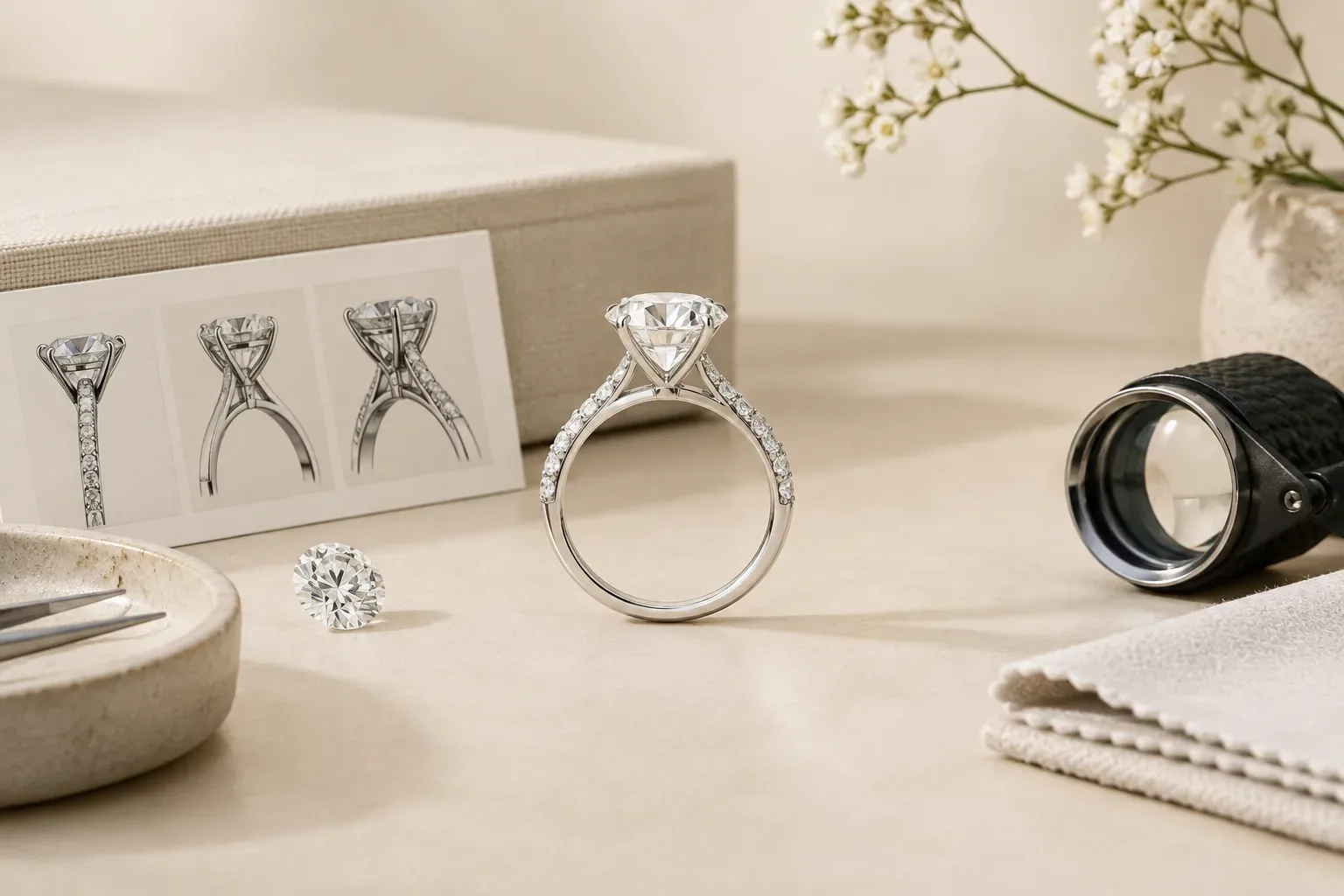
A high-profile setting engagement ring lifts and highlights the center stone to maximize visibility and light; it suits people who prioritize presence over low-profile practicality. This guide defines the style, explains contemporary marketplace demand, lists pros and cons, covers safe care and verification limits, and gives practical selection and gifting advice grounded in consumer- and trade-focused sources.
What we can say from the documented trade and consumer evidence
Approved trade and consumer sources describe the modern marketplace demand and consumer questions that surround engagement-ring choices. Imaginaire Digital reports robust search demand in the UK for engagement rings and related categories in 2026, showing consumer attention to engagement-ring styles. Jewelers Mutual highlights 2026 demand centering on fluid forms, craftsmanship, versatility and modern styling. The Gemological Institute of America (GIA) and the U.S. Federal Trade Commission (FTC) emphasize buyer concerns about treatments, disclosure, durability and the limits of what sellers and laboratories can confirm.
These sources together describe a contemporary context in which shoppers are looking for visible, crafted, and versatile rings while also needing clear disclosure about gemstone origin and treatment. They do not, however, provide a detailed archaeological or cultural history of a specific elevated setting form that predates modern jeweler practice. Where a reader wants precise historical attributions for elevated settings in particular periods or cultures, the approved sources do not supply that evidence, and further specialized historical research or academic sources would be required.
Documented historical meanings versus modern interpretations
Because the approved sources focus on current consumer trends, treatment disclosure and market demand, there is little direct historical documentation in them tying a high-profile setting to fixed cultural meanings in a specific past period. Any historic claim about symbolic meaning would need primary historical sources or specialist scholarship, which are outside the included evidence set.
Modern interpretations are distinct and personal. Today, many people read a raised, dramatic setting as a statement of prominence, celebration, or traditional proposal symbolism, but those are contemporary associations rather than documented historical meanings. Jewelers Mutual and Imaginaire Digital reflect that modern buyers value visibility and craftsmanship; the meanings buyers attach to those visible settings are subjective and can vary widely between individuals and cultures.
How the high-profile motif appears in jewelry
In practice, a high-profile engagement ring places the center stone noticeably above the band to expose more facets or surface area to light and to make the gem appear larger from a distance. Designers achieve that elevation in several construction approaches and with various complementary motifs, including raised prongs, cathedral shoulders, halo frames, and gallery work beneath the stone. The overall effect is to increase the rings visual presence and allow more light interaction with the stone.
A high profile can be used with diamonds and a wide range of colored gemstones. The GIA notes that gemstone treatments, durability and care needs create distinct consumer questions, so designers and buyers often factor a gems hardness and treatment history when choosing a raised design. Because the stone is more exposed, choices about mounting style, metal strength and prong configuration are more consequential for both appearance and long-term security.
Pros and cons: practical trade-offs
Pros include increased visual impact, perceived size and brilliance, and greater opportunity for detailed setting work that can feel more ornate or sculptural. Many shoppers choose high-profile settings specifically to showcase a center stone as the focal point of the ring, which aligns with current demand for visibility and craftsmanship noted by Jewelers Mutual and search interest reported by Imaginaire Digital.
Cons include higher susceptibility to snagging, a greater profile against clothing, and potentially higher maintenance. Elevated stones are more exposed to knocks and may require more frequent prong checks or repairs. The FTC and GIA resources remind consumers that durability and treatments affect long-term care; certain gemstones or treated stones may need gentler handling when set high. Practical considerations such as daily activities, a job with manual tasks, or the desire to wear a wedding band flush against the engagement ring often lead buyers to prefer lower-profile alternatives.
What a shopper can verify and what requires a jeweler or laboratory
Before consulting a jeweler you can inspect the ring visually for obvious features: the stones face-up size relative to the band, the mountings apparent lift, and whether the setting style is open underneath or heavily enclosed. You can ask the seller for written disclosures and any available certificates, and the FTC specifically advises consumers to request clear distinctions among natural, lab-created, treated, and imitation materials in writing.
What you cannot reliably verify without expert help includes whether a gemstone has been treated in ways that affect durability or value, the precise origin of a natural stone, or whether a diamond meets specific grading standards. The GIA explains that treatments and detectability require gemological tools and trained analysts. For a definitive identification, a qualified jeweler with proper instruments or a gemological laboratory report is necessary. If you need assurance about a diamonds grade or a gems treatment history, obtain an independent laboratory report and rely on written disclosure from the seller.
Selection and gifting guidance (practical and respectful)
Start with lifestyle: clarify whether the recipient prefers bold visible jewelry or discreet daily wear. If they work with their hands or prefer minimalist jewelry, a high-profile setting may not suit daily wear. If they enjoy statement pieces and occasional formal wear, a high-profile ring is appropriate. Jewelers Mutuals 2026 trend guidance underscores that modern buyers prize versatility and craftsmanship, so balance visual impact with practical durability.
Budget and stone choice follow. Higher-profile settings can require more material and more skilled labor, so they can cost more than simpler low-profile designs for the same center stone. Decide whether you want a natural, lab-grown or treated stone, and ask the seller for written disclosure per FTC guidance. If you value long-term durability, consult the GIA guidance on how treatments and gem hardness affect care. When gifting, be respectful: know sizing, ask about return or resizing policies, and consider a ring-try period. If you are proposing, consider whether a temporary stand-in with a clear plan and receipt for exchange would be more considerate than an unexpected permanent fit.
Care, maintenance, and insurance
High-profile settings benefit from routine professional checks. Because elevated stones are more exposed to impact and wear, inspect prongs regularly for bending or thinning and return to a reputable jeweler for any re-tipping or repair work. Jewelers Mutual as an industry authority highlights the contemporary focus on craftsmanship and the reality that different styles need different maintenance schedules.
For cleaning, follow the stone and metal makers guidance; avoid aggressive ultrasonic cleaning or steam if a stones treatment could be affected. The GIA provides consumer guidance about treatments, detectability and special care, and recommends following laboratory or manufacturer instructions for treated gems. Finally, consider insurance or a jewelry policy rider to protect against loss, theft or damage; insurance is a practical complement to routine care for rings that have higher exposure.
How to finalize the purchase: a checklist of respectful steps
Ask for written disclosures about the stones origin and any treatments, and request any third-party certificates the seller has. Verify the return, resizing and repair policies in writing. If the stone is valuable, arrange for an independent appraisal and a gemological laboratory report when appropriate. The FTC stresses the importance of clear, written disclosures about natural versus lab-created or treated stones.
If you are buying for a partner who will wear the ring daily, plan for a professional sizing and a prong inspection within the first year of wear. For a high-profile design, consider whether a complementary wedding band or ring guard will be needed to secure a desirable stack. Many modern buyers want versatility and gender-neutral options, a trend noted by Jewelers Mutual, so think about how the engagement ring will pair with other jewelry your recipient already wears.
Final considerations
A high-profile setting engagement ring is an unmistakable visual choice: it maximizes presence and showcases the center stone, but it carries trade-offs in daily practicality and maintenance. The contemporary marketplace favors visible craftsmanship, but the FTC and GIA remind buyers to insist on written disclosure and expert verification where treatment, origin or grading matter.
If you value a confident, visible design and the recipients lifestyle permits elevated settings, a high-profile ring can be an excellent choice. If the recipient prefers low-fuss or hands-on wear, consider lower-profile alternatives or a compromise design that preserves showmanship while reducing exposure.
Frequently asked questions
Are high-profile settings practical for everyday wear?
They can be practical if the wearers lifestyle avoids heavy manual work and they commit to regular inspections; however, high-profile settings are more likely to snag and require more maintenance than low-profile rings.
How often should I have the prongs checked on a high-profile ring?
Have prongs professionally inspected at least once a year and sooner if the ring receives knocks, but follow any specific guidance from your jeweler or insurer.
Can a high-profile ring be resized or altered later?
Most rings can be resized or modified, but the scope depends on design and metal; verify the sellers resize policy and consult a jeweler before purchasing if future resizing is likely.
How can I verify whether a gemstone has been treated or is lab-created?
Ask the seller for written disclosures and any laboratory certificates; for definitive identification and treatment detection, obtain a report from a qualified gemological laboratory, as advised by the GIA and the FTC.
Should I insure a high-profile engagement ring?
Yes; insuring a visibly elevated and valuable ring is prudent because its exposed position increases the risk of accidental damage or loss, and insurers can advise on appropriate coverage.
Sources and further reading
- Imaginaire Digital — Imaginaire Digital
- Jewelers Mutual — Jewelers Mutual
- Gemological Institute of America — Gemological Institute of America
- Federal Trade Commission — Federal Trade Commission