Meaning at a glance
Low-profile engagement rings sit closer to the finger for comfort, safety, and stackability; choose them when personal style and daily wearability matter most, and rely on a qualified jeweler or gemological laboratory to verify treatments, material origin, and precise measurements.
Quick answer
Low-profile engagement rings are best for people who prioritize comfort, active daily wear, and easy stacking: they sit closer to the finger and reduce snagging. Expect trade-offs around light performance for some stones and potential differences in repair or resizing options. Use this guide to define decision criteria, care expectations, and the exact limits of what you can verify without a qualified jeweler or a gemological laboratory.
What a low-profile setting means (definition and visual cues)
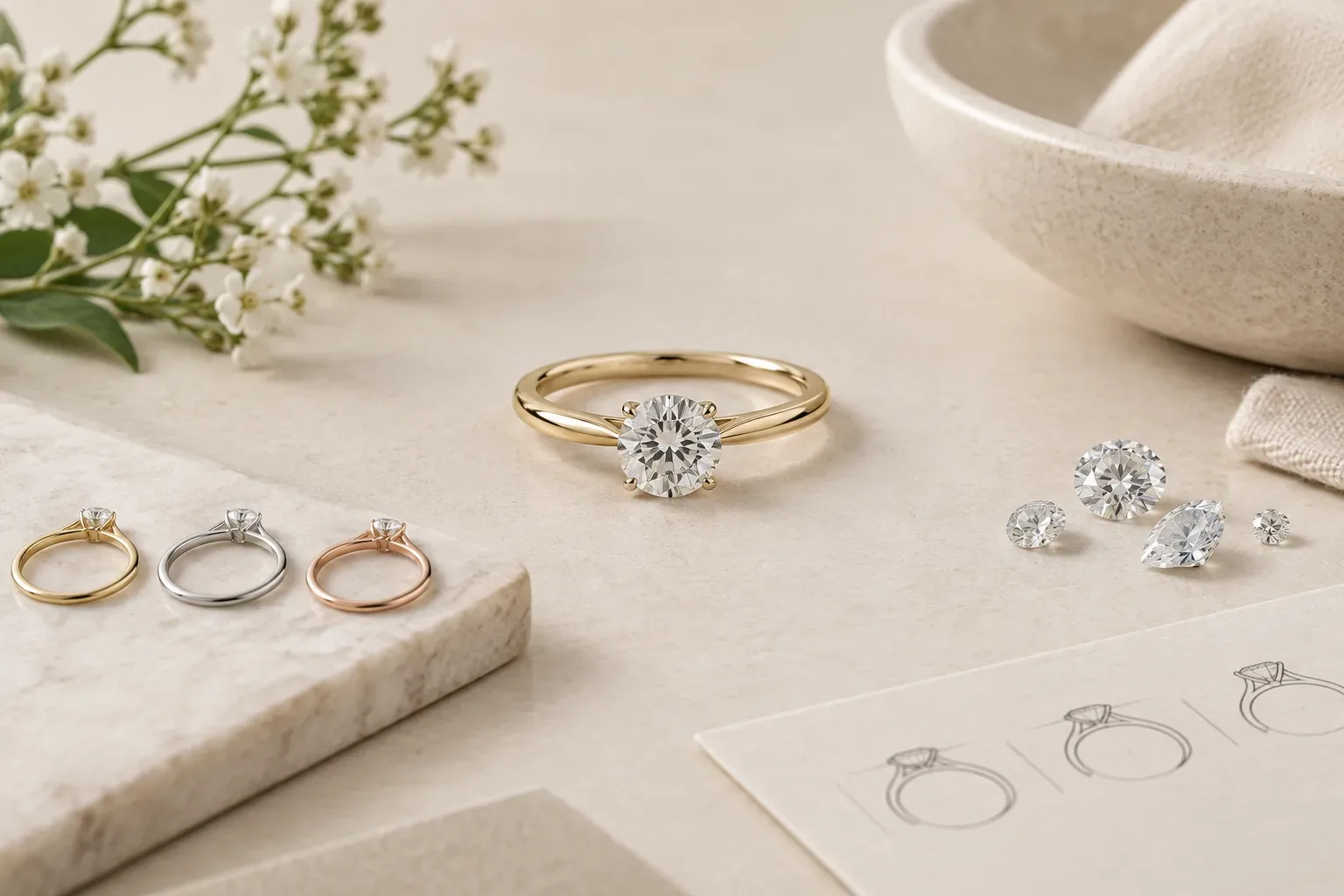
A low-profile setting refers to ring designs where the gemstone sits close to the band and the top of the stone does not rise far above the finger. Visually, these rings present a flatter silhouette than high-set or cathedral styles and often appear more integrated with the band.
Shoppers describe low-profile rings as easier to wear with gloves, sleeves, or when doing hands-on work, and as more compatible with stacking or wedding bands due to their compact silhouette.
Documented historical evidence and recent market history
Within the approved industry sources for this guide, direct archaeological or long-term cultural histories of low-profile settings are not provided. Instead, the available evidence documents recent consumer demand and design trends. Jewelers Mutual identifies 21st-century and especially recent trends that favor fluid forms, modern stacking, versatility and gender-neutral styling, which explain much of the market interest in lower-profile ring designs today.
Imaginaire Digital’s 2026 UK search analysis shows strong demand for engagement ring queries alongside other categories, reflecting active consumer interest in ring styles; this search demand correlates with broader market movement toward rings that work with modern lifestyles. For deeper historical or cross-cultural archaeological claims about ring silhouette across earlier centuries or regions, consult specialized jewelry history sources beyond the materials used here.
Documented meanings versus modern personal interpretations
None of the approved sources present a documented cultural or ritual meaning that specifically attaches symbolic content to a ring’s profile height. That means a low-profile setting does not have a single historically documented symbolic meaning across cultures in the materials used for this guide.
Modern wearers and designers, however, commonly interpret low-profile settings as practical, understated, or emblematic of an active lifestyle. Jewelers and industry observers link low-profile preference to functional priorities—comfort, durability in daily wear, and ease of stacking—rather than to a fixed cultural symbolism. Those contemporary interpretations are personal or stylistic choices, not universal cultural meanings.
How low-profile settings appear in jewelry and what to expect
Low-profile approaches appear in many design techniques: settings that cradle the stone close to the band, settings with lower prongs or full metal surrounds, and band designs that integrate the center gem so it does not rise far above the finger. The shared outcome is a ring that reads flat or compact on the hand.
Because this guide relies on industry-sourced trends and responsible-care recommendations, shoppers should expect that particular execution varies by maker: some low-profile rings prioritize protection and security around the stone, others prioritize the visual effect and stackability. Ask a jeweler to show how the setting holds the gemstone and how the band sits next to sample wedding bands before you buy.
Practical decision criteria: what to weigh before you buy
Lifestyle: If the wearer uses their hands a lot, works with tools, plays sports, or prefers minimal snagging, a low-profile ring usually increases comfort and reduces the chance of catching on clothing. This is a practical rather than symbolic consideration.
Stone choice and durability: Gemstone hardness and toughness affect whether a low-profile arrangement is advisable. The Gemological Institute of America (GIA) explains that treatments and durability characteristics create distinct consumer care questions, so buyers should consider how a chosen stone will tolerate daily wear and whether it has any treatments that change its hardness or care needs.
Stacking and styling: If the wearer plans to stack a wedding band or multiple rings, low-profile settings typically produce a neater fit and fewer alignment gaps, aligning with the stacking trend noted by Jewelers Mutual.
Resizing and repair: Compact settings can be easier to wear but may limit repair options or complicate resizing depending on how the metal and setting are constructed. Ask a qualified jeweler about future resizing and routine maintenance possibilities before purchase.
Verification and documentation: The Federal Trade Commission (FTC) emphasizes the need for clear distinctions among natural, lab-created, treated, cultured, and imitation materials and for written seller disclosures. Before finalizing a purchase, request written disclosure about material origin and treatments and, for diamonds or high-value gems, any independent grading or lab report.
Trade-offs: pros and cons explained
Pros: Low-profile rings tend to be more comfortable and less likely to snag on clothing. They generally work better with stacked bands and offer a modern, understated aesthetic that appeals to many buyers seeking versatility and gender-neutral styling as observed by Jewelers Mutual.
Cons: Some low-profile designs can reduce the amount of light entering the stone compared with higher-set designs, which may slightly change how a faceted gemstone appears in different light. Lower settings can also complicate access for cleaning or make some repair techniques more complex. Because each design varies, confirm these trade-offs with a jeweler and, where necessary, a gemologist.
Care, inspection, and safe handling advice
Regular inspection: Ask your jeweler to inspect the setting periodically, especially if the ring is worn daily. A qualified jeweler can check prongs, bezels, and the overall integrity of the mount and advise on safe cleaning.
Cleaning and treatments: The GIA advises that treatments, disclosure, detectability, durability and special care create distinct consumer questions for gemstones. Follow any care recommendations tied to the gemstone and its treatments and never assume a low profile removes the need for routine maintenance.
Insurance and documentation: Keep written purchase records, seller disclosures, and any laboratory reports in a safe place. For higher-value pieces, consider insurance that covers loss or damage; discuss coverage specifics with an insurance professional.
What you cannot reliably verify without experts
Origin and treatments: Consumers cannot reliably verify whether a gem is natural, lab-created, treated, or imitation without either a qualified jeweler using appropriate instrumentation or a gemological laboratory report. The FTC stresses that buyers need written seller disclosures about these distinctions.
Grading and precise measurements: Claims about precise color, clarity, or grading of diamonds should be supported by an independent laboratory report; a retail visual inspection alone is not sufficient for certification claims.
Long-term durability claims: While basic hardness and care guidelines are available from sources such as the GIA, specific long-term durability under a particular wearer’s activities cannot be guaranteed without professional assessment and documented testing.
Practical selection and gifting guidance
Talk about function and size ahead of time when possible. Confirm ring size and whether the recipient prefers a snug or looser fit. If the element of surprise is essential, consider proposing with a temporary or adjustable ring and then choosing the final low-profile ring together.
Ask for written disclosures and any available lab reports at the time of purchase. If you want a ring that stacks well, bring or view sample bands for fit comparison. Request information about future resizing or modification options and ensure the jeweler documents any treatments and material origin per FTC guidance.
When gifting, be respectful of personal taste: low-profile does not equal minimalist by default. Offer options or a post-proposal shopping trip if you are unsure of the recipient’s daily wear needs or stylistic preferences.
Final buying checklist
Before you buy, confirm the ring’s fit and feel on the hand, request written disclosures about treatments and material origin, ask for any independent grading reports for diamonds, and discuss expected maintenance and resizing with a qualified jeweler. Use this information to weigh comfort and lifestyle priorities against appearance and optical trade-offs.
Frequently asked questions
Is a low-profile engagement ring better for everyday wear?
Many people find low-profile rings more comfortable and less likely to snag, making them well suited to everyday wear; however, the best choice depends on the wearer’s daily activities and the specific gemstone’s durability. Discuss daily use and stone care with a qualified jeweler before buying.
Will a low-profile setting make a diamond look less sparkly?
A lower setting can alter the angles at which light enters and exits a gemstone, which may change perceived brilliance for some cuts. Visual effect varies by stone cut and mounting; review the mounted stone in different lighting and ask a jeweler for demonstrations if light performance is a priority.
Can low-profile rings be resized or repaired easily?
Some low-profile designs resize or repair like higher-profile rings, but others—especially those with integrated band work—may be more complex. Confirm resizing and repair policies and options with the jeweler before purchase.
How can I verify a stone’s origin or treatment?
You cannot reliably verify origin or treatments without appropriate testing. The FTC requires sellers to provide clear written disclosures; for diamonds and other valuable gems, ask for an independent laboratory report and consult a qualified gemologist when needed.
Sources and further reading
- Imaginaire Digital — Imaginaire Digital
- Jewelers Mutual — Jewelers Mutual
- Gemological Institute of America — Gemological Institute of America
- Federal Trade Commission — Federal Trade Commission