Meaning at a glance
Three-stone setting engagement ring durability depends on setting type, gemstone durability and craftsmanship; choose protected settings, stable gemstones, routine inspections and clear seller disclosures to minimize snagging and repair risk, and rely on a qualified jeweler or gem lab to verify treatments or origin.
What the historical evidence shows (and what it does not)
Among the approved reference materials for this article there is little direct documentation of long-term historical meanings tied specifically to three-stone engagement rings. The sources provided are modern and practical in focus, and do not trace named cultures or precise historical periods for the three-stone motif. That absence is itself a useful historical fact: contemporary trade and consumer resources emphasize current design, craftsmanship and disclosure rather than ancient provenance.
Because the available evidence is modern in scope, this article treats historical claims about symbolism with caution and separates verifiable, contemporary trade guidance from popular or personal interpretations offered by retailers or individuals.
Documented historical meanings versus modern personal interpretations
Documented historical meanings are not established in the provided sources. Modern explanations for three-stone rings—commonly phrased as representing past, present and future or friendship, love and fidelity—are best understood as contemporary personal interpretations rather than universally documented historical facts.
If symbolism matters to a giver or recipient, treat those meanings as meaningful personal narratives rather than proven historical truths. Sellers, custom designers and recipients often attach such stories because they help explain the motif, but those interpretations are cultural or individual choices rather than claims supported by the modern trade and consumer guidance cited here.
How the three-stone motif appears in jewelry
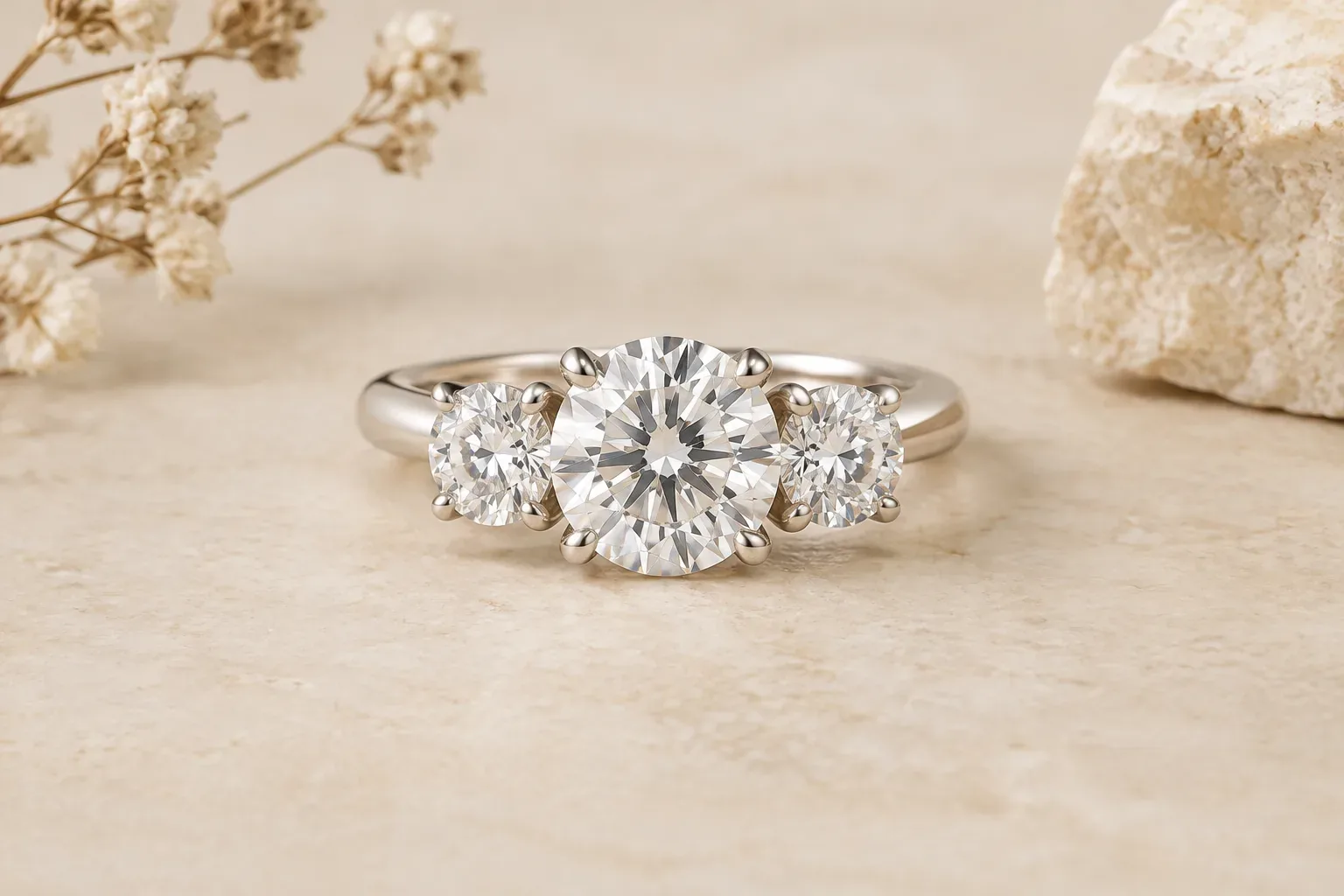
Physically, a three-stone engagement ring places a primary center gemstone between two smaller or complementary side stones. Variations include matched diamonds flanking a colored center stone, graduated side stones, or mixed shapes—round center with tapered baguettes, for example. Setting choices range from prong-set side stones to bezel or channel-set accents and pavé shoulders on the shank.
Those design choices affect both the ring’s look and its everyday behavior. Prong-set side stones tend to be more exposed; bezel or channel settings wrap metal around the gem and reduce snagging. Pavé and micro settings increase surface detail and sparkle but add additional small prongs and milgrain that can catch fabrics. The balance between appearance and protection is a primary durability trade-off for three-stone rings.
Durability factors that matter for daily wear
Setting security and profile. A low-profile bezel or semi-bezel setting around side stones reduces the chance of catching on clothing. Taller prongs and open crowns increase exposure and snag risk. Solid construction and thoughtful design can substantially reduce mechanical vulnerabilities.
Gemstone choice and treatment. Different gemstones have different physical properties and responses to knocks, heat, chemicals and abrasion. The Gemological Institute of America (GIA) highlights that treatments and special care needs can change a stone’s durability profile, so treatment status and specific care recommendations should inform whether a given three-stone ring is suitable for daily wear.
Metal selection and workmanship quality. Heavier-gauge settings and harder metals increase resistance to wear, but often at the cost of comfort or weight. Jewelers Mutual’s 2026 trends emphasize craftsmanship and versatility, reinforcing that construction quality is central to a ring’s long-term performance.
Lifestyle and use. Daily activities such as manual labor, gardening, frequent handwashing with harsh detergents, or sports exposure increase the chance of a snagged or damaged side stone. Wear patterns matter more than the presence of two additional stones; a carefully selected three-stone ring can be perfectly suitable for a wearer who avoids high-risk activities while wearing the ring.
Snagging, common wear points, and typical repair risks
Snagging is most likely where small prongs, pavé beads or raised shoulders meet flexible fabrics. Side stones set with high-profile prongs or open-side galleries present narrow edges that can catch on loops or threads. Conversely, bezel-set side stones and flush-set details present smoother silhouettes and snag less.
Repair risks include bent or broken prongs, dislodged side stones, scratches to the girdle of a side gem, and wear to the setting that requires re-tipping or re-setting. Repairs to three-stone rings can be more complex than on solitaires because side stones add more points that require matching, sizing and alignment. A qualified jeweler can re-tip prongs, replace lost side stones and repair worn channels, but those repairs are time-consuming and can be costlier when matching existing side stones is necessary.
Practical decision criteria and trade-offs
Decide which trade-offs you value most: aesthetic symmetry and sparkle versus low maintenance and reduced snag risk. If you prioritize protection, choose bezel or partial-bezel side settings, a lower profile, and harder, untreated gemstones where possible. If you prioritize sparkle and classic form, a prong-set look with pavé shoulders will deliver more light but require more frequent inspection.
Consider documented disclosures and lab reports. The Federal Trade Commission (FTC) stresses that consumers need clear distinctions among natural, lab-created, treated and imitation materials and written seller disclosures. Ask for written information about treatments, mounting materials and any warranties. For consumers who want long-term assurance, documented material disclosures and a reputable seller guarantee are non-negotiable.
Think about serviceability. Choose a seller who offers routine inspection services, has clear repair policies, and can replace or match side stones. Jewelers Mutual’s trend notes on craftsmanship and versatility imply that choosing a jeweler who stands behind construction will reduce lifetime risk and maintenance friction.
Safe care guidance to minimize risk
Inspect the ring visually every few weeks for loose stones, worn prongs or bent shanks, and get a professional check at least annually or more often if the wearer is active. Many jewelers offer complimentary or low-cost inspection services and will advise on necessary maintenance.
Avoid wearing a three-stone engagement ring for activities that are likely to expose the ring to knocks, heavy abrasion, or harsh chemicals. Remove the ring for gardening, weight lifting, dishwashing with strong detergents, and contact sports when possible.
Store the ring separately from other jewelry to avoid abrasion to small side stones and to prevent prongs from catching on other pieces. For cleaning, follow the gemstone’s care advice; because treatments can change cleaning sensitivity, consult the seller and the GIA’s guidance on treatments and special care before using ultrasonic or steam cleaning.
What you can and cannot verify without professional help
You can visually check symmetry, obvious damage, smoothness of the setting and whether prongs appear intact, but you cannot reliably confirm stone treatments, origin, or precise grading without specialists. The Gemological Institute of America (GIA) and the Federal Trade Commission (FTC) underline that treatments and origin require laboratory expertise and that written disclosure from the seller is essential.
If you need definitive, objective verification—treatment status, clarity grading, cut grading, or geographic origin—request a report from a recognized gemological laboratory or an independent appraisal by a qualified gemologist. Written disclosures from the seller are important, but independent lab verification is the only reliable method to confirm certain technical claims.
Selection and gifting guidance (practical and respectful)
Match the ring to the recipient’s lifestyle and preferences. If the wearer is active with hands-on hobbies or a profession that risks impact, choose a lower-profile design and protective settings. If they value maximum brilliance and a traditional look, discuss maintenance expectations honestly and arrange inspection or insurance services.
Ask for and keep written disclosures. Insist on clear documentation of gemstone treatment status, whether stones are natural or lab-created, and any warranties or return policies. The FTC’s consumer guidance emphasizes the importance of these written distinctions when buying gemstones and jewelry.
Consider insurance and craftsmanship warranties. Jewelers Mutual and similar professional bodies highlight the importance of craftsmanship and post-sale support. A durable three-stone ring starts with good construction and continues with a plan for maintenance, inspection and, if appropriate, insurance.
Frame symbolism as personal, not universal. If you gift the ring for a specific symbolic reason, explain what the three stones mean to you or to the recipient. Recognize that many commonly cited meanings are modern interpretations rather than established historical facts, and present them as a personal message.
Final checklist before purchase
Confirm the setting style and ask the seller to show how high the side stones sit relative to the shank. Request and read written disclosures about gemstone treatments, natural versus lab origin, and any service policies. Ask about inspection frequency and the jeweler’s approach to repair and matching side stones if replacement becomes necessary. Consider a low-profile setting or bezel detailing for higher daily durability, and ensure you are comfortable with the trade-offs in appearance versus maintenance.
Frequently asked questions
Are three-stone engagement rings suitable for everyday wear?
They can be, but suitability depends on setting style, gemstone durability, craftsmanship and the wearer’s daily activities. Low-profile bezel or semi-bezel settings and hard, untreated gems are more compatible with daily wear; open prongs and pavé work increase maintenance needs.
How can I minimize snagging with a three-stone ring?
Choose lower-profile or bezel-set side stones, avoid excessive pavé or milgrain if snagging is a concern, and remove the ring for tasks that risk catching or impact. Regular inspections and prompt prong re-tipping reduce long-term snag risk.
How often should a three-stone ring be professionally inspected?
A professional inspection at least once a year is a common recommendation, with more frequent checks if the wearer is active or if the ring has many small stones. Many jewelers offer inspection services and can advise on specific schedules.
Do gemstone treatments affect durability?
Yes. Treatments can change a stone’s physical behavior and care needs. The GIA notes that treatments and special-care considerations create distinct consumer questions, so request full disclosure and follow care guidance from the seller and gemology references.
What can I verify myself and when do I need a laboratory report?
You can check visually for damage, prong integrity and overall finish, and you should obtain written disclosures from the seller. To confirm treatment status, origin, or technical grading, you will need a recognized gemological laboratory report or an independent appraisal from a qualified gemologist.
Sources and further reading
- Imaginaire Digital — Imaginaire Digital
- Jewelers Mutual — Jewelers Mutual
- Gemological Institute of America — Gemological Institute of America
- Federal Trade Commission — Federal Trade Commission