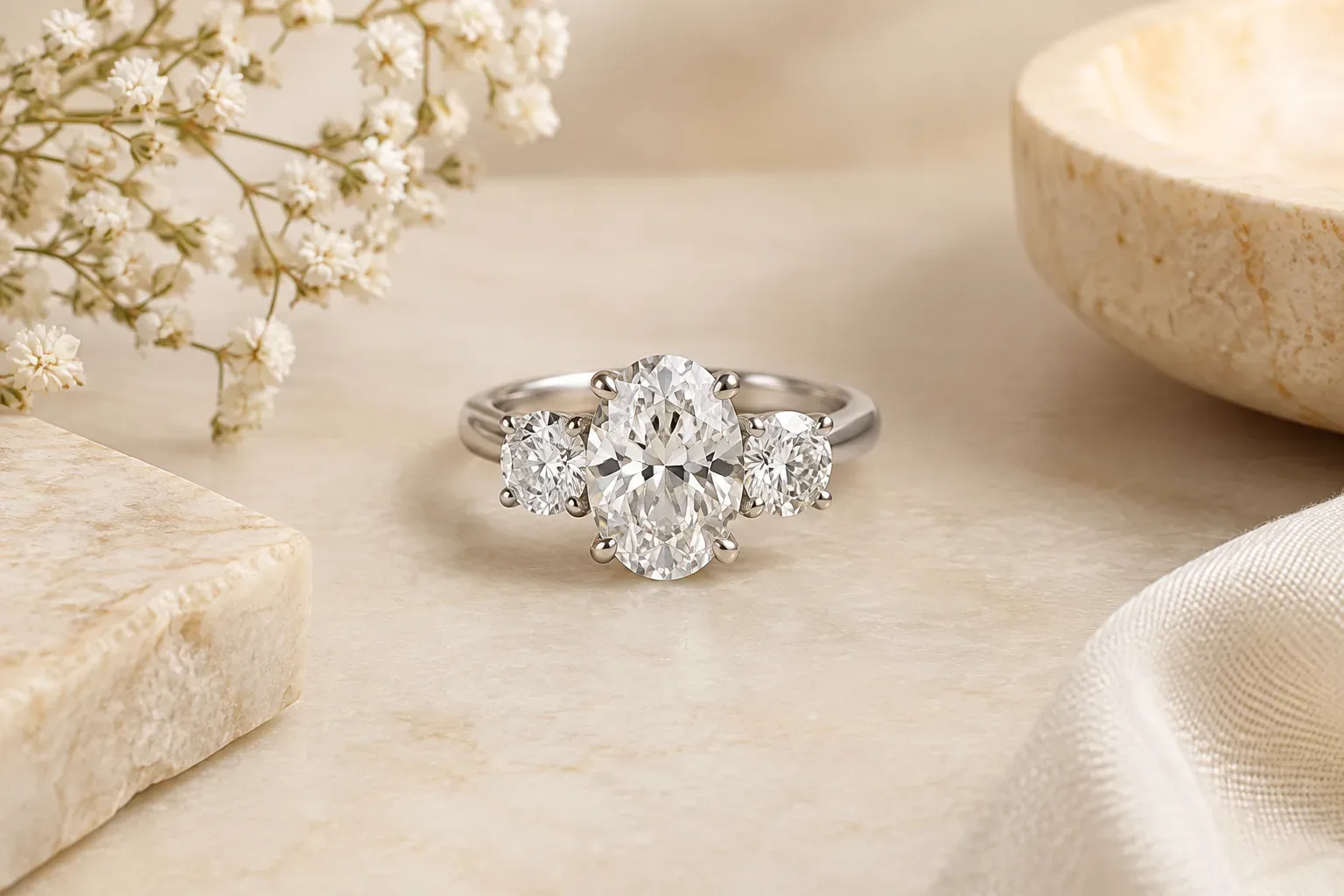
Meaning at a glance
This buying guide explains what a three-stone setting engagement ring is, contrasts documented historical evidence with modern marketing interpretations, lists pros and cons, offers decision criteria and practical trade-offs, gives safe care guidance, and clarifies what a shopper cannot verify without a qualified jeweler or gemological laboratory.
Quick answer
A three-stone setting engagement ring buying guide should give you an evidence-led definition of the style, decision criteria for choosing stones and settings, clear practical trade-offs (budget, durability, and matching), safe care advice, and explicit limits on what only a qualified jeweler or gemological laboratory can verify. This article supplies those elements and points to consumer-protection and gemological guidance where relevant.
What is a three-stone setting?
A three-stone setting normally places a prominent center gemstone flanked by two smaller (or occasionally equal) stones on either side along the same axis. In contemporary practice this can mean three diamonds, a diamond with colored side stones, or three colored gems. The setting can be executed in many technical ways—shared prongs, separate prongs, bezels, or channel-style side stones—and may include halos or additional accent stones around the primary three.
Historical evidence and cultural attribution
There is no single well-documented ancient or cross-cultural meaning for the three-stone motif that is established in the professional literature available to consumers. Industry reporting and professional bodies that track modern jewelry practice do not present an unbroken historical lineage assigning a particular symbolic meaning to the three-stone ring. Professional trend and trade commentary instead treats the style as a long-standing design vocabulary that has been repurposed in contemporary marketing and design.
The popular retail narrative that the three stones represent 'past, present, and future' is a modern interpretive framing used by some jewelers and marketers rather than a verified historical fact. Sources that study modern jewelry demand and practice discuss the motif in terms of its design versatility and consumer appeal rather than ascribing a single ancient origin or universally accepted cultural significance.
Documented history versus modern interpretation
Documented history in the jewelry field, as reflected in professional resources, focuses on styles and technical evolutions rather than prescriptive symbolic meanings. Modern interpretations, like the 'past, present, future' meaning, are valid as personal or marketing narratives but should not be presented as universal or historically proven. Treat the symbolic reading as a contemporary choice you can adopt or adapt when gifting or choosing a ring.
When a shopper is concerned about provenance, historical authenticity, or cultural symbolism, those are separate questions from style. For factual matters such as whether a stone is natural or treated, and the precise gemological grade of a diamond, rely on independent lab reports and written seller disclosures rather than on symbolic claims.
How the motif, gemstone, and tradition appear in jewelry
In practice the three-stone motif can emphasize visual weight and balance. Designers use matched side stones to create a graduated look or opt for two contrasting colored gems to create a focal contrast next to a diamond center. Settings vary: shared-prong settings reduce metal between stones and increase perceived surface area, while bezel or channel treatments add protection and a different aesthetic.
Colored gemstones appear frequently in three-stone rings, either as accent stones or as the center stone. Industry reports for contemporary demand highlight that colored gemstones and versatility are important consumer trends, which is a reason three-stone rings are often chosen to accommodate personalized color choices or to incorporate heirloom stones. Modern styling also favors gender-neutral options and stacking-friendly profiles, which a three-stone design can support when proportioned for everyday wear.
Pros and cons: practical trade-offs
Pros of three-stone settings include visual impact and flexibility. With three stones you can achieve more presence on the finger without a single very large center stone by using two substantial side stones. The layout also allows personal touches such as incorporating an heirloom gem or color accents, and it can frame the center gem to enhance perceived size and brilliance.
Cons include higher cost for comparable total carat weight because additional matching or quality stones raise price and complexity. The setting increases the number of contact points and prongs that must be inspected and maintained, and certain arrangements are harder to resize or repair without repositioning stones. Matching cut, color, and clarity across three stones to a visible standard can be challenging and may require compromises on each stone to stay within budget.
Decision criteria: what to weigh when choosing a three-stone ring
Begin with priorities: is the primary goal sparkle, color personalization, symbolic meaning, or budget efficiency? If sparkle is paramount, prioritize cut and center stone quality; if color personalization matters, choose stones with stable, durable colors and accept trade-offs in matching. Consider total carat weight versus the size of a single center stone; three stones can read larger on the finger for the same combined weight, but the visual effect depends on cut and setting.
Ask practical questions about lifestyle and durability. Hardness and toughness vary by gem type, so if the wearer has a physically active life you may prefer diamonds or hard colored gems set with protective bezels. Decide on metal type and profile for daily wear; lower-profile settings are less likely to snag. And always ask for written disclosures and documentation about whether gems are natural, lab-created, or treated, because those facts affect value and care.
Safe care guidance
Routine care for a three-stone ring is similar to other multi-stone pieces but with more points to inspect. Regularly check prongs and settings for wear and loose stones and have a jeweler inspect the ring at least once a year or after any hard impact. Professional cleaning and tightening services will prolong life and reduce risk of loss.
Be cautious with home ultrasonic cleaners because some gemstones and treatments are sensitive to ultrasonic or steam cleaning. The Gemological Institute of America explains that treatments and certain gem materials require special handling; when in doubt, consult a qualified jeweler or the laboratory that issued any reports. Insure high-value rings and maintain up-to-date documentation to support claims if repair or replacement becomes necessary.
Verification limits: what you cannot confirm at home
A shopper cannot reliably determine several key facts without professional testing. Independent gemological laboratories can distinguish natural from lab-grown stones, detect many treatments or enhancements, and provide objective grading for diamonds and colored gems. The Federal Trade Commission emphasizes that consumers should demand clear written disclosures from sellers about whether materials are natural, lab-created, treated, cultured, or imitation.
Ask the seller for any available lab reports and written disclosures before you buy. If a seller cannot provide clear documentation about a stone’s origin or treatments, plan to obtain an independent assessment from a qualified jeweler or laboratory before completing a high-value purchase.
Practical and respectful selection and gifting guidance
When gifting a three-stone engagement ring, focus on the recipient’s style more than the symbolic narrative. A ring that suits daily life and personal taste will be meaningful regardless of which symbolic story you choose. If you plan to use the 'past, present, future' motif, present it as a contemporary symbolic choice rather than a historical fact.
Discuss sizing and the possibility of resizing in advance, and keep paperwork and return or resizing policies clear. If you plan to include an heirloom stone or have the ring custom-made, arrange a professional appraisal and obtain written documentation about treatments and origin. Finally, consider the partner’s preferences about certification and whether they prefer natural gemstones, lab-grown alternatives, or sustainably sourced materials, and make sure the seller’s disclosures and any certifications align with those preferences.
When a three-stone ring suits you
Choose a three-stone ring if you want a design that balances visual presence with versatility: it works well for someone who likes framed centers, color accents, or a ring that looks substantial without a single very large stone. It is also a strong choice if you plan to incorporate an heirloom side or center stone because the design accommodates mixed materials.
Avoid a three-stone ring if you prefer the absolute simplicity of a solitaire, if you need the lowest possible maintenance profile, or if your budget is limited and you prefer to concentrate spending on a single very high-grade center stone. In those cases, a solitaire or a low-profile halo may serve goals more directly.
Conclusion
A three-stone setting engagement ring buying guide is most useful when it clarifies design definitions, sets realistic expectations about costs and maintenance, identifies what requires professional verification, and separates contemporary symbolic meanings from historical fact. Use written disclosures and independent lab reports for factual claims about gems, consider lifestyle and aesthetic needs carefully, and treat symbolic interpretations as personal choices rather than historical certainties.
Frequently asked questions
Does a three-stone ring always mean 'past, present, and future'?
No. The 'past, present, and future' reading is a modern interpretive framing used by some sellers and givers. It is a contemporary symbolic choice rather than a documented universal historical meaning; treat it as a narrative you can adopt or decline.
Can a buyer verify a stone is natural or treated at home?
No. Distinguishing natural from lab-grown stones and many treatments usually requires testing by a qualified jeweler or an independent gemological laboratory. Ask sellers for written disclosures and lab reports before buying.
Are three-stone rings harder to care for than solitaires?
They can require more maintenance because there are more prongs and contact points to inspect and tighten. Annual professional inspections and prompt attention to loose stones reduce the risk of damage or loss.
Is a three-stone ring more expensive than a solitaire?
Not necessarily, but the cost trade-offs differ. Three stones mean paying for additional material and matching quality, so for a given budget you may end up with smaller individual stones than with a single solitaire of equivalent total cost.
Should I get a lab report for a three-stone engagement ring?
Yes, for significant purchases request lab reports for the center stone and, if possible, for the side stones. The Federal Trade Commission recommends written disclosure of whether materials are natural, lab-created, treated, or imitation.
Sources and further reading
- Imaginaire Digital — Imaginaire Digital
- Jewelers Mutual — Jewelers Mutual
- Gemological Institute of America — Gemological Institute of America
- Federal Trade Commission — Federal Trade Commission