Meaning at a glance
This checklist explains what a hidden halo setting is, the practical trade-offs to weigh, specific questions to ask sellers, safe care guidance, and clear limits on what buyers can verify without a qualified jeweler or gemological laboratory.
Direct answer — the essential checklist in one sentence
A hidden halo setting engagement ring checklist should let you decide on the halo size and visibility, center-stone cut and certification, metal and durability, maker and warranty, disclosure of treatments or lab origin, return and resizing policies, insurance options, and realistic limits on verification (treatments, origin and exact grading) without a qualified jeweler or a gemological laboratory.
What people mean by a hidden halo setting and how it appears in jewelry
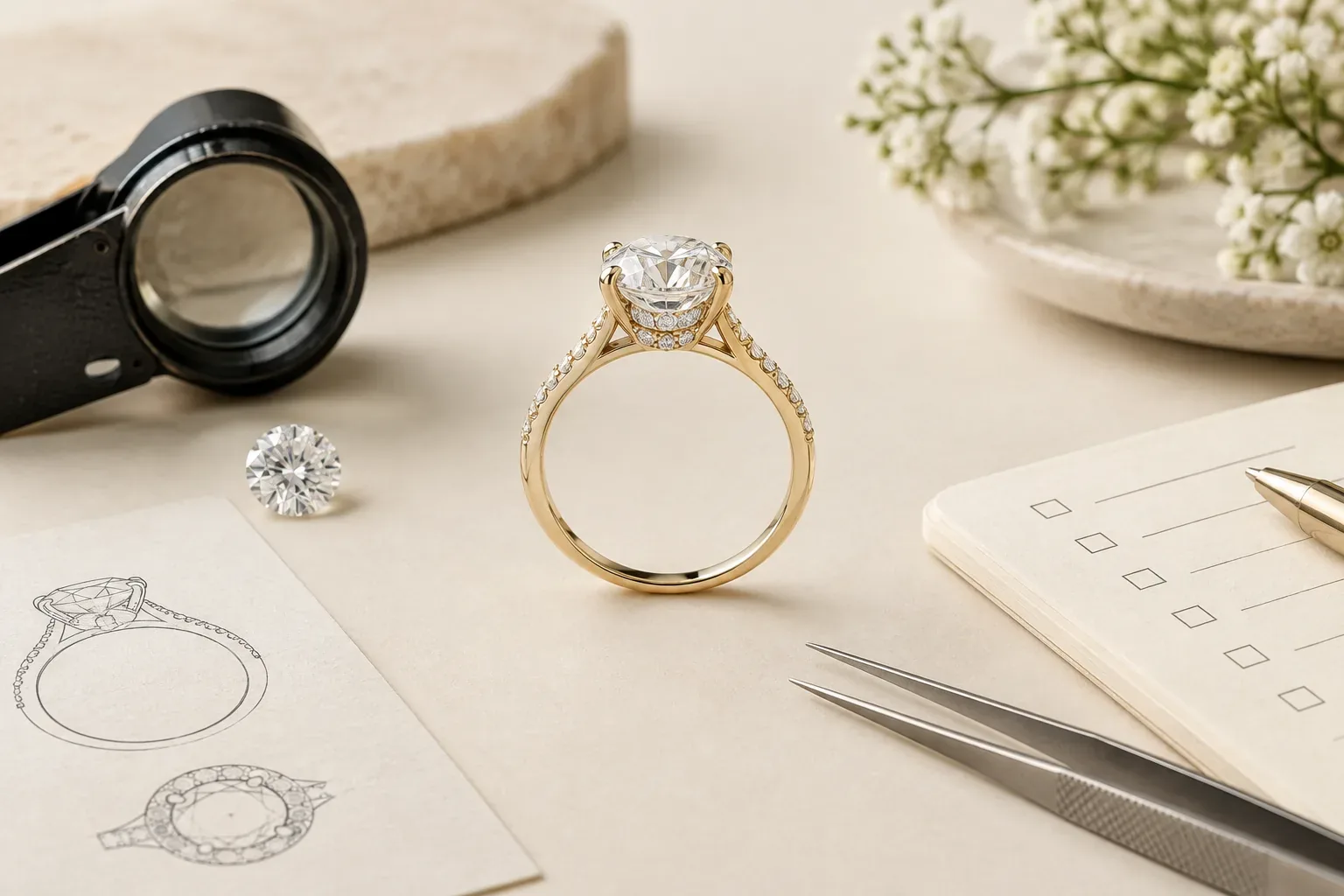
A hidden halo is a band of small accent stones set around the base or shoulder of the center stone so that they are visible only at certain angles or from above when the ring is viewed closely. In practice the motif makes the center appear larger or to sit on a cushion of light without adding an obvious outer ring of stones; designers execute this effect by placing pavé or micro-set stones beneath the crown or around the gallery rather than on the topmost bezel.
The hidden halo motif appears in a range of metals and designs. Jewelers use it with diamonds and colored gemstones; the accent stones are commonly smaller diamonds or durable melee stones set in gold or platinum to support wear. Hidden halos are often paired with delicate shanks, split shoulders, or under-gallery details so that the ring reads as elegant from a distance but reveals extra sparkle on closer inspection.
Documented historical evidence and what the approved sources say
The approved sources supplied for this article focus on contemporary market trends, consumer protections and gem treatment issues rather than deep historical scholarship about specific settings. Imaginaire Digital reports on 2026 UK search patterns and demand for engagement rings and specific styles, indicating strong consumer interest in oval engagement rings and other popular forms. Jewelers Mutual frames the 2026 trends around fluid forms, modern stacking, colored gemstones and craftsmanship, which helps explain why hidden, subtle motifs have become popular in recent product lines.
Because these sources emphasize current demand and care rather than primary historical archives, this article does not claim a precise historical lineage for the hidden halo setting derived from archaeological or period jewelry scholarship. If you need documented, period-specific history of halo motifs or a setting’s earliest appearance, consult specialist historical jewelry publications or museum catalogues rather than the market and consumer guidance sources cited here.
Separating documented meanings from modern personal interpretation
Documented meanings for ring settings in the references used here are largely commercial and practical: design trends influence consumer preference (Imaginaire Digital) and resilience, versatility, and care influence buyer concerns (Jewelers Mutual and GIA). The approved sources do not provide claims that a hidden halo setting has a consistent symbolic meaning across cultures or historical periods.
Modern personal interpretations—such as reading a hidden halo as "private luxury," an expression of subtlety, or an intimate secret between giver and recipient—are contemporary consumer narratives rather than historically documented facts. Those interpretations are valid as personal meaning, but they should be distinguished from verifiable historical or cultural claims. For purchase and gifting decisions, treat symbolic readings as part of your personal story rather than an objective property of the ring.
Questions to ask sellers: the decision criteria and checklist
Before buying, ask the seller to describe how the hidden halo is set and how visible it will be in everyday wear. Request photos from several angles and a short video where possible, because the effect and height of a hidden halo are best judged in motion rather than a single photo.
Ask for the center stone’s certification and grading report if it is a diamond. If the stone is a colored gemstone, ask about treatments and request any available laboratory reports. The Federal Trade Commission requires clear disclosure about whether a gem is natural, lab-created, treated, cultured or an imitation, so demand that information in writing prior to purchase.
Confirm whether accent stones in the hidden halo are natural or lab-grown and whether they are securely set using micro-setting techniques. Small stones carry a higher risk of loosening over time if set shallower than recommended, so ask about the setting method and warranty on stone security.
Request a written policy for resizing, returns and repairs. A hidden halo can complicate resizing because small accent stones may extend into the shank: ask whether the maker resizes rings of this design and whether any resizing could void warranty or damage the halo.
Ask about metal choice and durability. Platinum and 14k or 18k gold behave differently under wear; if you or the wearer has a physically active lifestyle, discuss whether the hidden halo sits too high or too close to the finger where it might catch or receive knocks.
Inquire about disclosure of treatments and detectability. Use the Gemological Institute of America’s guidance: some treatments are stable and require no special care, others affect durability, and many cannot be confidently identified without laboratory testing. If you require guarantees about untreated stones or origin, ask whether the seller will provide a laboratory report from a recognized gemological laboratory.
Confirm whether insurance, appraisals and recommended care instructions are provided. Jewelers Mutual highlights modern demand for craftsmanship and versatility and recommends buyers consider insurance and routine maintenance for intricate settings.
Practical trade-offs to weigh
A hidden halo increases perceived size and sparkle without the overt ring-of-stones look, but it also tends to add setting complexity. Complexity raises the chance of needing professional maintenance, which is a trade-off against the discreet aesthetic.
Smaller accent stones and close micro-setting produce a refined look but require regular checks for loosening. If you prioritize low maintenance, choose a sturdier setting or larger accent stones and ask about the maker’s recommended service schedule.
A higher-profile hidden halo may show more sparkle but be more likely to catch on clothing. A lower-profile design is less likely to snag but will reduce the halo’s visual impact. Decide whether visual drama or everyday practicality matters more for the wearer’s lifestyle.
Cost trade-offs include the labor involved in precise micro-setting, the total carat weight of accent stones, and the metal choice. Designers often charge more for intricate under-gallery work and for platinum versus gold, so balance budget, appearance and longevity.
Care guidance and maintenance
Routine inspection is important. Have a jeweler check prongs and micro-settings every six to twelve months or sooner if you notice movement or loss. Jewelers Mutual emphasizes craftsmanship and ongoing care as central consumer concerns, so follow any maker-recommended maintenance schedule.
Clean gently and avoid abrasive methods. Use mild soap, lukewarm water and a soft brush to lift oil and dust from tiny settings. The Gemological Institute of America warns that treatments and certain gemstones require special handling, so avoid ultrasonic or steam cleaners unless you have confirmation that all stones and treatments are safe for those methods.
Insure the ring. Discuss coverage with an insurer that understands fine jewelry and settings; Jewelers Mutual provides resources on trends and insurance considerations. Maintain receipts, appraisals and any certification paperwork to support loss or damage claims.
Limits on what you can verify without a jeweler or laboratory
You can verify the seller’s written disclosures, inspect photos and videos, compare design details, and check return and resizing policies without expert help. The Federal Trade Commission requires sellers to disclose whether gems are natural, lab-created, treated or imitations, so obtain that statement in writing.
You cannot reliably determine gem treatments, origin (natural versus lab-grown beyond disclosed claims), or precise grading grades without a qualified jeweler’s inspection or a recognized gemological laboratory report. The Gemological Institute of America notes that detectability and disclosure of treatments are specialized tasks; when a buyer needs definitive information about treatment or origin, ask for an independent lab report before purchase.
You cannot fully assess long-term wear resilience or whether future resizing will be safe for a particular hidden halo design without a jeweler’s evaluation. For structural questions such as repairability, ask for the maker’s guidance and, if possible, an independent bench jeweler’s opinion.
Respectful selection and gifting guidance
Match the hidden halo’s visibility to the recipient’s style. If the recipient prefers discreet jewelry, choose a subtle, low-profile hidden halo. If they appreciate surprise detail, choose a design that reveals itself in close-up viewing. Modern trends show demand for versatile and gender-neutral styling, so consider how the ring will pair with daily wear and other jewelry.
Prioritize written information and shared decision-making where possible. If you plan a surprise purchase, collect seller photos, ask about sizing flexibility and ensure a reasonable return or exchange policy. If you have time, consider a confidential conversation with the recipient about preferences to reduce the risk of disappointment.
Consider durability and lifestyle. For people with active hands-on jobs or frequent manual tasks, choose a sturdier mounting, lower profile and more secure prongs. Confirm whether the designer offers a service plan and whether the setting can be safely resized or repaired without compromising the hidden halo.
When gifting, present documentation: any gem reports, receipts, warranty and care instructions. That paperwork protects both parties and respects the buyer’s and recipient’s rights under consumer protection guidance cited by the Federal Trade Commission.
Final practical checklist summary
Get photos and a video; confirm center-stone certification and treatment disclosures in writing; ask how visible the halo is in normal wear; confirm setting method and warranty for small stones; verify resizing and return policies; check metal and profile for lifestyle fit; ask about recommended care, service intervals and insurance; and understand that definitive claims about treatment or origin require a qualified jeweler or recognized gemological laboratory report.
Frequently asked questions
What exactly is a hidden halo setting?
A hidden halo is a ring design in which small accent stones are set beneath or around the gallery of the center stone so the halo effect is visible only at certain angles or on close inspection.
What are the main pros and cons of a hidden halo?
Pros include increased perceived center size and discreet sparkle; cons include more complex maintenance, potential for loose accent stones, and sometimes higher repair costs due to intricate setting work.
Can I verify whether the stones are treated or lab-created myself?
You can and should get written disclosures from the seller, but definitive verification of treatments or origin requires a qualified jeweler’s inspection or a recognized gemological laboratory report, as noted by the Gemological Institute of America and the Federal Trade Commission.
Will a hidden halo make resizing harder?
Possibly. If accent stones or setting details extend into the area where the shank needs to be cut and soldered, resizing may be more complicated; always confirm the maker’s resizing policy before purchase.
How often should I have a hidden halo ring inspected?
Inspect prongs and micro-settings every six to twelve months, or sooner if you notice movement or loss. Follow any maintenance schedule recommended by the maker or a trusted jeweler.
Should I insure a hidden halo engagement ring?
Yes. Because of the setting’s complexity and potential repair costs, discuss insurance options with a provider experienced in fine jewelry; keep appraisals and certification paperwork for claims.
Sources and further reading
- Imaginaire Digital — Imaginaire Digital
- Jewelers Mutual — Jewelers Mutual
- Gemological Institute of America — Gemological Institute of America
- Federal Trade Commission — Federal Trade Commission