Meaning at a glance
A hidden halo setting engagement ring styling guide gives clear, evidence-led decision criteria: the hidden halo increases visual spread without a high profile, changes perceived finger coverage based on halo diameter and band width, and requires trade-offs between cleaning, durability, and verification of gemstones that only a qualified jeweler or gem lab can settle.
What a hidden halo setting is and how it changes styling decisions
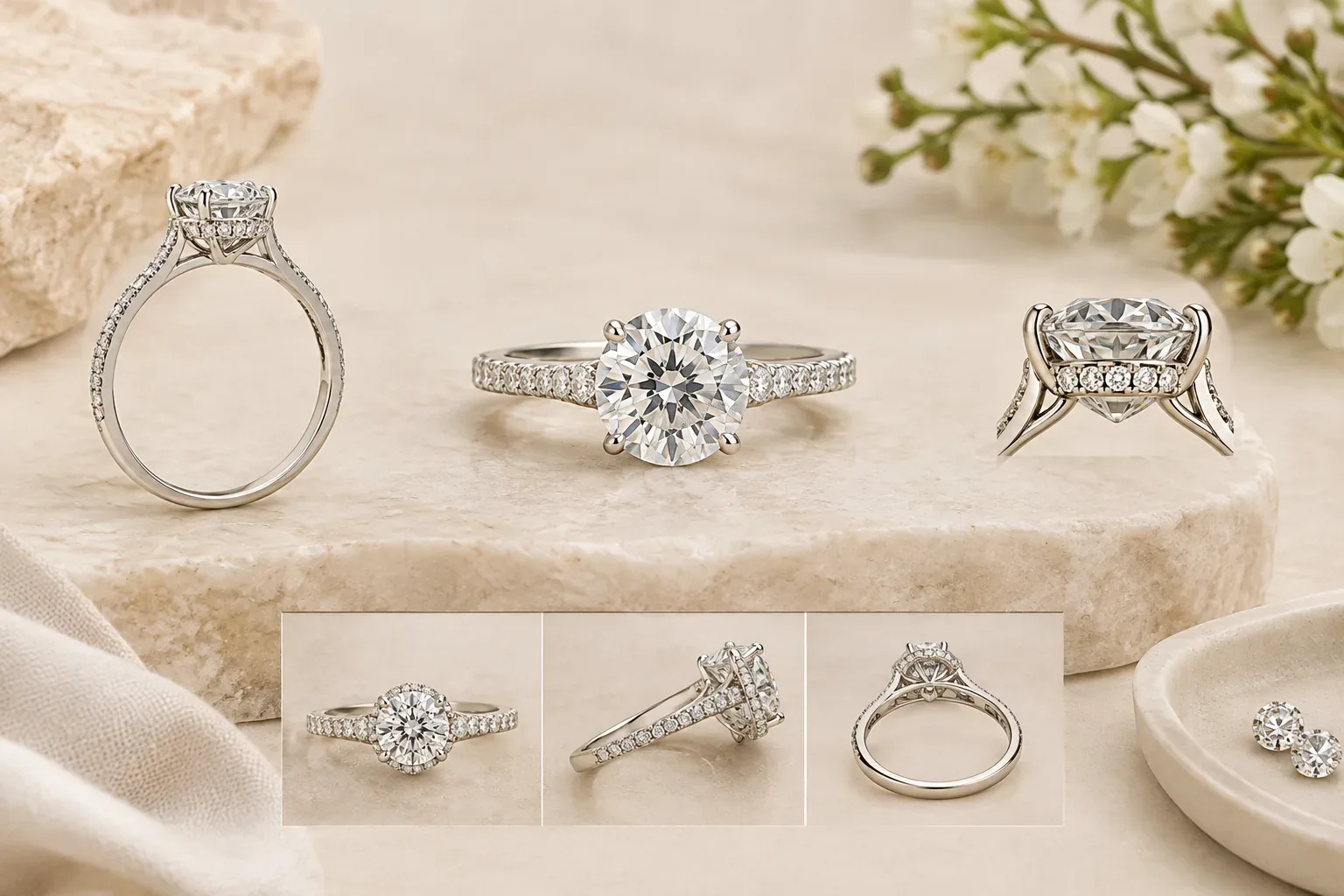
A hidden halo is a row of smaller stones set beneath or just under the crown of the center gemstone so that the halo is not immediately visible from above. From the top view the ring can read as a simple solitaire or minimal halo, while from the side or at certain angles the smaller accent stones become apparent and increase the ring’s visual spread and sparkle.
Because the hidden halo surrounds the girdle or sits under the crown, it changes styling decisions differently from a full visible halo. It adds perceived size and brightness without the higher bezel or visible rim of a conventional halo, which affects finger coverage, finger-to-stone proportion, and how the band sits with other rings or when stacking.
Historical evidence and cultural context — what the sources show
Specific, authoritative historical records that identify a distinct historical origin or cultural meaning for the hidden halo motif are not presented in the professional and regulatory sources provided for this article. Contemporary industry research and trend reporting highlight modern consumer preferences and design directions but do not treat the hidden halo as a documented historical symbol tied to a particular culture or period.
Imaginaire Digital’s 2026 analysis of jewellery search behavior documents demand patterns across ring shapes and types in the UK market, showing strong interest in engagement rings and specific shapes but not providing a historic origin story for the hidden halo. Jewelers Mutual’s 2026 trends reporting places emphasis on modern styling priorities such as fluid forms, versatility, and stacking, which helps explain why hidden halo designs are popular today as they pair well with contemporary, low-to-mid profile rings. The Gemological Institute of America (GIA) and the U.S. Federal Trade Commission (FTC) provide independent guidance on gemstone treatments, disclosure and verification rather than stylistic history, so they are the appropriate references for questions about material origin, treatments and consumer protections.
Documented historical meanings versus modern personal interpretation
Based on the approved sources, there is no documented, authoritative symbolic meaning historically attached to hidden halo settings across a specific culture or period. That absence is an important historical fact: modern sellers, designers and wearers assign personal meanings to ring features, and those personal interpretations are valid as contemporary symbolism but are not the same as documented historical meaning.
When gifting or buying, be explicit about whether the ring’s meaning is a documented cultural symbol or a modern personal sentiment. Contemporary trends and customer preferences inform why people choose hidden halos today, but those reasons reflect modern aesthetics and lifestyle priorities rather than a traceable historical symbolism in the sources cited here.
How the motif appears in jewelry: form, proportion and finger coverage effects
In practice, a hidden halo appears as a secondary row of small pavé or micro-set stones located directly beneath the main stone’s crown or set just over the gallery. From above the center stone often dominates the visual field; from the side the halo increases brilliance and can make the center appear larger because light reflects from the accent stones into the crown.
Styling outcomes that matter for finger coverage are the halo’s diameter relative to the table of the center stone and the width and contour of the shank. A hidden halo that reaches just beyond the center stone’s girdle gives a subtle increase in spread, while an extended hidden halo that visually projects past the crown’s outline gives a more noticeable increase in perceived size. Slim shanks concentrate the visual mass on the center stone and halo, which can lengthen the look of long fingers; wider bands balance larger stones and give a more grounded look on short or broad fingers.
Profile height also matters. Hidden halos often allow a lower overall profile than full visible halos because the accent stones sit closer to the center’s girdle or under the crown. Lower profiles reduce snag risk and improve comfort for daily wear but can make cleaning the halo area more challenging.
Practical decision criteria and trade-offs
Start with finger size and shape. For narrow or petite fingers, choose a modest hidden halo that extends the center stone’s perceived size without adding excessive width or height. For broader fingers, a more pronounced halo and a wider shank provide balance. For long fingers, narrower shanks and slightly larger tables help maintain proportionality.
Consider lifestyle and daily wear. Hidden halos suit wearers who want extra brilliance without a very high profile, but the recessed stones are more likely to trap dirt and oils. If the recipient is active or works with their hands, prioritize lower-profile settings with secure prongs and a robust gallery to avoid accidental damage.
Weigh sparkle versus maintenance. A hidden halo boosts light return and can make a center stone look larger, but the micro-setting style often requires more frequent professional cleaning to maintain brilliance. There is a trade-off between the delicate look of micro-pavé halos and the ease of maintenance of simpler bezel or solitaire settings.
Material and security trade-offs matter. Thinner prongs and tighter pavé settings create a refined appearance but increase the risk that a tiny accent could loosen over time. Conversely, a more open or robust setting compromises some micro-sparkle for durability. Decide what balance is right for the wearer’s routine.
Safe care guidance informed by industry and regulatory sources
Treatments and material disclosure affect cleaning and care. The GIA reminds consumers that treatments, detectability and durability differ among gemstones, and that certain treatments require gentler handling or professional maintenance. Ask the seller about any treatments to the center or accent stones and follow the recommended care protocol for those materials.
Follow FTC guidance for consumer protections. The FTC advises buyers to obtain clear written seller disclosures about whether stones are natural, lab-created, treated, or imitations. Before purchasing or accepting a ring as a gift, request documentation and confirm what the seller is representing in writing.
Routine home care for a hidden halo should be gentle and frequent. Use a soft brush, mild soap and warm water to remove surface oils, and dry with a soft lint-free cloth. Avoid ultrasonic cleaners unless a qualified jeweler confirms the specific combination of center stone, accent stones and treatments is safe for ultrasonic use. Schedule periodic professional inspections to check prongs and micro-settings because hidden halos have more recessed settings where debris can collect and small stones can loosen.
What only a qualified jeweler or gemological laboratory can verify
A trained jeweler or a gemological laboratory is the only reliable source to confirm gemstone origin, to test for treatments and to identify whether a laboratory-grown material or a natural stone has been altered. The GIA provides guidance on treatments and detectability and emphasizes that specialized testing is necessary to identify some treatments, while the FTC sets the standard that sellers must disclose material origins and treatments.
Practical buyer questions such as whether a center diamond has been fracture-filled, HPHT treated, or laser drilled, and whether accent stones are natural or lab-created require professional instruments and expertise. Similarly, a jeweler should confirm whether a ring’s construction will withstand everyday wear, whether prongs are adequate, and whether a proposed design can be resized without affecting the hidden halo.
Selection and gifting guidance — practical and respectful steps
Start by asking about lifestyle, existing jewelry habits and resizing expectations. If you cannot ask directly, choose a versatile low-to-mid profile hidden halo that pairs well with common band widths and wedding ring styles. Consider choosing a setting that can be resized if needed, and ask the seller in writing about resizing limits before purchase.
Request clear written information about the stones, including any laboratory reports for center stones and documented disclosure of treatments for all gemstones. The FTC requires clear distinctions among natural, lab-created and treated materials; insist on written confirmation so that the recipient can later seek professional verification if needed.
When gifting, present the design’s intended meaning as a modern personal sentiment rather than a claim of historical symbolism. Explain why you chose the hidden halo — for example, to increase sparkle with a discreet profile, to match stacking needs, or to respect a preference for lower profiles — and include guidance about care and servicing intervals so the recipient can maintain the ring properly.
Styling examples and pairing considerations
For a classic, minimalist look, choose a narrow shank with a modest hidden halo that keeps the centre stone visually dominant and pairs easily with thin wedding bands or stacking rings. For maximal brilliance with daily wearability, choose a low-profile gallery and a hidden halo set with slightly larger accent stones under the crown to boost reflection without raising the ring.
When stacking, ensure the wedding band or companion ring complements the hidden halo's silhouette. Flat bands or slight concave contours that sit close to the gallery work best. If the recipient prefers multiple stacking rings, prioritize a hidden halo with a modest extension so companion rings sit flush without gaps.
Final limits and the best next steps
Use the styling rules above as decision criteria but rely on a trained jeweler or gem lab for any factual verification about stone origin or treatments. Follow FTC guidance to secure written disclosures at the point of sale, and follow GIA advice for care specific to the materials identified.
If you need help matching proportion to a specific finger, ask a jeweler to mock up the ring or to show comparable rings in multiple finger sizes. If certainty about the center stone’s identity or treatments matters, obtain a current laboratory report from a reputable gemological lab before completing a purchase.
Frequently asked questions
Will a hidden halo make a stone look bigger?
Yes, a hidden halo can increase the apparent size and brilliance of the centre stone by reflecting light from small accent stones placed under or around the gallery, but the visual effect depends on the halo’s diameter and the centre stone’s cut; only a jeweler can show comparable mock-ups for a precise visual comparison.
Is a hidden halo harder to clean than a visible halo?
Often yes; because the accent stones in a hidden halo sit under the crown or in recessed pavé, dirt and oils can collect in those areas and require more careful cleaning and periodic professional inspection rather than just routine home wiping.
Can a hidden halo be resized with the ring?
Many hidden halo rings can be resized, but the feasibility and cost depend on the ring’s construction and the extent of the change; ask the jeweler for resizing limits in writing before purchase so you understand whether the halo or pavé setting will be affected.
How can I verify whether stones are natural or lab-grown, or if they have treatments?
Only a qualified jeweler with testing equipment or a recognized gemological laboratory can reliably verify origin and treatments. The FTC requires clear seller disclosure, so request documentation and a lab report when material origin or treatment matters to your decision.
Is a hidden halo a modern trend or a traditional design?
Based on the professional trend sources used here, hidden halos are best understood as a modern styling choice that aligns with contemporary preferences for versatility and lower profiles rather than as a documented traditional motif with a specific historical cultural meaning.
Sources and further reading
- Imaginaire Digital — Imaginaire Digital
- Jewelers Mutual — Jewelers Mutual
- Gemological Institute of America — Gemological Institute of America
- Federal Trade Commission — Federal Trade Commission