Meaning at a glance
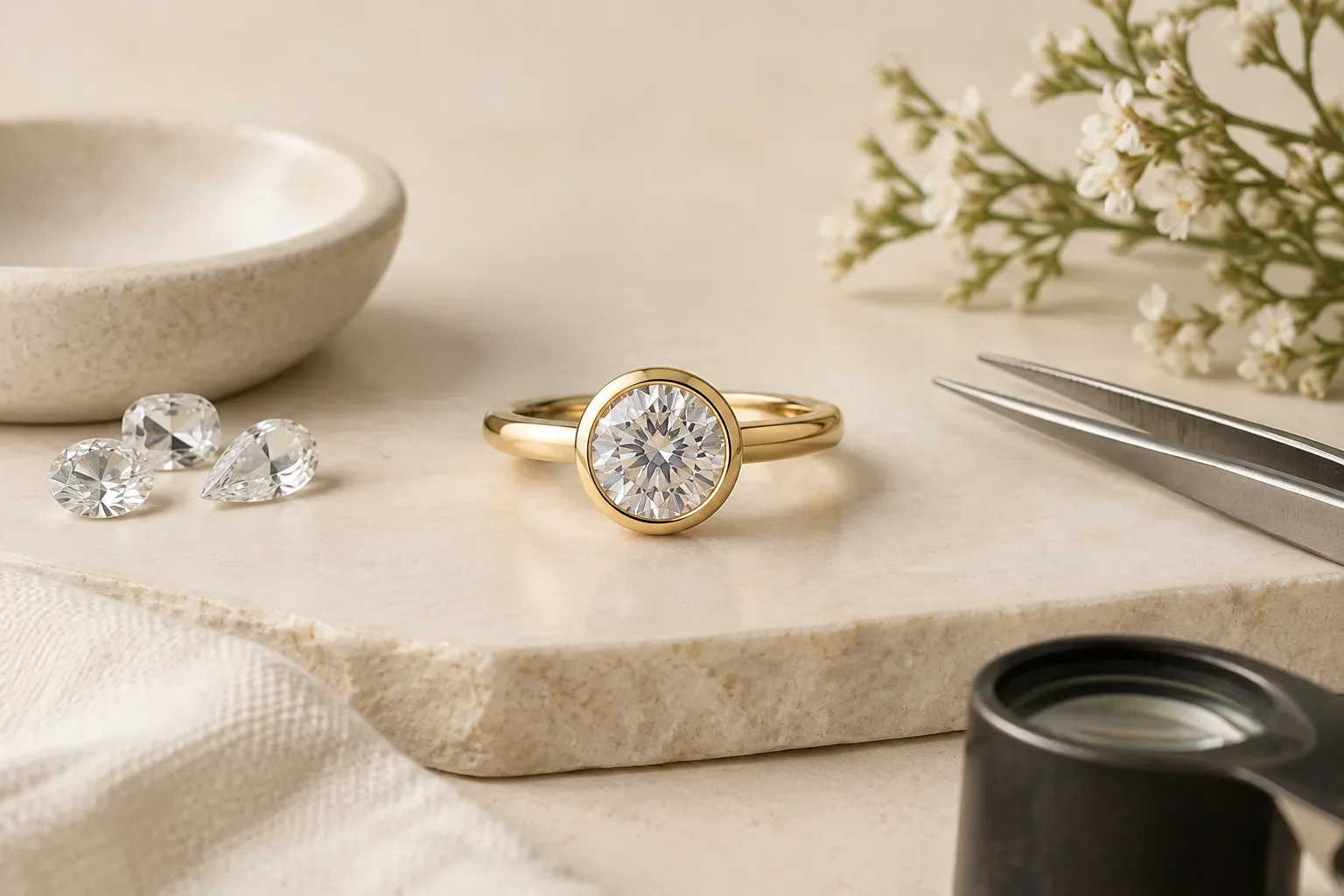
A bezel setting engagement ring is one in which the gemstone is surrounded and held by a metal rim; choose it for security, clean lines, and low snag risk, but expect a visual size trade-off and possible resizing complexity. This guide gives decision criteria, care advice, what you can verify without a laboratory, and when to consult a qualified jeweler or gemological lab.
What a bezel setting is, simply defined
In jewelry terms a bezel is a metal rim that holds a gemstone in place by surrounding its girdle or sides. Variations include full bezels that encircle the stone completely, half or partial bezels that cover part of the girdle, and low-profile or flush bezels that sit close to the finger for a sleeker look. Designers use bezels on diamonds and colored gemstones and in ring heads, pendants, and rings for both aesthetics and protection.
Historical evidence and what the approved sources say
The four approved sources for this article focus on contemporary market demand, consumer protections, and gem treatment issues rather than primary historical research about bezel origins. Because none of these sources offers a detailed, dated history of bezel settings, this guide does not assert a precise archaeological timeline or attribute the bezel to a particular ancient culture. For readers who want specific historical attributions and exact periods, consult museum catalogs, academic jewelry history publications, or specialist conservators who cite primary archaeological or archival evidence.
Documented historical meanings versus modern personal interpretations
When an object has a documented historical meaning, that meaning appears in primary sources, catalogs, inscriptions, or scholarly analysis. The approved sources do not provide evidence that bezel settings carried a consistent symbolic meaning across a particular historical culture or period. Modern uses of bezel-set engagement rings, however, carry personal and stylistic meanings for wearers: many choose bezels to signal practicality, minimalist taste, or an emphasis on durability and everyday wearability rather than a claimed historical symbolism. Keep clear the difference between documented historical claims and modern personal interpretation when you read descriptions or marketing copy.
How bezel settings appear in engagement rings and other jewelry
Designers use bezel settings in a wide range of jewelry, from single-stone solitaire engagement rings to multi-stone bands and pendants. In engagement rings, full bezels create a smooth outline around the center stone and are common with cabochons, ovals, and cushions because the rim highlights shape while protecting edges. Partial or open bezels reveal more of the pavilion and table and can make faceted diamonds sparkle more. Jewelers also use flush or gypsy bezels, where the stone sits level with the shank, for low-profile designs favored by people who work with their hands or prefer minimal snag risk.
Pros and cons — practical trade-offs
Pros: Bezel settings offer excellent security for stones and reduce the risk of chipping and snagging by covering the edges with metal. They can be easier to clean for everyday wearers because there are fewer exposed edges to trap dirt. Bezeled rings often suit active lifestyles and can be a good option for non-traditional or gender-neutral styling, matching current demand trends emphasizing craftsmanship and versatility reported by Jewelers Mutual in 2026.
Cons: A fully enclosing bezel can make a gemstone look smaller than a similar stone in a prong setting because the metal rim hides part of the visible area. Bezels can interfere with light return on faceted gems if they hide portions of the pavilion or girdle, so diamonds may show less brilliance if the bezel is heavy. Some bezel constructions, especially when paired with intricate shanks, make resizing more complex or expensive because the metal rim and setting structure must be altered carefully to preserve the stone’s security.
Who a bezel setting suits
A bezel setting suits someone who prioritizes durability, low maintenance, and a contemporary or minimalist look. It is particularly appropriate for people with active jobs, parents, athletes, or anyone who wants a ring that resists catching on clothing. Jewelers Mutual’s 2026 trend overview notes increased interest in versatility and gender-neutral styling, which aligns with bezel designs that read as modern and practical. Bezels also work well with colored gemstones and cabochons, which respond well to a protective rim.
Gemstone considerations: treatments, durability, and visibility
Gemstone choice interacts with bezel decisions. Hard stones such as diamonds and sapphires tolerate bezel settings well; softer or treated gems may need extra care. The Gemological Institute of America emphasizes that treatments and detectability affect care and durability of stones. Buyers should ask whether a stone has been treated, how permanent the treatment is, and whether the treatment affects durability or cleaning methods. Some treated stones can be damaged by heat, steam, or ultrasonic cleaners, so plan care accordingly.
What you can and cannot verify without a qualified jeweler or lab
You can verify a number of practical details yourself before purchase: the metal type and hallmark stamped on the ring, the overall carat weight and finger size, a return or repair policy, and whether the seller provides a grading report or treatment disclosure. The Federal Trade Commission requires clear seller disclosures about natural versus lab-created materials, treatments, and imitations, so ask for written confirmation. What you cannot reliably verify without expert help includes undetected treatments, specific origin claims, or subtle enhancements; for those you need a qualified jeweler’s inspection or a gemological laboratory report.
Selection checklist and questions to ask sellers
Before buying, ask the seller whether the bezel is full, partial, or flush; whether the ring has been sized or is easily resizable; what metal and hallmark are used; whether the stone is natural, lab-grown, or treated; and whether the seller provides a grading report or independent appraisal. Request written disclosure on treatments and on returns, warranty, and repair options. If the stone is a diamond and you want a detailed assessment of cut and light performance, ask for a recognized laboratory report and, if needed, an independent check from a qualified jeweler.
Care and maintenance for bezel-set rings
For everyday cleaning, use a soft brush, mild soap, and warm water to remove dirt from the exposed edges and the seat where the bezel meets the stone. Avoid steam or ultrasonic cleaners if the stone has treatments that could be affected; consult the seller’s disclosure or the Gemological Institute of America guidance on treatments. Inspect the bezel periodically for loose metal, nicks, or a gap between the rim and the stone; have a professional jeweler tighten or repair the bezel if you see movement or damage.
Practical gifting and proposal guidance
When gifting a bezel-set engagement ring, consider the recipient’s daily activities, stylistic preferences, and resizing needs. If size is uncertain, choose a reputable jeweler with a flexible return or resizing policy. Communicate clearly about materials and any laboratory reports so the recipient has the documentation needed for insurance. Gift considerations should include the wearer’s comfort with a lower-profile ring: propose with a ring style that matches their lifestyle rather than assuming a bezel is the safest choice for everyone.
When to consult a qualified jeweler or gemological laboratory
Consult a qualified jeweler if you need an expert opinion on resizing feasibility, bezel repair, or confirmation that a bezel sits correctly and securely. Seek a gemological laboratory report when you require definitive answers about a stone’s identity, treatment status, or grading that affects value. The FTC guidance underscores the importance of written disclosures for treated, lab-created, or imitation materials, and the GIA notes that detection and disclosure of treatments can require specialized testing.
Final decision framework
Choose a bezel-set engagement ring when your priority list ranks security, low snag risk, and a clean, modern look above maximum apparent size or maximum brilliance. Ask specific verification questions, insist on written treatment and origin disclosures, and preserve receipts and reports for insurance. When in doubt about a stone’s treatment history or a seller’s claim, rely on a qualified jeweler or a gemological laboratory to provide definitive answers.
Frequently asked questions
Does a bezel setting make a diamond look smaller?
A full bezel adds a metal rim that can hide part of a stone’s visible surface, so a diamond may appear smaller compared with a similar stone in a light-exposing prong setting. Partial or open bezels reveal more of the table and can reduce that effect.
Are bezel-set rings more secure than prong settings?
Yes. By surrounding the girdle with metal a bezel offers strong protection and reduces the chance of snagging or chipping. However, proper setting construction and regular inspection by a jeweler are still important to prevent loosening over time.
Can a bezel-set ring be resized?
Many bezel-set rings can be resized, but the bezel construction or integrated design elements may complicate or increase the cost of resizing. Ask a qualified jeweler to assess resizing feasibility before purchase if size is uncertain.
How do treatments affect bezel-set gemstones?
Some gemstone treatments affect durability and cleaning options. The Gemological Institute of America advises that treated stones may need special care; avoid heat, steam, or ultrasonic cleaning if a treatment is heat-sensitive or otherwise vulnerable. Ask the seller for written treatment disclosures.
What should I ask the seller before buying a bezel engagement ring?
Request written details on metal type and hallmark, whether the bezel is full or partial, the stone’s identity (natural or lab-grown), any treatments, laboratory reports or appraisals, and the seller’s return, repair, and warranty policies. The FTC recommends written disclosures for treated or lab-created materials.
When should I get a laboratory report?
Obtain a gemological laboratory report when you need definitive verification of a stone’s identity, treatment history, or graded attributes that affect value. For diamonds, a reputable lab report helps verify grade claims; for treated or rare colored stones, lab testing clarifies treatment status and origin claims.
Sources and further reading
- Imaginaire Digital — Imaginaire Digital
- Jewelers Mutual — Jewelers Mutual
- Gemological Institute of America — Gemological Institute of America
- Federal Trade Commission — Federal Trade Commission