Meaning at a glance
This article gives an evidence-led checklist for buying a solitaire engagement ring: define the setting, list decision criteria (stone origin, treatment, certification, metal, setting security, sizing, return and insurance policies), explain practical trade-offs and care, and state clearly what buyers cannot verify without a qualified jeweler or gemological laboratory.
Concise direct answer
A practical solitaire setting engagement ring checklist focuses on five priorities: confirm the stone's identity and documented disclosures, verify certification or written guarantees, check setting security and metal purity, understand return/repair/insurance terms, and plan routine care. Use written seller disclosures and independent certification when possible, and accept that definitive answers about treatments or exact grading require a qualified jeweler or a gemological laboratory.
What we mean by 'solitaire setting' and why it matters
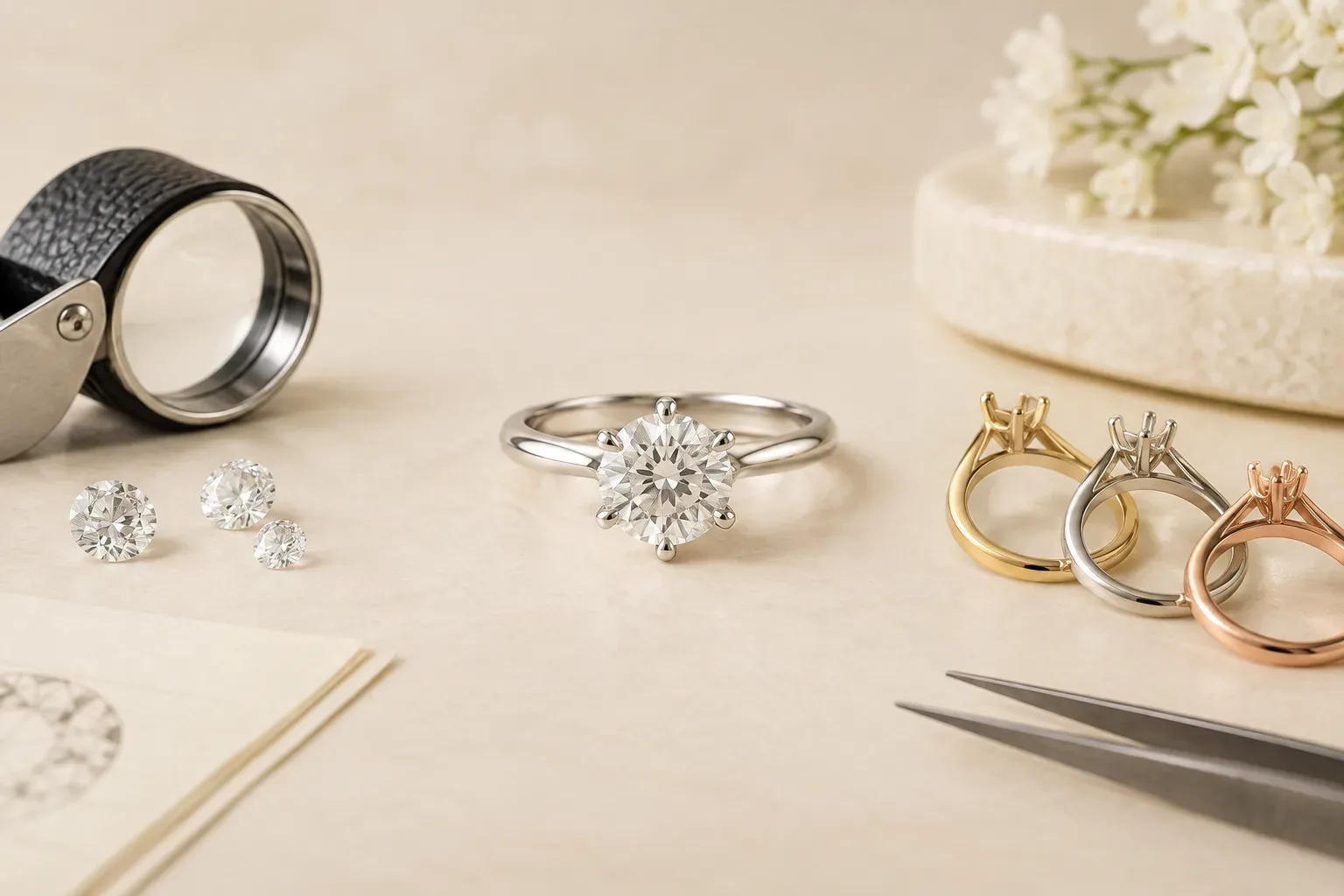
In jewelry practice, a 'solitaire setting' refers to a single prominent gemstone mounted by itself rather than surrounded by side-stones or a halo. The most common solitaire for engagement rings is a single center diamond set in prongs, bezel, or other solitary mounts. The simplicity emphasizes the center stone’s size, cut, and fire, and influences every downstream choice: metal, prong style, stone profile, and how the ring wears with a wedding band.
Historical evidence and what the approved sources can and cannot tell us
The material set provided for this piece does not include primary historical studies on the origin or cultural meanings of the solitaire setting, so I cannot assert a precise cultural or period origin from these sources. None of the approved references here (Imaginaire Digital, Jewelers Mutual, Gemological Institute of America, Federal Trade Commission) supply archaeological or social‑history claims about the solitaire motif’s beginnings, and therefore no historically documented cultural meanings can be presented from them.
Because of that gap in this evidence set, any statement about ancient or specific cultural origins would be speculation rather than an evidence-led claim. Readers wanting a detailed cultural or chronological history of solitaire rings should consult dedicated jewellery history texts, museum catalogues, or academic publications outside the sources allowed for this article.
Documented historical meanings versus modern personal interpretations
With no historical evidence in our approved sources for specific cultural meanings of the solitaire, there are no documented historical symbolic claims to record here. By contrast, modern interpretations are plentiful and personal: many shoppers and designers treat a solitaire as a symbol of singular commitment or minimalism, and current industry reporting shows demand for clean, versatile styles.
The distinction matters. Documented historical meanings require verifiable references to a culture and period; modern personal meanings reflect contemporary tastes and individual intent. Treat the solitaire’s symbolism as personal rather than universal unless you can cite a specific historical source.
How the solitaire setting appears in jewelry
Solitaire settings appear in multiple technical styles: four- or six-prong mounts that lift the stone to maximize light, full bezels that rim the gem for protection, and variations such as cathedral or low-profile shanks that change how the ring stacks with other bands. Jewelers use solitaires with diamonds and with colored gemstones depending on the effect the wearer wants.
Industry trend reports highlight that engagement buyers now favor versatility and modern styling. Imaginaire Digital’s search insights and Jewelers Mutual’s trend overview indicate strong consumer interest in clean solitaire silhouettes, colored gemstones at the center, and gender-neutral approaches that let solitaires pair easily with other rings or stacked jewelry.
The evidence‑led checklist: questions to ask the seller before you buy
1) What exactly is the center stone? Ask for a written description that uses plain terms: natural, lab‑created, treated, or imitation. The Federal Trade Commission emphasizes the need for clear distinctions among natural, lab-created, treated, cultured, and imitation materials and for written seller disclosures.
2) Is there a laboratory report or certification? For diamonds and many colored gems, an independent lab report provides objective details about identity and attributes. If the seller claims a report, request to see the actual document and check the issuing laboratory’s name.
3) Are there any treatments or enhancements? The Gemological Institute of America notes that treatments, disclosure, detectability, and durability create distinct consumer questions for gemstones. Ask whether the stone has undergone heating, irradiation, fracture-filling, high-pressure high-temperature (HPHT) treatment, or any other enhancement and whether such treatments are disclosed in writing.
4) What are the metal type and purity hallmarks? Confirm the metal (e.g., 14K yellow gold, 18K white gold, platinum 950) and ask to see hallmarks or assay documentation where available.
5) How secure is the setting? Ask how many prongs there are, whether the prongs are reinforced, and whether the ring is intended for everyday wear. Request close-up photographs or a chance to inspect the prongs and bezel seats in person.
6) What are the return, resizing, and repair policies? Written return and resizing policies protect you if the ring does not fit or if stones loosen. Ask about turnaround time and costs for common repairs.
7) Is insurance or appraisal available? Jewelers Mutual and other trade sources endorse insurance and routine inspection. Ask whether the retailer offers insurance or a current appraisal for replacement value and whether they will provide documentation suitable for an insurer.
8) What is the warranty or service plan? Find out whether routine maintenance such as prong retipping, tightening, and polishing is included and for how long.
9) How does the ring pair with a wedding band? If you plan to wear a band alongside the solitaire, ask about low-profile options or bespoke adjustments to ensure they sit well together.
10) Can I see the stone under magnification? A close inspection helps you evaluate visible inclusions or chips. Some features require a professional to interpret properly, so take note of what you can see and ask for professional verification when in doubt.
Practical trade‑offs to weigh
Solitaire rings maximize focus on the center stone, so you may pay more for a higher-grade gem rather than for multiple smaller stones. Solitaires are typically easier to clean and less likely to snag than intricate settings, but single prongs expose the stone and require periodic inspection. Bezel solitaires protect the girdle better than prongs but reduce the light return and make the stone appear slightly smaller.
If you want the visual impact of size at lower cost, concentric settings (halos or side stones) often make a center stone appear larger, but they add complexity and maintenance. Jewelers Mutual’s materials on modern trends also remind buyers that stacking and versatility are current priorities; a low-profile solitaire can be easier to stack with other bands for a curated look.
Care, inspection and what requires professional verification
Routine care for a solitaire includes gentle cleaning with mild soap and warm water, soft brushes for debris under the stone, avoiding harsh chemicals, and removing the ring for heavy manual work. Most trade sources advise periodic professional inspections to check prongs and settings because wear can loosen the center stone.
There are limits to what a shopper can verify at point of sale. The FTC advises that written disclosure is necessary for distinctions such as natural versus lab-created or treated stones, and the GIA notes that detectability and treatment disclosure are technical matters. Definitive identification of treatments, origin, and exact grading typically requires a qualified jeweler’s instruments or an accredited gemological laboratory.
Selection and gifting guidance — practical and respectful
When choosing or gifting a solitaire, prioritize documented facts first (certification, disclosure, warranty), then consider the recipient’s lifestyle and style preferences: do they prefer low profile or high-set rings, warm or cool metals, minimal or statement looks? For surprises, get sizing guidance from a trusted friend and confirm the seller’s return and resizing terms in writing.
Respect cultural and personal meanings. As noted above, modern interpretations vary; do not assume a solitaire conveys the same symbolism across cultures or individuals. If family or cultural traditions matter, ask early about expectations so your choice is both beautiful and considerate. For broader advice on gift meaning, see our related guides on choosing meaningful jewelry and symbols for new beginnings in the internal links below.
A short closing checklist to bring to the store or to use online
Bring or request: written disclosure of stone identity and treatments; any laboratory certificate; metal type and hallmark information; written return/resizing/repair policy; warranty/service details; insurance or appraisal options; close-up photographs or a chance for magnified inspection; and a clear retail invoice listing all specifications. If the seller cannot provide clear documentation about identity or treatments, seek another seller or an independent lab report before purchase.
Frequently asked questions
What documents should I insist on when buying a solitaire engagement ring?
Ask for written disclosure of the stone’s identity (natural, lab-created, treated, or imitation), any treatment details, and any laboratory certification or report. Also get a written return/resizing/repair policy and details about warranty or service plans.
Can I tell if a stone has been treated during a store visit?
You can sometimes see signs of treatment or unusual appearance, but definitive identification of many treatments usually requires instruments and expertise at a qualified gemological laboratory. The FTC stresses the need for written disclosure from the seller.
How often should I have a solitaire inspected?
Have settings and prongs professionally inspected at least once a year or sooner if the ring takes a knock; insurers and jewelers often recommend routine checks to prevent loss.
Is a solitaire setting better for everyday wear than a halo or side-stone ring?
Solitaire settings are often simpler to clean and less likely to snag, and a protective bezel offers more security than prongs, but simple prong solitaires require regular inspection. The best choice depends on lifestyle, metal and setting type.
Do I need an independent lab report for a diamond solitaire?
An independent laboratory report gives objective details about a diamond’s identity and attributes and is strongly recommended when purchasing a high-value stone; it is the primary way to confirm grading claims beyond seller documentation.
Sources and further reading
- Imaginaire Digital — Imaginaire Digital
- Jewelers Mutual — Jewelers Mutual
- Gemological Institute of America — Gemological Institute of America
- Federal Trade Commission — Federal Trade Commission