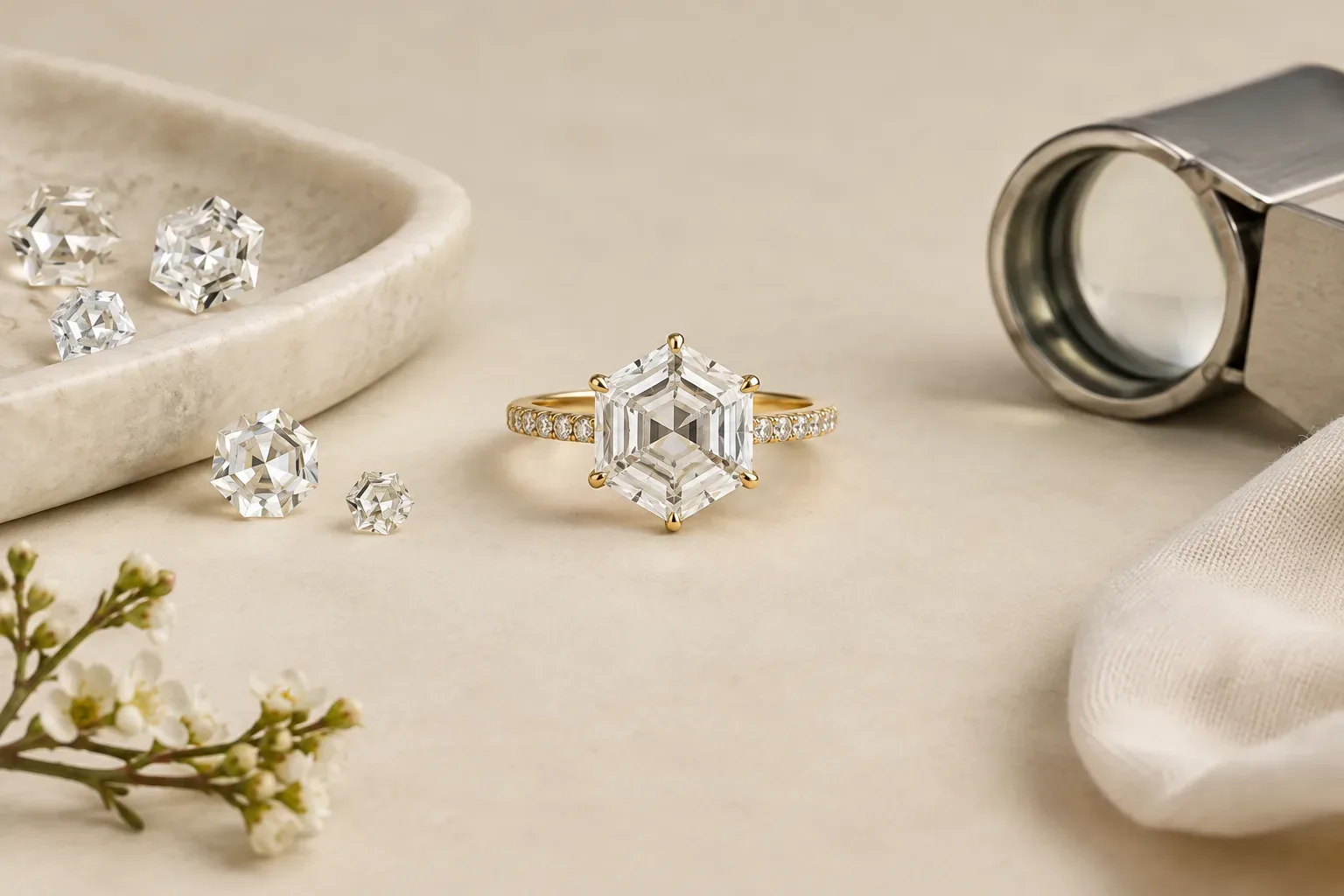
Meaning at a glance
A hexagon cut engagement ring is a contemporary design choice best understood as a modern facet shape and motif rather than a long-documented historical tradition; when considering one, weigh its visual uniqueness and setting needs, confirm material and treatment disclosures with written documentation, follow standard gemstone care, and consult a qualified jeweler or gemological laboratory for any authenticity or durability questions.
Quick answer
A hexagon cut engagement ring is primarily a modern stylistic choice: it refers to a gemstone cut or setting silhouette that emphasizes six-sided geometry. It suits shoppers who want a geometric, contemporary look and who accept slightly different trade-offs in sparkle, setting security, and stone sourcing compared with classic round or oval cuts. For responsible buying, insist on written disclosures for whether the stone is natural, lab-created or treated and get any important identity or durability questions checked by a qualified jeweler or a gemological laboratory (Federal Trade Commission; Gemological Institute of America).
What 'hexagon cut' means today
The phrase 'hexagon cut' is used in two related ways. First, it can describe a faceting pattern on a transparent gemstone where the outline or the crown and pavilion arrangement produces a six-sided or hexagonal outline. Second, it can describe the overall silhouette of a stone or setting shaped into a hexagon—even when the internal facet pattern is not strictly hexagonal. Because the terminology is not standardized in the same way as 'round brilliant' or 'princess', different vendors may use 'hexagon' to mean slightly different things.
Historical evidence and cultural context
Within the approved evidence for this guide there is no primary historical source that documents a specific, continuous cultural tradition of hexagon-cut gemstones tied to a named period or culture. Modern trade and design reporting treat hexagonal and other geometric cuts as contemporary design choices rather than revived historic cuts (Jewelers Mutual, 2026).
When researching historical or symbolic claims, rely on explicit documentary sources. The absence of a named historical usage in the professional and regulatory sources used here means you should treat hexagon cuts as stylistic developments of recent decades rather than as artifacts with a single traceable cultural origin (Jewelers Mutual; Imaginaire Digital).
Documented historical meanings versus modern personal interpretation
Documented historical meanings are different from modern personal interpretation. The approved sources used for this article do not attribute a specific historic symbolic meaning to the hexagon cut; therefore no historically documented cultural symbolism can responsibly be claimed for it here. If other historical sources or cultural studies exist outside the evidence used for this guide, they should be checked directly.
Modern wearers and designers, however, frequently ascribe meanings to geometric shapes. A hexagon may be chosen today for its associations with geometry, balance, or minimal modern design aesthetics. Those associations are modern, personal interpretations and not proven historical meanings in the sources used for this guide (Jewelers Mutual; Imaginaire Digital).
How the hexagon motif and cut appear in jewelry
In contemporary jewelry a hexagon appears in three common ways: as the overall outline of a faceted gemstone, as the faceting pattern that emphasizes sixfold symmetry, and as a motif in settings or metalwork that complements another central stone. Designers may pair a hexagon-cut center stone with simple bezel settings, geometric halos or openwork bands to keep the shape legible.
Beyond center stones, hexagonal motifs also appear in accent stones, in pavé layouts that form honeycomb-like patterns, and in metalwork inspired by architecture and modernist geometry. Trade reporting notes a broader market interest in fluid forms, modern stacking and gender-neutral styling—contexts where geometric cuts, including hexagonal shapes, are increasingly used (Jewelers Mutual, 2026; Imaginaire Digital, 2026).
Pros: why shoppers choose a hexagon cut
Visual uniqueness and contemporary style are the principal attractions. Hexagon cuts offer a distinct geometric silhouette that stands apart from traditional round and oval shapes and aligns with modern minimalist or architectural tastes (Jewelers Mutual).
A hexagon outline can also feel versatile in gender-neutral or alternative engagement-ring styling, fitting well with stacking rings and band-forward looks that are currently in demand (Jewelers Mutual; Imaginaire Digital). Finally, bezel and low-profile settings that protect angular stones can make hexagon designs practical for everyday wear if well executed.
Cons and practical trade-offs
Because hexagon cuts are less standardized than classic cuts, variations in faceting, weight distribution and brilliance are common. That means two hexagon-cut stones can look quite different in terms of sparkle and spread for the same carat weight, so visual comparison matters.
The six angles and corners can concentrate stress in ways a rounded shape does not, so setting and mounting quality are important for durability. Some settings that show the stone’s edges may expose those corners to knocks unless the design deliberately protects them with bezel walls or secure prongs.
Finally, secondary-market liquidity and resale pricing can be more variable than for standard cuts. The market preference for certain shapes affects demand, and trade reports show that consumer demand centers shift over time (Imaginaire Digital; Jewelers Mutual).
Choosing a hexagon cut: practical decision criteria
Define your priority: visual impact, durability, or resale flexibility. If visual uniqueness is primary, examine multiple stones in person to compare facet patterns and light return. Photographs and videos help, but stones should be inspected under consistent lighting when possible.
Ask for precise seller information. The Federal Trade Commission requires clear distinctions among natural, lab-created, treated and imitation materials and written seller disclosures. Request written confirmation of whether the stone is natural, lab-grown or treated, and ask for any available grading reports or treatment disclosure (Federal Trade Commission).
Because the hexagon label is less standardized, ask the seller to describe exactly what they mean by 'hexagon cut' and to show exact dimensions, depth and table percentages when available. These numbers help a qualified jeweler or laboratory evaluate cut quality, light performance and stability.
Settings, metals, and gemstone options
Hexagon cuts work in a variety of settings, but protective designs such as full or partial bezel settings, or prongs placed at flatter facets rather than sharp corners, can reduce the risk of chipping. Low-profile settings can also help if the wearer uses their hands a lot.
Gemstone choice matters: harder materials like diamonds and sapphires will naturally endure daily wear better than softer stones. The Gemological Institute of America highlights how treatments and durability vary by material and how treatment disclosure affects care needs. Confirm any treatments and follow care guidance appropriate to the specific gemstone (Gemological Institute of America).
Metal choice should consider both aesthetics and protection: platinum and high-karat gold are common choices. If you plan to frequently resize the ring, discuss how the setting style and metal will be altered during resizing with your jeweler.
Care, treatments and limits on verification
Routine care for hexagon-cut stones follows the same principles as other faceted gems: avoid hard knocks, store separately to prevent edge contact, and clean according to the stone’s hardness and treatment status. For treated or porous stones, gentle cleaning and professional guidance are recommended (Gemological Institute of America).
There are clear limits on what a shopper can verify without specialist help. You cannot conclusively determine whether a gemstone is natural, lab-grown, or certain types of treated material by sight alone. The Federal Trade Commission advises obtaining written disclosures and, when necessary, independent laboratory reports to verify identity, treatment and durability characteristics (Federal Trade Commission).
If authenticity, origin, treatments or durability are important to you, budget for a grading report from a qualified gemological laboratory or an appraisal from a trusted professional. A qualified jeweler can also advise on proper protective settings for a particular stone.
Gifting, symbolism and respectful selection
When gifting a hexagon cut engagement ring, be mindful that the cut’s meaning is primarily personal and stylistic rather than a historically documented symbol. Communicate your intent: explain why you chose the shape and how it fits the recipient’s style. For many recipients, understanding the design reasoning adds value and emotional meaning.
Respect cultural preferences. Because hexagon cuts are contemporary and not a universal symbol, check whether the recipient or their family has specific preferences for ring shapes, traditional motifs or material sources. If provenance or ethical sourcing matters, ask sellers for policies and documentation; trade guidance emphasizes transparency from sellers (Federal Trade Commission; Gemological Institute of America).
A short pre-purchase checklist
Before you buy, see the actual stone in suitable lighting or request detailed photos and videos, insist on written material disclosures (natural vs lab-grown vs treated), get a clear description of the cut and mounting, ask about repair and resizing policies, and consider obtaining an independent lab report for high-value purchases. These steps align with regulatory and industry recommendations and reduce surprises after purchase (Federal Trade Commission; Gemological Institute of America).
Frequently asked questions
What exactly is a hexagon cut?
A hexagon cut generally refers to a gemstone or setting with six-sided geometry, either in the stone’s outline or its faceting. There is no single industry standard for the label, so ask sellers for exact dimensions, facet descriptions and images to understand what they mean by 'hexagon cut'.
Are hexagon cuts durable for everyday wear?
Durability depends on the gemstone material and the setting. Harder stones like diamonds and sapphires resist wear better. Because angular corners can be vulnerable, protective settings such as bezels or well-placed prongs are advisable. Consult a jeweler about mounting choices for daily wear.
How much more or less do hexagon-cut stones cost compared with round cuts?
Price depends on material, carat weight, cut quality and demand. Uncommon shapes can be more variable in price and resale value. Compare similar stones by face-up size and light performance rather than carat weight alone to judge value.
Can I tell if a stone is natural or lab-created just by looking?
No. Visual inspection is not sufficient to reliably distinguish natural from lab-grown stones or certain treated materials. Obtain written seller disclosures and consider an independent laboratory report for conclusive identification (Federal Trade Commission; Gemological Institute of America).
What cleaning and care does a hexagon-cut ring need?
Care follows the gemstone’s specific needs: avoid hard knocks, store separately, and use cleaning methods appropriate to the stone’s hardness and any treatments. If the stone has been treated or is porous, follow specialized cleaning guidance and consult a professional if in doubt (Gemological Institute of America).
Should I get a lab report for a hexagon-cut engagement ring?
For high-value purchases, or when exact identity, treatments or origin matter, a grading report from a recognized gemological laboratory is recommended. It gives you independent verification beyond seller claims and can be essential for insurance and resale.
Who suits a hexagon cut engagement ring?
Hexagon cuts suit people who prefer geometric, contemporary and gender-neutral aesthetics, and who want a distinctive look. They are especially fitting for wearers who like stackable or modern minimalist styling noted as trending in recent market reports (Jewelers Mutual; Imaginaire Digital).
Sources and further reading
- Imaginaire Digital — Imaginaire Digital
- Jewelers Mutual — Jewelers Mutual
- Gemological Institute of America — Gemological Institute of America
- Federal Trade Commission — Federal Trade Commission