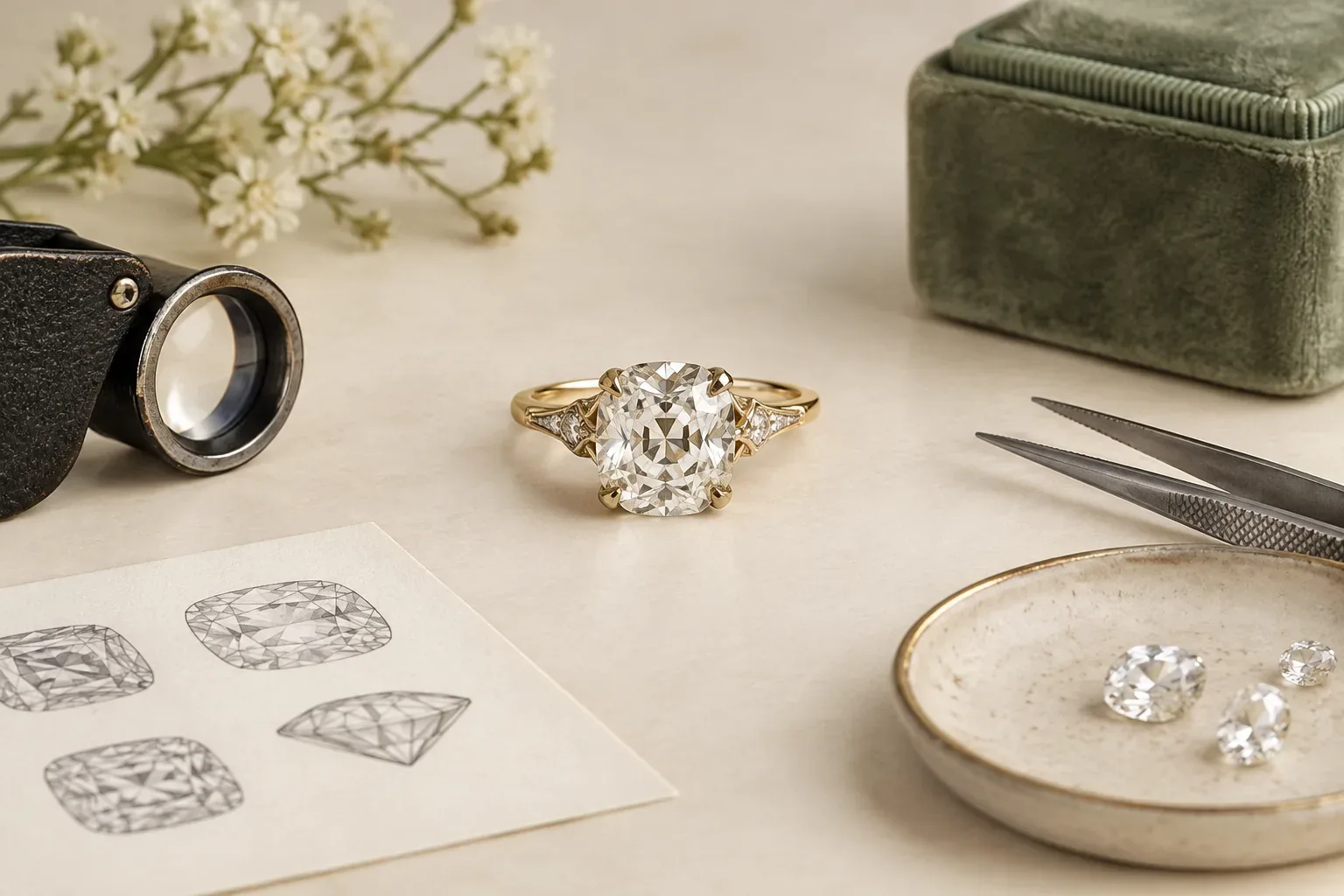
Meaning at a glance
Use a focused checklist asking about certification, treatments, provenance, condition, setting compatibility, and care; understand what sellers must disclose, what a jeweler or lab must confirm, and the practical trade-offs between antique character and modern performance.
Direct answer — what to check, in one line
When buying an Old Mine Cut engagement ring, ask for written identification of the stone (natural vs lab-grown), any gem treatments, a description of the cut and measurements, condition and repair history, provenance or age evidence, a current appraisal or replacement value, and clear seller disclosures—then arrange a qualified jeweler’s inspection or gemological laboratory report to confirm anything beyond basic facts the seller can document.
Why this checklist matters (thesis and limits)
The checklist below answers the practical search intent behind 'Old Mine Cut engagement ring checklist' by mapping the common buying decisions: verifying what you can see and obtain in writing, understanding trade-offs (look vs. brilliance; antique character vs. stability and serviceability), following reliable disclosure rules, and knowing which questions only a qualified jeweler or gem lab can answer. This approach follows consumer-protection principles promoted by the Federal Trade Commission and gemological guidance such as the Gemological Institute of America: sellers should disclose material facts and consumers need lab or expert confirmation for origin and treatments.
What 'Old Mine Cut' means in trade terms and what we can verify
In trade usage, 'Old Mine Cut' is a historical term used to describe a group of antique diamond faceting styles and proportions that differ from modern brilliant cuts. The exact historical provenance and stylistic evolution of that cutting family are the subject of specialized gemological and auction-house research; those detailed primary-historical sources are outside the limited reference set used here, so buyers should treat any specific age-attribution or workshop claim as requireing documentation.
What you can reasonably expect to verify without a laboratory: observable proportions and wear, approximate shape and facet pattern, carat weight, ring measurements (shank size, setting dimensions), and any visible repairs or inclusions. What requires a qualified jeweler or a gemological laboratory report is confirmation of the stone’s natural vs lab-grown status, detection and identification of treatments, and a scientific statement of age or geographic origin.
Historical evidence and cultural context — what to say and what to avoid
Specialist histories attribute ‘antique’ and period-style cuts to broad eras and to changes in cutting technology, but precise cultural attributions (for example, linking a single Old Mine Cut stone to a specific country workshop or decade) require provenance documents and specialist analysis. Because our approved reference materials focus on consumer protection, gem treatment detection and contemporary market trends rather than primary historical scholarship, do not accept precise historical or cultural origin claims from a seller without supporting archival, auction, or lab documentation.
In practice, auction houses and museum catalogs are the usual sources for period-attribution claims. If a seller states a specific period (e.g., Georgian, Victorian), request whatever provenance they have and seek a specialist appraisal that references comparable examples. Treat romantic or storytelling claims about a piece’s culture or famous provenance as marketing unless substantiated.
How Old Mine Cut stones and related traditions appear in rings
Old Mine Cut diamonds and other vintage cuts commonly appear as center stones in cushion-shaped settings, often paired with antique-style halos, cluster settings, or simple solitaires that show the stone’s crown and culet. The aesthetic emphasis is usually on warmth, depth of color, and the irregular, hand-cut character rather than on modern brilliance and precise optical symmetry.
Sellers frequently set Old Mine Cut centers in period-revival shoulders, filigree work, or plain bezels that preserve the stone’s old-world look. Colored gemstones cut in older styles or set alongside Old Mine Cut diamonds are often used to emphasize vintage character. Keep in mind that the setting and mounting affect wearability, resizing options, and conservation needs.
Checklist: concrete questions to ask a seller before you buy
Ask for written documentation: does the ring have a current gem lab report or independent appraisal? If so, request a copy. If not, ask whether the seller will allow a pre-purchase inspection by a qualified jeweler or lab and whether they will accept return if a lab report contradicts the seller’s claims.
Ask about disclosure of treatments and origin: is the diamond natural or lab-grown? Has it been treated (for example, fracture filling, laser drilling, high-temperature annealing)? Federal Trade Commission guidance requires clear disclosure; the Gemological Institute of America explains why treatments and disclosure matter for durability and care.
Ask about condition and repair history: has the stone been recut, re-polished, or repaired? Has the mounting been altered from the original? Are there documented repairs to the shank, prongs, or setting that affect value or durability?
Request exact measurements: carat weight, diameter/length and width, depth, and table size when available. Ask for photographs from multiple angles, including hallmarks or maker’s marks inside the shank.
Ask about certification and testing: will the seller supply or allow testing that confirms the stone’s identity and treatments? Understand that only a qualified gem lab can make conclusive statements about certain treatments and origin.
Ask about insurance and return policy: does the seller provide a recent appraisal or replacement value? What is the return policy if the ring’s identity differs from the listing?
Ask about setting and wearability: can the ring be resized safely, and by how many sizes? Are the mounting materials modern alloys or period metals that may affect resizing and durability?
Practical trade-offs to weigh
Antique character versus optical performance: Old Mine Cut stones often have less modern scintillation and a different light profile compared with modern brilliant cuts. Buyers seeking antique charm accept that the stone’s appearance prioritizes depth and individuality over maximum sparkle.
Value and rarity versus structural risks: older cuts and antique settings can command premium prices for rarity and style, but may also have thin bezels, worn prongs, or prior repairs that affect longevity and increase maintenance needs.
Certification cost versus purchase certainty: obtaining an independent gem lab report or a qualified appraiser adds cost and time, but it reduces the risk of undisclosed treatments or misidentified material. The FTC and GIA materials support the consumer right to know these material facts.
Resizability and modification: vintage settings can be more difficult to resize or convert without compromising historical features. Discuss modifications with a jeweler experienced in period jewelry conservation.
Care guidance and safe handling
Gentle cleaning and inspection: clean the ring with a soft toothbrush and mild soapy water and inspect settings regularly. Many antique settings and older treatments require a gentle approach—avoid aggressive mechanical cleaning unless a jeweler confirms it is safe.
Ultrasonic and steam cleaners: before using ultrasonic or steam cleaners, confirm that the stone has no treatments (for example, fracture-filling) or inclusions that could be exacerbated. The Gemological Institute of America highlights how treatments affect the choice of cleaning methods. When in doubt, seek professional cleaning.
Storage and wear: store antique rings in a stable, separated compartment to avoid abrasion. If you plan to wear the ring daily, ask your jeweler about reinforcing prongs or securing the setting to reduce risk of loss.
Insurance and appraisal updates: obtain a current replacement-value appraisal and update it after any significant repair or resizing. Jewelers Mutual identifies evolving consumer trends that favor craftsmanship and versatility; insuring an antique ring protects both sentimental and material value.
When to involve a qualified jeweler or a gemological laboratory
Bring in a qualified jeweler or request a gemological laboratory report if the purchase hinges on natural vs lab-grown identity, detection of treatments, country of origin claims, or precise dating/provenance. Only laboratory analysis and specialist examination can provide conclusive statements about many of these factors.
If the seller offers a lab report, verify the issuing laboratory’s reputation and ensure the report matches the stone’s measurements. If no report exists, consider delaying purchase until an independent appraisal or lab report is obtained, particularly for high-value pieces.
Practical gifting and selection guidance
Match aesthetic intent to lifestyle: if you or the recipient prioritizes daily wear practicality, choose an Old Mine Cut setting with secure prongs and durable mounting. If the goal is a museum-like display piece for occasional wear, prioritize originality and documented provenance.
Prioritize disclosures when buying for a loved one: insist on written confirmation of natural vs lab-grown stones and full treatment disclosure. Discuss insurance and resizing plans in advance so the ring arrives ready to wear, or provide a temporary sizing alternative with a plan to resize after purchase.
Respect sentimental interpretation: historical meanings are personal and modern. Separate documented facts about the piece from the stories you attach to it. If cultural or historical symbolism matters to the recipient, ask the seller for provenance documentation rather than relying on romantic marketing language.
Final steps before you commit
Obtain written seller disclosures and copies of any reports, photographs, hallmarks, or provenance documents. Arrange independent inspection or a lab report if the purchase price or claimed history justifies it. Confirm return, insurance, and repair policies, and get any resizing or reinforcement agreements in writing.
Frequently asked questions
Can I tell if an Old Mine Cut diamond is natural or lab-grown just by looking?
No. Visual inspection alone cannot reliably distinguish natural from lab-grown diamonds. The Federal Trade Commission advises that sellers must disclose material facts, but only a qualified gemological laboratory can conclusively identify origin. If this distinction matters, request a laboratory report.
Should I get a lab report for every Old Mine Cut ring I consider?
If the stone’s identity, treatment status, or provenance materially affects the purchase price or your confidence, yes. Lab reports add cost but reduce risk. For lower-value purchases, a qualified jeweler appraisal may suffice, but recognize the limits of an appraisal versus a full laboratory analysis.
Are Old Mine Cut rings harder to care for than modern cuts?
They can be. Antique cuts and older settings may have vulnerabilities such as thin prongs, prior repairs, or treatments that make ultrasonic cleaning or steam cleaning inadvisable. The Gemological Institute of America notes that treatments and specific conditions affect cleaning choices—consult a jeweler before using aggressive cleaning methods.
What documentation should I insist on from a seller?
Request written disclosure of whether the stone is natural or lab-grown, any treatments, any available lab reports or appraisals, photographs including hallmarks, a description of repair history, and the seller’s return and insurance policies. The FTC emphasizes clear disclosure for consumer protection.
Can an Old Mine Cut diamond be resized or reset safely?
Often yes, but it depends on the mounting and metal. Period settings may require specialist work to resize without damaging original features. Ask a jeweler experienced with antique jewelry about safe resizing limits and any recommended reinforcement.
Sources and further reading
- Imaginaire Digital — Imaginaire Digital
- Jewelers Mutual — Jewelers Mutual
- Gemological Institute of America — Gemological Institute of America
- Federal Trade Commission — Federal Trade Commission