Meaning at a glance
Old mine cut engagement ring styling is about balancing the vintage cut’s visual spread and height with the wearer’s finger proportions and lifestyle: choose settings and band widths that control how much the stone visually covers the finger, consider low-profile versus dramatic mounts for comfort and layering, verify treatments and origin with qualified labs or jewelers, and follow proven care and disclosure practices when buying or gifting.
What the historical evidence supports (and what it does not)
The approved sources for this article do not provide a detailed primary-history account of the Old Mine Cut’s origins or cultural meanings. That absence means we must not assert precise historical claims beyond what is documented by specialist historical sources, which are not part of the evidence set for this guide. Where a shopper or researcher needs provenance, age or a definitive historical attribution for a cut, verification by an expert is required.
Documented meanings versus modern personal interpretation
Because the listed evidence does not record symbolic meanings attached to the Old Mine Cut across specific cultures or periods, any meaning assigned to such a ring today should be treated as a modern, personal interpretation. Contemporary buyers frequently invest vintage cuts with ideas about romance, craftsmanship, and continuity, but these are personal or market-driven meanings rather than universally documented historical facts.
For context on how consumer sentiment and tastes shape modern meanings, industry reporting notes demand patterns and aesthetic directions that influence how people interpret jewelry today. Imaginaire Digital’s 2026 UK search data shows strong consumer interest in engagement rings and related categories, demonstrating market attention rather than historical symbolism. Jewelers Mutual’s 2026 trends reporting also highlights how contemporary consumers prize craftsmanship, versatility and modern stacking—preferences that shape how a vintage-style Old Mine Cut ring is worn and read socially.
How the Old Mine Cut appears in jewelry and why that matters for coverage
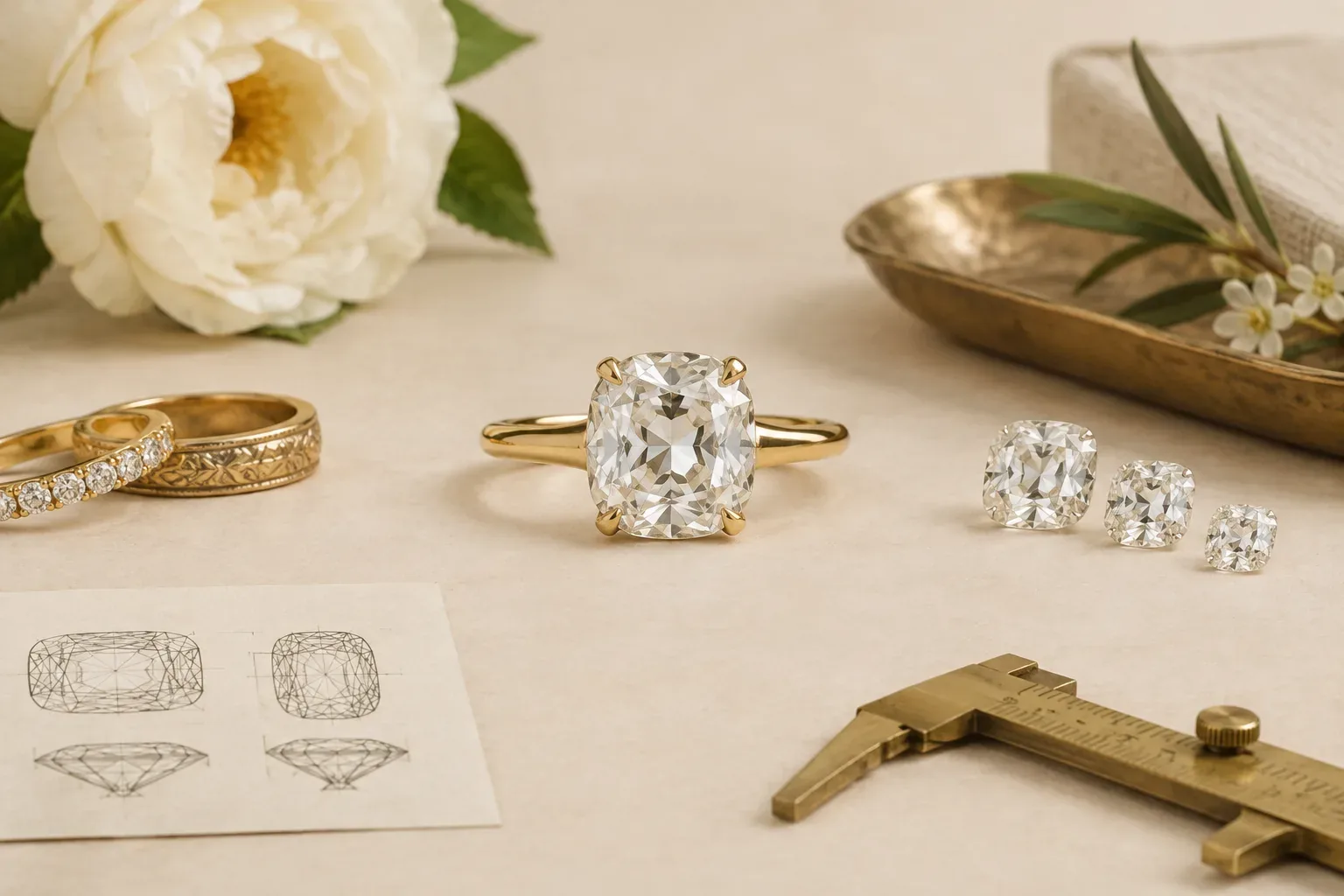
In jewelry design, an Old Mine Cut is used as the center stone choice, and its faceting, table size and crown height influence how much of the finger it visually covers. Designers integrate the cut into several common settings: classic solitaires that emphasize the single stone, low-profile bezels that reduce height and protect edges, halo mounts that increase perceived size, and multi-stone shoulders or side stones that spread visual weight across the hand.
The choice of metal, band width, and whether the ring is paired with a wedding band or stacking rings also affects apparent coverage. Industry trend reporting for 2026 emphasizes fluid forms and stacking as significant consumer preferences, which means many buyers will choose ring profiles that accommodate other rings and lifestyle needs. Those trend signals inform how contemporary jewelers present vintage cuts in updated settings to meet modern wearability and style expectations.
Finger proportion and visual coverage: practical guidance
Begin by assessing finger proportions. Narrow fingers can be visually balanced by a modestly wider band or a halo that increases perceived stone size without requiring larger finger coverage. Conversely, broader fingers or shorter fingers may call for a slightly larger table or longer-shaped settings to achieve a balanced silhouette. The goal is visual harmony between stone size, setting height and band width rather than an exact numerical rule.
If you prefer a ring that reads as vintage, retain elements like a raised crown or higher prongs, but understand these increase vertical profile and can catch on clothing or be less comfortable for everyday wear. Low-profile bezels and secure prongs reduce snag risk and sit closer to the finger, which is helpful for active lifestyles or when the ring will be stacked with other bands. Jewelers Mutual’s trends reporting underscores how contemporary buyers trade between craftsmanship and everyday versatility when selecting engagement rings.
Halo settings enlarge apparent coverage without drastically increasing carat weight, useful for those seeking finger presence while keeping center-stone size modest. Conversely, clean solitaires emphasize the unique cut and faceting of an Old Mine Cut and often require a carefully chosen band width to avoid the stone appearing too small or too dominant on the finger.
Proportion decision criteria and practical trade-offs
Decide first on lifestyle priorities: daily comfort and stacking compatibility favor lower profiles and medium-width bands, while visual impact and period-accurate silhouettes favor higher crowns and accentuated prong settings. These are trade-offs: higher crowns improve vintage character and light return but reduce comfort and increase risk of knocks; lower profiles enhance durability and comfort but alter the historically accurate look.
Next, consider hand and finger metrics. A proportionate design does not require precise measurements in most retail settings, but jewellers will use finger circumference, knuckle size and ring size to recommend band widths and setting heights that preserve balance. If you cannot visit a jeweler in person, ask the seller for mounting dimensions and clear photos of the ring on different hand sizes to judge coverage.
Finally, account for pairing. If the engagement ring will be worn with a wedding band or multiple stacking rings, select a mounting that allows flush or near-flush pairing and choose a band width that complements the stack rather than competes with the center stone.
Selection and gifting guidance with respect
When selecting or gifting an Old Mine Cut engagement ring, be explicit about the recipient’s style preferences, comfort needs and daily activities. If you are uncertain about the recipient’s finger width or the desire for a vintage silhouette, choose options that offer return or resizing policies and request a setting that can be adjusted or modified later. Clear written disclosure and flexible return terms protect both giver and recipient.
Ask the seller for specific measurements: table diameter, crown height, setting profile, and band width. If these are unavailable, request close-up photographs and dimensions or a mockup from the jeweler. Because modern consumer research emphasizes craftsmanship and versatility as priorities, selecting a ring that balances historical appearance with comfortable daily wear usually gives the broadest satisfaction across different personal tastes.
Care, treatments, and what you can’t verify without experts
For safe care and reliable buying decisions, rely on the Gemological Institute of America’s guidance that treatments, disclosure and detectability are material consumer concerns. Always ask whether the center stone has undergone treatments or is lab-created; those details affect long-term care and value. The GIA’s resources explain that some treatments change care requirements and that proper disclosure is both ethical and important to buyers.
The Federal Trade Commission’s consumer guidance makes clear that determining whether a gemstone is natural, lab-created, treated, or an imitation typically requires written seller disclosure and, for definitive claims, a gemological laboratory report. Visual inspection alone cannot reliably verify origin or some treatments. If origin, enhancement history or exact grading matters to you or the recipient, obtain a report from a recognized laboratory or buy from sellers who provide certified documentation.
For everyday care, a lower-profile setting reduces the chance of knocks and settings loosening. Clean settings regularly with a soft brush and mild soapy water, and avoid ultrasonic cleaners if the stone’s treatment or integrity is unknown. If you suspect a treatment or unusual fragility, seek professional advice before using chemical cleaners or ultrasonic methods.
A short decision checklist before purchase or gifting
Request measurements for table size, crown height and band width and compare those numbers to photographs of the ring on hands or finger models. Ask the seller whether the setting is compatible with wedding bands or stacking rings and whether the mount can be modified later. Obtain clear written disclosure of any treatments, origin and whether a laboratory report is included.
If provenance, natural origin or grading is important, insist on a lab report from a recognized gemological laboratory and understand that some features cannot be confirmed without such analysis. For lifestyle-heavy wearers, prioritize lower profiles and sturdy settings. For recipients who prioritize historical authenticity, accept the trade-offs of higher crowns and more delicate mounts and plan for occasional professional maintenance.
Final notes on modern demand and interpretation
Market signals underline why buyers encounter many hybrid options today: Imaginaire Digital shows robust interest in engagement rings in 2026 search data, and Jewelers Mutual documents that modern consumers value fluid forms, stacking, colored gemstones and craftsmanship. These market trends explain why jewelers frequently re-interpret Old Mine Cut stones in contemporary, wearable settings that respect vintage character while addressing modern demands for versatility and durability.
Respect personal meaning: because historical symbolism for the Old Mine Cut is not established by the approved evidence set, allow the recipient’s preferences and your relationship’s story to shape the ring’s meaning rather than assigning a universal historical interpretation.
Frequently asked questions
Will an Old Mine Cut stone visually cover more or less finger area than a modern round cut of the same carat weight?
Because the Old Mine Cut’s faceting and table proportions differ from modern rounds, it can appear larger or smaller depending on table size and setting. Visual coverage depends on the stone’s table diameter, crown height and the chosen setting. Definitive comparison for a specific stone requires measurements or photos and, if necessary, consultation with a jeweler.
Is a halo a good choice to increase finger coverage for an Old Mine Cut?
Yes, a halo increases perceived size and finger coverage while keeping center-stone carat weight lower, but it changes the ring’s silhouette and can alter the vintage look. If you prioritize daily wear and minimal snagging, select a halo that sits relatively low or choose a protective setting.
How can I verify whether an Old Mine Cut diamond is treated, lab-created, or natural?
You cannot reliably verify origin or treatment by sight alone. The Federal Trade Commission advises seeking written disclosure, and the Gemological Institute of America explains that detection and disclosure of treatments are specialized tasks. For authoritative verification, request a report from a recognized gemological laboratory or buy from sellers who include certified documentation.
What setting offers the best balance of vintage look and everyday durability?
A setting that retains vintage cues (prongs or a modest crown) but keeps a moderate profile and secure prongs achieves a middle ground. Bezel settings offer high durability but alter the historic airborne look. Prioritize settings with strong prongs and metal thickness if the wearer leads an active lifestyle.
Can I resize or modify an Old Mine Cut engagement ring later if proportions feel off?
Most rings can be resized or adjusted within reasonable limits, and settings can often be adapted for different bands or profiles. Ask the maker or seller about modification options and costs before purchase to ensure future adjustments are possible.
Sources and further reading
- Imaginaire Digital — Imaginaire Digital
- Jewelers Mutual — Jewelers Mutual
- Gemological Institute of America — Gemological Institute of America
- Federal Trade Commission — Federal Trade Commission