Meaning at a glance
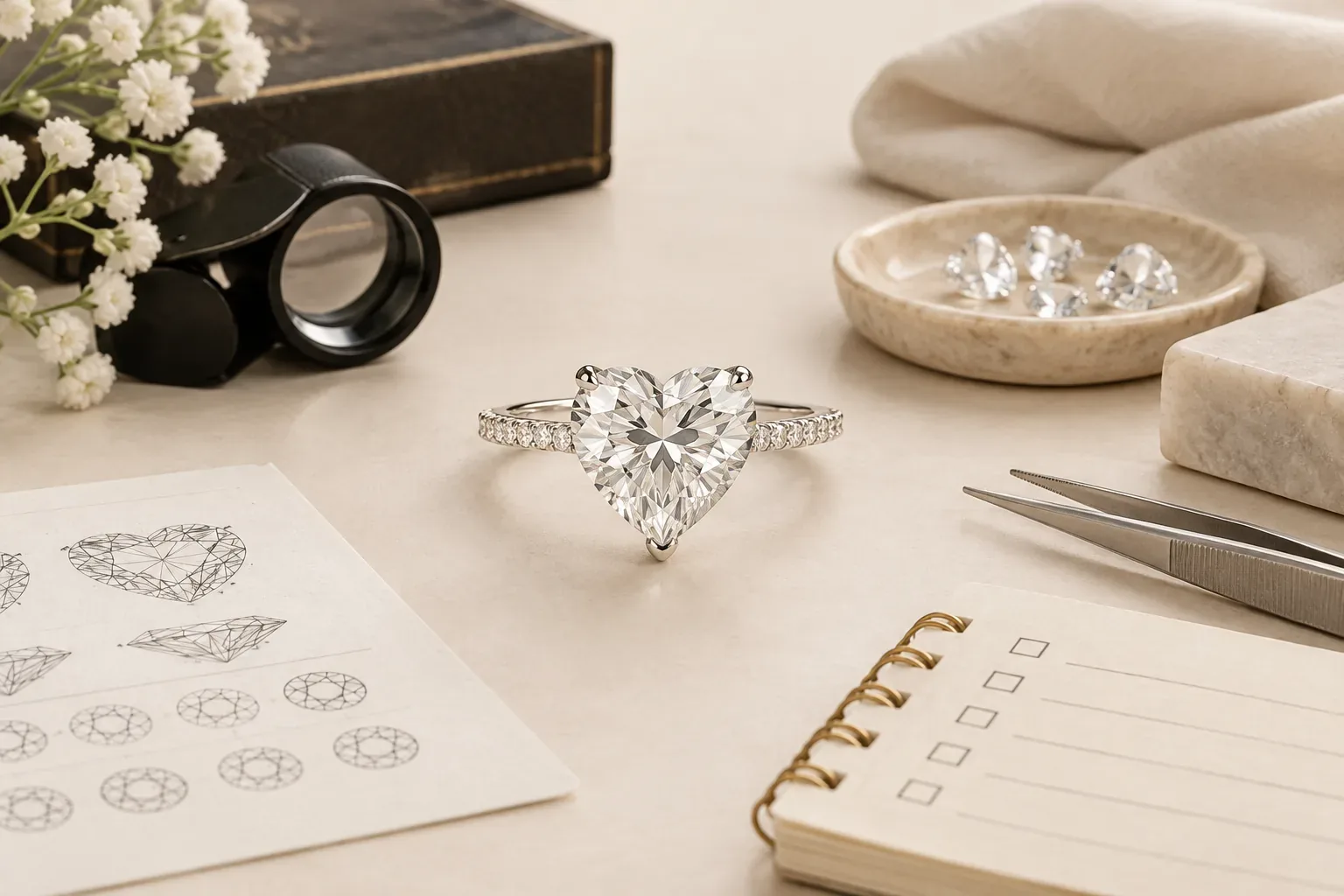
A heart cut engagement ring checklist should help you verify shape symmetry and condition, confirm material disclosures (natural vs lab-grown, treatments), choose a setting that protects the point and lobes, match wearability to lifestyle, and understand which claims require a qualified jeweler or gemological laboratory to confirm.
Quick answer
If you search for a heart cut engagement ring checklist, prioritize these actions: confirm clear written seller disclosures for material and treatments, inspect symmetry and the pointed tip, choose a protective setting, verify durability for daily wear, and obtain a grading report or independent appraisal when certification is part of your decision. Understand that some claims—like origin, certain treatments, and precise grading—require a qualified jeweler or a gemological laboratory to confirm.
What this checklist covers and why it matters
This checklist is designed to answer the practical shopping intent behind the phrase heart cut engagement ring checklist: what to look at on the stone and setting, what seller documents to request, which trade-offs you will accept for aesthetics versus durability, and the clear limits on what you can verify without professional equipment or a lab report.
The advice below combines consumer-protection principles about disclosure and detectability with practical ring-wearing guidance and trade-offs between cost, look, and longevity. For tests and authoritative grading you will need either a qualified bench jeweler or a gemological laboratory report, such as one from a major lab.
Historical evidence and cultural notes
Among the approved sources used to prepare this article, there is no primary historical account that links the modern heart cut gemstone to a specific ancient culture or definitive period origin. Contemporary industry and consumer research used here focuses on current demand and product characteristics rather than the motif’s precise historical provenance.
Market and trend reports from Imaginaire Digital and Jewelers Mutual show strong contemporary demand for distinctive engagement shapes and fluid, personal styles, which helps explain why shoppers choose heart cuts today. These sources document present-day popularity patterns rather than providing a formal cultural history of the heart cut itself.
Documented history versus modern interpretation
Because the approved evidence set does not provide primary historical documentation of symbolic meanings tied to particular cultures or eras for the heart cut, any specific historical-attribution claims would be outside the scope of these sources. Where historical meaning is important to you, seek primary historical research from specialist historians or museum catalogues; that material was not supplied here.
Modern interpretations are well documented in industry reporting as personal and expressive choices. Jewelers Mutual and Imaginaire Digital identify current consumer interest in versatile, gender-neutral styling, colored gemstones, and expressive shapes. These modern meanings are individual and social rather than universal, and they reflect contemporary fashion and gifting practices rather than a single historic symbolism.
How the heart motif and heart cut appear in jewelry
The heart cut is a brilliant-style modified shape intended to read unmistakably as a heart when viewed from above. As a motif it appears both as a shaped center stone and as accent stones, metalwork silhouettes, or engraved motifs. Designers use the heart cut to signal romantic intent, sentimental value, or simply a distinctive visual statement.
In practice the heart cut places two design priorities on the buyer: symmetry and a secure setting. Symmetry determines whether the lobes and the central cleft read as a heart, and the setting must protect the pointed tip and expose enough of the stone to show its shape while maintaining everyday durability. These are the same concerns that inform many modern engagement ring choices, which industry sources describe as favoring craftsmanship and versatility.
Practical trade-offs to weigh
A heart cut emphasizes shape over maximum spread-for-weight. That often means a heart cut may appear smaller across the finger than certain brilliant cuts of equal carat weight, so consider visible size versus carat budget. Many buyers accept that trade-off because the unmistakable outline has strong visual impact.
Durability trade-offs matter. The pointed tip of a heart cut is vulnerable to chipping if the setting does not protect it, and shallow or deep cuts can affect sparkle and wearability. Choosing a protective prong or bezel for the point increases security but can change the visual profile of the stone.
Color and clarity trade-offs are similar to any shaped stone: if you prioritize brilliance in a diamond, you may accept higher color and clarity grades. If you prioritize color (for example a pink sapphire in a heart cut), you will make different compromises. Wherever treatments, lab-created options, or imitations are part of the offer, ask for written disclosures as required by consumer-protection guidance.
What to verify before buying: the checklist
Ask the seller for clear, written disclosure about whether the stone is natural, lab-created, treated, or an imitation. The Federal Trade Commission emphasizes that consumers need clear distinctions among these categories and written seller disclosures. Obtain any lab report or certificate that accompanies the stone and check which laboratory issued it.
Inspect the heart cut visually or ask for detailed photographs showing the crown, pavilion, and the pointed tip. Look for symmetry of the lobes and a well-centred cleft; asymmetry is the most common aesthetic flaw people notice in heart shapes. Verify the setting protects the point and that prongs are sturdy and well-finished.
Request information about treatments and their durability and care requirements. The Gemological Institute of America notes that treatments, detectability, and durability create distinct consumer questions. Certain treatments can alter a gemstone’s care needs and resilience, so clarity on these points affects both maintenance and insurance.
Confirm return policy, warranty, and whether the seller offers or recommends independent grading or an appraisal. For diamonds, buyers often rely on reports from established laboratories; if a grading report is central to your purchase decision, verify the lab name and report number.
What you can and cannot verify without a jeweler or lab
You can verify a number of visible and documentary items yourself: the stone’s shape and symmetry from photos or in person, the presence of hallmarks on the metal, visible damage, the seller’s written disclosures on natural vs lab-grown or treated materials, and the stated return and warranty terms.
You cannot conclusively verify some technical claims without a qualified jeweler or a gemological laboratory. Origin claims, some treatments that require spectroscopic analysis, exact color grading nuances, and formal grading reports typically require laboratory equipment and expertise. If those factors are important, ask for a lab report from an accepted laboratory and, when in doubt, an independent appraisal.
Care guidance
Care requirements depend on the material. GIA guidance underscores that treatments and material type affect durability and special care needs. Hard gemstones set as daily-wear engagement rings commonly withstand everyday use better than softer stones, but even hard stones can chip at sharp points if the setting is inadequate.
For daily wear, choose metals and settings that help protect the heart’s point and lobes. Remove the ring for heavy manual work, contact sports, or when using harsh chemicals. Ask the seller for recommended cleaning methods for the specific gemstone and setting, and consider periodic professional checks to re-tighten prongs and assess wear.
Respectful selection and gifting guidance
A heart cut can be a highly personal symbol. If symbolism or surprise is part of your intent, consider how the recipient wears jewelry generally and whether a bold, shaped center stone matches their everyday style. Contemporary trend reporting highlights an appetite for personal, versatile, and gender-neutral styling, which can guide how you pair the heart cut with bands or other jewelry.
When gifting, be respectful about size and wearability. If you are unsure about ring size, many jewelers offer resizing within certain limits or temporary sizing options. If the ring is a surprise, confirm the seller’s return and resizing policies beforehand so the recipient can make adjustments without penalty.
Final buying steps to reduce risk
Before completing the purchase, ensure you have the seller’s written disclosures for material, treatments and origin claims, examine the provided lab report or certificate, and confirm the return period and any warranty. If certification is important, request a lab report and verify the report number with the issuing laboratory.
If the ring is a high-value purchase, consider an independent appraisal and insurance. If you plan to insure the ring, check insurer requirements for documentation and for any specific lab reports they favor. These practical steps reduce surprises and protect the purchase after gifting or wear.
Frequently asked questions
Is a heart cut engagement ring a good choice for everyday wear?
A heart cut can be suitable for everyday wear if the setting protects the pointed tip and the wearer’s lifestyle avoids frequent impact or harsh manual tasks. Verify the setting’s prongs, choose durable metals, and follow recommended care. For precise durability questions about a specific stone or treatment, consult a jeweler or a gemological laboratory.
How can I tell if a heart cut stone is natural or lab-created?
Ask the seller for written disclosure and any accompanying laboratory report. The Federal Trade Commission requires clear distinctions among natural, lab-created, treated and imitation materials. Some differences are not visible to the naked eye and require gemological testing to confirm.
What setting is best for protecting a heart cut?
A setting that shields the point—such as one or two protective prongs, a V-prong, or a partial bezel—reduces chipping risk. The right choice balances security with how much of the heart shape you want visible. A bench jeweler can advise on the best option for a particular stone and wearer.
Should I demand a laboratory report for a heart cut diamond?
If grading (color, clarity, cut) is a material part of your purchase decision, request a report from a recognized gemological laboratory and verify the report number. A lab report provides technical confirmation that you cannot obtain by sight alone.
What should I ask the seller about treatments?
Ask whether the stone has undergone any treatments, what those treatments are, how they affect durability and care, and whether the treatment is disclosed in writing. The Gemological Institute of America notes that treatments influence detectability and special care needs, so clear answers are important for long-term ownership.
Sources and further reading
- Imaginaire Digital — Imaginaire Digital
- Jewelers Mutual — Jewelers Mutual
- Gemological Institute of America — Gemological Institute of America
- Federal Trade Commission — Federal Trade Commission