Meaning at a glance
A pear cut engagement ring buying guide should define the pear cut, weigh pros and cons (elongating effect, vulnerable tip, bow-tie issues), explain selection criteria (finger shape, setting, proportions), give care and disclosure steps, and clearly state what can and cannot be verified without a qualified jeweler or gem lab.
Short answer
A pear cut engagement ring buying guide should give you clear definitions, practical decision criteria, and honest limits on verification: pear cuts pair an elongated teardrop shape with a pointed tip that flatters many fingers but needs protective settings and careful inspection; you can assess proportions, symmetry, and setting quality yourself, but authenticity, treatments, exact grade and origin require a qualified jeweler or a gemological laboratory.
What is a pear cut?
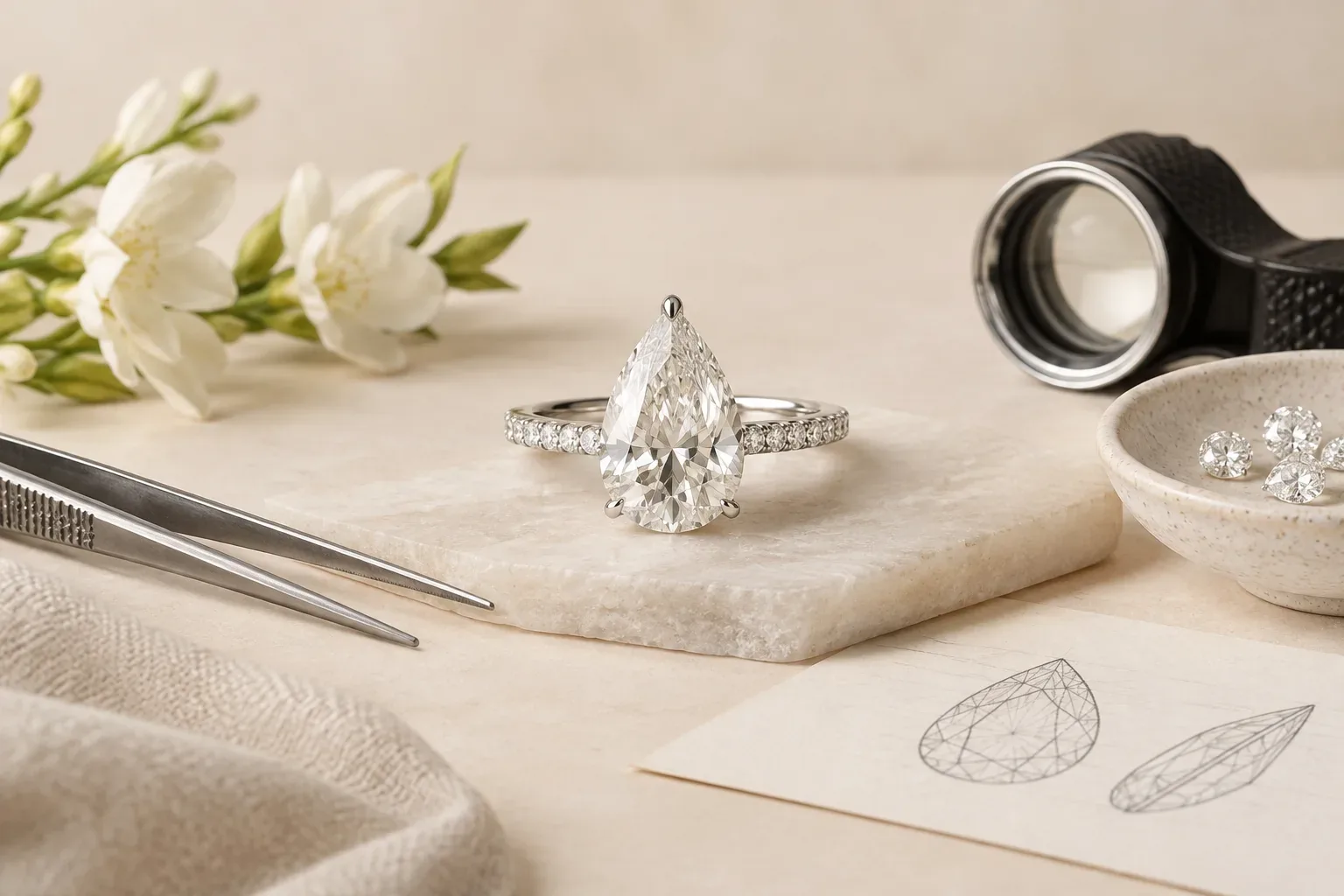
A pear cut (also called teardrop) combines a rounded end and a pointed tip to create an asymmetrical, tapered shape. In engagement rings the pear is used as a single center stone or as part of a cluster. The shape influences how weight distributes through the stone, how it appears on the finger, and how light returns—factors that affect perceived size and sparkle.
Documented historical evidence
The set of approved sources for this guide does not include a detailed cultural or archaeological history of the pear cut. None of the listed sources present a documented origin story tying the pear cut to a particular historical culture or period, so authoritative historical claims about the pear cut’s original inventors or early symbolic meanings cannot be made from this evidence base.
Because historical documentation is not provided in these sources, any precise cultural or period attribution belongs to specialist historical or museum research rather than the commercial and consumer-oriented publications cited here. If you need confirmed historical provenance for a vintage pear-shaped piece, ask a qualified appraiser or a museum curator who specializes in jewelry history.
Documented meanings versus modern personal interpretations
The approved consumer and professional sources used here focus on market trends, craftsmanship and consumer protections rather than long-standing symbolic meanings for the pear shape. That means documented historical meanings are effectively absent in this evidence set.
Modern associations with pear-shaped rings—such as elegance, uniqueness, or a blend of vintage and contemporary style—are contemporary, marketing-driven, and personal. They are valid as individual interpretations but should not be treated as universal cultural meanings.
How the pear motif and cut appear in jewelry
In practice the pear shape appears as a center solitaire, in halo rings, in three-stone compositions (often paired with rounds or tapered baguettes), and as drop elements in earrings and pendants. The pointed end usually faces the fingertip or the hand’s base depending on stylistic choice; orientation affects perceived finger length and balance.
Manufacturers and designers exploit the pear’s tapered silhouette to create looks that appear elongating or delicate. Settings vary from full bezels around the tip to protective V-prongs that shield the point, and designers often pair pear cuts with complementary side stones to balance asymmetry.
Pros and cons of choosing a pear cut
Pros include an elongating visual effect on the finger, a distinctive and less-common look than round solitaires, and good face-up size for carat weight—because the shape spreads more weight across length than a round of equal carat weight.
Cons are practical: the pointed tip is vulnerable to chips if not protected, the cut can show a dark "bow-tie" area across the center in some stones, and asymmetry or poor proportions can make the stone appear off-balance. These trade-offs affect durability, appearance and maintenance costs.
Choosing a pear cut: decision criteria
Start with proportions: length-to-width ratio controls whether a pear looks short and full or long and slender. A range of ratios suits different tastes, but symmetry between the two halves and a well centered apex (tip) are important for a pleasing look.
Consider the setting: a V-prong or bezel that protects the tip is a practical choice for everyday wear, and halos or side stones can mask minor asymmetry while increasing apparent size. Metal choice and ring shank width influence the overall balance—thinner bands emphasize the stone’s length while heavier shanks ground it.
Think about lifestyle: if the wearer uses their hands a lot, prioritize protective settings and durable mounting. If the objective is maximum sparkle, work with a reputable seller to choose a well-cut stone that minimizes the bow-tie and maximizes brilliance.
Practical selection and gifting guidance
Respect recipient preferences: if you can, learn whether the person prefers classic symmetry or distinctive, unconventional shapes. If the ring is a surprise, ask friends or family about jewelry they already wear and note metal colors, band widths and whether they favor bold or understated pieces.
Choose settings with protection and comfort in mind: a V-prong at the tip and well-fitted prongs along the sides reduce snagging and chip risk. Consider ring orientation—some people prefer the point toward the fingertip, others toward the wrist—so allow a return policy or resizing window.
Document seller disclosures and policies: the U.S. Federal Trade Commission emphasizes obtaining written disclosures for whether a stone is natural, lab-created, treated, or imitation and for other material claims. Always request clear return, warranty and repair terms in writing before purchase.
Care, durability and what you can verify yourself
Care and durability: because the pear’s tip is a stress point, keep the ring away from harsh knocks and consider routine inspections of prongs. The Gemological Institute of America notes that treatments, detectability and durability are central consumer concerns; certain treatments change care and repair protocols, so you should know whether a stone is treated.
What you can verify yourself without a lab: you can inspect proportions, symmetry, visible chips or cloudiness, the quality of the setting and finish, the ring’s weight and dimensions as provided, and whether the seller supplies written disclosures and return policies. You can also evaluate comfort, how the stone sits on the finger, and whether the setting protects the tip.
What requires a qualified jeweler or gemological laboratory: definitive identification of natural versus lab-created material, detection and characterization of treatments, grading reports for color and clarity that meet laboratory standards, and origin claims (for example, country of origin or mine source) all require laboratory testing or professional appraisal. If provenance or a particular grade matters to you, obtain a certificate from a recognized gem lab or an independent appraisal.
Final checklist before purchase
Confirm the stone’s measurements, length-to-width ratio and symmetry photographs. Ask whether a V-prong or similar protection is used at the tip and whether the mounting is solidly constructed for daily wear.
Obtain written disclosures and, where relevant, an independent lab report; verify return, resizing and repair policies. Plan for insurance or valuation updates if the ring represents significant value—the market emphasis on craftsmanship and versatility in recent trends means consumer protection and documentation are increasingly important when buying high-value pieces.
Frequently asked questions
Is a pear cut better than a round for an engagement ring?
There is no universal 'better' choice. Pear cuts give an elongating, distinctive look and often face-up larger per carat, while rounds are the most brilliant and symmetrical. Choose based on the wearer’s style, finger shape, and whether you prioritize durability or traditional sparkle.
How do I protect the pointed tip of a pear cut ring?
Select a setting with a V-prong or partial bezel at the tip and inspect prongs regularly. For an active lifestyle, consider a stronger mount and schedule periodic checks by a jeweler to tighten or replace worn prongs.
Can I tell if a pear-shaped stone is natural or lab-created by sight?
No. Definitive identification of natural versus lab-created materials, and detection of many treatments, requires professional testing by a qualified jeweler or an accredited gemological laboratory.
What should I ask the seller for before buying?
Request written disclosures about whether the stone is natural, lab-created or treated; any available lab reports; detailed measurements and photos; return and repair policies; and a clear warranty. The FTC recommends obtaining these written disclosures.
How can I avoid the 'bow-tie' effect in a pear cut?
Work with a reputable seller to view the specific stone in person or view high-quality photos and videos under different lighting. Good proportions and cut quality reduce the bow-tie; however, slight bow-ties are common and acceptable to some buyers.
Sources and further reading
- Imaginaire Digital — Imaginaire Digital
- 2026 Trends — Jewelers Mutual
- Gem Treatment — Gemological Institute of America
- Buying Gemstones, Diamonds, and Pearls — Federal Trade Commission