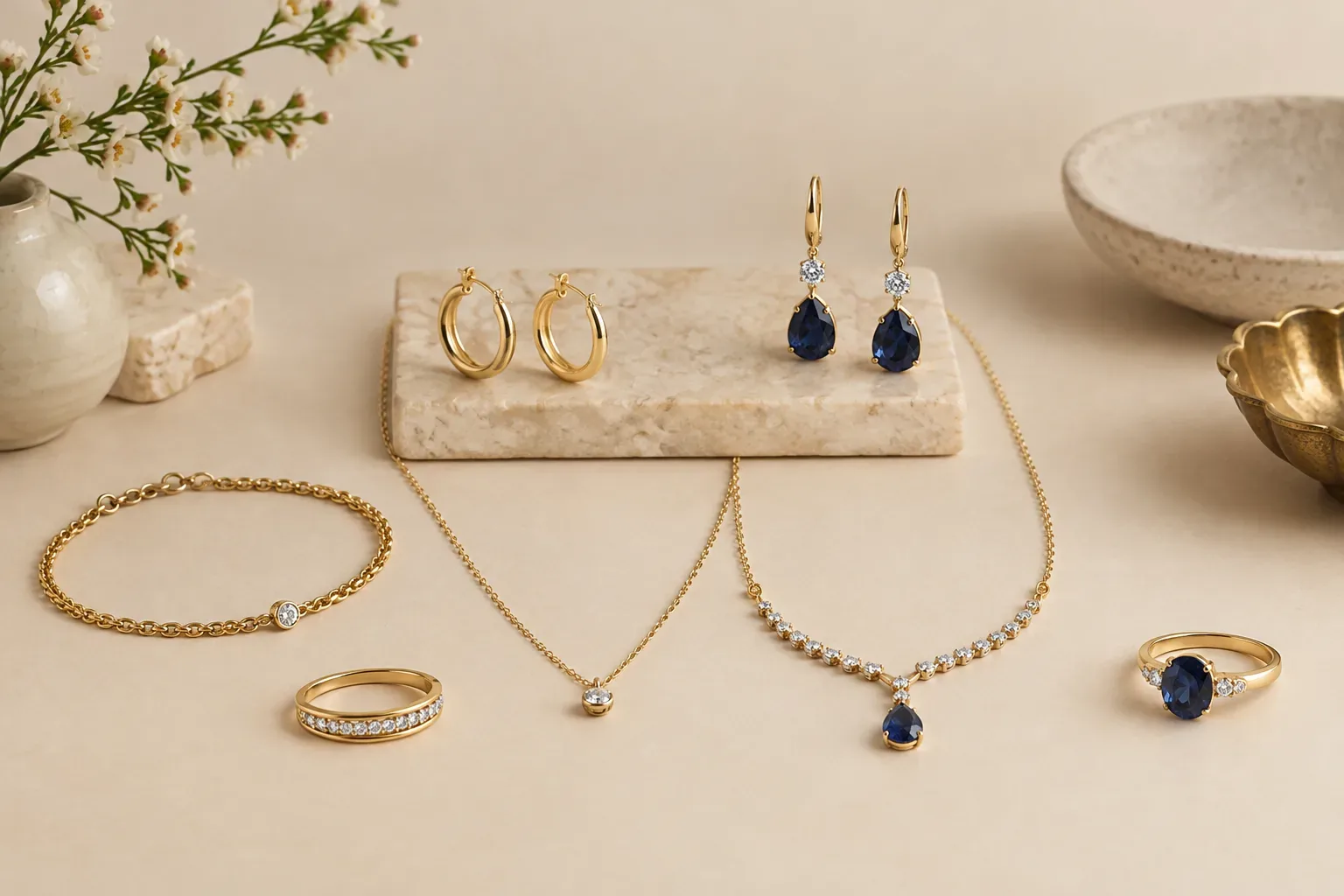
Meaning at a glance
Compact, well-made pieces—small studs, a fine chain, a slim ring or bracelet—form a casual foundation that can be dressed up with one or two bolder additions. Museums document long shifts in jewelry use and meaning across cultures; modern day-to-night styling is largely personal and practical, not a recovery of a single historical rule. Check gemstone disclosures and cultural context when selecting or giving jewelry.
Quick answer
Start the day with a minimal base—stud earrings, a fine chain or pendant, and one slim ring or bracelet—and change one or two elements for evening: add a statement earring or pendant, swap a leather strap for a metal bracelet, or layer a second necklace. These small changes update a casual outfit without needing a full wardrobe change and respect the piece's materials and the wearer's personal meaning.
What museums and consumer agencies say about jewelry's changing roles
Surveys of jewelry history show that forms and social functions of personal adornment have changed often and vary by place. The Victoria and Albert Museum presents this long view, noting that jewelry served decorative, social, protective and commemorative roles in different periods and cultures, and that similar object types—rings, pendants, pins—recur with shifting meanings.
That historical variety matters for modern styling because it underlines that there was never a single, universal ‘right’ way to wear everyday jewelry. What counts as casual, formal, or symbolic depended on time and place: for example, pieces worn as status or amulets in one culture could become sentimental keepsakes or fashion accessories in another, a pattern the V&A highlights in its surveys of jewellery history.
Gemstones and materials in documented context
For information about stones and how they were used, the Victoria and Albert Museum’s A–Z of Gemstones explains both identification and historical context. Museums record that specific materials have carried different practical and aesthetic values: some stones were prized for hardness and permanence, some for color, and others for the labor and technology required to cut and set them.
Those material histories influence modern day-to-night choices. A hard, simple stone set in a low-profile mounting translates well from day to evening because it combines durability with a clean silhouette, while a large carved or highly faceted gem reads more formally. The V&A’s reference work helps with recognizing which stones have been historically common in smaller, wearable forms and which are traditionally more showy.
Documented historical meanings versus modern personal interpretations
Documented historical meanings are the purposes and associations recorded by historians and museums, such as the use of rings as seals in certain legal contexts or the preference for personal portrait lockets as sentimental objects in particular periods. Where specific historical functions are known, the Victoria and Albert Museum identifies them as part of the material record and social history of the object.
Modern wearers often layer or combine pieces for personal, stylistic, or practical reasons that are not continuations of one single historical practice. Wearing a signet-style ring as a fashion accent, or pairing multiple thin chains because they suit a casual shirt and jeans silhouette, is a contemporary choice that may draw loosely on historical forms but usually reflects individual taste and lifestyle rather than inherited social rules. It is important not to present modern usage as the same thing as a documented cultural practice.
How motifs, gemstones, and traditions appear in everyday jewelry
In contemporary everyday jewelry, motifs appear as small-scale pendants, charm bracelets, minimal signet or band rings, and simple stud or hoop earrings. Gemstones are used either as accent points—tiny diamonds, a single cabochon or bezel-set colored stone—or as the central focus in a modest ring or pendant. Metal finishes range from high-polish gold and silver to matte or brushed surfaces and plated options for affordability.
Traditions such as wearing a locket or a signet evolved from historical practices into modern wearable forms. Museums document that these object types repeat over time; in the present day designers often reference those forms in reduced sizes for daily wear so the object reads as personal rather than ceremonial.
Simple day-to-night styling changes that actually work
Base your daytime look on comfort and scale: small studs, a thin chain with a single pendant, a low-profile watch or slim bracelet, and one narrow ring. These pieces are tidy against casual fabrics, layer easily, and are unlikely to catch while you move about in daytime activities.
To move the same outfit into evening, change one or two elements rather than everything. Replace studs with drop or statement earrings, add a bolder necklace layered over the daytime chain, swap a casual leather or fabric strap for a metal cuff or bracelet, or stack a second more decorative ring next to your slim band. A single eye-catching piece changes the visual center without overwhelming a casual silhouette.
For texture and contrast, consider mixing finishes: a matte leather strap looks intentionally relaxed by day, and a polished metal cuff worn on the opposite wrist creates evening balance. If your daytime jewelry is gold-toned, add a single cool-toned piece such as a silver chain or a white-gold pendant to create a deliberately modern, dressed-up contrast.
Practical selection and gifting guidance
Choose quality materials and simple, wearable proportions for everyday pieces. A fine chain with a secure clasp and a low-profile pendant will survive daily routines better than a large, protruding setting. For rings, select a comfortable band width and check for sizing that suits regular wear—thin bands can be comfortable all day while wide or highly ornamented bands may be less practical.
When buying gemstones, the Federal Trade Commission reminds consumers and sellers that treatments, enhancements and imitations must be disclosed. Ask whether a stone is untreated, heat-treated, fracture-filled, irradiated, dyed, or simulant, and request any available documentation. That transparency helps you decide whether a piece is suitable for everyday wear, potential maintenance, or future resale.
Consider the recipient’s lifestyle and preferences when gifting. If they work with their hands or prefer a low-maintenance routine, select durable metals and low-profile stones or consider engraving a subtle personal message rather than choosing a large, conspicuous piece. If the recipient values symbolism, research the cultural or personal significance of a motif and ask if a religious or culturally specific symbol is appropriate before gifting it.
Cultural respect and practical care
Be cautious with sacred or culturally specific symbols. Museums and historians record specific religious and cultural uses for objects; those uses often carry meanings not easily transferred to fashion. If you are not sure about a symbol’s significance, seek reliable information before adopting it as a motif or gifting it, and consider choosing a neutral design instead.
Care is part of making a piece wearable every day. Follow metal-appropriate care guidance, avoid exposing soft stones to harsh chemicals or knocks, and have valuable pieces checked periodically by a reputable jeweler. For gemstone treatments and imitation disclosures, consult the FTC guidance when making purchase decisions.
Put it into practice: three quick outfit ideas
Casual daytime: small gold or silver stud earrings, a single fine chain with a tiny pendant, a slim band ring, and a leather-strap watch. These elements are low-profile and comfortable for a range of daily activities.
Evening update: swap the studs for short drop earrings, add a mid-length chain layered over the original pendant, and replace the leather strap with a slim metal cuff or bracelet. The focus shifts upward and the metal catches light without requiring a full change of clothes.
If you prefer one standout piece: begin with a plain base and let a single statement element—an ornate pendant, a cocktail ring, or chandelier earrings—do the evening work. Keep the rest of the jewelry minimal so the statement piece reads intentional rather than accidental.
Final thoughts
Day-to-night jewelry styling for casual everyday outfits is less about copying any single historical practice and more about using durable, well-proportioned pieces thoughtfully. Museums like the Victoria and Albert Museum record how jewelry’s forms and meanings have shifted across cultures and periods, and that history helps explain why certain shapes and materials remain useful and appealing today.
When choosing or gifting, combine practical choices—secure clasps, comfortable proportions, and disclosed gemstone treatments—with respect for cultural meanings. That balance gives you everyday jewelry that performs well during the day and transforms easily for evening.
Frequently asked questions
What are the best everyday pieces to build a versatile base?
Choose small studs or simple hoops, a fine chain with a low-profile pendant, one slim ring or band, and a slim bracelet or watch. These items layer easily, are comfortable for daily activities, and adapt well to a single evening upgrade.
How do I change my look for evening without carrying extra jewelry?
Swap one or two pieces: replace studs with drop earrings, add a second necklace layered over your daytime chain, or swap a leather strap for a metal cuff. Small, strategic changes alter the focal point without adding bulk.
Should I worry about gemstone treatments when buying everyday jewelry?
Yes. The Federal Trade Commission advises that sellers should disclose treatments, enhancements, and imitations. Ask for information on whether a stone is heat-treated, dyed, fracture-filled, or a simulant, since some treatments affect durability and care needs.
How can I gift jewelry respectfully when motifs have cultural or religious meaning?
Research the symbol’s significance before gifting. If you are unsure, select a neutral design or ask the recipient about their preferences. Avoid presenting sacred symbols without understanding their context, and consider personalization that is clearly appropriate to the recipient.
Which metals hold up best for everyday wear?
Higher-karat gold alloys, sterling silver, and certain hard metals are durable for daily wear, but finish, plating thickness and lifestyle factors matter. For pieces worn constantly, favor solid metals or thick vermeil over light plating and follow care recommendations for the metal and any stones.
Can historical meanings guide modern styling choices?
Historical meanings recorded by museums can inspire modern styling, but they do not prescribe how you should wear jewelry today. The Victoria and Albert Museum documents many past uses; use that information as context rather than a rulebook, and prioritize the wearer’s comfort and intent.
Sources and further reading
- Bedazzled: A History of Jewellery — Victoria and Albert Museum
- An A-Z of Gemstones — Victoria and Albert Museum
- Buying Gemstones, Diamonds, and Pearls — Federal Trade Commission