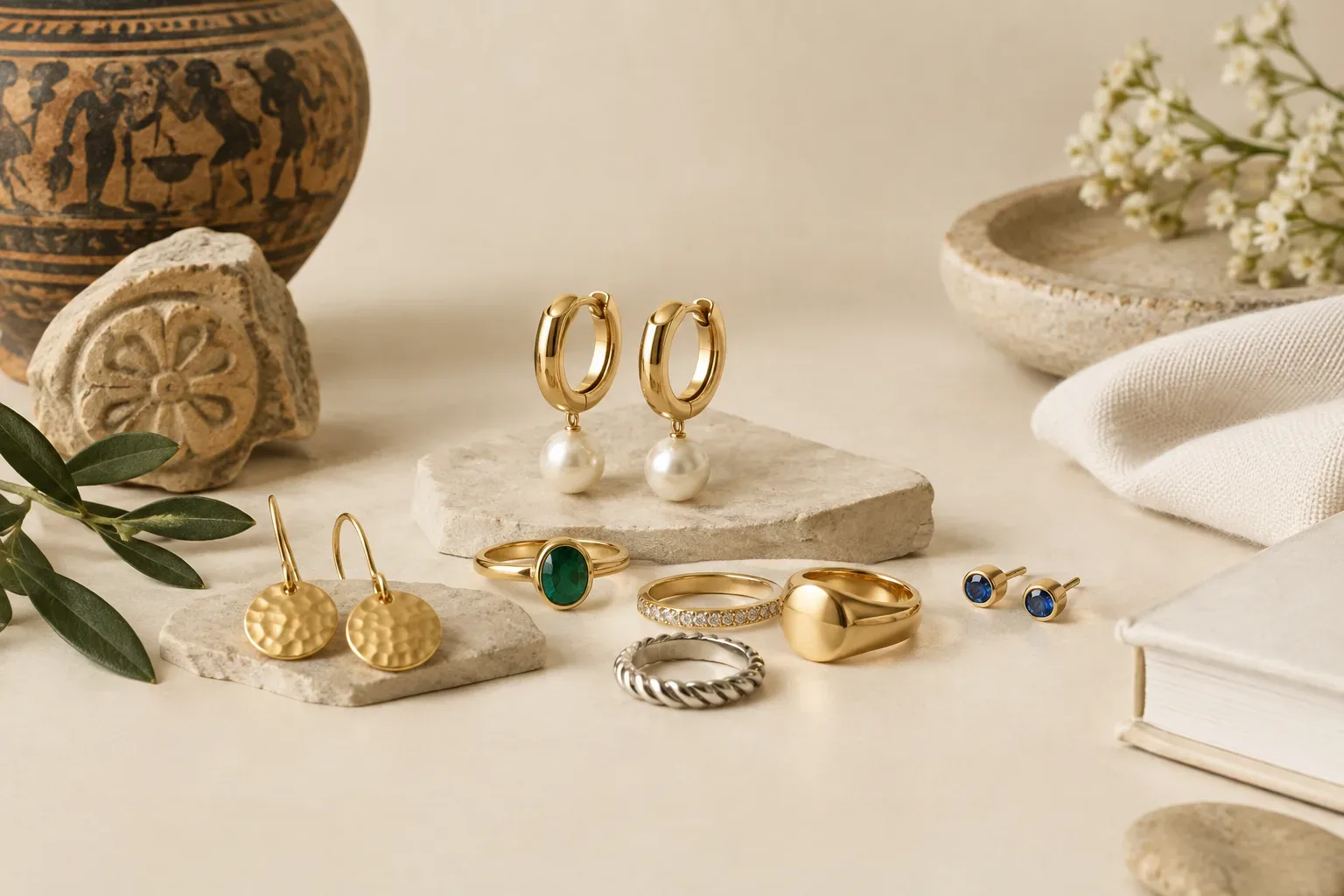
Meaning at a glance
Use small, lightweight earrings and low-profile or comfort-fit rings that respect historical meanings and modern personal interpretation; choose durable materials, confirm treatments or imitations, and match scale and shape to your daily activities and personal style.
What the historical evidence actually shows
Museums and curators document that jewellery has repeatedly shifted roles and styles as social needs and technologies changed. The Victoria and Albert Museum describes jewellery as both personal ornament and a social signal whose materials, scale, and motifs shift with fashion, function, and available techniques. This means the size and look of everyday jewellery in any era were shaped by what was practical, fashionable, and technically possible at the time, not by a single, unchanging rule.
The V&A's guide to gemstones places specific stones into long histories of use and trade and explains how different cultures and periods prized particular materials for reasons ranging from local availability to symbolic association and status. That documentation supports choosing stones for modern casual wear by considering durability and historical context rather than assuming a single meaning applies universally.
Separating documented historical meanings from modern personal interpretation
Documented historical meanings are those recorded by curators, inventories, or practice—such as the use of signet rings for sealing documents, or the prominence of certain gems in court jewellery for status. The Victoria and Albert Museum presents these contexts as part of the object's social life. For example, a ring used as a seal had an administrative function beyond ornament; that role is a documented historical meaning.
Modern personal interpretation is distinct: people today may choose a motif or gemstone because it resonates with personal identity, trend, or sentiment. These contemporary meanings can be powerful and legitimate, but they are not the same as historical, culturally specific usages. When wearing or gifting jewellery that borrows historical motifs—like a signet-style ring, a protection amulet motif, or a birthstone—note that you are applying current personal or popular meanings rather than re-creating a single, documented past function.
How motifs, gemstones, and traditions appear in everyday jewellery
Motifs such as bands, signet shapes, circles, leaves, or simple geometric forms are recurring elements because they translate well into small-scale, durable designs suitable for daily wear. Museums show that motifs survive through simplified forms: elaborate ceremonial jewellery is reduced to stable, wearable silhouettes for everyday use.
Gemstones appear in casual jewellery in a few consistent ways: as small accent stones in bezel or flush settings, as cabochons for secure low-profile looks, or as durable faceted gems set in protective metal. The V&A's A–Z of Gemstones explains which stones were historically prized and highlights qualities (color, hardness, availability) that make some stones better choices for frequent wear.
Traditions such as ring-worn tokens or simple stud earrings have been adapted over time into lightweight contemporary versions. These reductions maintain a nod to tradition while making the piece function for the pace and activities of modern life.
Earring styling for casual everyday outfits: scale, shape, and comfort
Scale matters: earrings should complement your face size and hairstyle without catching on clothing. For casual wear choose studs, small huggies, or lightweight hoops in diameters that suit your proportions. Huggies and small hoops sit close to the ear and are less likely to tangle with collars or hair.
Shape and construction influence comfort: flat-back or low-profile studs and bezel-set stones offer smooth surfaces that resist snagging. Hoops with secure click or hinge closures and continuous-wire sleepers are practical for daily wear because they stay closed and distribute weight evenly. Avoid long, heavy pendants or sharp prongs for everyday pieces if you are active or wear scarves and knitwear.
Weight and materials: lighter earrings are easier to wear all day. Metals like sterling silver, 9–14k gold, and titanium offer different trade-offs in weight, cost, and hypoallergenic properties. If you have metal sensitivities, consider posts or backs made of titanium or surgical steel. For gemstone earrings, choose harder stones or well-protected settings to reduce risk of chips—V&A documentation on gemstones emphasizes understanding a stone's properties when choosing how it will be worn.
Ring styling for casual everyday outfits: scale, shape, and comfort
Band width and profile determine comfort: narrow to medium bands (approximately 2–5 mm) are versatile for everyday wear, while wider bands can be comfortable if they have a slightly rounded interior or a comfort-fit profile. Comfort-fit rings have a domed inner surface that reduces resistance when sliding over knuckles.
Stone settings and safety: bezel or low-profile settings protect stones and are less likely to snag than high prongs. If you want a gemstone for daily wear, prioritize stones with greater durability and choose settings that shield the stone from impacts. The V&A's gemstone guidance helps identify which stones have historically been used in wearable jewellery and why some were adapted into lower-profile cuts for durability.
Stacking and mixed metals: stacked rings are a popular casual look, but keep total band height and edge sharpness in mind—multiple thin bands can be comfortable if each is smooth and well-finished. Mixing metals is a modern stylistic choice and acceptable; match surfaces and finishes so the ensemble sits comfortably together rather than clashing or creating rough edges.
Practical and respectful selection or gifting guidance
Consider the recipient's daily life and cultural context. Select low-profile, durable designs for someone active or who works with their hands. If the piece invokes a cultural or religious motif, research its specific meaning before gifting; the V&A's historical approach shows that motifs can carry particular social or ritual significance in their original contexts, so respect and clarity are important when reusing them in contemporary fashion.
Ask about metal sensitivities and ring sizing. For gifts, include a receipt or resizing option. If you are uncertain about stone treatments or authenticity, ask the seller for written disclosure: the Federal Trade Commission recommends asking about treatments, synthetics, and imitations so buyers can make informed choices. Transparency about treatments, enhancements, or imitations is part of respectful gifting.
If the piece is intended as a meaningful token—commemorative, sentimental, or symbolic—explain your intention when giving it. Modern personal meaning is valid, but giving context avoids misunderstanding and honors the object's possible cultural antecedents.
Care, materials, and disclosure: what to check before you buy
Check gemstone durability and setting security. The V&A's A–Z of Gemstones provides context that can guide choices toward stones that tolerate daily wear. For less durable stones, select protective settings and avoid wearing them during activities likely to knock or abrade the stone.
Ask the seller about treatments and imitations. The Federal Trade Commission advises consumers to request clear information on treatments, synthetics, and imitations when buying gemstones, diamonds, or pearls. Sellers should disclose enhancements that affect value or care, and buyers should expect this transparency for informed wear and maintenance choices.
Finish and maintenance: choose smooth finishes and well-polished edges for comfort. For daily pieces, ask about care instructions—some treatments or plated finishes require specific cleaning methods. A durable metal base and quality finishing will extend the working life and comfort of everyday jewellery.
Frequently asked questions
Can I wear heavy or long earrings every day?
Regularly wearing heavy or long earrings can strain the earlobe and increase the risk of tearing or discomfort. For daily wear, choose lighter designs such as studs, huggies, or small hoops, and reserve heavier or dangling styles for occasional wear.
Which gemstones are best for daily wear in rings?
Choose harder, more durable gemstones and protective settings for daily rings. The V&A's A–Z of Gemstones can help identify durable choices, and bezel or low-profile settings offer additional protection. Avoid softer stones or exposed cuts for everyday rings.
How can I be sure a gemstone is natural and untreated?
Ask the seller for written disclosure about any treatments, synthetics, or imitations. The Federal Trade Commission advises consumers to request clear information about treatments and enhancements so you can make informed decisions about care and value.
What should I consider when gifting culturally significant motifs?
Research the motif's documented historical or cultural context before gifting. The Victoria and Albert Museum's historical approach shows that many motifs have specific original meanings; explain your intention when gifting and choose designs that are respectful and appropriate to the recipient's background.
How important is ring sizing for everyday comfort?
Proper sizing is crucial for comfort and wearability. A ring that is too tight can be uncomfortable, and one that is too loose risks falling off. For gifts, include a resizing option or a gift receipt so the recipient can obtain the correct fit.
Sources and further reading
- Bedazzled: A History of Jewellery — Victoria and Albert Museum
- An A-Z of Gemstones — Victoria and Albert Museum
- Buying Gemstones, Diamonds, and Pearls — Federal Trade Commission