Meaning at a glance
Treat oxidized silver as a finished surface: clean gently to preserve the darkened patina, store pieces separately and dry, and ask sellers about treatments and disclosures; historically the appearance of darkened silver has shifted between functional patina and decorative choice, as discussed by the Victoria and Albert Museum, while modern interpretations are personal and variable.
Direct answer — what to do first
For oxidized silver jewelry cleaning and storage, treat the darkened surface as an intentional finish rather than a defect. Clean with a soft, dry or slightly damp lint-free cloth and avoid abrasive polishing that will remove the dark patina. Store items separately in a dry, padded pouch or box to prevent rubbing, and ask the seller whether the finish is natural oxidation, a chemical treatment, or a deliberate surface patina so you can follow recommended care.
What 'oxidized' finishes look like and how they appear in jewelry
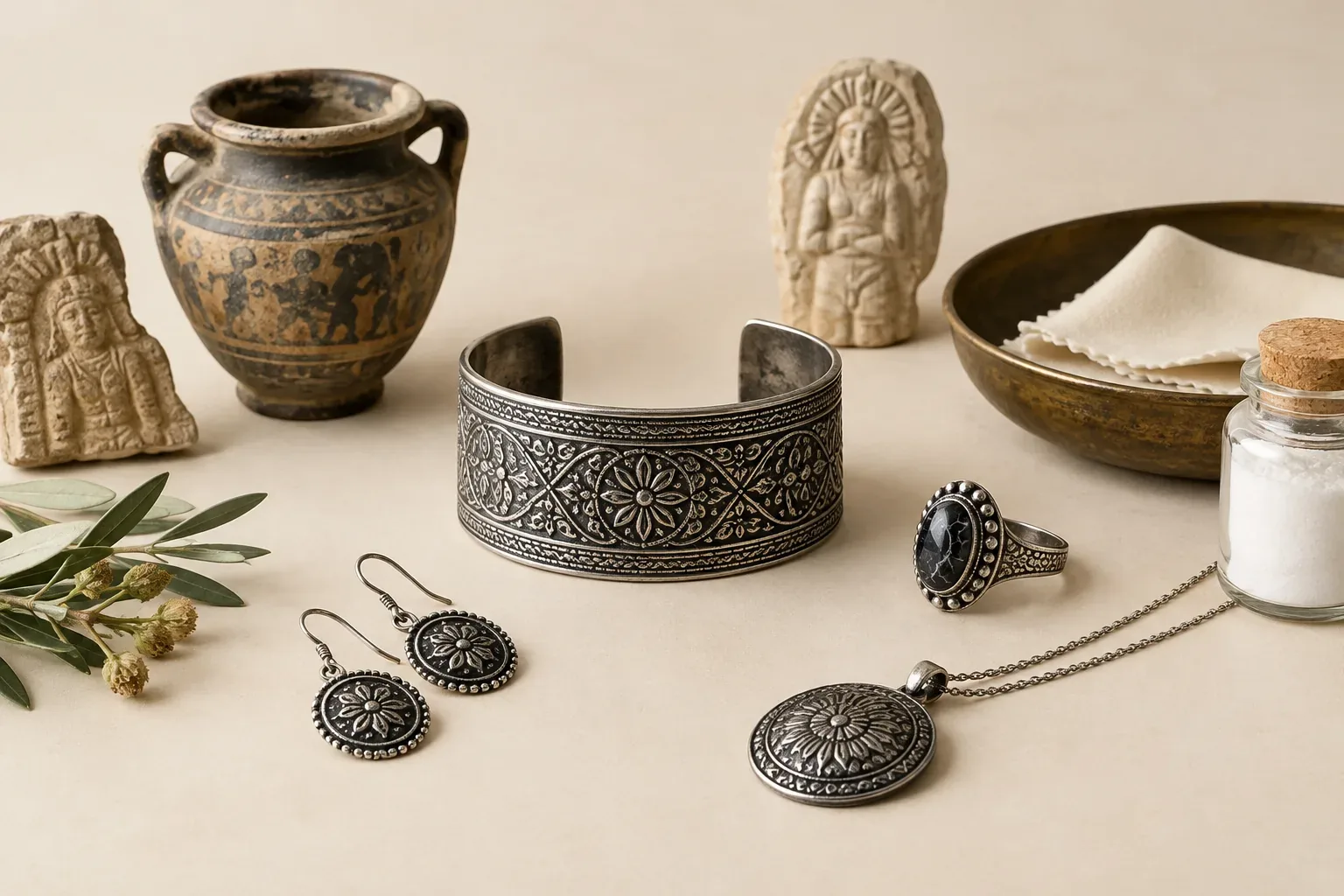
The term "oxidized" in jewelry commonly refers to a darkened or blackened surface on silver that increases contrast and highlights surface detail. In practice, jewelers use dark finishes or allow silver to develop a patina so engraved, textured, or filigree work reads more clearly against a darker background. Oxidation appears across styles from hand-hammered ethnic designs to contemporary minimalist pieces, and it is frequently applied to emphasize motifs, relief, or gemstone settings.
Documented historical evidence and changing contexts
Historical and museum research shows that the look of darkened or patinated metal has been used in many periods to serve visual or practical aims rather than a single, fixed meaning. The Victoria and Albert Museum describes jewelry history as a record of changing social contexts and tastes, where surface treatments and finishes reflect shifting techniques, technologies, and aesthetic preferences (Victoria and Albert Museum).
Examples in museum collections and exhibitions documented by the Victoria and Albert Museum illustrate how metal finishes were used differently at different times: some patinas formed in use and age, while other darkening techniques were applied deliberately to increase contrast and ornament visibility. These changes in technique and taste show that the darkened surface of silver has had practical, decorative, and sometimes symbolic roles depending on period and place (Victoria and Albert Museum).
Separate documented historical meanings from modern personal interpretations
Where museum records exist they describe how finishes functioned in specific cultures and periods, but they do not support a single universal symbolic meaning for oxidized surfaces. The Victoria and Albert Museum’s approach to jewelry history emphasizes context: finishes can signal age, class, technological ability, or fashion at a particular moment rather than a timeless belief (Victoria and Albert Museum).
Modern wearers often attach personal meanings to oxidized finishes—associating the darker tones with vintage style, gothic aesthetics, or a more subdued, lived-in look. Those interpretations are valid as personal or stylistic choices, but they are different from documented historical meanings. When you encounter statements about "ancient symbolism" for a darkened silver finish, check provenance and museum or scholarly sources rather than assuming continuity across cultures.
Material treatment, disclosure, and what to ask the seller
Treatments and surface finishes can affect care. The United States Federal Trade Commission requires sellers to disclose material treatments and imitations; that guidance is relevant when you are buying oxidized silver because finishes can be natural, chemically induced, or mechanically darkened (Federal Trade Commission).
Before you buy, ask whether the dark finish is a reversible patina, a chemical oxidizing agent, intentional tombac or liver of sulfur treatment, or a surface coating. Ask how the maker recommends cleaning and whether the finish will wear or polish off with time and abrasion. Retailers who follow FTC guidance should be able to explain treatments and disclose any coatings or plating that affect care and durability (Federal Trade Commission).
Safe cleaning methods
If you know the finish is intended, start with the gentlest approach: wipe the piece with a soft, dry, lint-free cloth to remove surface dirt and oils. For light soiling, a slightly damp cloth with plain water applied to the cloth (not soaked) can be effective. Work carefully around settings and textured areas to avoid dislodging stones or catching threads in chains.
Avoid abrasive polishes, metal dip cleaners, or rotary polishing tools that are designed to remove tarnish or restore bright silver, because those methods will often remove or lighten an intentional oxidized finish. If the maker specifies a safe mild soap, use a very small amount rinsed thoroughly and dried immediately. When in doubt, return to the jeweler or maker for cleaning guidance rather than attempting aggressive cleaning yourself.
Common mistakes to avoid
Do not assume darkening equals damage: rubbing an oxidized finish with a silver polishing cloth or abrasive compound can unintentionally remove the patina and change the look of the piece. Do not soak oxidized items in commercial silver dips or ultrasonic cleaners unless the maker explicitly confirms those methods are safe for that finish and any attached stones.
Do not store oxidized pieces loose with other jewelry where friction can abrade the finish. Avoid exposing intentionally darkened surfaces to household chemicals, chlorine, or prolonged high humidity without protective storage, because those conditions may alter both the metal and any coatings applied to it.
Storage recommendations to preserve finish and gemstones
Store each oxidized item in a separate soft pouch or compartment to prevent rubbing. Use an acid-free, breathable jewelry box lining or a soft fabric pouch that does not trap moisture. For long-term storage, include a small desiccant packet or an anti-tarnish strip that is designed for jewelry storage to keep humidity low and slow changes.
Keep gemstone-set pieces in positions that avoid pressure against the stone or setting. If a piece includes porous or soft gemstones, such as opal or turquoise, avoid sealed plastic bags for long periods because trapped moisture can affect some stones. If you are unsure about a specific gemstone’s storage needs, consult a reliable reference or the maker.
How oxidized finishes interact with gemstones and settings
Oxidation is often used to set off gemstones visually: darker backgrounds make lighter stones appear brighter and help filigree or engraved patterns read more clearly. When the finish is applied around or beneath a setting, care must avoid disturbing prongs or recessed areas where cleaning tools or chemicals can accumulate.
If your oxidized piece includes gemstones, check that cleaning methods are safe for those stones. Some gems and their adhesives are sensitive to liquids and solvents. When in doubt, clean only the metal surfaces with a dry cloth and ask a jeweler to examine the mount and stone condition periodically.
Choosing and gifting oxidized silver respectfully
When selecting oxidized silver as a gift, consider the recipient’s style and the message you intend. Oxidized finishes signal a range of aesthetics from antique or vintage to contemporary industrial or gothic, but they do not carry a single fixed cultural meaning. If you want a durable, low-maintenance look, ask the maker whether the darkening is stable or will require occasional touch-ups.
Buy from sellers who disclose materials and treatments clearly, following the guidance of the Federal Trade Commission about material disclosure (Federal Trade Commission). Gift an item with care instructions and, if available, the maker’s recommendations for cleaning and storage so the recipient knows how to preserve the intended finish.
When to seek professional care
If a piece is heavily soiled, has loose stones, or you are unsure whether cleaning will remove an intentional finish, consult a professional jeweler or conservator. Museums and qualified jewelry repairers can assess condition without risking unintended removal of a historic or deliberately applied surface. For high-value or heirloom items, professional advice preserves both appearance and value.
Closing summary
Treat oxidized silver jewelry cleaning and storage as a conservative practice: preserve the finish with gentle cleaning and careful, dry storage, verify how a finish was achieved before you try stronger methods, and follow seller or maker guidance. Historical research shows darkened metal has been used for different visual and practical reasons over time (Victoria and Albert Museum), while modern meanings are personal and stylistic rather than universal. Ask about treatments at the point of purchase (Federal Trade Commission) and keep care simple to maintain the look the maker intended.
Frequently asked questions
Is it safe to polish oxidized silver with a regular silver cloth?
No—regular silver polishing cloths are designed to remove tarnish and restore bright silver, which will often remove an intentional oxidized finish. Use a soft, dry lint-free cloth for light cleaning, and consult the maker before attempting any stronger polishing.
Can I put oxidized silver jewelry in an ultrasonic cleaner?
Avoid ultrasonic cleaners unless the maker explicitly confirms the finish and any gemstones are safe for that method. Ultrasonic cleaning can dislodge stones or strip delicate surface treatments.
How should I store oxidized silver long term?
Store each piece separately in a soft pouch or padded compartment with low humidity. Small desiccant packets or anti-tarnish strips in the storage container help preserve finishes by reducing moisture.
Will the dark finish wear off over time?
Some dark finishes are stable; others are surface treatments that can wear with friction or aggressive cleaning. Ask the seller about the specific treatment and whether touch-ups are possible.
What should I ask the seller when buying oxidized silver?
Ask whether the finish is a natural patina, chemical treatment, coating, or plating, and request care instructions. Sellers following Federal Trade Commission guidance should disclose material treatments so you can make an informed purchase (Federal Trade Commission).
Sources and further reading
- Bedazzled: A History of Jewellery — Victoria and Albert Museum
- An A-Z of Gemstones — Victoria and Albert Museum
- Buying Gemstones, Diamonds, and Pearls — Federal Trade Commission