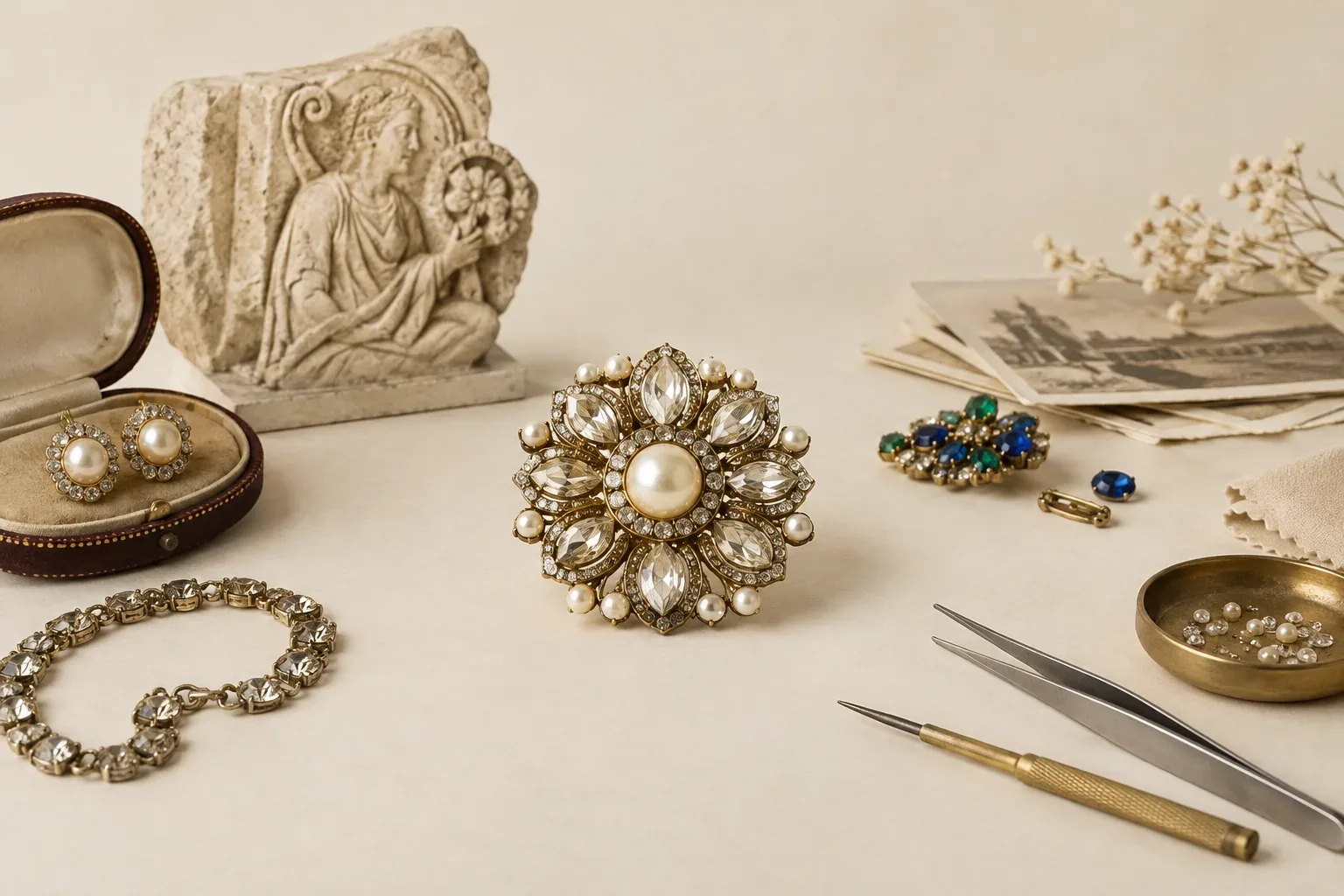
Meaning at a glance
Documented museum evidence shows that costume jewelry borrows styles and materials from many historical periods; care and repair focus on preserving plated metals, glued or set stones, and fragile mountings; seek a professional jeweler for structural repairs, replating, or conservation that risks loss of historic detail.
Documented historical evidence and specific periods
Many of the stylistic sources for what we call vintage costume jewelry are documented by the Victoria and Albert Museum, which describes how jewellery styles and social meanings changed across distinct periods and cultures. The V&A traces influences from Victorian sentimental and mourning jewellery, through the geometric and machine-age look of Art Deco, into the imaginative and glamour-driven designs of the mid-20th century. Each of these periods produced both high-end fine jewellery and lower-cost, imitation alternatives intended to replicate fashionable motifs for a wider public.
In those documented periods the appearance of imitation gems, glass paste, and plated base metals allowed fashionable motifs to spread more widely than traditional precious-metal jewellery. The V&A's overview of gemstones and jewellery history helps identify how specific stones and shapes were copied or reinterpreted in lower-cost materials during different eras and for particular markets.
Separating documented history from modern personal interpretation
Documented history, as recorded by institutions such as the Victoria and Albert Museum, shows how costume jewellery reproduced fashionable forms and motifs from particular eras and class contexts. Those records focus on materials, manufacturing methods, and social use. Modern personal interpretations—what a wearer today feels a piece represents—can differ markedly from the original intent. A mid-20th-century rhinestone brooch that originally signalled Hollywood glamour may now be treasured as a family heirloom or adopted as a symbol of vintage style with personal meaning.
It is important not to conflate historical documentation with universal symbolic meaning. Museums document who made a style and how it circulated; contemporary wearers assign private or community meanings. Both are valid, but they should be described separately: one as recorded context, the other as individual or contemporary interpretation.
How motifs, gemstones, and traditions appear in costume jewellery
Costume jewellery often reproduces motifs drawn from earlier periods: Victorian hearts and lockets were echoed in inexpensive lockets and heart-shaped brooches; Art Deco’s stepped forms and sunburst designs reappear in geometric clips and pendants; and naturalistic motifs such as leaves and insects recur in many eras’ costume pieces. These motifs were reproduced in lower-cost materials to make fashion more accessible, rather than to convey the same social status as fine jewellery.
The Victoria and Albert Museum’s A–Z of Gemstones explains how particular stones and their imitations appear in jewellery. In costume pieces, simulated gems commonly take the form of cut glass, paste, or early plastic imitations that mimic the colour and faceting of true stones. Costume designers often used glass or foil-backed rhinestones to give the impression of brightness and depth without the cost of genuine gems. Understanding these material differences helps identify what a piece is and how it should be cared for.
Practical maintenance: daily care and safe cleaning
For everyday maintenance, keep vintage costume jewelry dry and away from cosmetics, perfumes, and household cleaners, as these can accelerate plating loss and dissolve old adhesives. Store each piece separately in soft fabric or padded compartments to prevent surface abrasion and entanglement, and avoid exposing pieces to prolonged humidity or direct sunlight that can cause certain plastics and adhesives to yellow or become brittle.
When cleaning, use only mild, gentle methods. A soft, dry brush or a microfiber cloth will remove surface dust and oils. If a deeper clean is absolutely necessary, lightly dampen the cloth with plain water and dab rather than scrub; dry immediately. Do not soak pieces with glued stones or pieces with delicate finishes, and avoid aggressive polishing compounds that remove plating or patina. If you are unsure about a piece’s materials, stop and seek professional advice rather than risk irreversible damage.
Repair: what you can safely do at home and what requires a professional
Small, non-structural tasks you can often do at home include reattaching a loose earring back using the correct replacement backs, replacing easily available jump rings with appropriate gauge rings, and gently tightening post fittings with steady, careful pressure. Use appropriate tools designed for jewelry, and work over a soft surface so components are not lost if dropped.
Major repairs should be left to professionals. Any repair that involves soldering, replating, replacing rivets or posts, stabilizing fragile glued stones, or altering the original construction risks changing the piece’s integrity or historic character. Seek a jeweller experienced with costume or period jewellery, and if the piece is of particular historical or family significance, consider a conservator who understands preservation standards rather than a general repair shop.
Warning signs that you need professional intervention
Warning signs include flaking or worn plating that exposes a different base metal beneath, which indicates a need for replating or stabilization; loose or missing stones where settings are fractured or adhesive has failed; cracked or brittle plastic or early resins that may crumble if handled; broken clasps, bent pins, or fractured mountings that compromise the piece’s structural safety; and corrosion or verdigris on base metals that may continue to degrade the object. If you see active corrosion, flakes of metal, or powdery residues, stop handling the piece frequently and consult a professional.
Also consider professional assessment when a repair requires replacement parts that would be visible or change the look of the object. A professional can recommend reversible repairs or document any interventions, preserving provenance and value where possible.
Choosing, gifting, and selecting costume pieces respectfully
When selecting vintage costume jewelry as a gift, consider the recipient’s preferences for style, wearability, and historical authenticity. Choose pieces in good structural condition when the intention is for regular wear; choose more delicate or patinated pieces for display or occasional use. Think about allergies and sensitivities: many costume pieces use base metals or nickel alloys that can irritate some people, so pick items with known metal content or provide a protective means of wearing, such as a fabric barrier or clip-on backing.
If you are gifting a piece with historical interest, provide provenance or a short note explaining its documented period and, where possible, mention how the design originally functioned or was used, citing museum sources such as the Victoria and Albert Museum for historical context. That approach respects both the object’s history and the recipient’s informed appreciation.
When to consult experts and what to ask them
Consult a jeweller with relevant experience if repairs will alter the construction or finish. Ask about the repair methods they use, whether replacements are reversible, whether they document interventions, and whether they have experience with costume pieces or historic conservation. If replating is advised, ask about preparatory cleaning, how the original surface will be handled, and the plating thickness and metal used.
For pieces of clear historical or family significance, consider a conservator who will prioritize preservation over restoration and can advise on minimal, reversible treatments. If authenticity or material identification is important—such as knowing whether stones are glass paste, early plastics, or genuine gems—ask whether the professional can provide or recommend testing or refer to a museum-conservator or accredited appraiser.
Ethical and legal considerations
Be mindful of disclosure and consumer protection when buying or repairing costume jewellery. The Federal Trade Commission provides guidance on the disclosure of treated, imitation, or synthetic gemstones, and suppliers and repairers should be transparent about material substitutions or treatments. When commissioning repairs or replacements that change a piece’s material appearance, keep clear records so future owners understand what is original and what has been altered.
If a piece has cultural or ceremonial origins, approach repair and gifting with respect for those meanings, acknowledging that contemporary personal use may differ from historical or cultural contexts. Museums document original contexts; contemporary choices determine present-day use and meaning.
Summary and practical checklist
Treat vintage costume jewelry as fragile, not disposable. Keep pieces dry and separately stored, clean gently, and resist soaking or abrasive cleaning. Look for warning signs such as flaking plating, loose stones, brittle plastics, active corrosion, and broken mountings. For structural repairs, replating, or anything that risks the object’s integrity, consult a jeweller experienced with costume or period pieces or a conservator for valuable or historically significant items. When gifting, consider wearability, allergen risks, and provide historical context to respect the object’s past.
Document any repairs and ask professionals about reversible techniques. Use museum resources such as the Victoria and Albert Museum for historical context and the Federal Trade Commission for guidance on disclosure of treatments or imitations when buying or repairing pieces.
Frequently asked questions
How often should I clean vintage costume jewelry?
Clean lightly and only as needed. Remove surface dust and oils with a soft, dry cloth after wearing. Avoid frequent wet cleaning or polishing that could remove plating or damage glued stones; deeper cleaning should be infrequent and carried out carefully or by a professional.
Can a jeweller replate flaking costume jewellery?
Yes, many jewellers offer replating for pieces with worn plating, but replating changes the surface and may not be reversible. Ask about the metals used, the plating thickness, and whether any preparatory cleaning could affect original details. For historically significant objects, consult a conservator first.
Are glued stones in vintage costume jewelry repairable?
Glued stones can often be re-secured, but adhesives used in the past can degrade and require careful removal. Re-gluing should be done by someone experienced with costume materials to avoid heat, solvents, or techniques that could damage surrounding materials.
How can I tell if a stone is an imitation or a genuine gem?
Visual inspection can suggest whether a stone is glass, paste, early plastic, or a genuine gem, but identification is sometimes difficult without testing. The Victoria and Albert Museum provides context on how gemstones and their imitations appear historically. For conclusive identification, consult a qualified gemologist or appraiser.
Is it safe to wear vintage costume jewelry every day?
You can wear some vintage costume pieces daily, but frequent wear increases the risk of wear, loss of plating, and damage to brittle or glued components. Choose sturdy pieces for everyday wear and reserve delicate or historically significant items for special occasions.
Sources and further reading
- Bedazzled: A History of Jewellery — Victoria and Albert Museum
- An A-Z of Gemstones — Victoria and Albert Museum
- Buying Gemstones, Diamonds, and Pearls — Federal Trade Commission