Meaning at a glance
Documented museum histories show that jewelry meanings and technologies have changed across periods; modern glue-set stones are a later development mostly associated with 19th–20th century costume and mass-produced pieces. Clean glue-set stones gently with minimal moisture, avoid soaking and heat, store flat and separate, and choose or gift pieces with clear information about construction and care.
What history and museum evidence tell us — cultures and periods
Museums that study jewellery emphasize that meanings and making techniques change with culture, technology and economics. The Victoria and Albert Museum presents jewellery history as a long sequence in which materials, settings and social functions evolve from ancient civilizations through more recent centuries. The V&A discusses how jewellery in ancient Egypt, classical Greece and Rome, medieval Europe, and the Renaissance each used different materials and settings for symbolic, decorative or status purposes and how those contexts shifted again in the Georgian and Victorian eras and into the 19th–20th century transition toward costume jewellery.
Glue-set stones are not a stable ancient tradition documented by historic liturgical or court records; rather, the widespread use of adhesives to attach stones or glass became technically and economically practicable with industrial production and the rise of inexpensive, fashionable costume jewellery in the 19th and 20th centuries. The shift toward mass-produced, glued-in rhinestones and paste is part of the broader story of jewellery becoming accessible to a larger market, a topic the Victoria and Albert Museum examines in its surveys of changing social contexts for adornment.
Documented historical meanings versus modern personal or popular interpretations
Documented historical meanings are those recorded by contemporary sources, museum catalogues and object histories. For example, the V&A documents how particular gemstones, forms and techniques held specific social or symbolic roles in defined historical contexts. These recorded functions and meanings are tied to particular cultures and periods and should not be assumed universal.
Modern or personal interpretations—such as attributing a single symbolic meaning to any piece with glued stones—are contemporary readings that reflect present tastes, marketing, and personal sentiment. Costume or glue-set pieces may carry nostalgic or fashion meanings today, but those are modern layers added to the earlier histories that museums record. Treat historical evidence and modern sentiment as distinct: museum documentation explains past use and social context, while modern meanings are a matter of personal or community interpretation.
How glue-set stones appear in jewellery (motifs, gemstones, and traditions)
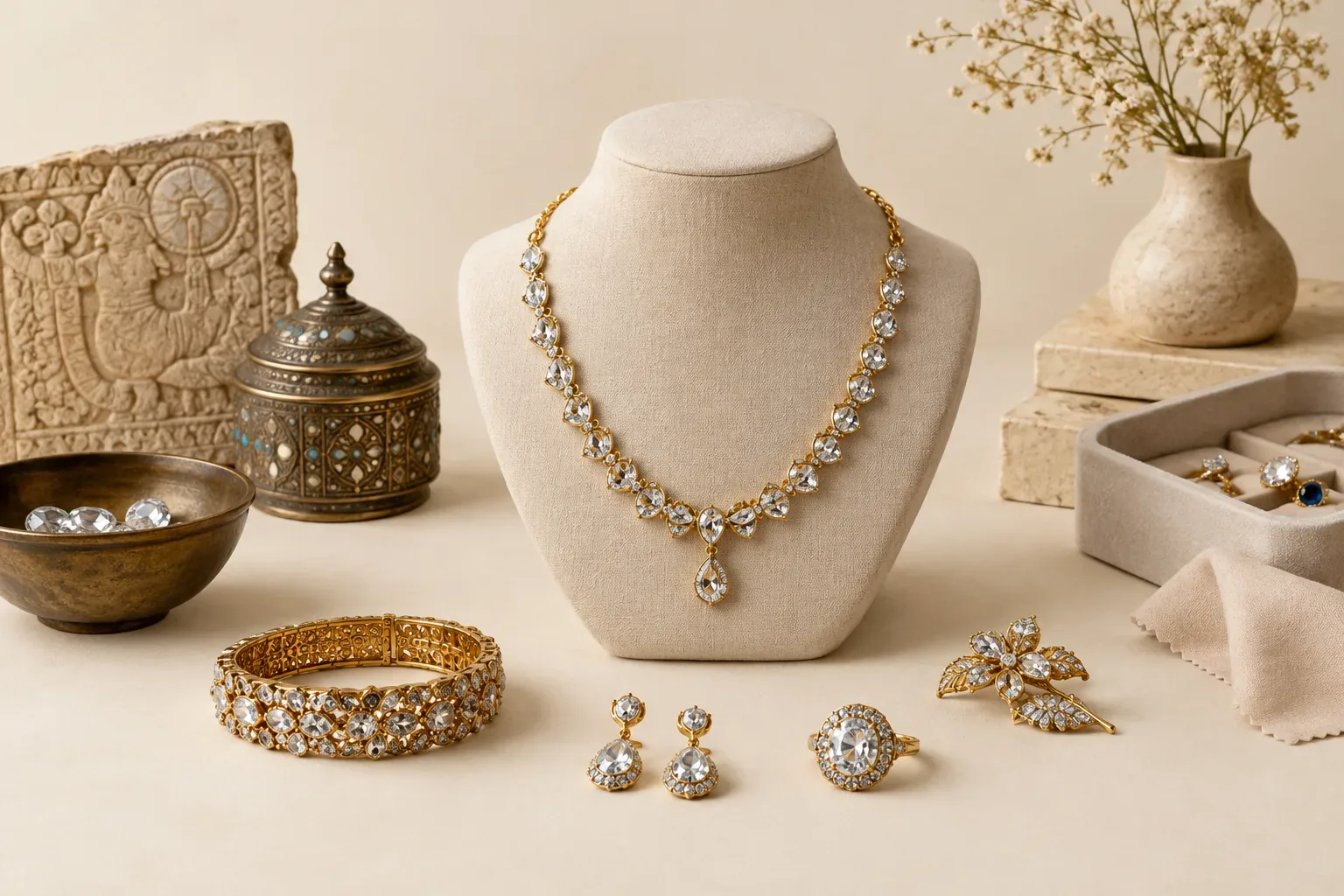
In modern jewellery, glue-set stones most often appear in costume pieces and in settings where speed and low cost are priorities. Typical manifestations include rhinestones, glass cabochons, paste gems, and some synthetic or lower-cost natural stones mounted into metal or composite bases with adhesive rather than with metal prongs, bezels or mechanical settings. These stones are used across motifs from floral sprays to Art Deco geometric panels and in accessories such as brooches, hair ornaments, and fashion necklaces and earrings.
Gemstone identification and the materials used in jewellery are topics the Victoria and Albert Museum treats in its guides to gem materials and their historical uses. Understanding whether a stone is genuine, synthetic or glass and whether it has been glued or mechanically set matters for both conservation and for interpreting the object's intended use and value.
Safe cleaning methods for jewellery with glue-set stones
Start with inspection. Look for loose stones, cracking adhesive, gaps, discoloration or soft spots in the setting. If multiple stones are loose or the adhesive looks discolored, consider professional repair before cleaning.
Work gently. Use only a soft, dry-bristled brush or a clean microfiber or lint-free cloth to remove surface dust. If more cleaning is necessary, lightly moisten the cloth with clean lukewarm water and a drop of mild, pH-neutral soap. Wring the cloth so it is damp, not wet, and gently wipe around the stones without saturating the setting.
Avoid soaking or immersion. Do not immerse glue-set pieces in water, soapy baths, or cleaning solutions. Prolonged exposure to water can soften many adhesives and dissolve backing materials used in costume jewellery.
Avoid heat, steam and ultrasonic cleaners. High temperatures, steam cleaning and ultrasonic baths may soften adhesives or cause backing foils and composite substrates to delaminate, so avoid these professional methods unless a conservator specifically recommends them.
Spot clean with care. For small build-ups of dirt, use a cotton swab lightly dampened with the mild soapy solution to dab at the area and immediately blot with a dry cloth. Do not apply solvents or nail-polish removers, because many adhesives and backing materials are solvent-sensitive and you risk dissolving or spreading the glue.
Dry quickly and fully. After any damp cleaning, dry the piece gently with a soft cloth and let it air-dry face-up on a towel in a warm, dry place away from direct sun or heat sources.
Storage and long-term care recommendations
Store flat and separated. Keep glue-set jewellery flat rather than hanging, and store each item separately in a soft pouch or compartmentalised box to prevent abrasion and pressure on glued stones. Avoid stacking pieces on top of each other.
Control humidity and temperature. A cool, dry storage environment with stable temperatures is best. Avoid attics, basements or car trunks where heat and humidity vary widely. Use silica gel packets in storage boxes to reduce moisture, replacing them periodically.
Avoid prolonged light and heat exposure. Direct sunlight and heat can degrade some adhesives and can fade certain glass or dyed components, so store pieces in opaque or closed containers.
Include care notes with gifted or long-stored pieces. When storing antique or vintage glue-set pieces for the long term, include a note describing the materials, known vulnerabilities (for example, glue-set backing), and preferred cleaning method to help future handlers avoid accidental damage.
Professional conservation for valuable pieces. If a piece has high monetary or sentimental value, consult a professional conservator or a reputable jeweller experienced with costume and historic pieces for advice on safe consolidation or re-setting.
Practical and respectful selection and gifting guidance
Ask about construction and materials. When buying or accepting a gift, request clear information about whether stones are glued, pronged or bezel-set and whether stones are glass, synthetic or natural. Government consumer guidance emphasizes that sellers should make clear material treatments and imitations when relevant, so ask for disclosures and any care instructions when you can (Federal Trade Commission).
Match durability to intended use. If the recipient plans to wear the piece frequently or in active situations, prefer mechanically set stones (prongs/bezel) or pieces designed for daily wear. Reserve glue-set items for occasional, fashion or gentle use.
Be culturally respectful and informed. If a motif has a documented cultural meaning in a particular historical or religious tradition, rely on museum sources and community knowledge to understand that meaning rather than assuming a generic interpretation. Combine that knowledge with the recipient’s preferences—some people prize historically infused motifs, others prefer purely decorative items.
Provide care guidance with the gift. Include a short written note explaining how to clean and store the piece (for example, “wipe gently, do not soak, store flat and dry”), and suggest professional inspection if any stones loosen. This is practical, respectful and helps preserve the piece’s life.
Consider repairability and warranties. Prefer reputable sellers who offer cleaning, repair or clear policies on restoration. For heirloom intention, consider having glue-set stones professionally reset into mechanical settings if durability is important to the recipient.
Summary and best-practice checklist
Glue-set stones are common in costume and many modern fashion pieces and require gentler cleaning and more cautious storage than mechanically set gemstones. Historic contexts for gemstones and settings are diverse and change by culture and period, as documented by the Victoria and Albert Museum, while modern personal meanings are a separate, subjective layer.
In practice: inspect before cleaning, use only lightly dampened cloths and soft brushes, never soak or use ultrasonic or steam cleaners, avoid solvents, store pieces flat and separated in a cool, dry place, and ask sellers for construction details and care instructions (with material disclosures consistent with FTC guidance). When gifting, match durability to the recipient’s needs and include plain, respectful care instructions so the piece’s life is extended.
Frequently asked questions
Can I clean glue-set jewellery with warm, soapy water?
You can gently wipe glue-set jewellery with a cloth lightly dampened in lukewarm water and a drop of mild soap, but do not immerse or soak the piece. Excess water can soften adhesives and backing materials, so blot and dry immediately.
Is it safe to use an ultrasonic cleaner or steam on glue-set stones?
No. Ultrasonic and steam cleaners can loosen adhesive bonds and damage backing foils or composite substrates used in glue-set jewellery; avoid these methods unless a trained conservator advises otherwise.
How should I store glue-set pieces long-term?
Store them flat, separated in padded compartments or soft pouches, in a cool, dry place out of direct sunlight. Use silica gel packets to control humidity and include a note on care to help future handlers.
How can I tell if a stone is glued rather than prong- or bezel-set?
Inspect the perimeter of the stone. Glued stones often sit on a base or in a recessed cup with no visible metal securing edge. Look for film, residue or a shallow lip rather than prongs or a continuous bezel. When unsure, ask the seller or a jeweller for confirmation.
What should I do if stones are loose or adhesive looks damaged?
Stop cleaning the piece and consult a reputable jeweller or conservator experienced with costume or vintage jewellery. Attempting home regluing risks mismatch of adhesives, further damage and loss of stones.
When choosing or gifting glue-set jewellery, what should I ask the seller?
Ask whether stones are glass, synthetic or natural and whether they are glued or mechanically set. Request any care instructions and information on repair or warranty. The Federal Trade Commission recommends clarity on material treatments and imitations, so insist on transparent disclosure.
Sources and further reading
- Bedazzled: A History of Jewellery — Victoria and Albert Museum
- An A-Z of Gemstones — Victoria and Albert Museum
- Buying Gemstones, Diamonds, and Pearls — Federal Trade Commission