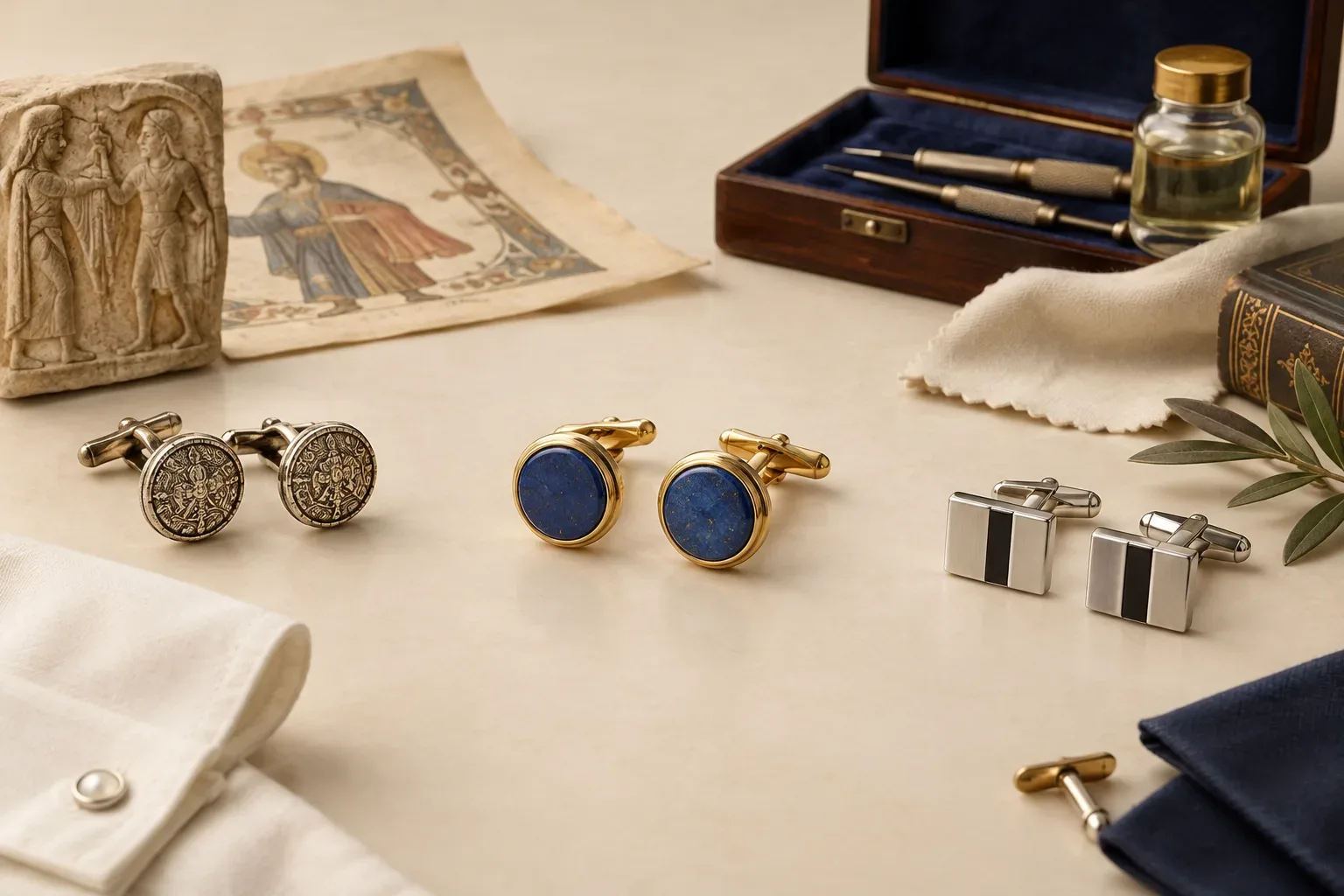
Meaning at a glance
This article explains documented historical context for cufflinks and related gemstones, separates recorded meanings from later personal interpretations, describes how motifs and materials appear in cufflink design, lists common warning signs that require professional attention, and gives practical guidance for choosing and gifting cufflinks and preserving them at home.
What the historical record shows
Museum research and curatorial writing identify cufflinks as part of a long history of personal adornment whose meaning changed with fashion and social structures. The Victoria and Albert Museum presents that jewellery, including men’s dress accessories, should be understood in changing social contexts rather than as having a single, fixed meaning. The V&A's work illustrates how small accessories functioned as markers of status, profession, or fashion, and how manufacturing, materials and tastes evolved over time.
That documented museum perspective is important because it anchors our understanding of cufflinks in observable objects, materials and wardrobes rather than in later popular claims about universal symbolism. Use the V&A's historical framework to interpret cufflinks as artifacts that reflect period tastes, available techniques, and the social meanings assigned to dress at particular times and places.
Separating documented historical meanings from modern interpretation
The historical record preserved in museum collections and catalogues tends to show cufflinks as markers of social identity, wealth or fashion rather than as fixed religious or cultural symbols. When curators describe cufflinks in context, they emphasize makers' techniques, materials and the changing role of male dress. The Victoria and Albert Museum's scholarship supports reading cufflinks as objects embedded in changing social practices.
Modern personal interpretation differs from documented history because people now assign individual meanings—sentimentality, a corporate logo as identity, a family crest as heritage, or a motif picked for perceived symbolism. Those contemporary meanings are valid for wearers, but they are not the same thing as documented cultural or religious usage in historical sources. Keep the distinction clear: documented evidence tells us how cufflinks were made and used; modern meaning is often personal and situational.
How motifs, gemstones and traditions appear in cufflinks
Cufflinks commonly carry motifs such as monograms, family crests, knots, geometric patterns or figurative scenes. These motifs are applied by engraving, enamelling, chasing or the use of applied elements. Motifs that appear on cufflinks often mirror broader trends in jewellery and decorative arts, adapting techniques that appear across necklaces, rings and brooches.
Gemstones appear in cufflinks in small cabochons or faceted stones set into bezels, prongs or collets. The Victoria and Albert Museum's reference material on gemstones explains identification and historical context for stones used in jewellery, which helps when assessing whether a stone requires specialist attention. Many gemstones used in cufflinks are cut and set to withstand wear, but each material behaves differently and can require different care.
Common warning signs that cufflinks need repair
Look for mechanical failures: a toggle that no longer flips or locks, a bent post, a missing screw or a hinge that has developed play. These are mechanical issues where small repairs by a skilled jeweller are usually needed to restore function and prevent further damage.
Look for losses in structural integrity: a stone that wiggles in its setting, enamel that is lifting or flaking, deep dents or cracks, and metal fatigue near a joint. Surface wear such as heavy scratching, worn plating or persistent tarnish are also signs that a professional intervention—such as re-plating or polishing by a conservator or jeweller—may be appropriate.
Everyday maintenance you can do safely
For routine care, handle cufflinks gently, wipe them with a soft, dry cloth after wearing to remove oils and perspiration, and store them separately in a lined case to prevent scratching. Keeping them dry and away from strong chemicals—such as chlorine, bleach, or household cleaners—reduces the risk of corrosion and finish loss.
Avoid aggressive ultrasonic cleaners or abrasive pastes without first checking the materials involved. Some gems, certain enamels and plated metals are vulnerable to these treatments. When in doubt, consult a jeweller for guidance specific to the metal, gemstone and construction used in a particular pair of cufflinks.
When to consult a professional jeweller or conservator
Take cufflinks to a professional when there is a mechanical failure, a loose stone, significant surface loss, or when a decorative finish such as enamel or inlay is damaged. Professional repairers can re-solder broken joints, replace or repair hinges and toggles, tighten or re-set stones, and re-plate metals where needed. For antiques or pieces with historic surfaces, ask for a conservator or an experienced jeweller who understands conservation principles and the value implications of invasive treatment.
If the cufflinks contain gemstones or materials that may have been treated or are brittle, point this out to the repairer. The Federal Trade Commission’s guidance on buying gemstones, diamonds, and pearls stresses disclosure of treatments and imitations; repair decisions and cleaning methods should take any such treatments into account.
Selecting and gifting cufflinks respectfully
Choose cufflinks with attention to the recipient’s wardrobe, cuff style and comfort. Consider cuff thickness and the width of the link: oversized or heavy designs may not work with all shirts. Think about the wearer’s metal allergies and choose hypoallergenic options or confirm metal content before gifting. If the pair contains gemstones, ask the seller about treatments and hardness so you can advise care.
Be respectful about motifs. If you select a crest, religious symbol or cultural emblem, be sure you understand its provenance and contemporary meaning. Museum scholarship shows that symbols' meanings can vary by time and place; a historically interesting motif is not necessarily appropriate for every wearer. If in doubt, choose a neutral or clearly personal motif such as an initial, colour or texture that aligns with the recipient’s taste.
Buying with repairability and provenance in mind
When buying new or vintage cufflinks, check how they are constructed. Solid metal posts and hinged mechanisms are generally more repairable than plated, glued or riveted constructions. Ask for hallmarks or maker’s marks, which help identify materials and provenance. The Victoria and Albert Museum’s materials reference can help you understand how certain gems and metals were used historically and how that affects conservation choices.
If gemstones are present, request written disclosure about treatments or imitations as recommended by the Federal Trade Commission. Be wary of unattributed repairs or missing parts on vintage pieces and factor likely repair costs into the purchase decision.
Preserving sentimental or heirloom cufflinks
Treat heirloom cufflinks with conservational caution. Document their condition with photographs before any repair is attempted. For pieces with sentimental value, choose a conservator or jeweller who will discuss non-destructive options first and who will explain the impact of any intervention on appearance and value.
If a piece is primarily sentimental rather than of high monetary value, a discreet repair that preserves function may be the right choice. If the piece has collector interest or historic finishes, favor conservation over full restoration so that original materials and patina are retained where possible.
Final considerations
Cufflinks combine small moving parts with decorative finishes and, occasionally, fragile gemstones and enamels. That mix means routine, conservative care and timely professional attention are the best routes to keeping them wearable and meaningful. Use museum scholarship to understand the historical context of a motif, and rely on professional jewelers and conservators when mechanics or materials require intervention.
Remember that documented historical uses and meanings recorded by museums differ from modern, personal interpretations. Choose and gift cufflinks with an awareness of both the object’s material needs and the wearer’s preferences, and ask for material and treatment disclosures at purchase to make informed long-term care decisions.
Frequently asked questions
How can I tell if a cufflink stone is loose?
Gently test a stone with light fingertip pressure or by holding the cufflink close to your ear and listening for a rattle. If a stone moves, wiggles, or produces a sound, avoid wearing the cufflinks and seek a jeweller for tightening or re-setting.
Are ultrasonic cleaners safe for cufflinks?
Ultrasonic cleaners can be effective on robust metals and some hard gemstones but may damage delicate settings, enamel, or certain treated stones. When unsure, ask a jeweller for advice about the specific materials in your cufflinks.
Can worn plating be redone?
Yes, worn plating can often be re-applied by a professional. Re-plating will change the surface finish and may require stripping and polishing first, so discuss the long-term implications and costs with the repairer.
What should I ask when buying gem-set cufflinks?
Ask the seller for written information about metal content, gemstone identity, and any treatments or imitations, as recommended by the Federal Trade Commission. Also inquire about the construction and repairability of the piece.
When is it better to conserve rather than fully restore an heirloom pair?
If the cufflinks have historic significance or original finish that contributes to their value, favor conservation that stabilizes the piece and retains original materials. A conservator or experienced jeweller can advise which interventions are reversible and appropriate.
Sources and further reading
- Bedazzled: A History of Jewellery — Victoria and Albert Museum
- An A-Z of Gemstones — Victoria and Albert Museum
- Buying Gemstones, Diamonds, and Pearls — Federal Trade Commission