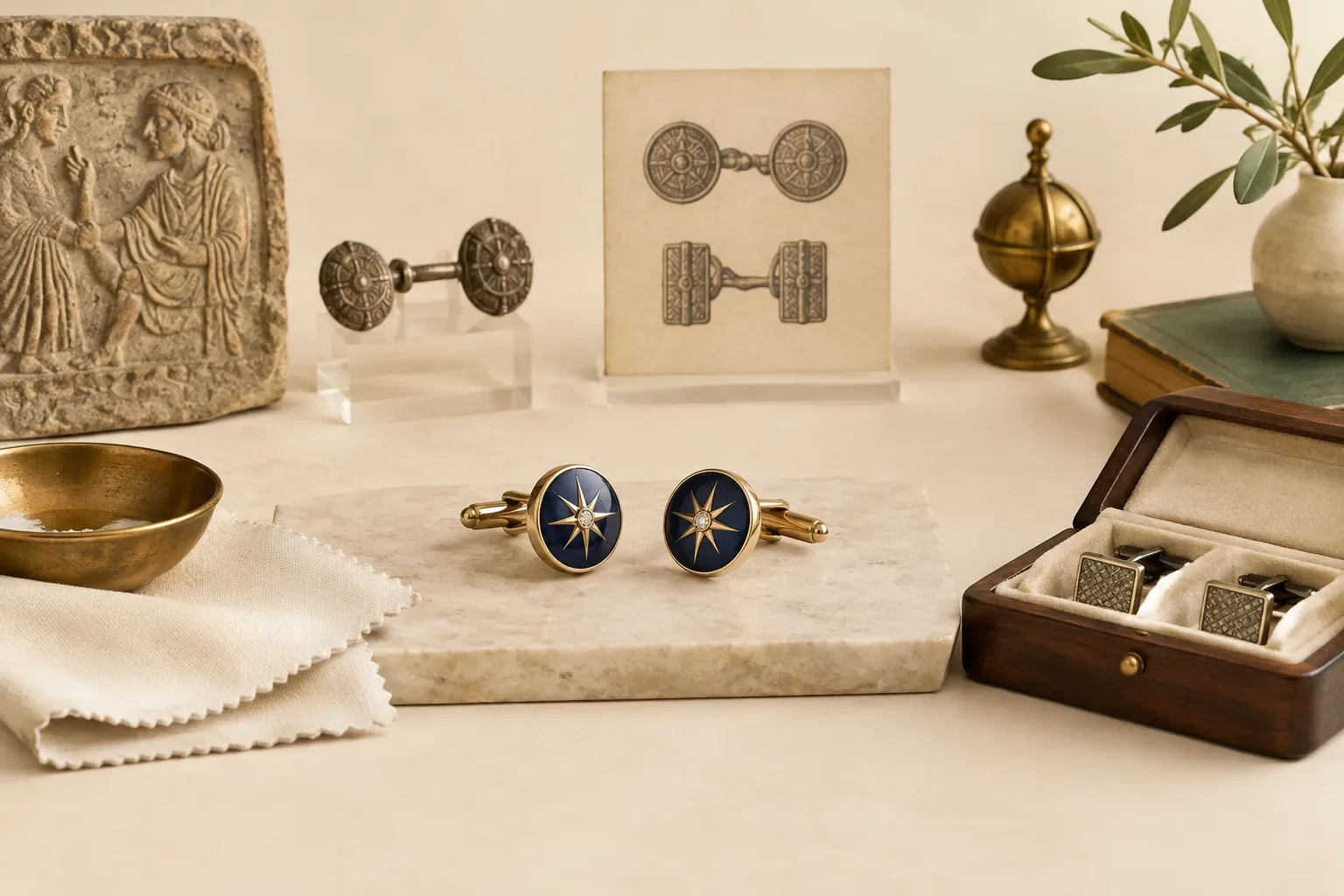
Meaning at a glance
Clean and store cufflinks using gentle, material-appropriate methods to avoid abrasion, chemical damage, and tarnishing; historically, cufflinks and men's dress accessories changed meaning with fashion and social context (as documented by the Victoria and Albert Museum), and modern personal meanings are separate from those historical uses. Select and gift cufflinks by balancing material, motif, and cultural respect, and avoid common mistakes such as using harsh chemicals, mixing metals in storage, or ignoring plated finishes.
Quick answer
Handle cufflinks according to what they are made of: clean them with the mildest appropriate method — a soft cloth, gentle soap and water for stable stones and metals, or manufacturer-recommended care for plated or delicate surfaces — and store them separated in a dry, padded container to prevent abrasion, oxidization, and loss. The Victoria and Albert Museum documents how jewelry, including men’s dress accessories, has changed meaning across time; modern owners should separate that documented history from contemporary personal or symbolic choices when choosing, wearing, or gifting cufflinks.
What museums tell us about cufflinks and changing meaning
Collections and exhibitions at institutions such as the Victoria and Albert Museum trace how jewellery moves through changing social contexts and fashions rather than holding a single, universal meaning. The V&A places cufflinks and similar accessories within a broader history of personal ornament and dress, showing that function, status, and style have shifted over time rather than remaining fixed.
Documented historical uses versus modern interpretations
Documented historical evidence—summarized by the Victoria and Albert Museum—shows that items of personal dress have been used to mark social position, professional identity, or evolving fashion tastes. Those documented functions are distinct from the many meanings people attach to cufflinks today. Modern personal interpretations—sentimental use, commemorative engraving, or selection for aesthetic or symbolic reasons—are valid for the wearer but are not the same thing as the historical social functions recorded by museums.
How motifs, gemstones, and traditions appear in cufflink design
Cufflinks are manufactured in a wide range of materials and styles: plain metals, decorative motifs, enamel, and settings that include both precious and semi-precious gemstones. Museums’ gemstone guides note the long history of gem use in jewellery, and many cufflinks incorporate small stones or inlays that reflect that tradition. Motifs can be monograms, heraldic or civic symbols, geometric forms, or popular decorative themes; some designs echo historical dress conventions while others follow modern tastes. Whether a cufflink features a plain gold face, an inset stone, or an enamel emblem, the motif and material will determine both how you should clean it and what cultural or personal meanings it may carry.
Safe cleaning: general principles and material-specific notes
Start with the gentlest approach. For many stable metals and durable stones, a soft microfiber or cotton cloth used to wipe away surface oils will be the safest first step. If more cleaning is needed, a small amount of mild, non-abrasive soap in lukewarm water and a soft brush can remove grime from crevices. Always rinse thoroughly and dry immediately with a soft cloth to prevent water spots or corrosion.
Cleaning considerations by material
Precious metals such as solid gold and sterling silver tolerate simple mechanical polishing and mild soap-and-water cleaning, but silver may tarnish over time and may benefit from periodic very gentle polishing with a cloth made for silver. Plated metals (gold-plated, rhodium-plated, or vermeil) require extra care: do not abrade plated surfaces with harsh brushes or abrasive cleaners because you can remove the plating. Stones and inlays vary: many hard gemstones and mother-of-pearl withstand gentle soap-and-water cleaning, but porous or treated stones and delicate enamels can be damaged by soaking or harsh chemicals. When in doubt, use the gentlest method or consult the maker.
Mistakes to avoid
Common errors include using strong household chemicals, abrasive cleaners, or ultrasonic cleaners on plated or delicate pieces; soaking assembled cufflinks with glued elements that can detach; and polishing away thin plating. Another frequent mistake is treating all cufflinks the same regardless of construction: a cufflink with a glued cabochon or an antique cufflink with fragile enamel needs a different approach from a modern machine-made solid-metal piece. The Federal Trade Commission reminds buyers that material treatments and imitations exist, so you should confirm construction before attempting aggressive cleaning methods that could damage coatings or glued elements.
Storage best practices to prevent damage
Store cufflinks in a dry, stable environment away from direct sunlight and humidity. Keep each pair separated or individually padded so metal faces and stones do not rub against one another; even small knocks and repeated contact produce abrasion. For silver items, short-term anti-tarnish bags or packets can slow oxidation, but long-term storage should still be dry and ventilated to avoid trapping moisture. Avoid storing cufflinks in the same container as household chemicals, cosmetics, or leather goods that may off-gas and affect finishes.
Handling, upkeep routines, and inspection
Adopt a gentle handling routine: put cufflinks on last when dressing and remove them first when undressing to reduce exposure to sprays and perspiration. Periodically inspect screw fittings or toggle mechanisms for looseness and have a trusted jeweller repair mechanical parts rather than forcing them. Regular light cleaning and safe storage are easier on a piece than infrequent, aggressive treatments.
Selecting and gifting cufflinks: practical and respectful guidance
When choosing cufflinks as a purchase or gift, match material and motif to the wearer’s lifestyle and sensitivities. Consider whether the recipient prefers minimalist or ornate styles, whether they will wear the pieces frequently, and whether they have metal allergies. If a motif borrows religious or cultural symbols, research its meaning and use respectfully; historical context recorded by museums can help, but modern cultural significance or personal associations may differ. For gemstones and treatments, follow the FTC’s advice to confirm disclosures about treated stones, plating, or imitations before buying to understand care needs and value. For heirloom or antique pieces, consult a conservator or experienced jeweller about appropriate cleaning and storage rather than attempting restoration yourself.
Document history, then personalize respectfully
Use documented history as a guide rather than a rule. Museums such as the Victoria and Albert Museum document how social meanings have shifted; that record helps you understand provenance and cultural context. But historical usage does not prescribe modern meaning for an individual wearer. If you select cufflinks as a commemorative item or family keepsake, clearly distinguish which aspects come from documented tradition and which are your own modern interpretation so that the piece’s story remains honest and respectful.
When to consult a professional
If a cufflink is antique, has fragile enamel, a glued setting, or an unfamiliar treatment, seek advice from a conservator or reputable jeweller before cleaning. For questions about gem treatments, disclosure, or authenticity when buying or caring for jeweled cufflinks, the Federal Trade Commission’s guidance on buying gemstones, diamonds, and pearls is a useful consumer resource about material treatment disclosure and common marketplace practices.
Final practical checklist
Use a soft cloth for daily wiping, mild soap and a soft brush only when necessary, avoid harsh chemicals and abrasives, separate pairs in padded storage, check mechanical parts periodically, and seek professional advice for antiques or treated stones. Remember that museums like the V&A document shifting functions and meanings in jewellery history; that documented context can inform respectful choices but does not replace the modern wearer’s personal or sentimental interpretation.
Frequently asked questions
Can I clean all cufflinks with a jewellery dip or ultrasonic cleaner?
No. Jewellery dips and ultrasonic cleaners can remove plating and loosen glued elements, and they can damage delicate enamels or treated stones. Use the gentlest cleaning method first and consult the maker or a professional for antique, plated, or delicate items.
How should I store plated cufflinks differently from solid metal ones?
Keep plated cufflinks in a padded compartment to prevent rubbing that wears away the thin plating, and avoid abrasive cloths or polishes. Solid precious metal pieces are more robust but still benefit from individual padding to prevent scratching.
Are there cufflink motifs I should avoid as gifts for cultural sensitivity reasons?
Yes. Religious, civic, or ethnic symbols can carry contemporary cultural significance beyond historical usage. Research a motif’s modern meaning and consult the recipient if appropriate; museum documentation can help with historical context but not present-day sensitivities.
How often should I inspect mechanical parts on cufflinks?
Inspect toggles, screws, and other moving parts periodically—every few months if worn frequently—and have any loose or damaged mechanisms serviced by a qualified jeweller rather than attempting to force repairs yourself.
What should I ask about gemstones or treatments when buying cufflinks?
Ask whether stones are natural or treated, whether metals are plated, and whether any adhesives or assembled elements might affect care. The Federal Trade Commission advises consumers to seek disclosures about treatments and imitations before purchase.
Sources and further reading
- Bedazzled: A History of Jewellery — Victoria and Albert Museum
- An A-Z of Gemstones — Victoria and Albert Museum
- Buying Gemstones, Diamonds, and Pearls — Federal Trade Commission