Meaning at a glance
This guide explains safe cleaning and storage methods for earrings, outlines historical evidence about care and changing contexts from museum sources, separates documented meanings from later interpretations, describes how motifs and gemstones appear in earrings, and offers selection and gifting advice.
Short answer — what to do and why
Keep earrings clean with gentle, low-risk methods: mild soap and warm water, a soft brush, and a microfiber or lint-free cloth for routine care, and avoid soaking or ultrasonic cleaning for porous, soft, or treated stones. Store earrings separately in a dry, lined box or soft pouches, limit exposure to chemicals and humidity, and label pieces that need special care. When in doubt, consult a professional jeweler for inspection and safe cleaning.
This article explains the practical routines and the reasons behind them, and it also places those routines within documented historical change and modern interpretation so you can care for earrings respectfully and effectively.
What museums say about historical care and changing contexts
Scholars and curators at the Victoria and Albert Museum place jewelry in social and technological history rather than as timeless symbols. The V&A explains that jewellery styles, materials, and how people wore and looked after pieces have shifted as fashions, trade networks, and technology changed. This means documented practices for cleaning and storage are themselves historically variable: methods that suited one metal or one social context were not necessarily appropriate for another.
The V&A’s work on gemstones highlights that the value and treatment of specific stones have also changed across cultures and periods. Some materials that were once prized for their surface effects require delicate handling today, and some historical treatments would be unacceptable or unstable if copied without disclosure in modern objects.
Documented historical meanings versus modern personal interpretations
Documented historical meanings about earrings and their care are best drawn from museum research and period records. The Victoria and Albert Museum's historical accounts show that jewellery signified rank, identity, and trade relations in particular cultures and times, and that care practices were shaped by the materials and technologies available then. These are specific, evidence-based claims about past uses and contexts.
Modern personal interpretations — for example treating a family pair of earrings as a talisman of continuity, or assuming that a decorative motif always means a single thing — are personal or contemporary social constructions. They can be meaningful and valid for the wearer, but they are not the same as documented historical evidence and should not be presented as universal facts.
How motifs, gemstones, and traditions appear in earrings
Motifs appear in earrings as engraved patterns, cast forms, applied enamels, and arranged stones. Across history, motifs have been influenced by religious symbols, court fashion, trade, and technological innovations in metalworking and gem cutting. The ways motifs are used reflect the cultural context recorded by museums and historians rather than a single, unchanging meaning.
Gemstones in earrings range from hard, stable stones to soft or porous materials. Museum resources that catalogue gemstones stress that each mineral has its own physical properties and historical uses. Some gems are traditionally cut and set to catch light; others, like pearls and certain organics, are valued for surface and texture and require different handling. Traditions such as heirs’ pairs of earrings or ceremony-associated styles survive in modern jewelry but their meanings have evolved with changing social norms.
Practical cleaning methods (safe, step-by-step guidance)
For routine cleaning of solid gold and platinum earrings, warm water with a drop of mild dish soap, a short soak of a few minutes, and gentle brushing with a soft brush will remove oils and residues. Rinse under running water and dry with a lint-free cloth. These materials are chemically stable and tolerate light cleaning well.
Silver can tarnish from exposure to air and chemicals. Clean silver earrings with the same mild soap and water routine or with a silver polishing cloth made for jewelry. Avoid abrasive cleaners that remove metal or decorative finishes. For heavily oxidized pieces, consult a professional to avoid damage to any applied surfaces or patinas.
Gemstones vary: hard stones such as sapphires and rubies generally tolerate mild soap and brushing. Avoid prolonged soaking for porous stones such as turquoise, opal, lapis, or some dyed materials because they can absorb liquids, and avoid steam or ultrasonic cleaning for stones known to be porous or fracture-prone. Pearls and other organic materials should never be soaked; instead, wipe them gently after wear with a soft cloth and store them flat to avoid strain on any stringing.
When a stone is known or suspected to be treated — for example filled, dyed, or coated — treat the pair more carefully and seek professional advice before using ultrasonic, steam, or chemical cleaners. The Federal Trade Commission notes that treatments exist and that disclosure matters when buying gemstones; treatment status also affects how fragile or porous a stone will react to cleaning methods.
Safe storage practices to prevent damage and loss
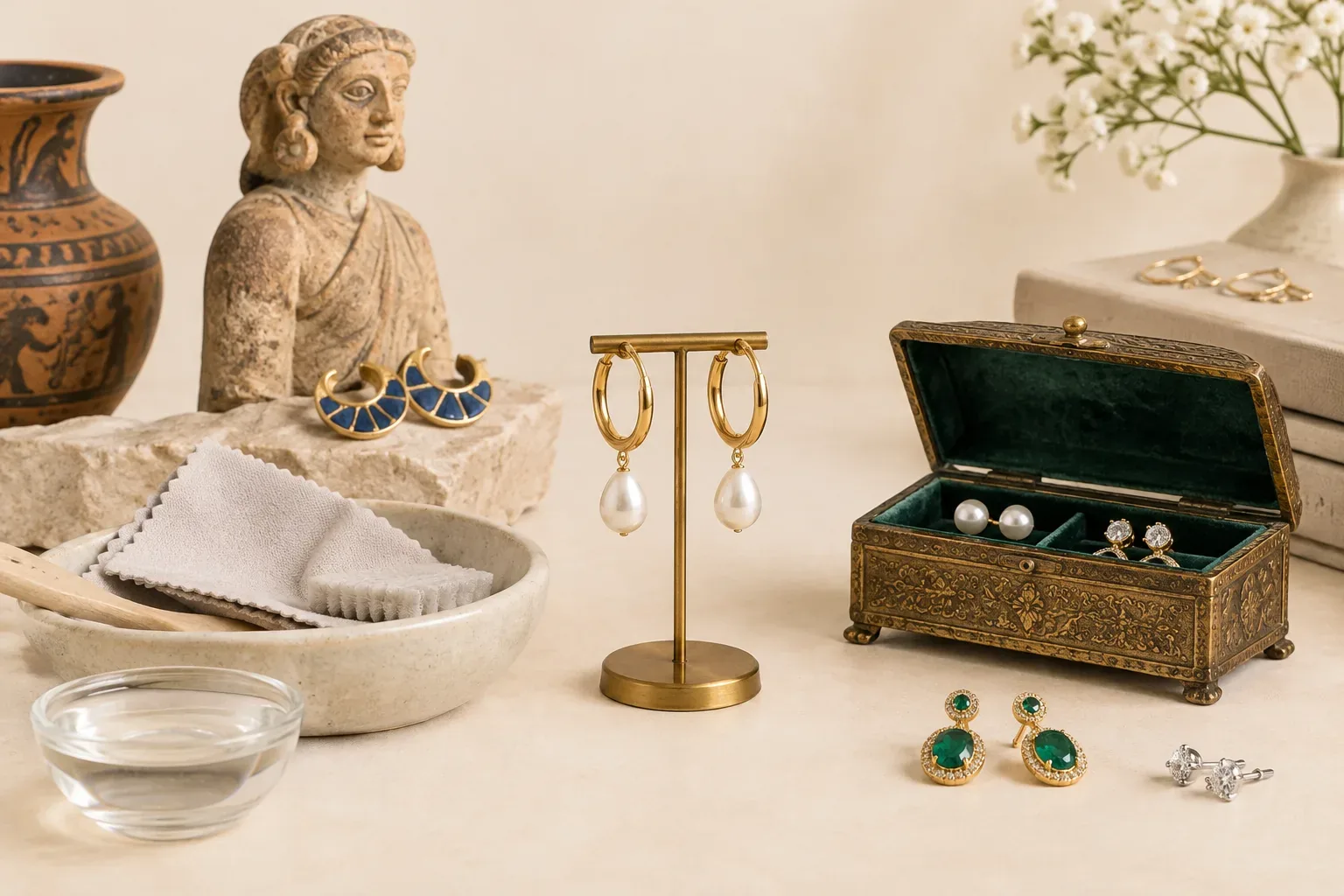
Store earrings with these principles in mind: separation, dryness, padding, and clear labeling. Keep pairs together in a compartmentalized jewelry box or in small soft pouches so pieces do not rub each other. Use lined compartments to protect finishes and soft fabrics to cushion settings and wires.
Avoid storing earrings in direct sunlight, in bathrooms, or in humid environments. A small silica gel packet in your jewelry box helps control humidity. Anti-tarnish strips in a closed storage box reduce silver oxidation. For heirloom or high-value earrings, keep an inventory with photographs and a note about any special care they need.
Selection and respectful gifting guidance
When choosing or gifting earrings, consider the materials and the recipient’s lifestyle and values. If the recipient has metal allergies, select nickel-free metals or confirm plating and base-metal composition. Choose stones and settings that suit how the earrings will be worn day-to-day, and include care guidance or a simple care card so the recipient knows whether pieces need special handling.
Be mindful of cultural and religious significances. Museums document that specific styles and motifs have held particular meanings in specific times and places. If an earring style originates in a living culture and carries ritual or identity significance, show respect: ask about appropriateness, choose ethically sourced items, and avoid appropriating symbols in a way the wearer or community might find objectionable. For heirloom gifting, consider professional cleaning and a storage solution to accompany the gift so it is received ready for safe wear.
Common mistakes to avoid and when to seek professional help
Common mistakes include using household bleach or ammonia solutions on jewelry, scrubbing with abrasive materials, putting delicate earrings into ultrasonic cleaners without checking for treatments, and storing mixed-metal pieces together so they rub and scratch. Avoid sleeping or exercising with delicate earrings that could snag or bend.
Seek a professional jeweler if an earring has loose stones, visible damage, complex settings, or if you suspect a historic or treated stone may be harmed by routine cleaning. For valuable antiques or pieces with historical importance, consult a conservator or a museum-trained professional to avoid irreversible damage. A knowledgeable jeweler can also verify metal content and treatments, and recommend safe, appropriate care.
Frequently asked questions
How often should I clean my everyday earrings?
Clean everyday earrings with mild soap and warm water every few weeks if worn regularly, and wipe them after each wear to remove oils and cosmetics. Frequency depends on wear, environment, and materials.
Can I use an ultrasonic cleaner on all earrings?
No. Ultrasonic cleaners can dislodge stones and damage porous or treated gems and organic materials like pearls. Check for treatments and stone type first, and when in doubt, avoid ultrasonics or consult a jeweler.
What is the best way to clean pearl earrings?
Wipe pearls gently with a soft, slightly damp cloth after wear and avoid soaking them. Store pearls flat and separate from harder gemstones that could scratch their nacre.
How should I store pairs so I never lose one earring?
Store paired earrings together in a compartmentalized box or a labeled pouch. Photograph and inventory valuable or sentimental pairs in case of loss.
Are there materials that need professional cleaning only?
Yes. Antique pieces, fragile settings, or earrings with loose stones or unknown treatments should be evaluated and cleaned by a professional jeweler or conservator to avoid damage.
Should I avoid wearing earrings while swimming or showering?
Avoid wearing earrings in pools or hot tubs, and limit exposure in showers. Chlorine and other chemicals can affect metals and treatments, and soap residues can build up in settings.
Sources and further reading
- Bedazzled: A History of Jewellery — Victoria and Albert Museum
- An A-Z of Gemstones — Victoria and Albert Museum
- Buying Gemstones, Diamonds, and Pearls — Federal Trade Commission