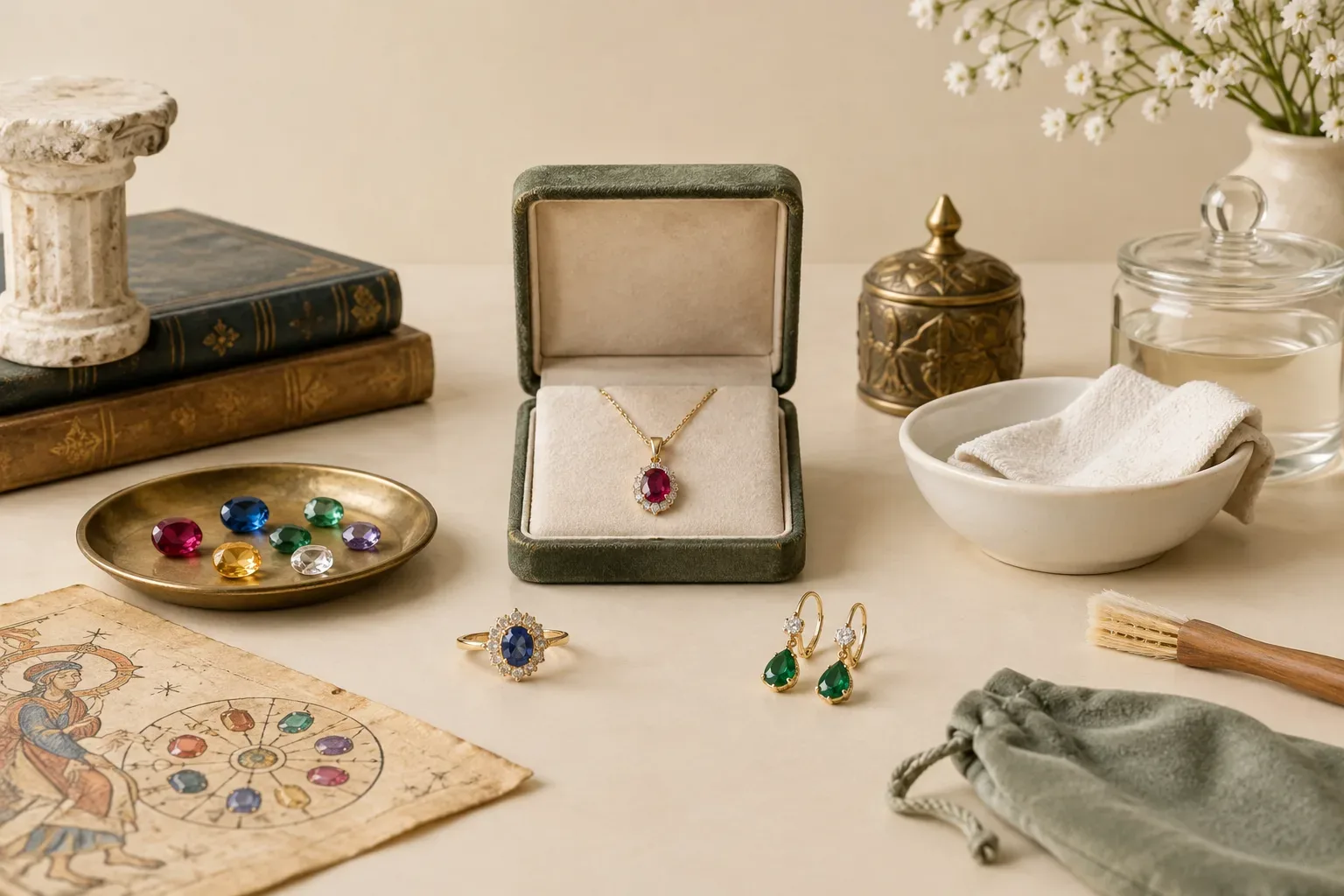
Meaning at a glance
This guide explains the historical context of birthstones using museum research, separates documented historical uses from modern personal meanings, and gives conservative, practical advice for cleaning and storing birthstone jewelry while flagging common mistakes and what to ask sellers about treatments.
Quick answer
Treat birthstone jewelry like any mixed-material jewelry: keep it dry, avoid harsh chemicals and extremes of heat, clean gently with a soft cloth or a mild soap-and-water rinse when appropriate, and store pieces separately to prevent scratching. Ask sellers about any treatments or imitations before buying. This article explains the historical context of birthstones, distinguishes documented historical uses from modern personal meanings, and gives conservative, practical cleaning and storage guidance you can use for most birthstone pieces.
What the historical record says (and who records it)
The Victoria and Albert Museum presents the history of jewellery as a record of changing social uses, aesthetics, techniques, and trade connections rather than a single, continuous symbolic system. Museum research collected and summarized by the Victoria and Albert Museum traces jewellery from ancient, medieval, early modern, and Victorian contexts into contemporary design and notes that gemstones have been treated differently depending on time, place, and function.
That institutional perspective means that references to gemstones and their meanings in historical sources are tied to particular cultures and times. For example, gemstones and gem settings appear in burial goods, court dress, religious objects, and trade inventories in different periods, and the V&A treats these as evidence of social value, craftsmanship, and material exchange rather than proof of a single, universal symbolic meaning.
Documented historical meanings versus modern personal interpretations
Documented historical meanings recorded in museum collections and research are contextual: a gem may have signified status, wealth, religious affiliation, protective power, or a connection to trade routes in a particular society. The Victoria and Albert Museum links gemstones and jewellery to those observable social roles in the material record, not to one fixed spiritual or emotional meaning.
Modern ideas about birthstones—family connections, monthly personality associations, or New Age claims—are largely later popular constructions and personal interpretations. These modern meanings are valid as personal or cultural practices today, but they are distinct from the historical record. Keep the distinction clear: museums document how jewellery was used and described in historical texts and collections, while contemporary wearers and retailers often layer modern meanings onto stones for sentimental, commercial, or therapeutic reasons.
How birthstones appear in jewellery: motifs, settings, and materials
In jewellery, birthstones appear in a wide variety of motifs: single-stone rings and pendants, multi-stone birth-month bands, charm bracelets, and engraved lockets. Historically, gemstones were set according to the prevailing metalworking techniques of the time—bezel settings, prongs, pavé, and inlay—and those same methods are used in modern birthstone pieces. The Victoria and Albert Museum’s coverage of gem materials describes how different stones were preferred for particular kinds of objects in various periods, which helps explain why some stones became associated with personal adornment.
Contemporary birthstone jewellery often combines the gemstone with symbolic motifs such as hearts, initials, or zodiac signs. Those motifs are modern design choices layered onto the long-standing practice of wearing gemstones; they are not direct continuations of a single historical motif, but rather new expressions that reference antiquity, fashion, or personal meaning.
Safe cleaning methods (practical guidance)
Start by identifying the materials in the piece. If you bought the item from a reputable seller, ask about treatments, imitations, and the metal type before cleaning. The Federal Trade Commission advises buyers to request clear disclosure about gemstone treatments and imitations at the point of sale; that information affects how you should care for a stone.
For most modern, solid gemstones set in sturdy metal, gentle cleaning with a soft, lint-free cloth and warm water with a drop of mild dish soap is a safe starting point. Rinse thoroughly and dry with a soft cloth. Avoid harsh household chemicals, bleach, and abrasive cleaners because these can damage metal finishes and some gem surfaces.
If a piece contains porous or soft materials—such as certain organic gems, treated stones, or fragile settings—or if you do not know the stone or treatment, consult the maker’s care instructions or a qualified jeweler before attempting deeper cleaning. When in doubt, professional cleaning and inspection are prudent steps, especially for sentimental or high-value items.
Storage solutions that reduce wear and damage
Store birthstone jewellery individually to prevent pieces from rubbing together and scratching. Use soft pouches or lined compartments in a jewelry box. Keep jewellery away from direct sunlight, sustained heat, and high humidity because extremes can affect some stones and metal finishes.
Separate pieces containing softer or more porous materials from harder gemstones and metals so they cannot be scratched or abraded. For longer-term storage, wrap items in acid-free tissue and place them in a dry, stable environment. If a piece contains loose settings or shows signs of wear, store it flat and consider a professional inspection to avoid lost stones.
Common mistakes to avoid
Do not assume every gem is durable enough for the same cleaning methods. Treatments and imitations change a stone’s surface and internal structure. Because sellers may have treated a stone, always ask about treatments before cleaning; the Federal Trade Commission advises disclosure at sale. Avoid soaking or using ultrasonic cleaners on pieces whose composition you do not know, and avoid rough handling that can loosen settings.
Avoid storing different pieces together in a single pile or dish, and avoid putting jewellery on before applying cosmetics, perfumes, or lotions to minimize surface films and chemical exposure. These straightforward habits reduce wear and keep stones and metals in better condition over time.
Choosing and gifting birthstone jewellery—practical and respectful guidance
When selecting a birthstone piece as a gift, consider the recipient’s lifestyle and the stone’s durability. If the wearer is active or washes hands frequently, choose designs and stones suited to daily wear. If the item is intended for occasional wear, you can choose more delicate settings or softer materials.
Respect personal and cultural meanings. Some recipients appreciate traditional birth-month associations, while others prefer stones chosen for color, family connections, or aesthetic harmony. If the recipient follows specific cultural or religious practices around certain stones, ask sensitively or choose a neutral option. When buying, ask the seller about treatments and request written disclosure if the piece has undergone enhancement or is an imitation; the Federal Trade Commission recommends clear disclosure procedures for gemstones, diamonds, and pearls.
When to seek professional help
If a setting is loose, a stone is missing, or a gem appears cloudy or cracked, stop home cleaning and consult a reputable jeweler for inspection and repair. For heirloom pieces or gemstones whose identity and treatment history are unknown, a professional assessment preserves value and prevents accidental damage during home care.
Professionals can also offer safe polishing, re-tipping of prongs, and advice on long-term storage options for particularly rare or fragile pieces, drawing on training and equipment that are not appropriate for routine home care.
Summary checklist
Identify materials and ask about treatments before you clean. Use a soft cloth and mild soap-and-water rinse for routine cleaning of known, durable stones. Store items separately in a dry, stable environment. Avoid harsh chemicals and abrasive methods. Consult a professional for repairs, uncertain materials, or particularly valuable pieces. Keep historical and cultural information distinct from the personal meanings you or the recipient attach to the stone.
Frequently asked questions
Can I clean all birthstone jewellery the same way?
No. Cleaning depends on the materials and any treatments the stone has received. As a general rule, use a soft cloth and mild soap-and-water for durable stones, but ask the seller about treatments and consult a professional for fragile or unknown materials.
How should I store multiple birthstone pieces to avoid damage?
Store each piece separately in a soft pouch or lined compartment away from direct sunlight and humidity. For long-term storage, wrap in acid-free tissue and keep in a dry, stable environment to prevent scratching and corrosion.
What questions should I ask when buying birthstone jewellery?
Ask about gemstone identity, any treatments or enhancements, whether the piece contains imitation materials, the metal type, and maker care instructions. The Federal Trade Commission recommends clear disclosure about treatments and imitations at the point of sale.
Is a professional cleaning necessary?
Professional cleaning is recommended for heirloom pieces, stones with unknown treatment history, pieces with loose settings, or when you want polishing beyond routine at-home care. A professional can also inspect and secure settings to prevent loss.
Are historical meanings of birthstones universal?
No. Historical meanings recorded by museum research are context-specific. The Victoria and Albert Museum emphasizes that gemstones served different social and cultural roles in different periods and places; modern birthstone meanings are largely later interpretations.
Sources and further reading
- Bedazzled: A History of Jewellery — Victoria and Albert Museum
- An A-Z of Gemstones — Victoria and Albert Museum
- Buying Gemstones, Diamonds, and Pearls — Federal Trade Commission