Meaning at a glance
Sapphires have a long, documented presence in jewelry across many cultures; understand that historical meanings recorded by museums differ from modern personal interpretations, learn how the stone and repair/maintenance concerns show up in settings, watch for loose or damaged settings, and seek a qualified jeweler for inspection, documented treatments, and any structural repairs.
Quick answer
Sapphire jewelry repair and maintenance requires both respect for the gem’s historic uses and practical upkeep: historically recorded uses of sapphires show their prominence across multiple cultures and periods, but modern repair needs are best assessed by a trained jeweler. Regular inspections, attention to mounting and prongs, cautious home care, and transparency about any gem treatments are the core concerns. For structural repairs, resizing, re-tipping prongs, or treatments disclosure, consult a reputable professional rather than attempting risky DIY fixes.
Historical evidence and contexts (what museums document)
Institutional records and curatorial overviews summarize the documented, material history of gemstones in jewellery rather than single, authoritative symbolic claims. The Victoria and Albert Museum’s exhibition and collection summaries describe how gemstones including sapphires appear across a wide span of periods and cultures, from antiquity through later medieval and early modern European jewellery to global court and ceremonial objects. Those museum resources focus on the material use, craftsmanship, and social contexts of gem‑set objects rather than asserting a single cultural meaning.
More specifically, museum surveys presented by the Victoria and Albert Museum show that sapphires were part of courtly and ecclesiastical adornment in various regions and featured in settings that emphasized permanence, status, and skilled metalwork. The museum’s A–Z of gemstones offers provenance and identification context for stones in collections, which helps conservators and curators decide how to care for historic pieces. These are documentary, object‑based records: they tell us where and how sapphires were used in jewelry, and how those uses changed as fashions, technologies, and social structures changed.
Documented historical meanings versus modern personal interpretation
When working from museum documentation, distinct cultural or religious meanings are tied to specific contexts and objects. The V&A records show that sapphires in ecclesiastical rings or royal jewels often signified rank, sacred association, or access to resources of power in those particular settings. Those are historical, contextual readings based on how objects were commissioned, used, and displayed.
Modern popular interpretations—such as attributing universal meanings like fidelity, calm, or mystical protection to all sapphires—are contemporary, personal, or marketing-driven layers of meaning rather than documentary facts. Those modern interpretations may be meaningful to an individual wearer or giver, but they are not the same as the historically documented uses and social functions preserved in museum collections. Treat modern symbolism as personal or cultural preference rather than universal truth.
How the sapphire motif and maintenance concerns appear in jewelry
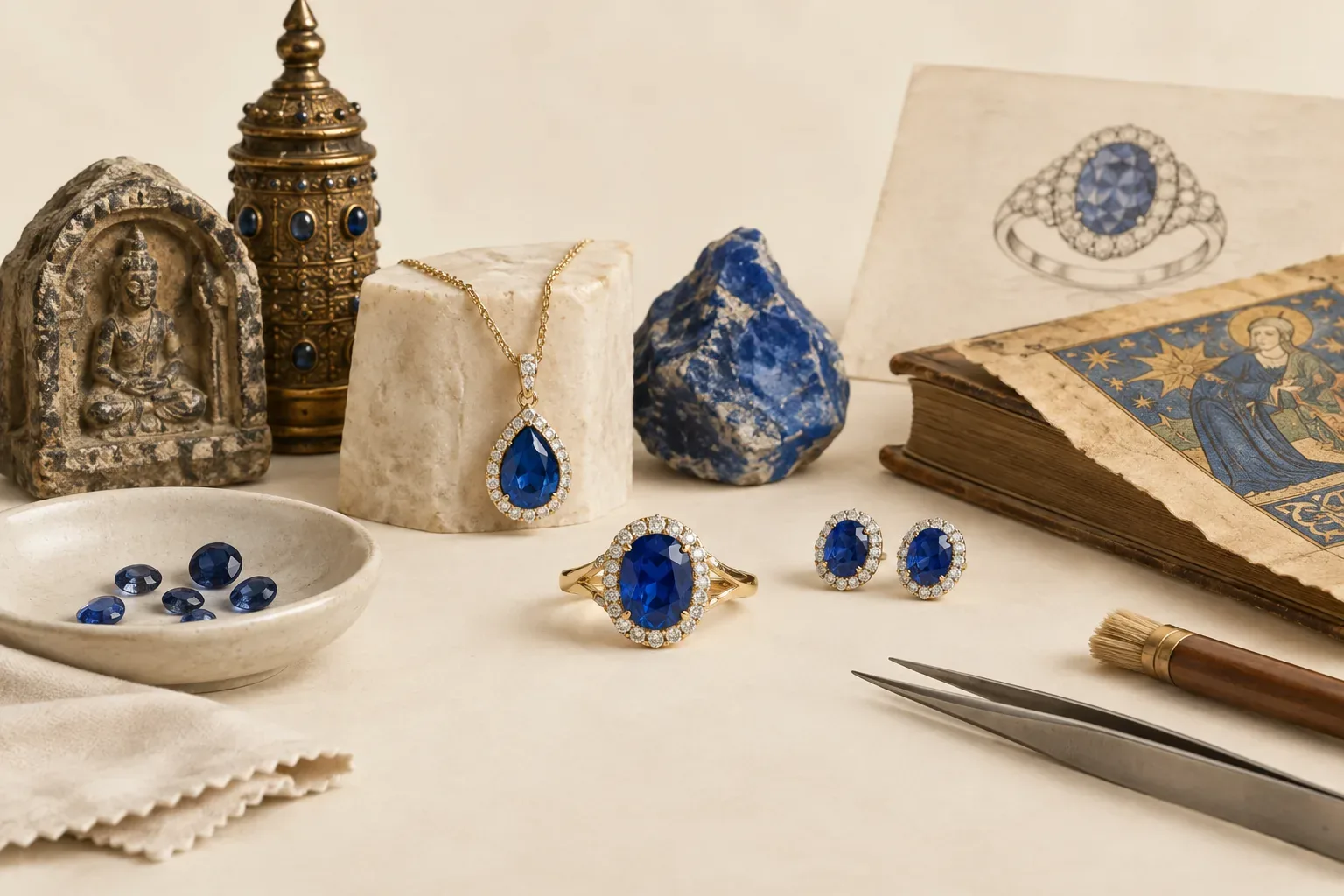
As an object in jewellery, sapphires appear in many forms: faceted stones set as centerpieces in rings, pendants and earrings, cabochons in historical pieces, and as accent stones framing other gems. Settings that hold sapphires—closed-back bezels, claw or prong mountings, and pavé or channel rows—determine both the visual effect and the maintenance needs of the piece. The choice of metal, setting style, and cutting of the stone all affect how a piece should be inspected and cared for.
Maintenance concerns are often about the setting rather than the stone itself. Historical and contemporary pieces with delicate mountings, antique joins, or soldered elements require careful inspection. In museum practice, conservators examine settings for corrosion, metal fatigue, and insecure stones; in private jewellery care, similar attention is appropriate. The visible forms of wear—rattling stones, bent prongs, or worn shanks—are the practical side of the motif: how a sapphire is set and used determines how it will require upkeep.
Practical care: warning signs and when to seek professional help
Know the warning signs that your sapphire jewellery needs a professional inspection. Common indicators include a stone that moves or rattles in its setting, missing or visibly worn prongs, chips or sharp edges on the stone, visible cracks in the mounting, a bent or broken shank, or changes in how the piece sits or fastens. If a stone appears cloudy, discoloured, or detached from its seat, stop wearing the piece and arrange for evaluation.
For structural repairs—re‑tipping prongs, re‑setting a loose stone, resizing a ring, repairing solder joints, or rebuilding antique mounts—seek a qualified jeweller or conservator who documents work and, when appropriate, provides a written condition report. For any concerns about treatments, enhancements, or origin information, rely on professionals who can provide lab reports or verifiable disclosure; the U.S. Federal Trade Commission requires sellers to disclose material treatments or imitations, and professional documentation helps you maintain value and insurance eligibility.
Routine maintenance is preventive: schedule regular inspections with a jeweller, particularly for pieces worn daily or during physical activity. At home, handle jewellery gently: avoid banging pieces or exposing them to potentially abrasive contact. Before cleaning at home, ask the jeweller whether the stone has been treated or whether the setting has fragile features that need special care. When in doubt, professional cleaning and inspection reduce the risk of accidental damage during DIY attempts.
Basic home-care guidance (conservative and safe)
Conservative, low‑risk home care focuses on minimizing mechanical stress and chemical exposure. Store sapphire pieces separately to avoid scratching or knocking against other items; keep rings in a protective box when not worn. Avoid wearing fine jewellery while doing heavy work, sports, or gardening where hard impacts or abrasives are likely. For light cleaning at home, many jewellers advise a very gentle approach and recommend consulting your jeweller about the specific piece before any home treatment.
If you choose to clean a piece at home after consulting a professional, proceed conservatively: use a soft cloth to remove oils and dust, and follow the jeweller’s guidance about whether and how to use water or a mild household cleaner. Do not attempt to repair mechanical issues at home; sizing, prong repair, and re-setting require tools and experience best supplied by a professional bench jeweller or conservator.
Selection and gifting guidance—practical and respectful
When choosing sapphire jewellery as a gift, be mindful of both the object’s material facts and the recipient’s cultural or personal preferences. Ask whether the recipient prefers certain colours, cuts, or styles, and whether they wear jewellery in ways that require durable settings. If the sapphire is sourced from a region or tradition with particular cultural significance to the recipient, gift respectfully and with awareness of that meaning rather than assuming universal symbolism.
Request transparency from the seller about treatments, origin, and any accompanying certification. The Federal Trade Commission’s guidance on buying gemstones stresses the importance of disclosure for treatments, and obtaining written information about a gem’s treatment or certification will make future repair, resale, or insurance processes smoother. Consider selecting a reputable jeweller who offers lifetime or periodic maintenance services, or factor the cost of routine care and periodic inspections into your decision. Finally, include a note or conversation about practical care expectations so the recipient understands how to keep the piece safe and intact.
Conclusion
Sapphire jewellery repair and maintenance sits at the intersection of historical understanding and everyday stewardship. Use museum documentation such as the Victoria and Albert Museum’s resources to appreciate how sapphires functioned materially and socially in different periods, and separate those documented contexts from modern personal symbolism. Prioritise professional inspection for structural concerns, insist on disclosure about treatments and origin as the FTC recommends, and choose or gift sapphires with both aesthetic taste and practical care in mind.
Frequently asked questions
What are the first signs my sapphire jewelry needs repair?
Common early signs include a stone that rattles or moves in its setting, visibly worn or missing prongs, chips or sharp edges on the stone, changes in how a piece fastens, or a shank that is bent or cracked. If you notice any of these, stop wearing the item and arrange for a professional inspection.
Can I clean sapphire jewelry at home?
Conservative home care is focused on minimizing risk: remove jewellery before strenuous activity, store pieces separately, and consult your jeweller about any specific cleaning method. Before attempting cleaning, confirm whether the stone has been treated and follow the jeweller’s guidance; when in doubt, professional cleaning is safest.
How often should I have sapphire jewellery inspected professionally?
For frequently worn pieces, an annual inspection is a practical baseline; pieces worn daily or under demanding conditions may benefit from more frequent checks. A jeweller can give a schedule tailored to the piece’s construction and use.
Are treated sapphires less valuable or more fragile?
Treatment affects value and care needs differently depending on the type of treatment. The Federal Trade Commission requires disclosure of material treatments and imitations, so ask the seller for documentation. A professional can advise whether a specific treatment changes cleaning or repair recommendations.
Can a chipped or scratched sapphire be repaired?
Many surface issues can be addressed by a trained lapidary or jeweller through re‑polishing or re‑cutting, but the viability of repair depends on the size and location of the damage and on preserving the stone’s proportions. Consult a qualified professional for an assessment rather than attempting repair yourself.
What documentation should I ask for when buying sapphire jewellery?
Request written information about any gem treatments, origin statements if available, receipts, and any lab reports or certificates. Documentation supports future repairs, insurance claims, and resale, and the FTC’s guidance emphasizes transparency about treatments and imitations.
Sources and further reading
- Bedazzled: A History of Jewellery — Victoria and Albert Museum
- An A-Z of Gemstones — Victoria and Albert Museum
- Buying Gemstones, Diamonds, and Pearls — Federal Trade Commission