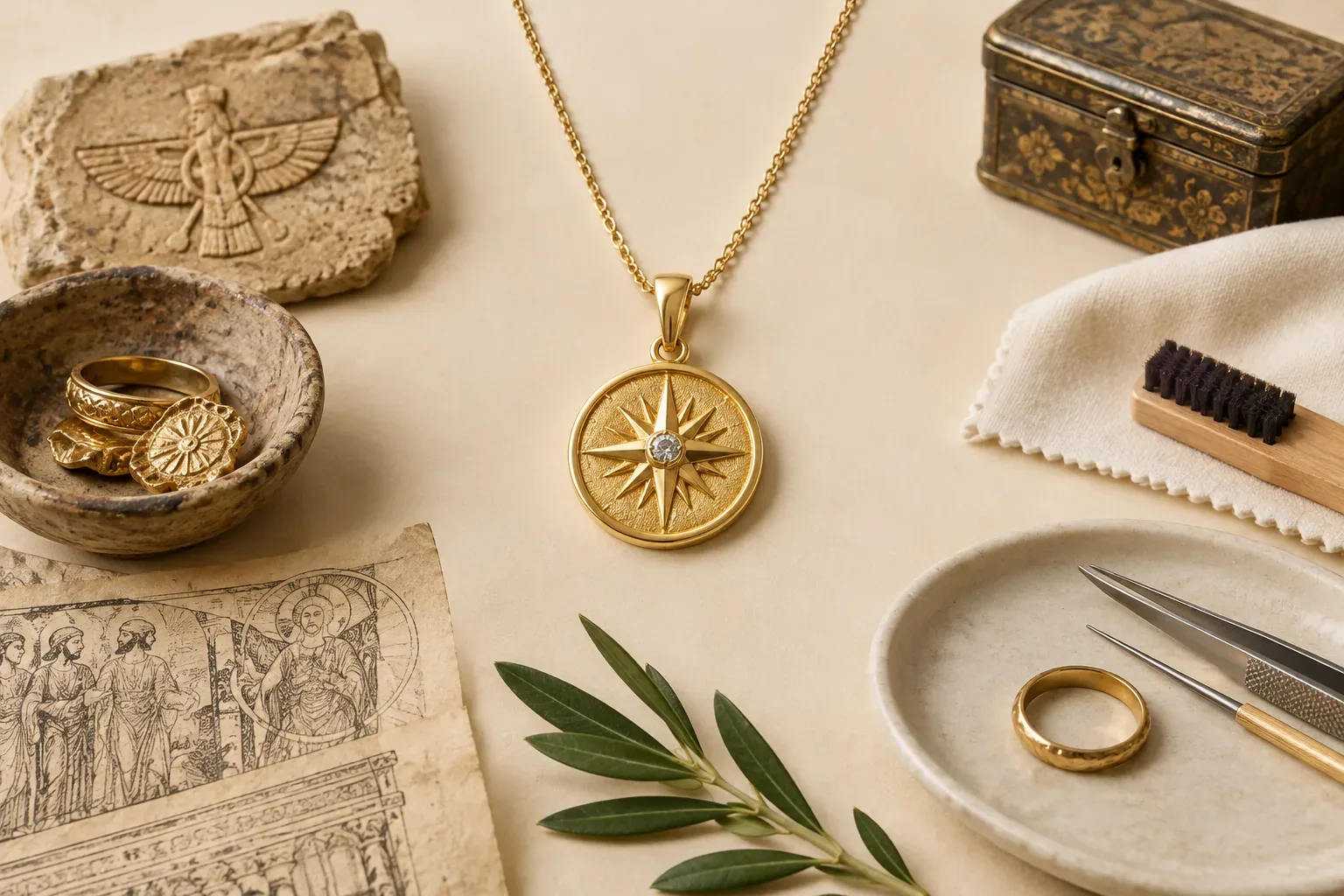
Meaning at a glance
Gold-filled pieces sit between plated and solid-gold jewellery in manufacture and meaning: museums like the Victoria and Albert Museum show how techniques and social uses of layered and surface-treated jewellery have changed over time, while the Federal Trade Commission advises buyers and sellers to disclose material treatments; this guide separates documented history from later interpretations and gives concrete warning signs, care steps, and professional-repair guidance for gold-filled jewellery.
Quick answer
Gold-filled jewelry repair and maintenance require routine, gentle care and occasional professional attention when the gold surface shows wear, joins loosen, or settings become unstable. Museum research highlights that surface treatments and finish techniques in jewellery have shifted with technology and fashion, and consumer-protection guidance stresses clear disclosure about materials. Treat historical meanings documented in museum collections separately from modern personal interpretations, and choose repair services that can explain methods and expected outcomes in writing.
What the historical record shows (and what it does not)
The social role and manufacture of jewellery have always changed with new techniques, materials, and fashions. The Victoria and Albert Museum presents exhibitions and collections that trace these shifts and make clear that surface finishes and layered treatments are part of a long pattern of changing technology and taste. Museum documentation is strongest when tied to particular objects and contexts: descriptions of function, fit, or ritual use in a specific culture come from object records and curatorial interpretation rather than from universal claims about jewellery.
That careful museum approach matters for gold-layered techniques in particular. While museum narratives show how makers historically used surface treatments and precious-metal finishes to achieve visual effects, they do not imply that any single technique—whether plating, gilding, or later industrial processes—is identical across cultures and periods. Use museum-provided object records and exhibition texts as the evidence for historical meanings rather than generalizing those meanings to all jewellery that looks similar today.
Documented historical meanings versus modern interpretations
When curators and museum records describe a piece’s meaning—for example, a locket used for mourning or a gem chosen for a documented symbolic program—those attributions are rooted in specific cultural or historical contexts. The Victoria and Albert Museum and similar collections identify contexts such as fashion, mourning practice, or social display in the places and periods where those practices were documented. These are the documented historical meanings.
Modern personal interpretations—what a wearer today feels a piece means—are valid personal choices but are not the same as documented historical practice. A contemporary wearer may adopt a Victorian sentimentality for a modern gold-filled necklace; that is a modern reinterpretation layered on top of the historical record, not a direct continuation of it. When explaining meaning to others, distinguish between what museum documentation supports and what is a modern, personal or popular reading.
How gold-layered techniques and traditions appear in jewellery
Layered or surface-treated pieces often look outwardly similar to solid precious-metal jewellery because the visible finish is of a precious metal. In museum displays and object records, curators describe finish, construction, and wear patterns as part of an object’s biography. That same attention to construction helps identify how a modern layered piece was made, how it will age, and what kinds of repairs are appropriate.
Material-treatment disclosure is important. The Federal Trade Commission explains that sellers must be transparent about treatments and imitations so buyers and future owners understand what they are purchasing. That guidance applies to any jewellery where appearance is achieved by surface treatment rather than a single alloy or solid precious metal. When looking at a piece, ask the seller for documentation about materials and construction so you and any repairer can choose appropriate care and techniques.
Warning signs that your gold-filled piece needs repair or professional attention
Visible thinning or wear of the gold surface at high-friction points, such as clasps, chains, and ring shanks, is a clear sign that the piece will require either cosmetic resurfacing or component replacement to restore appearance and function. Discoloration near connections and edges can indicate wear-through to the base metal beneath the finish or reaction with skin or chemicals.
Mechanical issues such as stretched or kinked chains, a bent or broken clasp, loose prongs or settings, or a splitting seam on hollow components also require repair. For pieces with stones, any wobble, missing setting metal, or chips near a setting should prompt immediate assessment by a professional to prevent loss of the gemstone.
Basic maintenance you can do at home
For routine care, handle pieces gently, remove jewellery before swimming, exercising, or applying lotions and perfumes, and store items separately to limit abrasion. Clean gold-surfaced jewellery with a soft, lint-free cloth and mild soap and water; rinse thoroughly and dry before storage. Avoid abrasive cleaners, harsh chemicals, and ultrasonic cleaners unless a qualified jeweller confirms they are safe for that particular construction.
Keep simple records with the piece: where and when you bought it, any maker’s notes, and any professional work done. These notes help a future repairer choose compatible methods and materials and preserve the provenance of the piece if it is an heirloom.
Choosing a repair professional and what to ask
Select a jeweller who explains their methods, who has experience with layered finishes, and who will discuss trade-offs candidly. Ask which specific repair techniques they propose, how those techniques might change the appearance, and whether the repair will be reversible or will alter the piece permanently. Request an estimate in writing that lists materials, labor, and any warranty on the work.
For cosmetic surface restoration, professionals may offer re-layering or re-plating options; for structural problems, they may replace worn components such as clasps or links, or re-solder joints. A reputable professional will also tell you when conservation is preferable to replacement, especially for older pieces where replacing parts would reduce historical integrity.
Selecting and gifting gold-layered jewellery respectfully
When choosing a gold-layered piece as a gift, prioritize clarity about materials and expected lifetime. If the recipient values longevity under heavy daily wear, choose a construction and finish appropriate to that use or direct them to a jeweller they trust for future maintenance. If the piece is intended as a sentimental or occasional-wear gift, communicate care instructions and encourage keeping the receipt and maker’s information.
Respect historic meanings where relevant. If buying a piece that references historical styles—mourning jewellery, memorial lockets, or revival designs—note that museums document specific cultural uses and that modern wearers may read those symbols differently. If you intend the design to convey a particular historical sentiment, consider including a note explaining that context so the recipient can decide how to interpret it.
When to conserve rather than repair
If an item is an antique or has family provenance, conservation aimed at stabilizing rather than returning to a ‘like new’ appearance can preserve historical value. Museums and trained conservators focus on documentation, minimal intervention, and reversibility. When in doubt, consult a conservator or a museum-affiliated specialist rather than proceeding immediately with invasive repairs that could remove historical surfaces or maker’s marks.
Summary
Gold-layered jewellery benefits from proactive, gentle care and informed professional attention when wear or mechanical problems appear. Use museum documentation to ground historical claims about meaning, follow the FTC’s guidance on disclosure when buying and selling, and choose repairers who explain methods and expected outcomes. Clear communication, modest cleaning, and records of provenance and repairs will extend the life of a treasured piece and preserve its historical and personal value.
Frequently asked questions
How can I tell if a piece is gold-filled or solid gold?
Ask the seller for documentation and disclosure about materials and construction. Museum and consumer-protection guidance emphasizes that sellers should be transparent about treatments and imitations. If documentation is unavailable, a qualified jeweller can inspect the construction and advise whether the piece is surface-finished or solid metal.
Is it safe to clean gold-layered jewellery with household cleaners?
Gentle cleaning with mild soap and water and a soft cloth is usually safe. Avoid abrasive cleaners, strong chemicals, and ultrasonic cleaners unless a trained professional confirms they are appropriate for that specific construction.
When should I seek a professional rather than DIY repair?
Seek professional help for mechanical failures such as broken clasps, loose stone settings, significant thinning of the metal layer, or any repair that would alter the piece’s construction. A professional can evaluate whether conservation, component replacement, or surface restoration is the best option.
Will redoing the surface restore my piece to 'like new' condition?
Surface restoration can improve appearance but may change the piece’s original finish or historical integrity. A professional should explain expected results, durability, and any trade-offs in appearance or value before work begins.
What should I include when gifting a gold-layered piece?
Include clear information about materials and care instructions, and if possible, provide the maker’s details and receipt. If the piece references a historical style, note whether that meaning is a documented historical usage or a modern interpretation so the recipient can understand context.
Sources and further reading
- Bedazzled: A History of Jewellery — Victoria and Albert Museum
- An A-Z of Gemstones — Victoria and Albert Museum
- Buying Gemstones, Diamonds, and Pearls — Federal Trade Commission