Meaning at a glance
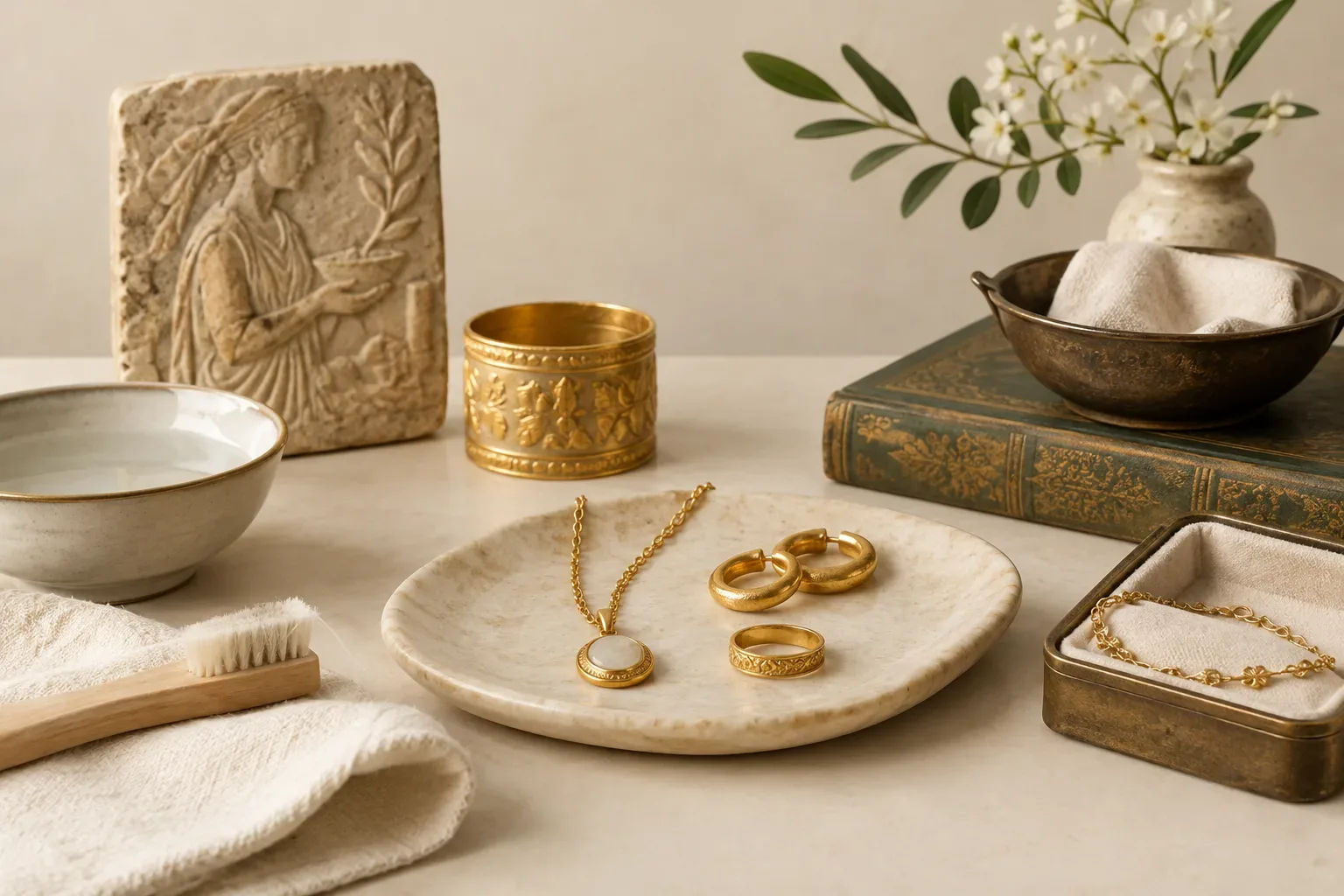
Clean gold vermeil gently with a soft cloth and mild soap, store it dry and separated from other metals, avoid harsh chemicals and abrasive tools, and ask sellers about metal composition and treatments before buying.
Historical evidence and changing contexts
The recorded history of plated and surface-finished jewellery appears across many periods and places; museum scholarship explains these changes in context rather than as single 'meanings.' The Victoria and Albert Museum (V&A) presents jewellery history as a record of changing technologies, tastes, and social contexts, showing how surface finishes and cost-effective techniques have been adopted at different times to achieve the look of solid precious metal without the full cost of it.
Which cultures or periods used plated finishes (what the record actually shows)
Museum collections and catalogues summarize examples from late antique and medieval periods through the 19th and 20th centuries where jewellers used overlays, gilding, or electroplating to alter appearance for economic, decorative, or technological reasons. The V&A identifies these shifts as responses to demand, new technologies, and shifting aesthetics rather than as fixed symbolic systems tied to a single culture. In short, plated and gold-surfaced techniques show up periodically across different places and eras, and the V&A frames them in terms of craft and consumer behaviour rather than uniform religious or cultural symbolism.
Documented historical meanings versus modern personal interpretations
Where the historic record speaks to meaning, the V&A emphasises social and material context: precious metal appearance communicated status, fashion, or new tastes. It does not present a single symbolic meaning for plated surfaces across cultures. Modern personal interpretations — for example, seeing vermeil as an ethical or budget-friendly stand-in for solid gold, or as a deliberately vintage aesthetic — are contemporary ideas layered on top of those historical practices. These modern readings are valid as personal or market meanings but should be distinguished from what museum documentation actually records about past uses and intentions.
How vermeil and related traditions appear in jewellery
In collections and retail, vermeil-style pieces appear as silver-based forms finished with a gold-coloured surface and often set with gemstones or glass that follow popular styles of their era. The V&A's guides on jewellery and gemstones describe how makers combine metals and stones to achieve fashionable effects, and consumer guidance documents emphasise that treatments and imitations are part of the market landscape. In practice, vermeil pieces can present the warm look of gold with the structural qualities of a silver core, and they are commonly used for rings, necklaces, bracelets, and settings for small to medium gemstones.
Safe cleaning methods
Start with the gentlest approach: wipe the piece with a clean, soft, lint-free cloth after each wear to remove oils, cosmetics, and perspiration. If a deeper clean is needed, use lukewarm water with a drop or two of a very mild soap, rinse briefly, and dry immediately and thoroughly with a soft cloth so moisture does not sit on surfaces or in settings.
When gemstones are present, consult the seller or a trusted jeweller before using any cleaning method because some stones are porous or sensitive to water and detergents. The Victoria and Albert Museum's resources on gemstones emphasise that gem materials have different care needs, and reasonable caution is required when cleaning set stones.
If a professional clean is desired, tell the jeweller that the item is gold-surfaced so they can avoid aggressive techniques that may abrade or remove the surface layer.
Cleaning mistakes to avoid
Do not use strong household chemicals, jewellery dips, or abrasive cleaners that promise to 'restore' colour—these products can remove thin gold layers or damage the underlying metal. Avoid scrubbing with brushes that have stiff bristles or pads that contain abrasives, which can scratch the surface.
Steam and ultrasonic cleaners expose plated surfaces to intense conditions; unless a professional jeweller confirms it is safe for the particular piece, avoid these methods. Also avoid prolonged soaking, and do not attempt to replate or repair vermeil at home; plating and conservation require controlled workshop processes.
Storage best practices
Store vermeil pieces in a dry, cool place away from direct sunlight and humidity, which accelerate tarnish and chemical interaction. Keep items separated in individual soft pouches or compartments so gold layers do not rub against other metals or hard surfaces. Use a lined jewellery box or a breathable fabric pouch rather than an airtight plastic bag for long-term storage, because some airflow helps avoid trapped moisture while still limiting airborne contaminants.
If you live in a very humid climate, consider storing pieces with silica gel packets in the compartment to absorb excess moisture, replacing the packets periodically. Avoid storing vermeil with chemicals such as perfumes, lotions, or household cleaners; always allow any applied products to dry before putting jewellery back on.
Selecting and gifting guidance (practical and respectful)
When selecting vermeil as a purchase or gift, confirm composition and surface treatment with the seller. The Federal Trade Commission advises consumers to ask about treatments, imitations, and disclosure so you understand what you are buying. Ask whether gemstones are natural or synthetic and what cleaning methods the maker recommends.
Consider the recipient's lifestyle: vermeil can be an excellent choice for casual and occasional-wear jewellery because it offers gold-like appearance at lower cost, but it may need more careful handling than solid gold. For pieces expected to be worn constantly (wedding rings, daily bracelets), a more durable metal may be a better long-term choice. Present vermeil as a considered, beautiful option and include care instructions with the gift so the recipient knows the best cleaning and storage practices.
When to consult a professional
If a piece shows significant wear to its gold finish, visible corrosion, or loose settings, seek a professional jeweller experienced with plated and silver-based work. Conservation of historic plated pieces—where the object has museum or sentimental value—requires a trained conservator; museum literature frames such treatment as a specialist activity rather than do-it-yourself repair.
For uncertain cases, a reputable jeweller can advise whether re-plating is appropriate and what the likely outcome and cost will be.
Final note
Treat gold vermeil as an attractive, historically rooted jewellery technique that benefits from gentle care. Distinguish what museums document about the social and technological history of plated jewellery from contemporary symbolic interpretations. With simple daily wiping, occasional gentle washing, careful storage, and clear information from sellers, vermeil pieces can remain attractive and wearable for years.
Frequently asked questions
Can I use a jewellery dip or metal polish on vermeil?
No. Strong dips, metal polishes, and abrasive cleaners can remove or dull the thin gold surface used on vermeil. Stick to very mild soap and water or a soft cloth, and consult a pro for significant tarnish or damage.
Is it safe to wear gold vermeil every day?
You can wear vermeil often, but daily wear accelerates abrasion and exposure to lotions, sweat, and chemicals. For items worn constantly, consider a more durable metal or be prepared for periodic re-finishing and extra care.
How should I store vermeil to prevent tarnish?
Store pieces dry and separated in soft pouches or a lined box. Avoid direct humidity and contact with other jewellery that could abrade the surface. In humid climates, use fresh silica gel packets in storage compartments.
Can ultrasonic or steam cleaning damage vermeil?
Yes. Ultrasonic and steam cleaners can be too aggressive for plated finishes and may lift or remove the gold layer. Ask a professional jeweller about safe cleaning options for your specific piece.
What should I ask the seller when buying vermeil?
Ask about the base metal and the nature of the gold finish, any care recommendations, and whether set stones are natural or treated. The Federal Trade Commission encourages consumers to request clear disclosure about treatments and imitations.
When is re-plating necessary, and who should do it?
Re-plating may be appropriate when the gold layer is worn through or the piece shows significant surface damage. Have re-plating done by a reputable jeweller or specialist who understands plated and silver-based work; avoid DIY attempts.
Sources and further reading
- Bedazzled: A History of Jewellery — Victoria and Albert Museum
- An A-Z of Gemstones — Victoria and Albert Museum
- Buying Gemstones, Diamonds, and Pearls — Federal Trade Commission