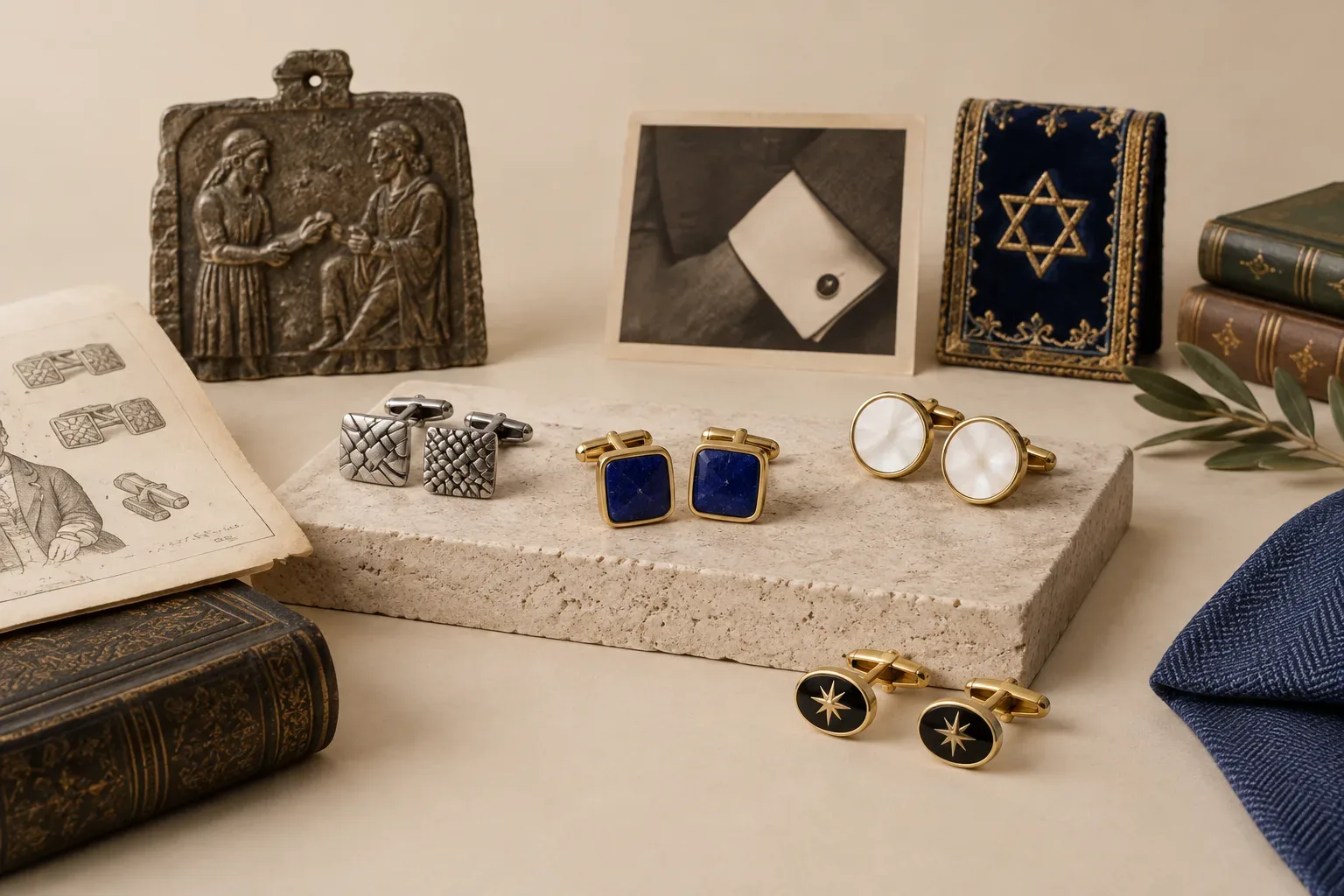
Meaning at a glance
This article explains the documented history and changing contexts of cufflinks and related men’s dress jewellery, distinguishes verified historical meanings from later personal interpretations, and gives a practical quality checklist and guidance for choosing and gifting cufflinks that balance construction, comfort, and durability.
Brief answer
A reliable cufflinks quality checklist focuses on three areas: solid construction (secure joints, quality metal or plating, and secure stone settings), wearer comfort (size, weight, and hinge or post ergonomics), and proven durability (material choices, finish stability, and ease of repair). Historical and cultural background helps explain why certain motifs and materials are used, but documented museum scholarship separates those origins from later personal or commercial meanings; practical buying and gifting decisions should be driven by build quality, appropriate style, and clear disclosure about materials and treatments.
Historical evidence and changing contexts
Museum surveys of jewellery history show that personal adornment for men and women has shifted in social function and form over centuries. The Victoria and Albert Museum’s exhibition materials and commentary describe how jewellery moved between private, ceremonial, and sartorial roles and how changing tastes, technology, and social codes produced new types of wearable objects and decorative techniques. The V&A frames cufflinks and other small men’s accessories as part of this longer story of changing social context rather than as timeless symbols with fixed meanings.
Scholarly museum overviews make two relevant points for cufflinks. First, materials and techniques used in small objects—enamelling, engraving, gemstone setting, and metalwork—have long histories and specific technological constraints that affect durability and appearance. Second, motifs and forms acquire or lose social meanings as dress codes change; an object worn in one period as a marker of status or affiliation may later become a sentimental keepsake or a purely decorative accessory. The V&A’s coverage intentionally situates objects in these shifting contexts rather than assigning a single, universal meaning to a form of jewellery.
Documented historical meanings versus modern interpretations
When assessing the symbolic meaning of a cufflink motif, separate what is documented in historical sources from what is a modern personal or commercial interpretation. Museums like the V&A report documented uses and contexts—such as items made for court dress, commemorative jewellery, or pieces demonstrating a particular technique—based on provenance, maker’s records, and contemporaneous accounts. These documented meanings are tied to specific cultures, periods, or communities and should be cited as such.
Later popular interpretations—such as attributing broad, cross-cultural spiritual significance to a motif without historical backing—are modern readings that may reflect contemporary tastes, marketing, or personal sentiment. They are valid as personal meanings but should not be conflated with the historically documented purpose of an object. For cufflinks, documented evidence most reliably supports statements about their social uses (dress codes, commemorative gifts, or fashion trends) and about the materials or techniques used, while personal meanings assigned by wearers today reflect individual context rather than universal symbolism.
How motifs, gemstones, and traditions appear in cufflinks and small jewellery
Motifs in cufflinks—monograms, heraldic devices, geometric forms, animals, or novelty shapes—are ways jewellery makers signal affiliation, taste, or humour. The way a motif appears is influenced by the technique used: engraving produces linear detail, enamel offers color fields, and relief carving or casting gives three-dimensional form. Museum literature highlights that technique and material shape how well a motif endures and how it reads visually in small-scale objects.
Gemstones appear in cufflinks as small accent stones, cabochons, or faceted gems set in bezels, prongs, or flush settings. The V&A’s reference material on gemstones explains identification, the visual properties of different stones, and how historical treatments affect appearance. For buyers, the type of setting, the hardness and cleavage of a gem, and whether the stone has been treated affect both aesthetics and the piece’s long-term wearability.
Traditions such as gifting cufflinks for coming-of-age moments, professional milestones, or weddings are modern social practices with historical precedents in gift-giving and commemorative jewellery, but the meanings attached to those gifts vary widely by culture and individual. Use museum-backed descriptions of technique and historical context to understand provenance; rely on personal knowledge and sensitivity to recipients’ backgrounds when choosing motifs or inscriptions.
A practical cufflinks quality checklist: construction
Examine the mechanism first. For toggle or swivel bar cufflinks, test the hinge for smooth movement without wobble and for a crisp return to position. For fixed-post links or chain links, check that posts are straight, uniformly sized, and firmly attached. Weak or sloppy joints are the most common early signs of failure in small metalwork.
Look closely at seams and solder joints. Well-made cufflinks have clean, polished joins where the metal has been fused or soldered; excessive filing marks, visible gaps, or brittle-looking joins suggest rushed repair or poor construction. For metal purity, ask about hallmarking or stamped content; reputable makers will disclose if a piece is sterling silver, gold-filled, vermeil, or base metal plated.
Inspect stone settings and mounting. Stones should sit flush and secure in their settings without adhesive residue. Prongs should be even and show no flattening or signs of bending. For glued-in stones or low-cost plated settings, anticipate higher risk of loss or damage under regular wear.
A practical cufflinks quality checklist: comfort
Consider weight and size relative to typical shirt cuffs. Oversized or heavy cufflinks can pull on fabric and make cuffs gape; lightweight designs and low-profile settings generally sit more comfortably and reduce strain on buttonholes. Test how the cufflink sits with a dress shirt cuff—if possible, try a similar weight and size to see if it interferes with wrist motion.
Assess edges and finishes. Rounded, polished edges reduce the chance of catching cuffs or skin; sharp edges or rough backs can irritate. For linked cuff styles, check that the linking chain or bar lays flat and does not twist excessively when the wrist moves.
Think about ergonomics of entry and removal. A smoothly operating hinge or an easy-to-thread post reduces fumbling when dressing and lowers the risk of abrasion to the shirt.
A practical cufflinks quality checklist: durability and materials
Choose appropriate base materials for longevity. Solid metals—solid gold, sterling silver, or stainless steel—will generally outlast plated pieces. When considering plated items, look for heavier plating (for example vermeil standards for silver) and ask about the base metal to understand how quickly wear-through might appear. The Federal Trade Commission’s consumer guidance stresses asking sellers to disclose treatments and imitations for gemstones and metals, which helps set realistic expectations about durability.
Consider the gem’s hardness and setting security. Harder stones like sapphires or diamonds resist scratching better than softer stones such as opal or turquoise; however, some hard stones can have cleavage or be vulnerable to impact. A robust setting—bezel or flush setting—will typically hold up better for daily wear than delicate prongs on smaller-scale cufflinks.
Plan for maintenance and repair. Pieces that are easily serviced—those made in common precious metals with conventional settings and removable parts—tend to stay usable longer. Avoid designs where a single delicate component, if lost or broken, cannot be restored without replacing the entire unit unless you accept that risk.
Buying, disclosure, and verification steps
Ask for clear information about metals, hallmarks, and gemstone treatments. The FTC’s published guidance on buying gemstones, diamonds, and pearls recommends requesting disclosures for treatments, imitations, and enhancements because these affect value and care. When buying online, request close-up photos of hinge areas, hallmarks, and the backs of cufflinks; for vintage items, ask about provenance and past repairs.
Check return policies and warranties. A trustworthy seller will permit reasonable inspection and return for undisclosed defects and will describe any repair or refurbishment performed. For heirloom or vintage cufflinks, request any available service history so you can assess future maintenance needs.
When in doubt, consult a qualified jeweller for an appraisal or condition report before purchase. Professional evaluation is especially important for pieces with significant gemstone content or unclear metal content.
Selection and gifting guidance (practical and respectful)
Match the style to the recipient’s regular dress and lifestyle. A modern minimalist cufflink suits someone who wears slim-cut suits and prefers understatement, while a heavier, engraved pair works for traditional or formal dressers. Consider the recipient’s job and daily activities; sturdy stainless steel or low-profile gold designs are safer for frequent wear.
Respect cultural and personal sensitivities around motifs. If choosing a symbol, crest, or motif that might carry cultural or religious meaning, do background research and, when possible, consult the recipient or someone knowledgeable. Use documented sources for historical claims about a motif’s meaning and avoid assigning broad cultural significance based only on modern marketing.
Consider personalization within durable constraints. Engraving initials or a short date can create sentimental value with minimal risk to structural integrity, but avoid deep carving into thin metal. When gifting gemstones, ask the seller for treatment disclosures and supply a written acknowledgement of materials and care recommendations.
Care and long-term upkeep
Store cufflinks so they do not rub against harder items. Soft-lined compartments or individual pouches reduce abrasion to surfaces and plating. Clean according to metal and gemstone type: mild soap and water with a soft cloth is generally safe for many metals, while some gemstones and treatments need specialist care.
Schedule occasional professional checks for prongs and hinges. Regular inspection by a jeweller can catch loose stones or weakening joints before they lead to loss or permanent damage. Keep documentation of any repairs, especially for pieces with sentimental or monetary value.
Frequently asked questions
What are the first things to check when inspecting cufflinks in person?
Start with the mechanism: test hinges or swivel bars for smooth, secure movement. Then inspect solder joints and seams for neat joins, check that posts are straight and firmly attached, and verify that any stones are securely set without adhesive residue.
Are plated cufflinks worth buying?
Plated cufflinks can be a good value for occasional wear, but expect plating to wear over time. Ask about base metal, plating thickness, and whether the finish can be re-plated; for daily use, solid metals or heavier vermeil plating tend to be more durable.
How do gemstone treatments affect durability and value?
Treatments can change a gem’s appearance and durability. Some treatments are stable and commonly accepted, while others may require special care. The FTC recommends that sellers disclose treatments and imitations so buyers can assess value and care needs.
Can cufflinks be resized or repaired if damaged?
Many cufflinks can be repaired—hinges can be tightened, posts re-soldered, and stones re-set—if made in conventional metals and settings. Extremely delicate or heavily plated novelty items may be harder or uneconomic to repair.
What makes cufflinks comfortable to wear all day?
Comfort depends on weight, size, and edge finishing. Low-profile designs with rounded edges and balanced weight are less likely to pull on cuffs or irritate the wrist. Testing a similar-weight pair on a shirt cuff helps anticipate comfort.
How should I care for cufflinks to extend their life?
Store cufflinks separated from harder items, clean with a soft cloth and appropriate mild solution for the metal and gemstone type, and have hinges and settings inspected periodically by a jeweller, especially for pieces worn frequently.
Sources and further reading
- Bedazzled: A History of Jewellery — Victoria and Albert Museum
- An A-Z of Gemstones — Victoria and Albert Museum
- Buying Gemstones, Diamonds, and Pearls — Federal Trade Commission