Meaning at a glance
This guide explains the documented history and changing contexts of hoop earrings, separates historical meanings from modern personal interpretations, and gives practical guidance on choosing, evaluating, and gifting hoop earrings today.
Direct answer — what this hoop earrings buying guide covers
Hoop earrings have a long, documented presence in many cultures; this guide explains that history as recorded by museum scholarship, distinguishes documented meanings from later or personal interpretations, and gives concrete, practical advice on materials, quality checks, gemstone issues and price considerations when choosing or gifting hoops today.
What the historical evidence shows (and where it comes from)
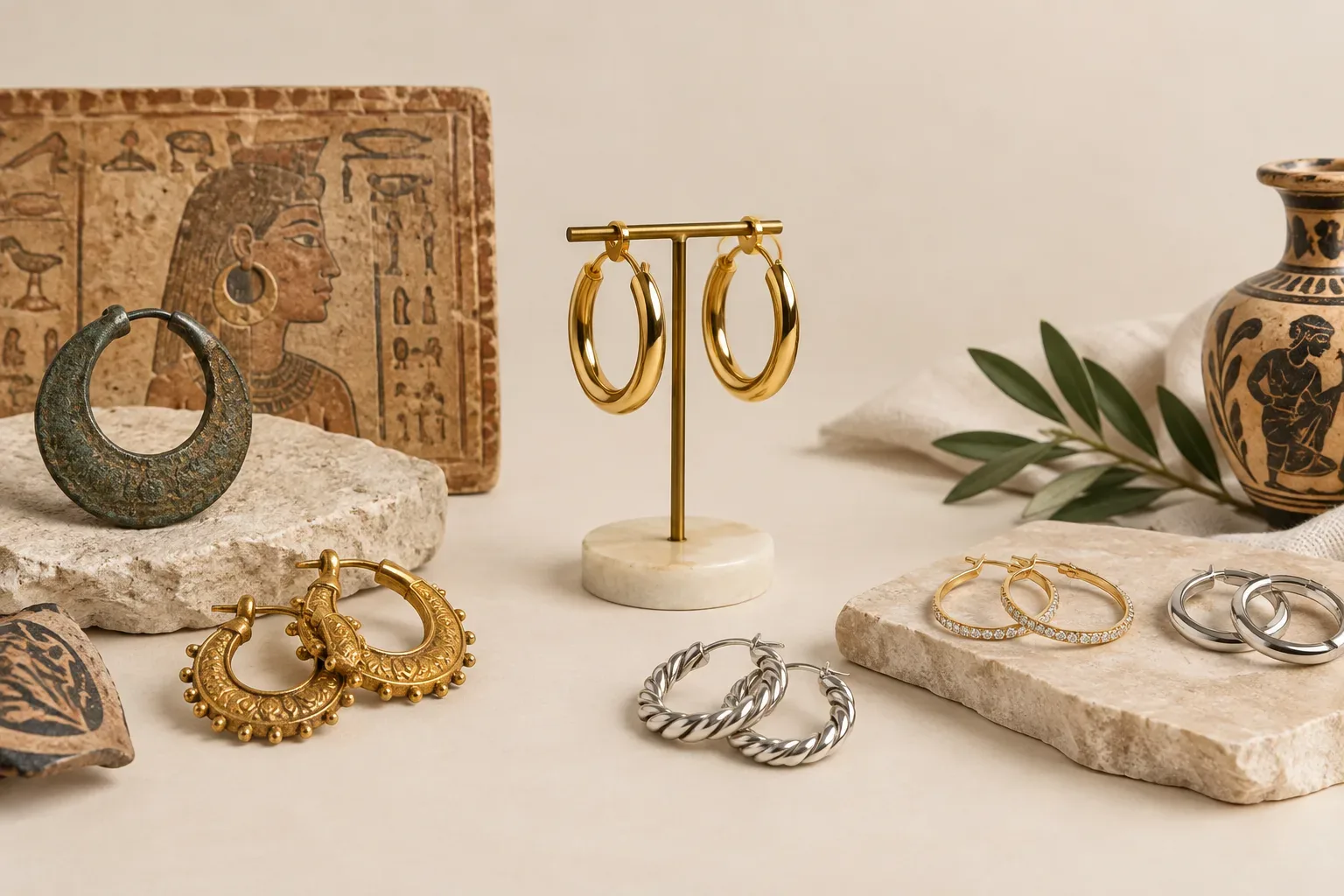
Surveys of jewelry history by the Victoria and Albert Museum show that hoop forms are among the long-lived shapes in personal ornament across many regions. The museum treats hoop-style earrings as a recurring form in collections spanning ancient Egypt, components of Greco‑Roman jewellery, and in the material cultures of parts of West and North Africa, among other places. The V&A frames these uses as examples of how basic geometric forms are adapted into different social and aesthetic contexts rather than as evidence of a single, unchanging meaning.
Archaeological and museum records collected and interpreted by institutions such as the Victoria and Albert Museum document that hoop earrings have been worn at different times for adornment, display of metalworking skill, or as part of culturally specific dress codes. Those records describe variations in size, construction (solid metal, hollow, or composite), and decorative technique, and they emphasize changing tastes and technologies rather than a single symbolic intent that carried unchanged across all places and periods.
Documented historical meanings versus modern personal or popular interpretations
Museum documentation typically links hoop earrings to social practice, craft traditions and aesthetic preference rather than a universal symbolic meaning. For example, the V&A’s scholarship notes changes in how jewelry signaled status, identity or fashion across periods, but it does not present a single symbolic interpretation that applies universally to all hoop earrings. In other words, historical records show usage and variation rather than one fixed meaning.
Modern meanings attached to hoop earrings—such as personal empowerment, cultural pride, or fashion statements—are often valid personal or group-level interpretations, but they are not the same thing as the specific, time- and place-bound uses recorded by curators and historians. When someone today treats hoops as a symbol of a community, identity, or trend, that is a contemporary layer of meaning built on top of centuries of practical and decorative use. Both documented historical context and modern interpretation are important, but they are distinct kinds of evidence.
How the hoop motif and related traditions appear in jewelry
As a motif, the hoop is simply a circle or ring worn from the ear. That circular form has been executed in many techniques: hammered sheet metal, cast solid rings, hollow tubing, ribbon-like strips, and combinations set with beads or gemstones. The Victoria and Albert Museum’s collections and interpretive material illustrate those technical and stylistic variations and how makers adapted the basic form to available materials and fashions.
Gemstone use and settings around a hoop also follow familiar jewelry practices discussed in museum guides and reference works. Gemstones may be set on hoop surfaces, suspended as drops within or below a hoop, or threaded as beads onto a hoop form. For information on gemstones themselves—identification, historical uses, and typical settings—museum resources such as the V&A’s 'An A–Z of Gemstones' provide objective context about how particular stones were used historically and the techniques that surround them.
Material, quality and price: practical checks before you buy
Decide what you want from the earrings: everyday wear, occasional use, heirloom investment, or a fashion piece. That choice guides which materials and constructions are appropriate. Solid precious metals (for example, higher‑karat gold) tend to cost more but resist corrosion and can be repolished; gold plating or vermeil offers the look of gold at lower price but will wear. Hallmarks or maker stamps are helpful indicators of metal content and quality; reputable sellers will let you inspect or photograph those marks.
Check construction details for durability and comfort. Examine the closure system (hinge, latch, post-and-back, continuous wire) for secure fit and ease of use. For larger or heavier hoops, solid construction or thicker gauges feel and wear better than very thin hollow tubing. If you have metal allergies, look for nickel-free finishes or hypoallergenic metals such as surgical steel, titanium, or verified solid gold. Try the earrings on or request measurements and weights if buying online to estimate how they will feel in prolonged wear.
If gemstones or pearls appear on the hoops, ask about origin, treatments, and whether any enhancements are disclosed. The U.S. Federal Trade Commission advises buyers that treated stones, simulants and synthetics must be disclosed by sellers; be sure any claims about natural, untreated, or high-value origins come with documentation or a clear seller statement. For historically informed background on gemstones and their uses, consult authoritative reference material such as the Victoria and Albert Museum’s 'An A–Z of Gemstones.'
Sourcing, treatments, and seller transparency
Reputable sellers will provide clear information about metal content, gemstone treatments, country of origin when relevant, and any repair or replacement policies. Where gemstones are involved, the Federal Trade Commission’s consumer guidance on buying gemstones, diamonds, and pearls explains that sellers should disclose treatments and whether a stone is natural, lab-grown, or an imitation. If a certificate accompanies a high-value purchase, check which laboratory issued it and what properties it reports.
When price looks unusually low for the claimed material, ask questions. Very low cost can indicate plated base metal, thin vermeil, hollow construction, or non‑precious components. Conversely, high price points should be supported by metal hallmarks, gemstone documentation, obvious craftsmanship, and transparent seller reputation.
Sizing, comfort and everyday wear considerations
Hoops vary in diameter, thickness and weight; those dimensions affect comfort and appropriateness for different activities. Small hoops and tight huggies are less likely to catch on clothing and are often preferred for work or sports. Larger hoops make a stylistic statement but can tug on the ear if heavy. If you are buying online, ask for inner diameter and wire gauge measurements and consider the weight per earring if provided.
Think about closure reliability. Hinged and latch closures are convenient for many, but continuous-wire hoops and screw backs have their own pros and cons for security and comfort. For sensitive ears, pay attention to posts: long, thin posts can bend, while very short posts may not seat securely. When possible, try a sample in store or buy from a seller with a clear return policy.
Respectful selection and gifting guidance
When gifting hoop earrings, consider the recipient’s personal style, cultural background, and any meanings they may attach to certain forms. Because hoop styles appear across many cultures with different historical uses, do not assume a specific symbolic meaning without checking. If you choose to reference cultural significance intentionally, research that association and, when appropriate, consult community‑led sources or the recipient to ensure your choice is respectful and informed. Our guide on how to research jewelry symbols can help with that preparation.
For milestones or heirlooms, prefer higher‑quality metals and workmanship so the piece can be maintained and passed on. For casual gifting, a well-made plated or vermeil hoop can be appropriate, but be transparent about materials so the recipient can care for the piece. If the recipient has metal sensitivities, choose hypoallergenic options and mention that consideration in a gift note—it shows thoughtfulness and practical care.
Care, repair and longevity
Basic care extends the life of hoop earrings. Keep plated pieces away from perfumes, lotions and abrasive cleaning; wipe solid gold or silver gently and store items separately to avoid scratches. For gemstone-set hoops, understand the fragility of the specific stone; softer gems require more cautious wear. If a hoop requires repair—reclosing a hoop, replacing an earring post, or re‑soldering—a professional jeweler can usually perform those services; quality makers often offer or recommend repair services.
For valuable or sentimentally important hoops, obtain written information on metal content and any gemstone certifications, and store documentation with the jewelry. Regular inspection for loose settings or worn closures helps prevent accidental loss.
Short summary and next steps
Hoop earrings are a durable and versatile jewelry form with a long and varied presence in many cultures, as documented by museum collections and scholarship. Use documented museum context to understand historical uses, treat modern symbolic meanings as contemporary layers of significance, and apply practical material and quality checks when buying. Ask sellers about metal content, hallmarks, gemstone treatments and return policies, and match hoop size, closure and material to the wearer’s needs and lifestyle.
If you want to explore related topics, see our parent category of Jewelry Guides or the practical gift guide on choosing meaningful jewelry for further reading and research tools.
Frequently asked questions
How can I tell if hoop earrings are solid gold or gold plated?
Look for a hallmark or maker’s stamp indicating karatage for solid gold; sellers should disclose plating if present. If hallmarks are not visible, ask the seller for documentation or testing details. Be aware that plated or vermeil pieces will wear over time and should be described accurately by the seller.
Do sellers have to disclose treatments to gemstones set in hoops?
Yes. Consumer guidance from the U.S. Federal Trade Commission states that sellers must disclose gemstone treatments, whether a stone is natural, lab-grown, or a simulant. Always request written confirmation of any treatments or certifications for higher-value stones.
What closure type is best for everyday wear?
Closure choice depends on personal comfort and security. Hinged or latch closures are convenient for many, while continuous-wire or screw-back systems can offer extra security. For everyday wear, choose a closure that feels secure and does not irritate the ear.
Are hoops appropriate to gift across cultures?
Hoops can be appropriate gifts, but because they appear in many cultural contexts with different meanings, do not assume a specific symbolic significance. If you intend the gift to reference cultural meaning, research that tradition carefully and consider consulting community sources or the recipient.
How do I choose hoop size for comfort?
Consider inner diameter, thickness and weight. Smaller hoops or huggies are generally more practical for active wear, while larger hoops make a statement but can be heavier. If buying online, request precise measurements and weight from the seller.
How should I care for vermeil or plated hoop earrings?
Avoid exposure to perfumes, lotions and abrasive cleaning; store plated pieces separately to reduce wear. For longer life, remove plated earrings before swimming or showering and clean gently with a soft cloth.
Sources and further reading
- Bedazzled: A History of Jewellery — Victoria and Albert Museum
- An A-Z of Gemstones — Victoria and Albert Museum
- Buying Gemstones, Diamonds, and Pearls — Federal Trade Commission