Meaning at a glance
This guide explains documented historical context for small single-stone and single-mount earrings, separates museum-documented meanings from modern personal interpretation, and gives practical advice on evaluating photos, seller policies, and red flags when buying stud earrings online.
Why historical context matters
Knowing the documented history of small single-stone or single-mount earrings helps you read a product description and makes it easier to separate authentic historic styles from contemporary reinterpretations or costume reproductions. The Victoria and Albert Museum frames jewellery as an object whose meaning and use change across time and place, and their materials explain how designs move between status, fashion, and personal use rather than carrying a single, unchanging meaning.
Documented historical evidence (what museums record)
Museum collections and exhibitions, such as those described by the Victoria and Albert Museum, show that small, single-stone or simple-mounted earrings appear in many periods and cultures as practical, decorative, and status objects. The V&A emphasizes changing social contexts and technical developments—metalworking, gem cutting, and fastening methods—that shaped how earrings were made and worn. Those documented facts are about materials, manufacturing and social use, not universal symbolic meanings.
Gemstones, materials, and documented contexts
The V&A’s A–Z of Gemstones provides context for how particular stones have been used in jewellery historically and how treatments or imitations can alter appearance and value. When an online listing names a gemstone, that statement can mean natural, treated, synthetic, or simulated material; the FTC’s consumer guidance on buying gemstones, diamonds, and pearls explains that sellers should disclose treatments and the nature of the stone. Use those documented frameworks—museum descriptions for historical context and FTC guidance for disclosures—when evaluating a listing.
Distinguishing documented meanings from modern personal interpretations
Museums and historical catalogues record what objects were made from and how they were worn, and sometimes note social associations in specific cultures or periods. Modern personal interpretations—such as assigning a single symbolic meaning to a stud shape or gemstone—are contemporary layers added by wearers, marketers, and designers. Neither is inherently wrong, but they are different kinds of information: one is documented evidence about materials and historical use, and the other is subjective meaning attached today.
How studs and related motifs appear in jewellery
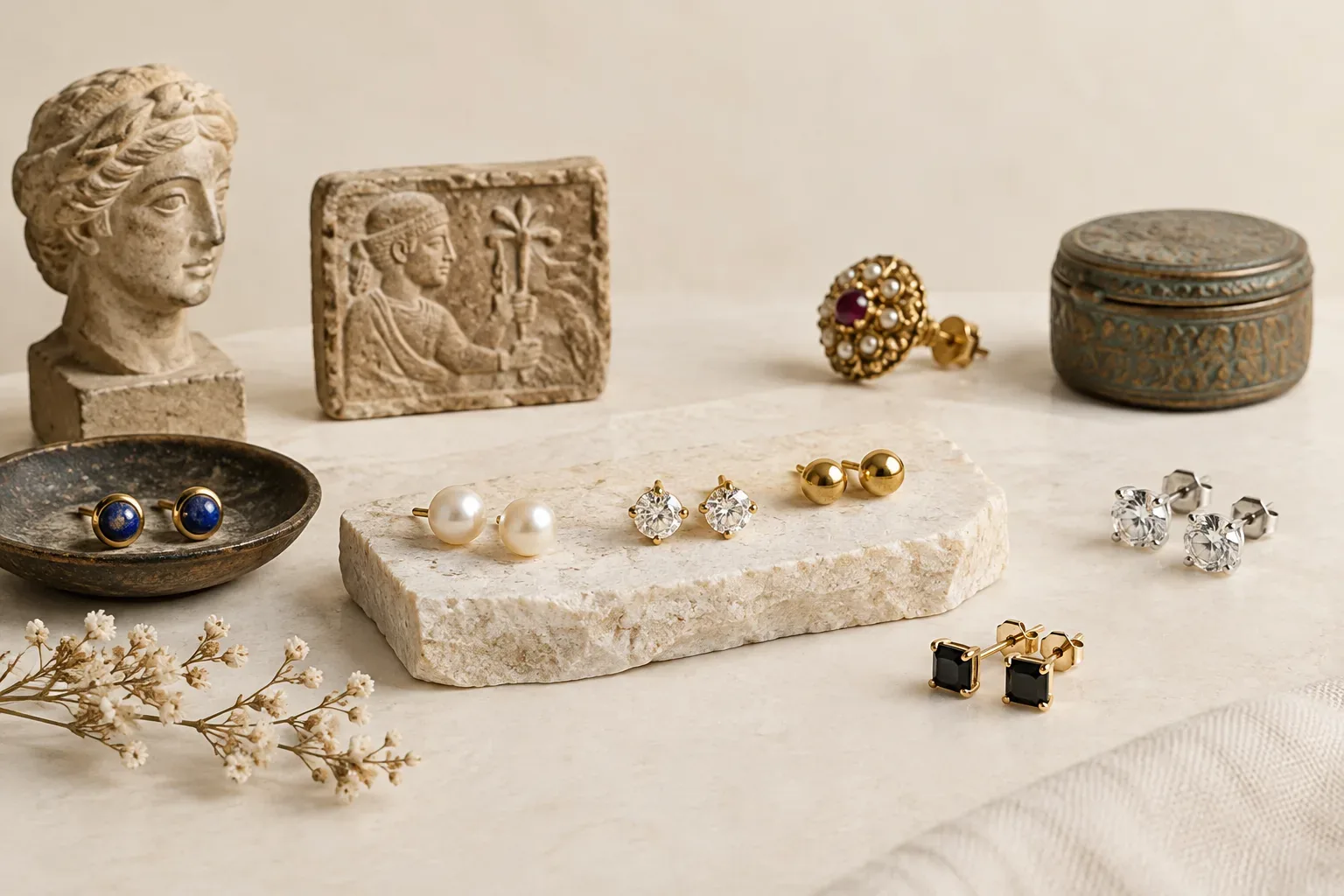
The term "stud" commonly refers to a small, typically single element that sits on the earlobe and is held in place by a post and backing. In historical and contemporary jewellery, this takes many forms: a single faceted gemstone set solitaire-style, a cultured pearl on a post, a small metal dome or motif, or a cluster set with several small stones. Museums show that similar small mounts have been used as discreet signs of taste, economical decorative options, or elements in more elaborate ear ornament systems; designers today continue these forms while varying scale, setting, and metalwork techniques.
What to look for in product photos and descriptions
High-quality listings include multiple views: a close-up of the earring front, a side view that shows the post and setting, a photo with the earring on a model or a scale reference to indicate actual size, and a clear shot of any hallmarks. Descriptions should state metal type (with karat or plating details), gemstone identity and whether it is natural, treated, synthetic, or simulated, dimensions (stone millimeters and post length), weight if relevant, and country of origin when known. If the listing claims vintage or antique status, look for provenance details or condition notes rather than a single label.
Policies, paperwork, and why they matter
Carefully review the seller’s return policy, warranty, shipping timelines, and customer service contact options before buying. For precious gemstones and diamonds, the FTC guidance indicates sellers should disclose treatments and imitations; reputable sellers often include gem reports or certificates for diamonds and higher-value stones. A clear policy on returns and an accessible customer service channel are practical protections when photos fail to convey color, fire, or fit accurately.
Red flags that should give you pause
Be wary when listings lack basic technical details, provide only a single, heavily edited photo, fail to disclose whether stones are treated or synthetic, or do not list metal content or hallmarks. Unrealistically low pricing for named precious stones, no return policy for higher-value items, vague provenance claims like "antique style" without condition notes, and no clear seller contact information are all practical red flags. The FTC explicitly advises consumers to seek disclosure about treatments, imitations, and the nature of the gem, so silence on these points is significant.
Practical selection and gifting guidance
Think about the wearer’s metal sensitivity, daily activities, and personal style. For sensitive ears, choose nickel-free or known-alloy metals and consider shorter, sturdier posts. Check measurements and compare them with a pair you already own for fit. When choosing a gift, respect cultural associations: a design or gemstone may carry different meanings in different communities, and museums caution against assuming a single symbolic interpretation. For valuable or meaningful gifts, request a certificate for the gemstone or a documented appraisal and make sure the seller’s return or exchange policy allows the recipient to have the piece adjusted or returned if it doesn’t suit.
Care, warranty, and aftercare considerations
A seller should state recommended care and any warranty or repair services. Basic aftercare instructions—how to clean a gemstone safely, whether the setting is appropriate for everyday wear, and guidance for re-plating if the finish is plated—are signs of a conscientious seller. Keep receipts and any gem reports you receive; museums and conservation guides emphasize documentation for long-term care and provenance.
Closing advice
Buying stud earrings online can be safe and satisfying if you combine an understanding of documented historical and material context with careful scrutiny of photos, specifications, and seller policies. Use museum resources to understand how a style fits within broader historical practice and rely on consumer-protection guidance, such as the FTC’s recommendations, to ask the right questions about gemstone treatments and authenticity. When in doubt, ask the seller for more photos, independent certification, or a clearer return period before completing the purchase.
Frequently asked questions
How can I tell if a gemstone in a listing is natural or treated?
Look for explicit language in the description—"natural," "treated," "heat-treated," "synthetic," or "simulated." The FTC recommends that sellers disclose treatments and the true nature of the stone. If this information is missing, ask the seller for a lab report or certificate that specifies treatment and origin.
What photos should a trustworthy listing include?
A trustworthy listing provides multiple views: a clear close-up of the earring front, a side view showing the setting and post, a photo showing scale (such as the earring on a model or next to a ruler), and any hallmark or maker’s mark. Heavily edited single images without scale are a red flag.
What return and warranty policies should I expect when buying studs online?
Expect a clear return window for fit or dissatisfaction, details on who pays return shipping, and information on warranty or repair services for manufacturing defects. For higher-value gemstones or antique items, allow time for independent appraisal before finalizing a purchase or make sure the seller permits returns after such appraisal.
Are very low prices for gemstone studs always suspicious?
Unusually low prices for items described as having precious stones or solid precious metal can indicate synthetic or simulated stones, plated metal rather than solid metal, undisclosed treatments, or misleading descriptions. Use the seller’s disclosures and the FTC’s buying guidance to verify value claims.
How should I choose studs for someone with sensitive ears?
Choose materials known for hypoallergenic performance such as titanium, surgical steel, or verified high-karat gold, and confirm the seller’s metal description. Short, sturdy posts and screw-back or secure push-back fittings reduce movement and irritation for many wearers.
What should I do if an online seller won’t answer questions about a listing?
If the seller fails to answer basic questions about metal content, gemstone nature, measurements, or return policy, consider that a significant warning sign and look for another seller who provides transparent information and prompt customer support.
Sources and further reading
- Bedazzled: A History of Jewellery — Victoria and Albert Museum
- An A-Z of Gemstones — Victoria and Albert Museum
- Buying Gemstones, Diamonds, and Pearls — Federal Trade Commission