Meaning at a glance
This guide documents the historical and changing contexts of wedding bands using museum evidence, separates cultural or religious evidence from later popular interpretations, and offers practical guidance for choosing, buying, and wearing bands today.
Quick answer
This wedding band buying guide documents the historical and changing contexts of rings using museum evidence, separates cultural or religious evidence from later popular interpretations, and offers practical guidance for choosing and wearing bands in modern jewelry.
What the historical evidence shows (and where it comes from)
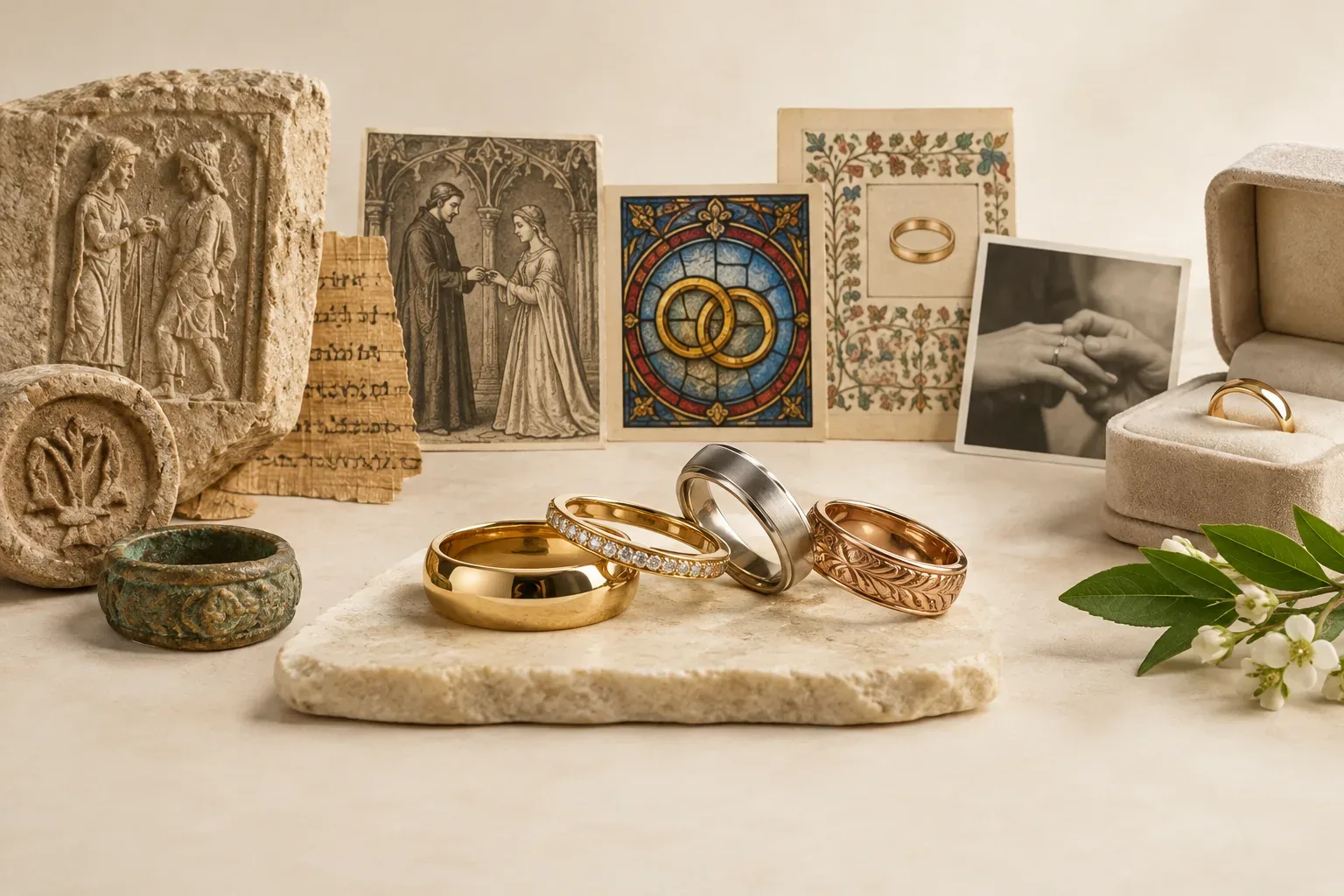
Museum collections and exhibition materials provide the clearest documented evidence about how rings and bands have been used over time. The Victoria and Albert Museum's surveys of jewellery trace how rings have carried different social meanings in different periods and places—from tokens of status and ownership to signs of commitment or memory—while their contexts and designs changed with fashion and material technology.
The V&A's historical overview groups jewellery evidence by broad periods and cultures, including objects from antiquity, medieval Europe, the Renaissance, the nineteenth century, and the modern era. Those museum records show that the form, ornament, and social use of rings shifted over time as societies changed. The same broad category of object—a band worn on the hand—has been adapted for widely varying functions across these periods rather than holding a single, universal meaning.
Separating documented historical meanings from modern interpretations
When you read about the meaning of wedding bands, it helps to keep two things separate: documented historical use (what museum collections and period records actually show) and later popular or personal interpretations that have been layered on since. The V&A documentation demonstrates that rings have historically served as legal, social, decorative, and memorial objects in different times and places, but it does not assert a single universal symbolism that applies across all cultures or eras.
Modern interpretations—such as the notion that a single band always symbolizes romantic commitment, or that a particular design carries a fixed spiritual meaning—are often shaped by recent customs, advertising, or personal preference. Those interpretations are valid as personal or cultural statements today, but they are not the same thing as the documented historical record. Treat each claim about meaning by identifying whether it comes from museum-archival evidence, religious or legal texts, or contemporary cultural trends.
How motifs, gemstones, and traditions appear in wedding bands
In jewellery practice, the core band can be plain or decorated, and motifs or gemstones are added in many ways. Historically and in modern makes, motifs appear as engraving on the band, surface treatment such as chasing or granulation, sculpted or pierced profiles, inlay work, or as attached elements. Gemstones may be set directly into a band, used as a central stone in an adjoining ring, or embedded as accents.
The Victoria and Albert Museum's resources on gemstones explain how different stones have been used for their colour, rarity, and perceived properties. Gem choice affects cost, durability, and the visual character of a band. The Federal Trade Commission notes that many gemstones are treated or enhanced and that sellers should disclose treatments and imitations, so shopping for gemstone-set bands requires attention to material disclosures and to care needs tied to stone hardness and setting style.
Traditions appear differently in physical pieces. Religious motifs or culturally specific designs are sometimes incorporated into bands through iconography or inscription. Memory or mourning rings historically included names, dates, or hairwork and appeared as a distinct genre in museum holdings. Contemporary makers often adapt motifs from historic sources in ways that reflect current tastes rather than original ritual uses.
Materials, quality markers, and what to ask about
When assessing quality, start with the metal: common choices for bands include yellow gold, white gold, rose gold, platinum, palladium, and stainless or titanium alloys. Each metal has trade-offs in hardness, scratch resistance, weight, color stability, and repairability. Consider how often the wearer works with their hands, whether they prefer a heavier or lighter feel, and whether they have metal allergies.
Look for hallmark stamps or maker marks that indicate metal fineness or alloy. Ask whether the band is solid metal or plated, and whether any soldered joins are visible. For gemstone-set bands, verify the stone’s identity and any treatments. The Federal Trade Commission advises consumers to request clear disclosure about gem treatments, synthetics, and imitations; reputable sellers will explain whether a stone has been heat-treated, filled, irradiated, dyed, or manufactured.
Examine construction details: how prongs are finished, whether channels are properly flush-set, and whether edges are comfortable for daily wear. Discuss sizing flexibility and whether the band can be resized later, especially for metals that are difficult to alter (for example, some modern alloys and certain hard metals). A trusted jeweller will explain trade-offs between style, comfort, and long-term maintenance.
Price questions: setting a realistic budget
Price depends on metal, weight, craftsmanship, and any gemstones. Costs rise with higher-purity precious metals, larger or rarer gemstones, and hand-finished detailing. Rather than relying on a single rule about how much to spend, set a budget that balances what you can afford with the recipient’s preferences and the expected everyday wear of the band.
Think in practical terms: choose a metal and finish that match the wearer’s lifestyle to avoid costly repairs or replacements; prioritize secure settings and durable stones for everyday rings; and be clear about the difference between visible cost (surface ornament and gem size) and intrinsic cost (metal weight and purity). If you are buying with sustainability or sourcing concerns, ask sellers for provenance and certification where available, and expect that these attributes may affect price.
Selection and respectful gifting guidance
Choose with respect for the recipient’s tastes, cultural background, and any religious or symbolic meanings they ascribe to rings. If you are uncertain about the cultural significance of a motif or symbol, research its origins or ask directly; appropriating a design with sacred or ceremonial importance can be hurtful even when well-intentioned. Use museum and scholarly sources where possible to understand historic contexts before adopting a distinct cultural motif.
Start conversations about style, ring width, finish, and whether the band will sit with an engagement ring. If the purchase is meant to be a surprise, consider consulting a friend or family member who knows the recipient’s ring size and aesthetic. Offer gift receipts and discuss resizing options gently; many couples prefer to decide on a final ring together.
Respect practicalities: choose durable metals and low-maintenance finishes for daily wear, ask for clear written disclosures about gemstones and treatments, and factor in maintenance costs such as periodic cleaning and potential re-plating. A thoughtful gift aligns material choices with the wearer’s daily needs and personal meanings rather than assuming a single symbolic answer.
Care, repair, and long-term considerations
Plan for long-term care. Some metals and stones require regular professional cleaning, re-polishing, or re-tipping of prongs. Plain bands conceal wear differently than highly polished or diamond-set styles, and different finishes accept scratches in different ways. Ask your jeweller about warranty terms, routine maintenance services, and how the piece should be stored.
Keep clear records of hallmarks, gem disclosures, and receipts. These documents are useful if you ever need repairs, resizing, or if you decide to sell or appraise the band later. If provenance or ethical sourcing matters to you, request any available certification and add those documents to your records.
Final thoughts
A wedding band buying guide that uses documented sources encourages buyers to distinguish historical fact from modern sentiment, to ask specific questions about materials and treatments, and to make choices that respect both the wearer’s tastes and any cultural meanings attached to a design. Use museum resources to learn how designs and meanings have changed, and use consumer-protection guidance to ensure transparent information about materials and gemstones.
Frequently asked questions
What should I look for to determine the quality of a wedding band?
Assess the metal purity or hallmark, construction details such as solder joins and setting quality, and whether the piece is solid or plated. For gemstone-set bands, ask for written disclosure about stone identity and any treatments. Check that the finish and edge profile feel comfortable for everyday wear, and ask whether the band can be resized if needed.
Are gemstone treatments common and do sellers need to disclose them?
Yes, many gemstones are treated to enhance color or durability. The Federal Trade Commission recommends that sellers disclose treatments, synthetics, and imitations, so ask for clear written information about any enhancements before you buy.
How do I choose a metal for daily wear?
Choose a metal based on the wearer’s lifestyle, desired color, weight preference, and whether they have metal sensitivities. Harder metals and platinum resist scratches better but may be heavier or harder to resize; softer gold alloys scratch more readily but are easier to repair. Discuss practical trade-offs with your jeweller.
Should I be concerned about cultural or religious motifs when gifting a band?
Yes. If a design carries religious or cultural significance, research its origins or ask the recipient whether they welcome that specific motif. Museum resources can help identify the historical context; when in doubt, choose a neutral or personally meaningful design to avoid unintentional appropriation.
How much should I expect to spend on a wedding band?
There is no single right price. Cost depends on metal, weight, craftsmanship, and any gemstones. Set a budget that reflects durability needs and the recipient’s preferences, and prioritize elements—such as a durable metal or secure gemstone setting—that will affect the ring’s longevity.
Sources and further reading
- Bedazzled: A History of Jewellery — Victoria and Albert Museum
- An A-Z of Gemstones — Victoria and Albert Museum
- Buying Gemstones, Diamonds, and Pearls — Federal Trade Commission