Meaning at a glance
This guide explains documented history and changing contexts of engagement rings using museum scholarship, separates historical meanings from modern personal interpretations, describes how motifs and gemstones appear in rings, and offers practical advice on photos, seller policies, and warning signs when shopping online.
Why history matters when shopping online
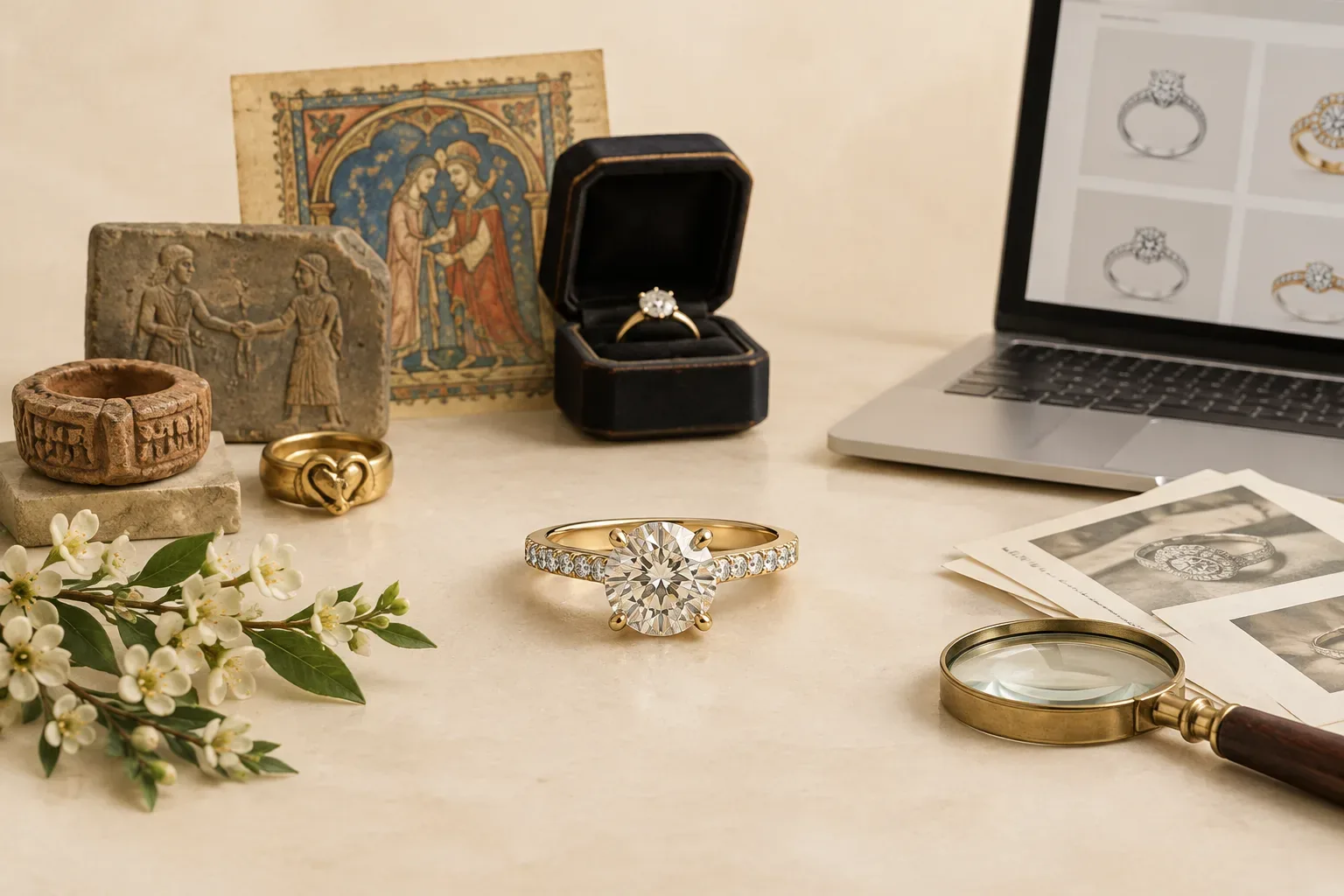
Knowing how engagement rings and their associated motifs have changed over time helps you separate documented practice from modern personal meanings. Museum scholarship highlights that rings and gemstones have moved through many uses and social meanings rather than having a single, unchanging symbolism. The Victoria and Albert Museum presents these shifts as part of a broader 'changing social context' for jewellery, showing that meanings assigned to rings and specific stones have been created and revised across eras and cultures.
Documented historical evidence, and what it does — and doesn’t — tell us
Historical evidence compiled by museum collections and scholarship shows that finger-rings and gemstone use were widespread across many places and periods, but the record varies by culture and century. The V&A organizes this variety as a history of changing forms and social functions, rather than a single origin story for the modern engagement ring. Use museum descriptions as evidence for what objects were and how they were used in particular contexts, and avoid treating those contexts as universal across time and place.
Separate documented practice from later popular interpretation. For example, museum catalogues may document that particular gemstones were valued for rarity, durability, or social status in specific periods; modern claims that a given gem always symbolizes a specific feeling or marital outcome are contemporary interpretations and personal meanings rather than fixed historical facts.
How motifs, gemstones, and traditions appear in jewelry
Motifs and gemstones appear in many different technical forms in rings. A motif may be expressed by a cut stone set prominently, a carving or engraving on the band, a cluster of smaller stones arranged into a pattern, or a shaped metal setting that evokes a heart, knot, flower, or other symbol. The visual language you see in modern engagement rings — from single prominent stones to decorative clusters and engraved bands — reflects centuries of technical developments in gemstone cutting and metalwork as described in museum summaries of jewellery history.
Gemstones themselves carry practical properties that shaped how they were used. The V&A’s guide to gemstones explains material characteristics such as hardness, color, and the ways stones respond to cutting and setting. Those material properties influence which gems are commonly used for rings that are worn daily and which appear more often in portrait jewellery or occasional-wear pieces. In modern practice, buyers and makers also bring personal and cultural meanings to motifs and gemstones; those contemporary interpretations sit alongside, but are not the same as, documented historical usages.
Photos: what to expect and what to insist on
Online photos are the primary way you evaluate an engagement ring before purchase, so insist on clear, high-resolution images that show the ring from multiple angles. Good product photography includes close-ups of the stone, the setting from both profile and top views, shots of the band, and images that show scale such as the ring next to a ruler or worn on a hand.
Ask the seller for magnified images that let you inspect for chips, inclusions, or obvious repairs, and for separate photos of any hallmarks or maker’s marks. If a seller provides video or 360-degree views, use them; they reveal details that still photos can miss. If the ring is pre-owned, request images of the current condition rather than a shop-stock photo. Sellers should provide accurate, up-to-date visuals as part of clear product representation.
Policies to review before you buy
Carefully read return and refund policies, warranty and repair terms, shipping and insurance options, and resizing rules. Return policies should be clearly stated, including who pays for return shipping and any fees for cleaning or restocking. Warranty information should cover repair or replacement for manufacturing defects and indicate the duration and conditions.
Verify what documentation the seller provides with the ring. The Federal Trade Commission advises buyers that information about material treatments, imitations, and other alterations should be disclosed by sellers. Ask whether any gemstones have been treated, whether settings have been repaired or replaced, and whether the piece has accompanying paperwork such as lab reports, receipts, or appraisals from independent parties. Clear, written answers to these questions are an important part of a trustworthy seller’s policies.
Red flags when buying an engagement ring online
Watch for sellers who cannot or will not provide high-quality, current photos of the exact ring you will receive, vague or missing return and repair policies, and refusal to disclose material treatments or previous repairs. The absence of clear answers about resizing, shipment tracking, or insurance is also concerning. Sellers who pressure you to purchase quickly without time to review documentation or to seek an independent appraisal are another red flag.
Be cautious with unusually low prices on stones that are normally more expensive; such listings can indicate undisclosed treatments, imitations, or misleading descriptions. The FTC makes clear that material treatments and imitations must be disclosed, so persistent vagueness about a stone’s identity or whether it is natural, lab-grown, or treated is a good reason to pause.
Practical selection guidance
Begin with preferences: discuss metal type, ring profile, expected daily wear, and whether a particular gemstone is desired. If you are unsure, consider whether the ring should be easy to resize, robust enough for daily wear, and suitable for any occupational or lifestyle needs. Prioritize sellers who provide clear measurements, stone weights or sizes, and a realistic sense of how the ring will look in person through multiple images or video.
Request documentation and consider an independent appraisal for high-value purchases. When a third-party laboratory report or independent appraisal is available, it helps confirm the stone’s identity and reported characteristics. If you are buying a pre-owned ring, ask about its purchase history, past repairs, and whether any stones were replaced.
Respectful guidance for gifting
Engagement rings often intersect with cultural, religious, and personal traditions, so approach gifting with sensitivity. Ask about preferences directly when possible, or involve a trusted friend or family member if the proposal is meant to be a surprise. Recognize that some people prefer non-traditional symbols or experiences instead of a ring, and that a ring may carry different meanings within different cultural or religious frameworks.
If cultural or religious traditions are relevant, prioritize sellers or makers who understand those needs, for example concerning specific motifs or materials. Where appropriate, choose a jeweller who can provide accurate information about hallmarking, ethical sourcing, or specific craft traditions that may be important to the recipient.
After purchase: verification and care
When the ring arrives, verify that it matches the photos and documentation you received. Check for the conditions outlined in the return policy and take clear photographs of the ring on receipt. Arrange for valuation and insurance if the ring represents a significant financial investment. For daily wear rings, plan regular checks for loose prongs, wear on the band, and periodic professional cleaning and inspection.
If you plan to resize, confirm the seller’s resizing policy and whether resizing might affect any warranties. Keep all documentation with the ring’s appraisal, invoices, and any lab reports, as these are often needed for insurance, resale, or repair.
Where museum and consumer guidance meet
Museum resources and consumer protection guidance complement each other when you shop for historically influenced or contemporary rings. The Victoria and Albert Museum’s materials on jewellery history and gemstones help contextualize why certain motifs and stones appear in rings and how their meanings have shifted. The Federal Trade Commission provides practical advice about disclosure of treatments and imitations that buyers can use as a checklist when verifying a seller’s claims.
Use historical knowledge to appreciate style and provenance, and use consumer guidance to secure clear facts and fair policies. Together they help you make an informed choice that respects both the object’s material history and the personal meaning you and the recipient bring to it.
Frequently asked questions
What photos should I ask for before buying an engagement ring online?
Ask for high-resolution images from multiple angles including top, profile, and close-up of the stone and setting, photos of any hallmarks or maker’s marks, and a scale reference such as the ring worn on a hand or next to a ruler. Request video or 360-degree views if available, and current pictures of the exact ring you will receive rather than stock images.
What seller policies are most important to check?
Carefully review return and refund terms, warranty and repair provisions, resizing rules, shipping and insurance options, and documentation policies. Confirm who pays for return shipping and whether any restocking or cleaning fees apply, and ensure the seller commits to disclosing material treatments, imitations, and prior repairs.
How can I tell if a gemstone has been treated or is an imitation?
Buyers should ask sellers directly and request written disclosure about treatments or imitations. The Federal Trade Commission advises that such information must be disclosed by the seller. If possible, seek independent lab reports or an appraisal for high-value stones to verify identity and disclosures.
Is it risky to buy a pre-owned engagement ring online?
Pre-owned rings can be good value but require thorough inspection and documentation. Request current, detailed photos of the actual ring, ask about its repair and ownership history, confirm resizing and warranty options, and consider getting an independent appraisal or verification before finalizing purchase.
How should I approach gifting an engagement ring respectfully?
Discuss preferences with the intended recipient when feasible, or consult trusted friends or family if planning a surprise. Consider cultural and religious considerations that may affect material choices or symbol meanings, and respect the recipient’s wishes if they prefer a different symbol, a non-traditional ring, or no ring at all.
Sources and further reading
- Bedazzled: A History of Jewellery — Victoria and Albert Museum
- An A-Z of Gemstones — Victoria and Albert Museum
- Buying Gemstones, Diamonds, and Pearls — Federal Trade Commission