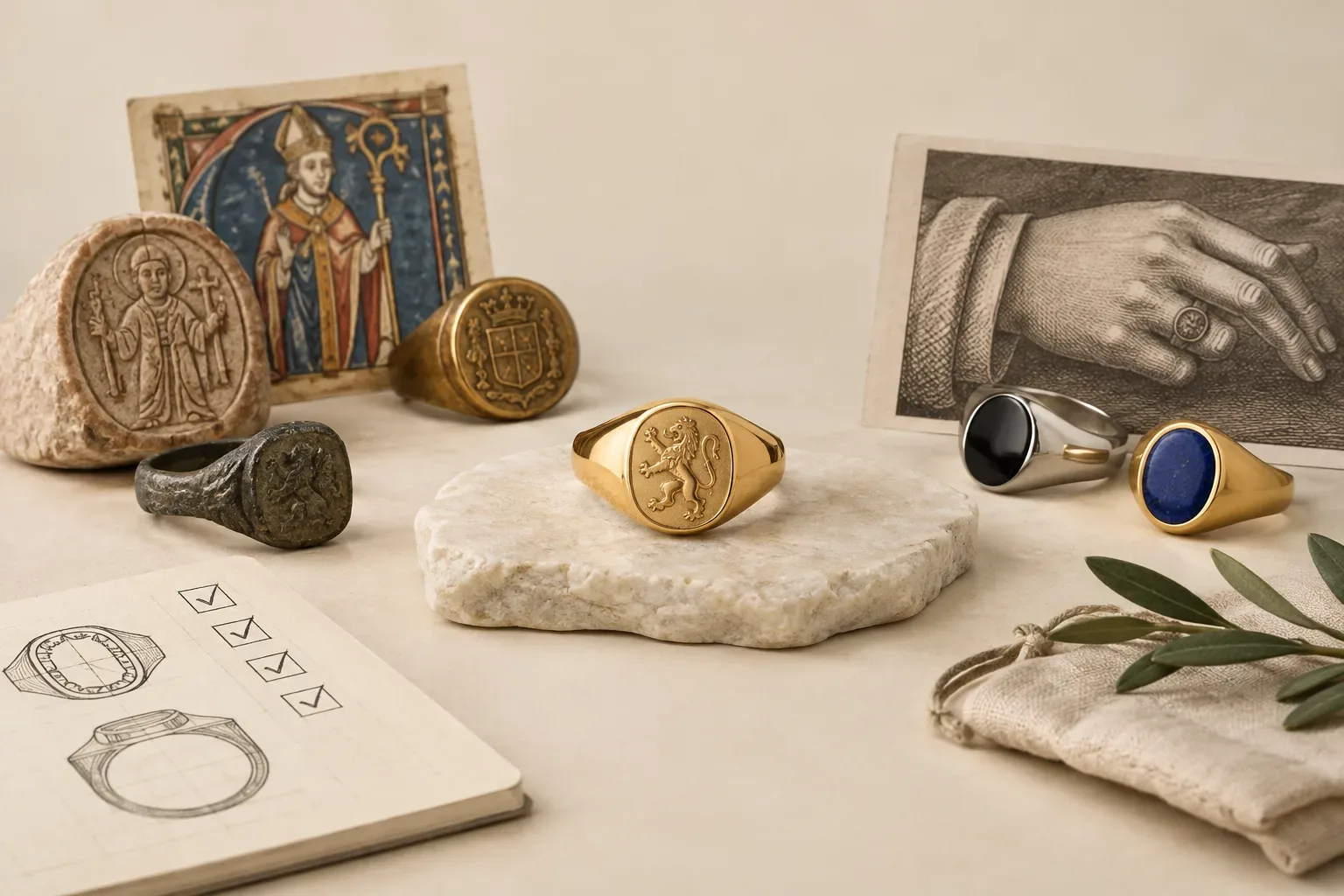
Meaning at a glance
Use documented museum evidence to understand signet rings as functional seals and social markers, distinguish historical meanings from modern personal interpretations, inspect construction details (metal, engraving, setting, soldering), prioritize comfort features (fit, weight, shank shape), and follow disclosure guidance on gemstones and treatments before buying or gifting.
Quick answer
A reliable signet ring quality checklist focuses on three linked areas: construction (metal, engraving, joinery, and gemstone setting), comfort (fit, weight distribution, and shank shape), and durability (metal hardness, stone hardness, finish, and evidence of professional soldering or casting). The museum record shows signet rings historically served as seals and social markers, but modern meanings are often personal and stylistic; use proven documentation for materials and ask sellers about treatments and disclosures before purchase.
What the historical evidence actually says
Museum scholarship sees signet rings as a long‑lived jewelry form whose primary historic function was to mark identity and authenticate documents. The Victoria and Albert Museum describes the changing social contexts of jewelry, including rings that carried carved motifs used as personal seals or emblems in many societies. Curators treat signet rings less as a single, unchanging symbol and more as an object type that adapts to administrative, social, and decorative needs over time.
The V&A collections and interpretive material make clear that signet rings appear across distinct cultures and periods—examples include use as seals in administrative systems and as status tokens in later medieval and early modern Europe—without treating any one meaning as universal or eternal. When assessing a modern signet, keep that documented versatility in mind: its historical role was often practical and social rather than exclusively symbolic.
Documented historical meanings versus modern personal interpretations
Documented meanings in the museum record emphasize function and social context. The V&A frames signet rings primarily as identity devices and status objects: carved motifs could be impressed into wax to authenticate letters, and the presence of a seal on a ring signaled legal or household authority in contexts where seals mattered. Those functional and social roles are what the historical evidence supports.
Modern interpretations—family identity, fashion statements, spiritual symbolism, or the reclaiming of heritage—are legitimate personal readings but are not the same as what the historical record documents. Contemporary wearers may choose signets for emotional or aesthetic reasons that postdate the original functional use. Distinguish carefully between what a museum source documents and the meanings people attach to signets today when you interpret or present the piece.
How motifs, gemstones, and traditions appear in signet jewelry
Motifs on signet rings typically appear as intaglio carvings—designs cut into a flat face so they can leave an impression. Historical examples include heraldic crests, household emblems, letters or monograms, and figurative scenes. Modern signets repeat these motifs, and also incorporate contemporary engraving techniques and decorative finishes. The motif’s placement and depth affect both the ring’s appearance and how well it resists wear.
Gemstones appear in signet rings in multiple ways: as a carved stone used for an impression, as a cabochon or faceted accent above or around a motif, or as part of decorative surrounds. The Victoria and Albert Museum’s guidance on gemstones highlights that different stones have different historical uses and levels of durability. Stones historically chosen for intaglio work tended to be hard enough to take a fine carving, while softer stones were used ornamentally.
Because treatments, enhancements, and imitations have been part of the gem trade for centuries and remain common today, the Federal Trade Commission’s guidance on buying gemstones, diamonds, and pearls is directly relevant: merchants should disclose treatments and imitations, and buyers should ask for clear information and documentation about any enhancements or synthetic materials before purchase.
A practical signet ring quality checklist: construction, comfort, durability
Construction: Verify metal and manufacture. Ask for hallmarks or an assay report to confirm metal type and purity, and inspect the finish for consistent workmanship. For cast signets, examine the face and shoulders for clear definition and minimal porosity. For hand-cut or engraved faces, check the crispness and depth of the carving; shallow or blurred engraving typically wears faster.
Stone setting and gemstone selection: Confirm how any gemstone is set—bezel, flush, or prong—and check that settings are secure with even, professional soldering. Choose stones appropriate to use: for an intaglio or frequently worn signet, select harder stones that resist abrasion. Consult gem identification and context resources such as the Victoria and Albert Museum’s notes when choosing a stone for historical fidelity or for durability.
Engraving and motif quality: Evaluate the engraving technique and whether the motif suits daily wear. Deep, well‑cut intaglio resists polishing away; shallow surface engraving is more vulnerable. If the motif is a family crest or sensitive cultural emblem, verify provenance and obtain permission where appropriate.
Shank design and comfort: Try the ring on and test comfort with ordinary hand activity. Comfort features to look for include a rounded interior (comfort fit) if you wear the ring for long periods, balanced weight distribution so the face doesn’t roll around the finger, and an appropriate shank width for the wearer’s finger. Wider shanks can offer durability but may bind between fingers if not sized properly.
Durability features: Check for solid construction over hollow bodies; solid signet bodies resist denting. Inspect solder joints and the junction between the face and shank for clean joins without visible filler. Consider how the finish will age: high polish shows scratches more readily but is easily repolished, while lightly textured or brushed finishes conceal small marks.
Resizing and repairability: Confirm whether the ring can be resized and how that process will affect the motif and any gemstones. Some signet faces cannot be altered without damaging the design. Ask the jeweler whether they will document any changes and whether a resizing voids any warranties.
Documentation and disclosures: Request written confirmation about metal content, gemstone identity, and any treatments or synthetics. The FTC recommends that sellers disclose treatments and imitations; insist on transparent answers and, where appropriate, independent gem reports for expensive stones.
Selecting or gifting a signet ring respectfully and practically
When choosing a signet as a personal purchase or a gift, match the ring’s construction and motif to the wearer’s lifestyle and preferences. If the recipient works with their hands, prioritize durability and low profiles over fragile settings and high cabochons. If the ring bears a monogram, crest or emblem, confirm the correct engraving and respect cultural sensitivities; do not assume a motif has the same meaning across cultures.
Gifting guidance also covers size and fit: if you do not know the recipient’s size, choose a vendor that offers straightforward resizing or buy a temporary placeholder that can be exchanged after sizing. For heirloom or commemorative signets, consider adding documentation—a note explaining the choice of motif, a record of the ring’s materials, and care instructions—to accompany the gift.
Budget and provenance: Balance budget with the value you want the ring to hold over time. Provenance matters for historic or antique signets and can affect both meaning and value. For modern commissions, negotiate clear timelines, proofs of the engraving or casting process, and a written warranty for workmanship.
Care, maintenance, and when to seek professional service
Care starts with everyday habits: remove a signet ring before heavy manual work, abrasion, or contact with harsh chemicals, and store it separately to avoid scratches. For polished finishes, occasional professional polishing restores appearance, but frequent aggressive polishing thins metal over many decades.
For gemstones or carved stones, follow the recommended cleaning method for that material; consult gem guides such as the Victoria and Albert Museum’s A–Z of Gemstones for basic information about relative hardness and sensitivity. If a setting becomes loose, or an engraving shows significant wear, seek a reputable jeweler rather than attempting repair at home to preserve the motif and structural integrity.
Final notes on ethics and verification
Treat historical attributions and symbolic claims with caution. Use museum documentation for historical context and ask sellers for clear evidence about age, origin, and any restorations. For modern commissions, discuss whether the motif appropriates cultural or religious symbols and proceed with sensitivity.
Above all, a good signet ring is both well made and well documented: clear materials identification, secure construction, comfortable fit, and transparent disclosure of gemstone treatments are the practical indicators that a signet will remain wearable and meaningful for years.
Frequently asked questions
What’s the single most important check before buying a signet ring?
Ask for clear documentation of the metal and any gemstone treatments, and inspect the engraving or carving quality; confirmed material disclosure and crisp engraving are the best early indicators of long-term quality.
Can all signet rings be resized without harming the motif?
Not always; many signet faces, especially those with deep intaglio or full‑face carvings, cannot be resized without affecting the motif. Ask the jeweler whether resizing is safe and whether resizing is included or will void any warranty.
Which gemstones are best for frequently worn signet rings?
Choose harder stones that resist scratching for frequently worn signets; consult reputable gemstone guides for hardness and durability, and ask sellers to disclose any treatments or synthetic origins.
How do I know if an antique signet ring is authentic?
Request provenance documentation, professional condition reports, and consult museum or dealer expertise; authentication rests on documented history, consistent construction techniques for the period, and transparent restoration records.
Should I be concerned about cultural appropriation when choosing a motif?
Yes—research the motif’s origin and contemporary cultural significance, and if it is sacred or sensitive, seek permission or choose a different design. Museums and cultural resources can help clarify historical versus current meanings.
What should I do if a seller won’t disclose gemstone treatments?
Treat a lack of disclosure as a red flag. Insist on written information or an independent gemological report; the FTC recommends sellers disclose treatments and imitations, so refusal warrants caution or choosing another vendor.
Sources and further reading
- Bedazzled: A History of Jewellery — Victoria and Albert Museum
- An A-Z of Gemstones — Victoria and Albert Museum
- Buying Gemstones, Diamonds, and Pearls — Federal Trade Commission