Meaning at a glance
This guide explains the historical context for continuous-line bracelets using museum scholarship, separates documented meanings from modern personal interpretations, describes how the motif and common gemstones appear in bracelets, and gives step-by-step, practical advice for measuring, selecting, and gifting a well-fitting tennis bracelet.
Quick answer
Measure the wearer’s wrist snugly, then add a small allowance for movement—typically between a quarter and a full inch depending on personal comfort and daily activity—to pick a tennis bracelet length that sits comfortably without sliding over the hand or pinching the wrist. This article explains why that measurement matters, how the continuous line-of-stones motif relates to historical bracelet practices (as documented by museum scholarship), how gemstones and treatments affect choice, and how to select or gift a bracelet respectfully.
What the historical record actually shows
Museum scholarship emphasizes that bracelets and the use of gems in wrist ornaments have changed meaning and form across cultures and historical periods rather than carrying a single, unchanging symbolism. The Victoria and Albert Museum frames jewellery history as shifting with technology, fashion, and social context, showing that what bracelets signified in one era could differ widely in another. The continuous line of closely set stones familiar in today’s tennis bracelets is a modern configuration built on long-standing practices of linking gems and settings, not a single ancient tradition.
Separating documented historical meanings from modern interpretations
Documented historical meanings of bracelets recorded in museum collections and catalogues are often functional and contextual: bracelets have served as markers of status, tokens of allegiance, devotional objects, or items of mourning depending on time and culture. These uses are what the Victoria and Albert Museum and similar collections document through objects and their provenance. By contrast, many contemporary interpretations are personal or commercial: for example, people today may choose a continuous-line bracelet to symbolize an anniversary, achievement, or personal milestone. Those modern meanings are legitimate as personal symbolism, but they are distinct from the historically recorded functions and messages attached to bracelets in specific cultures and periods.
How the continuous line-of-stones motif appears in jewelry
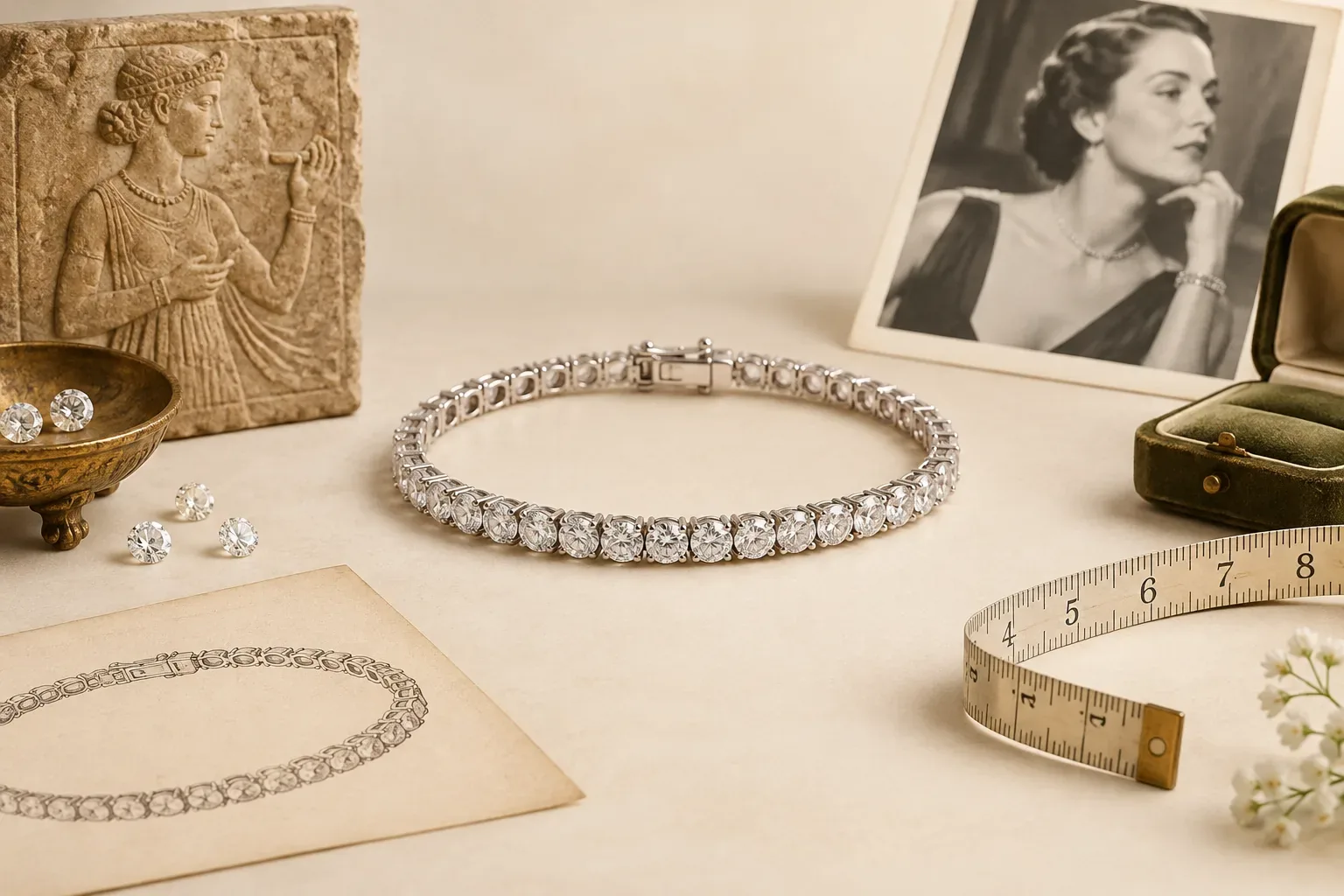
The motif commonly called a tennis bracelet is defined by a linked sequence of matched gemstones in repeat settings that create an unbroken visual line around the wrist. Historically, jewelers have achieved similar visual effects by linking bezel or prong settings or by mounting stones in continuous channels; the exact technical solutions vary with metals, gem sizes, and era-specific tools and tastes. Museums such as the Victoria and Albert Museum document both the variety of settings—bezel, prong, and channel—and how the choice of setting affects the bracelet’s appearance and wearability.
Gemstones used in line bracelets vary: diamonds are common for their hardness and optical properties, but sapphires, rubies, emeralds, and colored gems also appear in continuous designs. When selecting stones, consider both aesthetic match and practical durability: the Victoria and Albert Museum’s gemstone guides explain the historical and visual contexts for different gem types, while modern consumer protections underscore the importance of understanding treatments and imitations.
Gemstone treatments, disclosure, and what to ask when buying
Contemporary purchases should be informed by regulatory guidance about material disclosures. The U.S. Federal Trade Commission advises that sellers must disclose significant treatments, enhancements, or imitations to buyers so consumers understand what they are purchasing. That means when you evaluate a line bracelet you should ask the seller whether stones have been heat-treated, fracture-filled, irradiated, dyed, or are simulants rather than natural gems, and ask for documentation if available.
Ask for a clear description of metal content and for any grading or gem reports that accompany diamonds or other valuable stones. Knowing whether a stone is natural, lab-grown, or a simulant will affect both price expectations and care recommendations.
Measuring for a good fit: methods and considerations
Measure the wrist at the point where a bracelet will sit. Use a soft measuring tape or wrap a strip of paper or string snugly around the wrist, mark the overlap, and then measure that length against a rigid ruler. That measurement is your baseline wrist circumference.
Decide how you want the bracelet to fit. A very snug fit means little to no movement; a standard comfortable fit allows slight movement so the bracelet can shift and not pinch during normal activity; a relaxed fit leaves more space so the bracelet hangs lower on the wrist. As a practical rule, many people add a modest allowance to the wrist circumference to determine bracelet length: smaller allowances for a snug, secure fit and larger allowances for a looser, decorative hang. If the intended wearer is very active, prefers layered bracelets, or lives in a warm climate where wrists swell, favor a bit more allowance.
When in doubt, measure the hand as well: some bracelets must slide over the widest part of the hand. Have the wearer make a loose fist and measure the hand’s widest point—or pass a similarly sized ring or object over the fist to check whether a given bracelet length will fit.
Choosing metal, closure, and safety considerations
The metal type and the clasp both affect fit and safety. A flat, low-profile setting lies close to the wrist; heavier settings add weight and can cause a bracelet to sag. Look for secure, well-made clasps with backup safety catches if the bracelet will be worn daily. For people with metal sensitivities, choose metals known to be hypoallergenic for that wearer and verify any plating or surface treatments that might cause reactions over time.
Consider daily habits when evaluating fit. If the wearer types, uses their hands for manual work, or plays instruments, a tighter, low-profile fit will be less likely to catch. Conversely, if the bracelet is intended mostly for occasional wear, a looser fit that emphasizes drape can be more visually striking.
Practical and respectful selection or gifting guidance
Match the bracelet’s intended meaning with the recipient’s preferences. If you intend the bracelet as a personal symbol—an anniversary token or a celebration of achievement—pair that intention with a gemstone and style the recipient will value and wear. If you are unsure of size, choose a jeweler who offers easy resizing or selected exchange policies and purchase a modestly adjustable length or an extender to increase the chance of a good fit.
Respect personal and cultural tastes: some cultures have specific customs around gifts of jewelry or particular gems. When historical use informs modern tastes—such as color choices or the wearing of certain stones for life events—be mindful that these meanings vary. If a bracelet is a surprise, use a ring sizer or borrow a similar bracelet to confirm size, or buy from a retailer with an accommodating return and resizing policy.
When gifting diamonds or high-value gemstones, provide documentation about treatments or grading to respect the recipient’s right to know and to preserve the piece’s provenance. This transparency aligns with the Federal Trade Commission’s guidance on consumer disclosure and supports long-term care and resale options.
Care, maintenance, and when to resize
Regular inspection is important: a chain of small settings can be vulnerable at the links and clasps. Periodically check for loose stones, worn prongs, weakened links, and clasp integrity, and have any issues addressed promptly by a qualified jeweler. Clean according to the stone type and setting—ultrasonic cleaners are appropriate for some stones but harmful for others—so consult documentation or a trusted jeweler.
Resize if the bracelet consistently pinches, rubs, or catches, or if it slides so freely that it risks falling off. Resizing linked, gem-set bracelets is a specialized task: a reputable maker or jeweler can add or remove links or adjust settings while preserving the piece’s appearance, but options will depend on the construction and stone sizes.
Summary
A well-chosen tennis-style bracelet balances accurate measurement, an understanding of the wearer’s lifestyle, and informed choices about gemstones and settings. Museum scholarship highlights that bracelet forms change in meaning across time and culture, so don’t assume a single historical symbolism. Use careful measurement, ask about treatments and disclosures, and pick a jeweler with sensible return and resizing policies if you are gifting a bracelet you can’t size precisely. Those steps will help ensure the piece is comfortable, meaningful, and durable.
Frequently asked questions
How do I measure my wrist for a tennis bracelet?
Wrap a soft measuring tape, paper strip, or string snugly around the wrist where the bracelet will sit, mark the overlap, and measure that length against a rigid ruler. That baseline wrist circumference tells you the size you start from; add a modest allowance for comfort depending on whether you want a snug or looser fit.
How much allowance should I add to wrist circumference?
Allowance depends on personal preference and activity. Add a small allowance for a snug fit and a larger allowance if you want the bracelet to drape. Consider the wearer’s daily activities and whether wrists typically swell in warm conditions; when in doubt, choose a mildly adjustable length or a jeweler with a good resizing policy.
Can a tennis bracelet be resized if it’s the wrong length?
Yes, many line-style bracelets can be resized by adding or removing links, but the feasibility depends on construction and stone sizes. Have a reputable jeweler examine the piece to advise on options that preserve appearance and structural integrity.
Should I ask about treatments or lab-grown stones when buying?
Yes. The Federal Trade Commission advises that sellers disclose significant treatments and whether stones are natural, lab-grown, or simulants. Ask for documentation of treatments or grading if applicable to understand value, care, and long-term expectations.
Is the tennis bracelet motif historically symbolic of something universal?
No single universal symbolism attaches to the line-of-stones motif across all times and cultures. Museum research shows that bracelet forms and meanings shift with social context; modern symbolic uses—such as marking anniversaries or achievements—are contemporary personal interpretations rather than universally documented historical meanings.
Sources and further reading
- Bedazzled: A History of Jewellery — Victoria and Albert Museum
- An A-Z of Gemstones — Victoria and Albert Museum
- Buying Gemstones, Diamonds, and Pearls — Federal Trade Commission