Meaning at a glance
Use a simple checklist that inspects metal and construction, fit and comfort, gemstone setting and treatment disclosure, and care instructions; understand historical uses of cuffs through museum evidence, separate documented cultural meanings from modern personal interpretations, and choose or gift a cuff respectfully with attention to provenance and wearer needs.
Why historical context matters
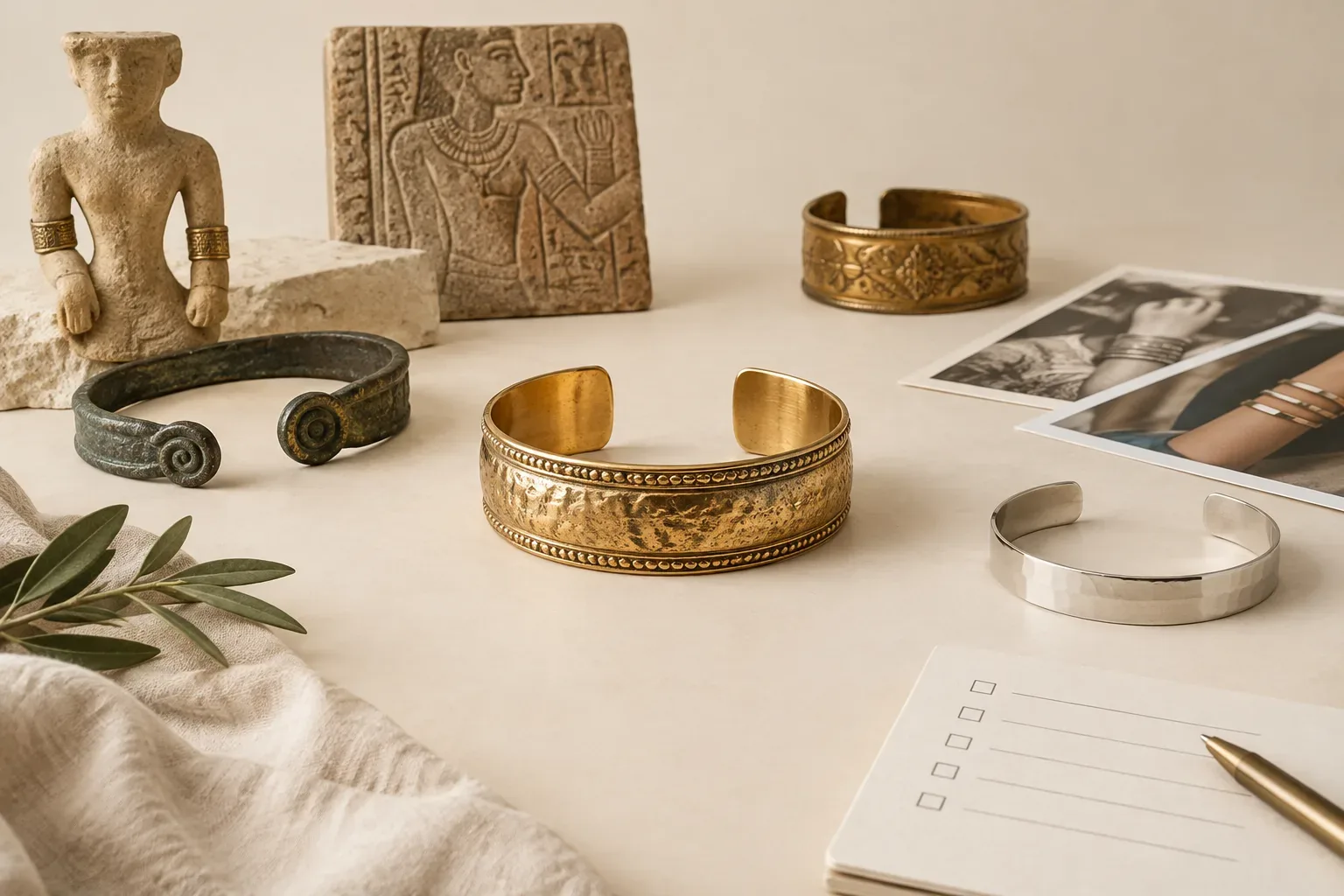
Cuff bracelets have appeared in many societies and their functions, materials, and decorative programs have changed over time. The Victoria and Albert Museum outlines the broad sweep of jewellery history and notes that rigid bracelets and armlets appear in ancient Egyptian and Near Eastern collections, in classical Greek and Roman ensembles, and reappear in later European periods and revivals. That museum-level survey is useful because it shows that the construction choices makers used—solid metal, hinged systems, terminal decorations—respond to available techniques and cultural expectations rather than a single universal purpose.
Documented historical meanings, and how they differ from modern interpretations
Museum documentation shows cuff and rigid bracelets served a range of social functions historically: markers of social status, indicators of wealth when made in precious metals, objects with amuletic or protective functions in some contexts, and purely decorative status symbols in others. The Victoria and Albert Museum's collection notes and interpretive materials support these documented roles across different cultures and periods, but it does not assign a single, fixed meaning to all cuff bracelets.
Modern interpretations—words like "empowerment" or "minimal modern chic"—are often personal or commercial framings rather than direct continuations of a particular historical practice. Those contemporary meanings are valid for the wearer who chooses them, but they should be kept analytically separate from documented cultural or religious meanings found in museum catalogues and specialist studies. When a cuff design directly references a sacred or communal symbol, treat historical evidence as primary and personal interpretations as secondary and contingent on context.
How motifs, gemstones, and traditions appear on cuff bracelets
Across time, makers have used motifs and gemstones to signal identity, status, or aesthetic taste. The Victoria and Albert Museum's surveys show that motifs such as engraved bands, animal or terminal forms at the cuff ends, and mounted gemstones are recurring features in many collections. Those features appear both as functional parts of cuff construction (for example, a terminal that helps distribute pressure) and as decorative accents.
Gemstones are used in cuff bracelets in predictable ways: as focal terminals, as continuous pavé along a band, or set into central panels. For identification, cutting and mounting styles vary by period. The Victoria and Albert Museum's "An A–Z of Gemstones" explains how particular gems have been used historically in jewellery and how treatment and cutting affect appearance. When examining a modern or historic cuff, consider whether the gem is integral to the construction or an applied decorative element and whether the setting type—bezel, channel, prong—affects durability and security.
Construction checklist: what to inspect
Begin by confirming the metal and maker information. Look for hallmarks, stamps, or maker marks that indicate metal type and purity. Hallmarks are not universal, but when present they help document material. Ask the seller for documentation if claims about karat, alloy composition, or designer provenance are important to you.
Inspect the joins, seams, and any soldering. A well-made cuff will have clean, well-blended joins without gaps, visible cracks, or unsightly lumps that indicate rushed repair. For hinged cuffs, operate the hinge several times and feel for consistent motion without looseness that could lead to eventual failure.
Evaluate thickness and cross-section. Very thin metal is more likely to bend or kinks with everyday wear; overly thick metal can be rigid and uncomfortable. Ideally the cuff's cross-section suits the metal: soft precious metals need more mass to resist deformation, while harder alloys can be thinner while retaining shape.
Check internal finishes and edges for comfort. The inside of a cuff that will be worn next to skin should be smoothly finished with rounded edges. Sharp inner edges or poorly finished seams will catch clothing and irritate skin.
Assess terminals and openings. Terminal designs can add comfort or pressure points. The gap size should allow a wearer to slide the cuff on without forcing or repeatedly deforming the metal. If the cuff is adjustable, test that adjustment leaves the metal looking intact and not work-hardened or cracked.
Examine gemstone settings. Look for secure bezels, tight prongs, and no visible glue. Gemstones should sit flush in their settings; loose stones signal future loss. Note the setting type: bezels and channels generally protect stones better than delicate prongs in items that will be worn daily.
Look for evidence of plating and surface treatments. Plating on a base metal can give the appearance of gold or silver at lower cost, but it will wear off. Ask for plating thickness or surface treatment disclosures and expect the seller to describe any enhancements.
Comfort checklist: sizing and wearability
Measure the intended wearer's wrist and the cuff opening rather than relying on ambiguous size terms. For a proper fit, many people prefer a cuff that slides over the widest part of the hand with only a small gap when on the wrist; others prefer looser wear. The cuff gap should not pinch the wrist or force the wearer to flex the metal to put it on.
Consider weight distribution. A heavily set cuff can rotate on the wrist or feel top-heavy. The wearer’s lifestyle matters: active people will prefer a low-profile, lighter cuff with secure settings; someone who wants occasional wear may accept heavier, more ornate pieces.
Test movement and noise. A cuff that rattles, has dangling elements, or catches on clothing will be less comfortable for daily wear. Wear it for a short period in the shop to assess whether it slides or shifts in a way that bothers the wearer.
Account for skin sensitivity. If the recipient has metal allergies, confirm base metal composition and whether a protective inner lining or plating is present. Nickel-containing alloys are common allergens and should be disclosed by reputable sellers.
Durability and care checklist
Confirm material durability. Precious metals like gold and platinum resist corrosion, but their softness affects how they wear. Harder alloys and sterling silver require different expectations for dents and scratches. Ask the seller about the expected lifespan and common wear patterns for the specific metal and finish.
Ask about gemstone treatments and maintenance. The Federal Trade Commission requires disclosure when gemstones have been treated or enhanced. Treatments can affect how a stone should be cleaned and how it weathers everyday wear. If the seller cannot provide treatment information, treat the piece conservatively and plan for gentler care.
Check for replaceable or serviceable parts. Hinges and clasps designed to be serviced are preferable to permanently forged joins that cannot be repaired if the mechanism fails. For gemstone settings, ask if a jeweler can tighten prongs or reset stones without compromising the design.
Request care instructions and warranty information. Durable design and correct maintenance together determine long-term performance. Many reputable sellers will offer cleaning advice, recommended service intervals for mechanical parts, and small repairs.
Practical and respectful selection or gifting guidance
Match the piece to the wearer’s routine and preferences rather than a single trendy look. Consider whether the recipient prefers delicate or bold jewellery, wears jewelry during work or sports, and whether they are sensitive to weight or metal contact. When in doubt, choose a reversible or neutral finish that can be layered or worn alone.
When a design references a cultural or religious motif, do the basic research first. Use museum resources and reliable guides—starting points include the Victoria and Albert Museum's collections and interpretive materials—to understand documented meanings. If the symbol is clearly an item of communal or religious significance, respect the context: either choose a neutral design or confirm that the wearer welcomes such references.
Ask about provenance and disclosures. For pieces advertised with historic or artisan origins, request proof or clear documentation. For contemporary pieces, ask about materials, treatments, and any warranties. The Federal Trade Commission's consumer guidance about buying gemstones, diamonds, and pearls exists to help buyers know which questions to ask about treatment and imitation.
Gift presentation: include care instructions and the seller’s contact details. A knowledgeable jeweler’s receipt and a short note explaining why you picked the cuff—along with practical care details—adds both sentiment and utility, and shows respect for the piece as an object that needs care.
Closing note
A cuff bracelet quality checklist is a practical tool: confirm metal and marks, inspect joins and internal finish, verify gemstone settings and treatment disclosures, check fit and comfort for the intended wearer, and ask about care and repairability. Use museum resources like the Victoria and Albert Museum to ground any historical or cultural claims and follow consumer-protection guidance from government resources such as the Federal Trade Commission when buying gemstones or treated materials. Separating documented history from modern personal meanings will help you choose a cuff that is both meaningful and well made.
Frequently asked questions
How do I size a cuff correctly for a gift?
Measure the widest part of the hand (usually across the knuckles) and the wrist circumference. Compare those measurements with the cuff's inner circumference and opening gap; a comfortable fit usually lets the cuff slide over the widest part of the hand with only a small gap when on the wrist. If sizing is uncertain, choose a slightly larger cuff or one with a gentle adjustability, and include the receipt and care/warranty information with your gift.
What setting types are best for durable everyday wear?
Bezel and channel settings generally protect stones better than high, delicate prongs and are preferable for cuffs intended for frequent wear. Tight, well-formed prongs can be secure, but they require regular inspection and occasional maintenance to prevent stone loss.
How can I tell if a cuff is plated or solid precious metal?
Look for hallmarks or stamps indicating metal purity; absence of marks is not definitive. Ask the seller directly and request written confirmation. Reputable sellers will disclose plating and base metal information. The Federal Trade Commission advises buyers to ask about treatments, plating thickness, and any enhancements for gemstones and metals.
Are vintage or antique cuffs more fragile than new ones?
Not always, but older pieces may show work-hardening, repaired joins, or worn plating. Inspect joins, hinges, and settings closely and, if possible, have a jeweler assess structural soundness. Vintage pieces can be very durable if they were well-made originally and maintained over time.
What questions should I ask a seller before buying a cuff?
Ask about metal composition and hallmarks, gemstone identification and any treatments, how the cuff was constructed (soldered joins, hinges), whether the piece is adjustable, recommended care, and warranty or repair options. For gemstones, ask for disclosure of any enhancements as recommended by consumer-protection guidance.
Sources and further reading
- Bedazzled: A History of Jewellery — Victoria and Albert Museum
- An A-Z of Gemstones — Victoria and Albert Museum
- Buying Gemstones, Diamonds, and Pearls — Federal Trade Commission