Meaning at a glance
This article explains how to evaluate a bangle’s construction, comfort, and durability; places bangles in documented historical contexts using museum evidence; separates historical meanings from modern personal interpretations; describes how motifs and gemstones appear in bangle design; and gives practical, respectful advice for selecting or gifting bangles.
Documented history and changing contexts
Bangles and rigid bracelets appear throughout the long history of personal ornament. Museum scholarship describes how forms, materials, and social uses have shifted across time and place. The Victoria and Albert Museum presents a broad history of jewellery that traces changing social contexts and design practices, showing that bracelets and bangles have been worn for decorative, status, and ritual purposes in many cultures rather than having a single fixed meaning.
Because the archaeological and historical record is complex, avoid assuming a single cultural story for any bangle. The V&A’s coverage reminds readers that jewellery’s social meanings evolve: a style that indicated status in one period could become a sentimental keepsake or fashion item in another. This article uses that museum framework to separate documented facts from later popular interpretations.
Documented meanings versus modern interpretations
When a museum or historian records a use or meaning for a bangle, that interpretation is tied to specific evidence and context. For example, curatorial notes may link particular burial finds or portraiture to named functions or social classes. The V&A emphasizes that such interpretations are contextual and subject to revision as new evidence emerges.
Modern personal interpretations—what a wearer believes a bangle stands for today—are different in kind from documented historical meaning. Contemporary wearers often assign private significance based on family stories, fashion trends, or marketing narratives. Neither approach is inherently wrong, but they should not be conflated: documented historical meanings are evidence-based and specific to time and place, while modern meanings are individual and culturally fluid.
How motifs, gemstones, and traditions appear in bangle jewelry
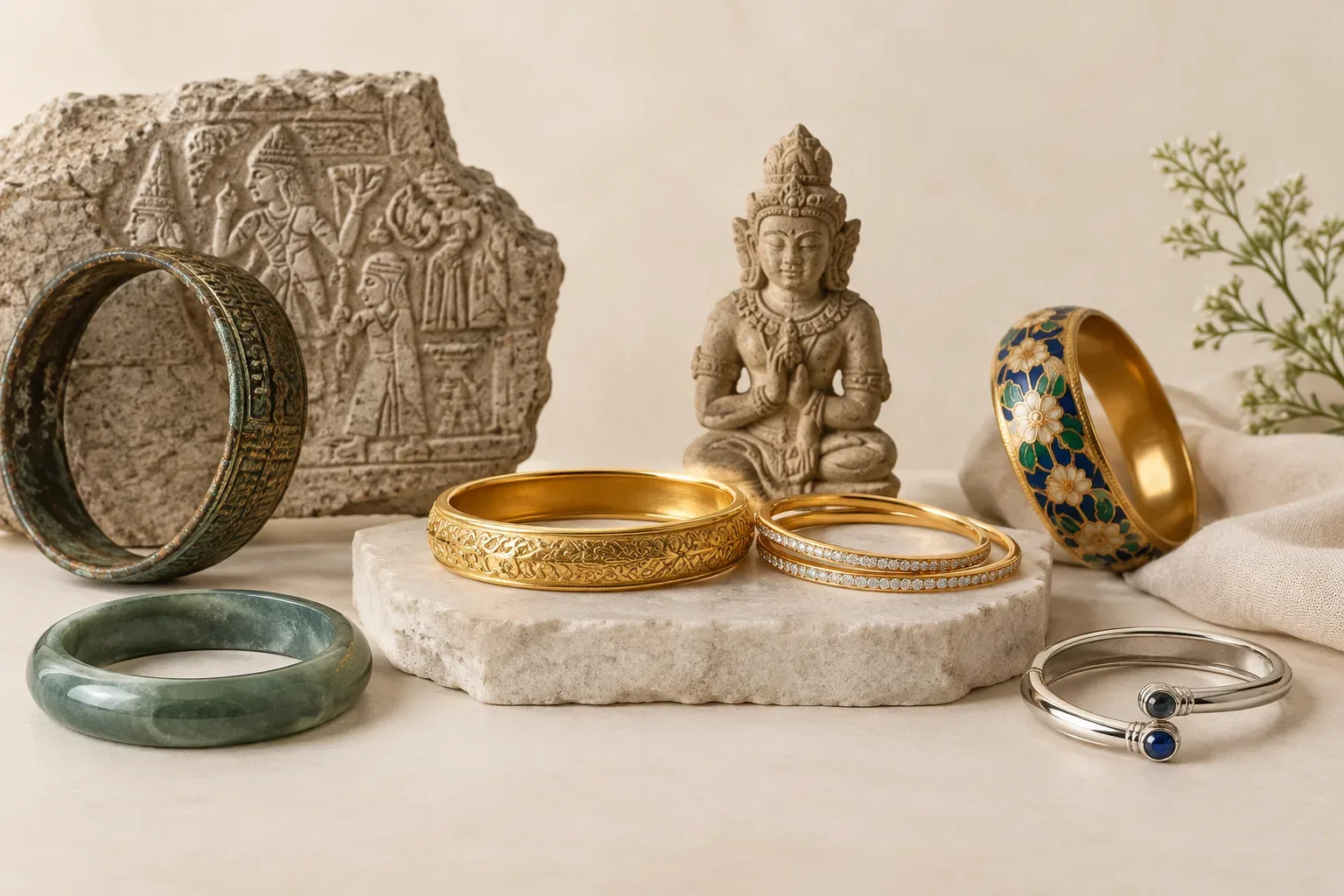
Motifs and decorative techniques appear on bangles in diverse ways: engraved bands, applied motifs, openwork, enamel, and set gemstones are common methods used to give a bangle visual identity. The motif might be geometric, floral, textual, or symbolic, and its interpretation depends on the historical and cultural context in which the bangle was made and used.
Gemstones are set into many types of bangles, and their selection often reflects aesthetic, economic, or symbolic choices. The Victoria and Albert Museum’s resources on gemstones explain historical preferences for certain stones and provide context for identification. In modern retail, gem choice also interacts with market factors: color, hardness, and availability influence whether a particular stone is practical for a rigid bangle that will be handled frequently.
Traditions such as gift-giving, marital customs, or ceremonial exchange influence when and how bangles are worn. Museums document many such traditions, but the specific practices and meanings vary by culture and period. If a motif or practice is described by a curator or historian, it should be cited precisely to that context rather than generalized.
A practical bangle quality checklist: construction
Start by examining the metal and construction. Confirm the stated metal content and look for hallmarks or manufacturer marks when present. Inspect joins, soldered seams, or hinges for neatness and strength; a poorly finished seam or sloppy hinge indicates weaker construction. For solid metal bangles without closures, check roundness and uniformity so the piece will slide cleanly over the hand without catching.
Ask the seller about plating, fill, or vermeil. The Federal Trade Commission provides guidance on required disclosures for treated metals and imitation gems; reputable sellers will state whether a piece is plated, gold-filled, or solid. If the bangle includes glued settings, examine the glue line and set security; glue ages and can fail, making prong or bezel settings preferable for long-term durability.
For bangles with gemstones, verify whether the stones are natural, treated, synthetic, or simulants. The Victoria and Albert Museum’s gemstone reference explains historical types and identification features, and modern vendors should disclose treatments such as dyeing, heating, or fracture-filling. When possible, request documentation or certification for high-value stones.
A practical bangle quality checklist: comfort
Fit is central to comfort. A bangle is usually worn over the hand, so internal diameter and thickness determine whether it will slide on comfortably. Measure the widest part of the hand and compare to the bangle’s internal diameter; many wearers prefer a small amount of clearance so the bangle moves without pinching. Weight distribution affects how a bangle feels during wear: heavy bangles may fatigue the wrist, while very light hollow pieces can feel unstable.
Finishing where the bangle contacts skin matters. Smooth interior surfaces and rounded edges prevent irritation; sharp edges or uneven finishing are red flags. If the piece is intended for daily wear, check that any embellishments do not rub uncomfortably against skin or snag clothing.
A practical bangle quality checklist: durability
Consider the hardness and wear-resistance of both the metal and any stones. Softer metals may dent or deform; soft gemstones will scratch or chip if the bangle is handled roughly. Hollow or filled constructions reduce cost and weight but can compromise long-term durability if they collapse or split.
Examine surface treatments that affect longevity. Plating can wear through at contact points; enamelling can chip if knocked. Ask about repairability: can a jeweller re-solder a hinge, reapply plating, or reset stones? Durable design anticipates reasonable repair rather than being disposable.
Practical and respectful selection or gifting guidance
When selecting a bangle as a gift, consider both the recipient’s aesthetics and cultural background. If a bangle motif or style has a specific cultural or ceremonial role, research that context using reliable sources before gifting to ensure you are being respectful. Museum materials, such as those from the Victoria and Albert Museum, can provide useful, contextualized background on traditions and historic uses.
Prioritize clear disclosure from sellers so you and the recipient understand what you are buying. The FTC’s consumer guidance recommends asking sellers directly about materials and treatments; request written confirmation if the item’s composition affects value or care needs. For heirloom-quality gifts, choose solid constructions, secure settings, and materials known for longevity, and include care instructions or a note about any cultural meanings you’ve confirmed.
Be mindful of sizing: because many bangles must pass over the hand, the wrong diameter can render a gift unwearable. If you are unsure, choose a model with an open cuff or a hinged design with a clasp that accommodates different wrist sizes. When in doubt, ask for a gift receipt or a resizing option.
Care, maintenance, and when to seek professional help
Routine care extends a bangle’s usable life. Keep bangles away from harsh chemicals, remove them during heavy manual tasks, and store them so that hard stones do not contact softer metals or gems. For plated pieces, expect gradual wear at contact points and consider periodic re-plating if the bangle has sentimental or monetary value.
If you detect loosened stones, a failing hinge, or a cracked enamel or inlay, consult a professional jeweller for assessment rather than attempting DIY fixes. Reputable jewellers can advise on repair options and on the advisability of restoration versus conservation, depending on the piece’s construction and value.
Conclusion
A clear bangle quality checklist—construction, comfort, and durability—helps buyers and gifters make informed choices grounded in evidence. Museum scholarship, such as the Victoria and Albert Museum’s work on jewellery history and gemstones, demonstrates that bangles carry varied meanings in specific historical contexts; modern personal meanings are valid but different from documented uses. Combined with careful inspection and vendor disclosure in line with Federal Trade Commission guidance, the checklist above will help you select bangles that are both meaningful and well-made.
Frequently asked questions
What is the first thing to check on a bangle?
Begin by confirming the claimed metal and inspecting the construction: look for hallmarks, check seams or hinges, and assess the finish where the bangle contacts skin. A clearly stated metal type and neat joins are signs of better quality.
How should a bangle fit for comfort?
A comfortable bangle has a suitable internal diameter so it passes over the widest part of the hand with a small amount of clearance. It should have smooth interior surfaces and rounded edges to avoid irritation; weight should feel balanced rather than fatiguing.
Are plated or gold-filled bangles durable?
Plated bangles will show wear at contact points over time; gold-filled pieces are more durable because they have a thicker layer of gold bonded to a base metal. Ask the seller about expected wear and whether re-plating or repair is supported.
How can I check if a gemstone is treated or a simulant?
Request disclosure from the seller about treatments or simulants. For important purchases, ask for documentation or a lab report. The Victoria and Albert Museum’s gemstone guide explains common stones and their historic uses, but modern treatment disclosures fall under FTC consumer protection guidance.
Is it appropriate to gift a culturally specific bangle style?
Gifting a culturally specific bangle can be meaningful, but research the cultural context first. Consult museum resources or reputable cultural histories to understand traditional meanings and avoid unintentional disrespect. When uncertain, choose a design with neutral symbolism or ask the recipient about preferences.
Sources and further reading
- Bedazzled: A History of Jewellery — Victoria and Albert Museum
- An A-Z of Gemstones — Victoria and Albert Museum
- Buying Gemstones, Diamonds, and Pearls — Federal Trade Commission