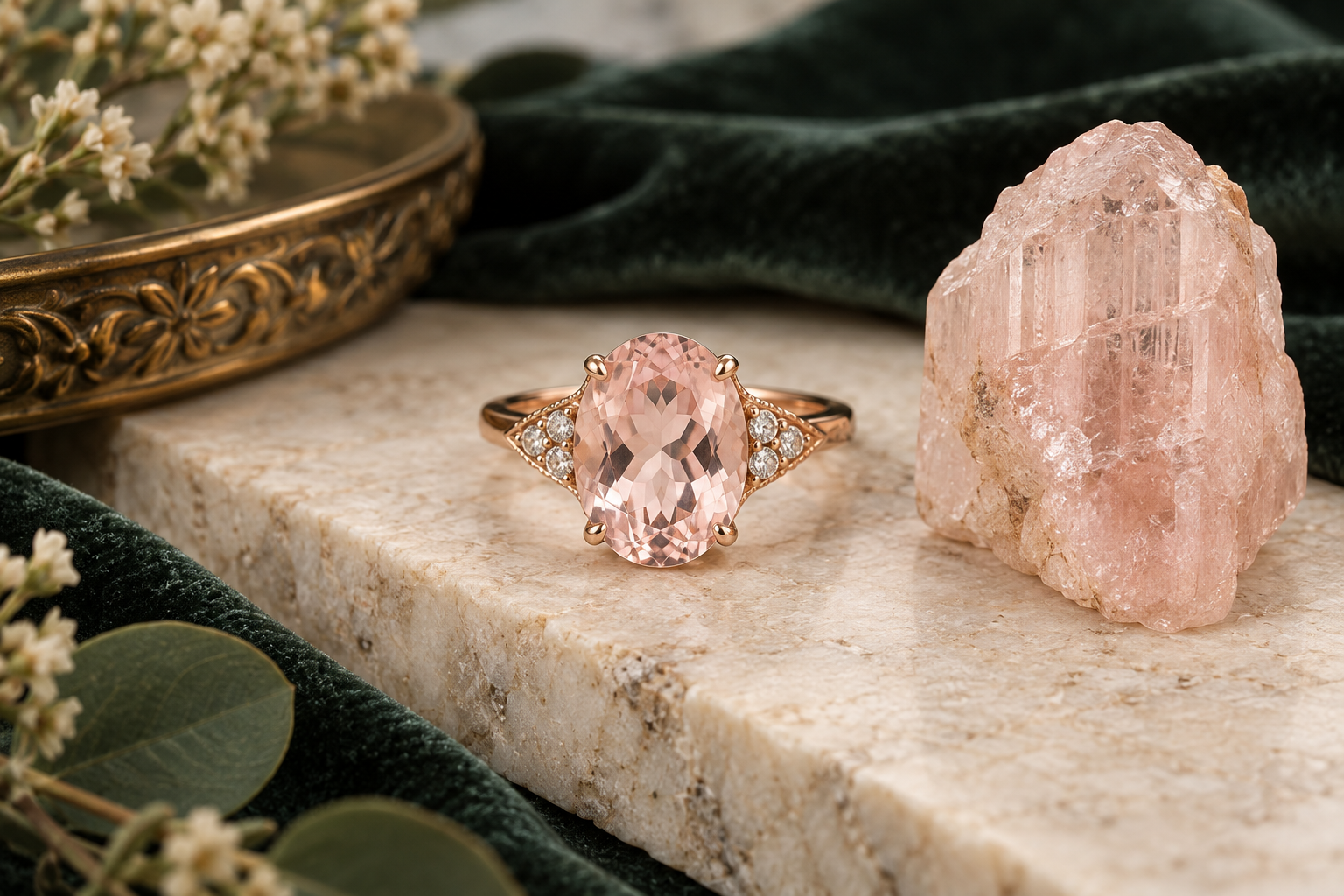
Meaning at a glance
Morganite is pink-to-orange-pink beryl colored by manganese; its modern romantic symbolism should be separated from its twentieth-century naming history, heat treatment, quality factors, and care.
What morganite is, scientifically
Morganite is a variety of the beryl mineral group. The Smithsonian National Museum of Natural History identifies morganite as beryl whose pink-to-orange-pink hues arise in part because of manganese in the crystal structure. The Gemological Institute of America (GIA) describes the same species as well and treats color and other gemological characteristics as the primary quality factors for morganite.
Documented historical evidence and naming
The most widely documented historical fact about morganite is its name. The Smithsonian National Museum of Natural History reports that the variety was named for the financier and collector J. P. Morgan. This naming history is a twentieth-century development in modern mineral classification rather than a long-standing cultural symbolism that can be traced across many historical periods or cultures.
Beyond the naming, there is no single long-documented set of symbolic meanings tied to morganite across multiple ancient or medieval cultures the way some other gems acquired classical attributions. When you encounter claims about old, universal meanings for morganite, those are typically modern interpretations rather than citations of historical practice; the Smithsonian’s account of the gem centers on its mineral identity and naming rather than legend or ritual use.
Separating documented facts from modern interpretations
Documented facts include morganite’s mineral identity as a beryl colored by manganese and the historical naming after J. P. Morgan, as noted by the Smithsonian, and gemological observations such as the role of heat treatment in improving color and the list of quality factors emphasized by the GIA. These are evidence-based, attributable statements about the stone.
Modern symbolic meanings—most commonly romantic associations, softness, compassion, or emotional healing—are contemporary personal or marketing interpretations rather than historic constants. Such meanings can be meaningful to individual wearers and are valid as personal symbolism, but they should be understood as modern, culturally variable, and not universal or ancient attributions.
How morganite appears in jewelry
Morganite’s pastel pink-to-orange-pink range lends itself to designs that emphasize warmth and subtle color. Jewelers often choose cuts and settings that maximize the gem’s gentle hue and clarity, and many modern designs pair morganite with warm metals such as rose gold to enhance its pink tones or with platinum and white gold for a cooler contrast. Morganite is commonly set as center stones in rings and pendants and as accent stones in earrings and bracelets, where its color provides a softer alternative to traditional colorless diamonds or stronger-hued gems.
Because morganite typically shows its color best in larger, well-cut stones, cutters often focus on table size, symmetry, and proportions that allow light to pass through the gem without washing out the tone. Jewelry motifs that emphasize romance—hearts, solitaires, floral settings, and halo arrangements—frequently use morganite in contemporary contexts, though those are stylistic choices rather than historic or cultural mandates.
Quality factors to watch when buying
The Gemological Institute of America lists color, clarity, cut, and carat as the primary quality considerations for morganite, with color often the most important factor for value and visual appeal. Stronger pinks or slightly orangey-pinks typically command more attention, but personal preference plays a large role in what a buyer finds desirable. GIA also notes that heat treatment can be used to improve the pink color of morganite, and sellers should disclose such treatments when they are present.
Because clarity is often high in morganite compared with many other gem species, buyers should still inspect stones for inclusion types and positions that affect durability or eye appeal. Cut quality affects how color and brilliance appear; a well-proportioned cut will enhance the stone’s apparent saturation and sparkle. When considering size, remember that morganite’s pastel tones change in perception depending on the surrounding metal and small accent stones, so view candidate pieces in natural light and in the setting you intend to wear.
Practical buying and gifting guidance
When selecting morganite as a purchase or a gift, start by identifying the recipient’s style and lifestyle. If the wearer prefers low-maintenance or everyday jewelry, choose a secure setting and discuss the stone’s intended use with the seller. If the piece is for a special-occasion wearer, you can prioritize larger sizes or more delicate settings that highlight color and clarity. Because modern romantic meaning attached to morganite is contemporary and personal, consider whether the recipient values the symbolic association of pink stones; some people prefer a stone chosen for personal meaning, while others prefer a purely aesthetic choice.
Ask any retailer or seller about heat treatment and request disclosure. The GIA notes that heat treatment can improve morganite’s pink color; whether treated stones are acceptable will depend on your budget and preference for natural, untreated material. Request to see the gem in daylight if possible, ask for certificates or documented appraisals when available, and keep receipts and any treatment disclosures with the piece. For gifts meant to mark commitments—engagements, anniversaries, or milestones—pair the stone with a setting and metal that matches the recipient’s wardrobe and daily habits and include a card or note explaining why you chose morganite if the personal symbolism matters.
Care and maintenance
Morganite is a gem that benefits from routine, sensible care. Clean it using warm water, mild soap, and a soft brush, rinsing thoroughly and drying with a soft cloth. Avoid exposure to harsh chemicals or situations where the stone can be struck or abraded, and store morganite pieces separately from harder gemstones to reduce the risk of scratches. Regularly inspect prongs and settings for security, especially for rings worn frequently.
If a morganite has received heat treatment, ask your jeweler whether specific cleaning methods should be avoided. When in doubt about ultrasonic or steam cleaning, consult the seller or a qualified jeweler, as cleaning methods appropriate for one gem or setting are not automatically appropriate for every treated stone or mounting.
Final perspective
Morganite’s appeal rests on a clear, approachable gemology and contemporary aesthetic value. The Smithsonian documents its mineral identity and naming history, while the GIA emphasizes the gemological attributes that drive quality and market practices, including the role of heat treatment. Its modern romantic symbolism is a personal and cultural layer added by designers, wearers, and gift-givers in recent decades, and it can be a meaningful choice when selected with attention to color, treatment disclosure, setting, and care.
Frequently asked questions
What is morganite?
Morganite is a pink-to-orange-pink variety of the mineral beryl; the Smithsonian notes that manganese contributes to its pink color.
Why is morganite often linked to romance?
Romantic associations are modern and cultural interpretations rather than long-documented historic meanings; people today often choose morganite for its soft pink hues and personal symbolism.
Was morganite named after someone?
Yes. The Smithsonian National Museum of Natural History reports that morganite was named for the financier and collector J. P. Morgan; this naming is part of its documented twentieth-century history.
Does heat treatment affect morganite?
The Gemological Institute of America states that heat treatment can be used to improve the pink color of morganite; buyers should ask sellers to disclose any treatments.
Is morganite durable enough for an engagement ring?
Many people use morganite in engagement rings, but suitability depends on the wearer’s lifestyle, setting security, and how often the ring will be worn; discuss intended use with your jeweler.
How should I clean and care for morganite?
Clean morganite with warm water, mild soap, and a soft brush, rinse and dry with a soft cloth, avoid harsh chemicals, and have settings inspected regularly; consult your jeweler if the stone has received treatments.
Sources and further reading
- Morganite Quality Factors — Gemological Institute of America
- Beryl (var. morganite) — Smithsonian National Museum of Natural History