Meaning at a glance
Tourmaline is a mineral group with a broad spectrum of colors; understand its species (notably elbaite), how trace elements create color and zoning, the limited documented historical symbolism, the modern color-based interpretations, how it is used in jewelry, practical buying questions, and gentle care advice.
What tourmaline is: species, chemistry, and color
Scientifically, tourmaline refers to a group of boron silicate minerals with complex and variable chemistry. The Smithsonian National Museum of Natural History identifies elbaite as one species within that group that commonly yields gem-quality material. The Gemological Institute of America (GIA) likewise describes tourmaline as a mineral group that occurs in many colors and notes that trace elements control those colors.
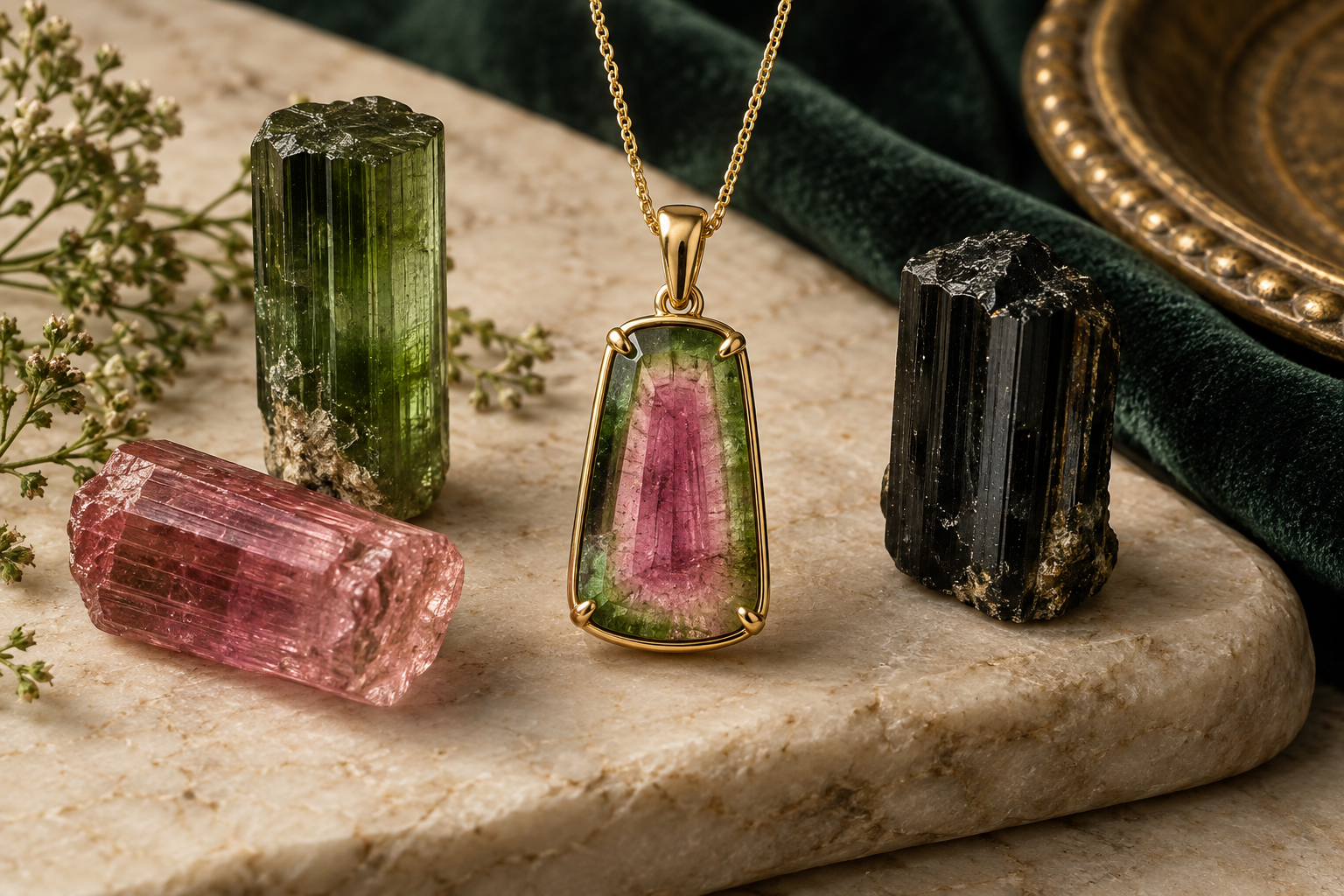
Because the chemistry of tourmaline can include a range of trace elements, the same mineral group can produce green, pink, red, blue, yellow, brown, black and multicolored crystals. The GIA also documents that some tourmaline shows color zoning—distinct bands or zones of color within a single crystal—so two stones cut from the same rough may look very different.
Documented historical evidence and what the scientific sources say
When we speak about "history" with tourmaline, the most robust published evidence in the scientific and museum literature concerns mineral identification, geographic occurrences, and notable specimens in collections. The Smithsonian’s entry for elbaite and the GIA’s summary of tourmaline focus on mineralogy, color origin, and physical properties rather than on comprehensive cultural symbolism.
Because these institutional sources prioritize geology and gemology, they do not provide a single, documented set of cultural meanings tied to particular peoples or historical periods. That absence in the GIA and Smithsonian records means that any claim of an ancient, universal symbolic meaning would require separate primary historical sources; it is not established by the mineralogical literature cited here.
Documented facts versus modern interpretations
Documented facts established by gemological and museum authors include that tourmaline is a multi-species mineral group, that elbaite is an important gem-bearing species, that trace elements influence its color, and that color zoning can occur. These facts are supported by the Gemological Institute of America and the Smithsonian.
Modern meanings — such as sayings that green tourmaline symbolizes renewal or that pink tourmaline signifies love — are contemporary, market-driven, and personal associations rather than proven historical or cultural facts in the institutional sources cited here. Many jewelers, designers, and wearers assign emotional or symbolic value to particular colors; those associations vary by individual, culture, and time.
Color-guided interpretations (modern and personal)
Because tourmaline comes in so many colors, modern buyers and wearers often use color as the basis for meaning. For example, some people choose pink stones for themes of compassion and affection, green for growth or restoration, and blue for calm. Bi-color or "watermelon" tourmaline, which shows both green and pink in the same crystal, is popularly interpreted as symbolizing balance or union.
It is important to emphasize that these color-based meanings are contemporary interpretations common in jewelry markets and social media; they are helpful when the recipient values color symbolism, but they are not universal historical meanings documented by the GIA or the Smithsonian.
How tourmaline appears in jewelry
Tourmaline is used in many jewelry forms: faceted stones for rings and pendants, cabochons and beads for necklaces and bracelets, and carved or free-form pieces when makers want to highlight color zoning or striking crystal patterns. Jewelry designers often select stones to show a single color field or to showcase multicolored zoning such as bi-color or parti-color crystals.
Because some tourmaline rough displays sharp color boundaries, cutters may orient the stone to emphasize color or create a dramatic contrast. The range of available cuts and finishes means tourmaline can be eye-catching in both classic and contemporary settings; jewelers frequently set tourmaline in metals from silver to platinum depending on desired contrast and budget.
Buying factors: what to ask and look for
When buying tourmaline jewelry, prioritize color intensity and evenness, clarity, the presence or absence of visible color zoning, and the quality of the cut. Because trace elements determine color and crystals can be zoned, two visually similar pieces may differ in value and visual appeal based on how the rough was cut and the stone’s internal patterning.
Request information about species when available (for instance, whether the gem is elbaite) and ask for certification or a gemological report if you are purchasing a high-value piece. The GIA and other reputable labs can note treatments, color origin, and whether the stone is natural or synthetic. If the seller does not provide clear answers about treatment, origin, or a return policy, consider that a potential risk.
Treatments and disclosure
Transparent disclosure of treatments and enhancements is a critical part of conscientious buying. While the institutional sources used here document color causes and zoning, they emphasize mineralogical facts more than trade practices. For that reason, always ask a seller to describe any heat, irradiation, or other treatments and to supply a lab report for valuable stones.
If clarity is important to you, examine the stone in person or in high-quality imagery. Color zoning can be an attractive feature, but it may also affect how the stone looks in different lighting or on the finger; examine how the color reads in the environments where the piece will be worn.
Selection and gifting guidance
Choose tourmaline for a gift by starting with the recipient’s color preferences and lifestyle. For an everyday ring, select a stone and mounting that consider wear and the wearer’s daily activities. If you want the stone to carry a particular modern meaning, discuss the color association with the recipient or include a personal note explaining why you chose that color.
Respect cultural contexts: do not assume a single color or stone carries the same cultural significance for everyone. Where cultural symbolism matters—ceremonial gifts, cross-cultural exchanges, or heritage occasions—ask about customs or consult a knowledgeable friend or community member. For higher-value purchases, request a gemological report and confirm return and repair policies.
Care and maintenance
Gentle care will keep tourmaline jewelry attractive for years. Clean gems with warm water, a mild detergent, and a soft brush, and dry with a lint-free cloth. Store tourmaline pieces separately to avoid scratching from harder gems or metals and steady wear.
Protect tourmaline from hard knocks and prolonged exposure to extreme heat or harsh chemicals, because like many gemstones, it can chip or be affected by rough handling. If your piece requires repairs or deep cleaning, consult a professional jeweler who can advise on the safest approach for the specific stone and setting.
Final thoughts
Tourmaline’s value to jewelers and wearers comes from its vivid color palette and the creative possibilities that color zoning and multicolored crystals provide. Rely on reliable gemological information for the mineral facts—such as the role of trace elements in color and the role of species like elbaite—and treat color meanings as contemporary, personal, and market-driven choices.
When selecting or gifting tourmaline, balance aesthetic preference, practical durability, clear disclosure about treatments, and respectful acknowledgment that symbolic meanings vary across individuals and cultures.
Frequently asked questions
What does tourmaline symbolize?
There is no single, universally documented symbolism for tourmaline in the gemological or museum literature cited here. Modern symbolic associations are typically color-based and contemporary: for example, people often choose pink for love or compassion and green for renewal. These meanings are personal and market-driven rather than universally historic.
Is watermelon tourmaline natural?
Yes, multicolored or "watermelon" tourmaline—stones that show green and pink within the same crystal—occur naturally and are a well-known phenomenon because tourmaline can show color zoning. Always ask the seller for documentation confirming the stone is natural and whether any treatments have been applied.
How should I clean tourmaline jewelry?
Clean tourmaline with warm water, a mild detergent, and a soft brush, then dry gently with a lint-free cloth. Avoid harsh chemicals and protect the stone from sharp impacts. For high-value pieces or complicated settings, consult a professional jeweler.
Are tourmalines treated or enhanced?
Treatments may exist in the trade to modify color or clarity, but the institutional sources used here emphasize mineralogical facts over trade practices. For valuable purchases, request full disclosure of any treatments and consider obtaining an independent gemological report.
What should I ask when buying a tourmaline?
Ask about the stone’s species (if known), whether it is natural or synthetic, any treatments, the presence of color zoning, and whether a gemological report is available. Also review the seller’s return policy and confirm the mounting and metal if you are purchasing finished jewelry.
Sources and further reading
- Tourmaline — Gemological Institute of America
- Elbaite — Smithsonian National Museum of Natural History