Meaning at a glance
Leather jewelry durability depends on the leather type, how it is finished, and the metals or gemstones used with it; leather does not tarnish like metal but will patina, dry, darken, or degrade with moisture, sweat, UV, and abrasion. This article separates documented historical evidence for leather and organic materials in jewelry from later popular meanings, explains how leather appears with settings and gemstones, and gives practical care, selection, and gifting advice.
Short answer — the main point
Leather jewelry durability is a function of two things: the behavior of leather as an organic material and the behavior of any metal, gemstone, or hardware attached to it. Leather itself does not tarnish the way silver or copper do; instead it patinas, hardens, softens, darkens, or dries and cracks depending on exposure to water, oils, sunlight, salts, and abrasion. Metal findings and gemstone settings on leather pieces can and do tarnish, and those failures are usually the limiting factor in how long a leather piece looks and functions well. Caring for leather jewelry means caring for both the leather and the attached metal or stone, and choosing materials and construction appropriate to the intended use.
Documented history and changing contexts
Museum scholarship and exhibitions make clear that jewellery materials and meanings have changed repeatedly across time and place. The Victoria and Albert Museum presents jewellery history as an evolving field in which metal, stone, glass, and organic materials all play roles that shift with fashion, technology, and social context. The V&A stresses that what counts as 'precious' or 'durable' has depended on the period and the society rather than on fixed symbolic rules.
In that broad sweep, distinct periods and cultures are visible in museum collections: ancient Egypt and other ancient Mediterranean cultures; classical Greece and Rome; medieval and Renaissance Europe; the industrializing societies of the nineteenth century; and twentieth- and twenty-first-century global fashion and craft movements. Across these eras, organic materials such as bone, shell, textile, and leather appear alongside metals and gemstones in ways that reflect use, availability, and cultural emphasis. The V&A's framing of jewellery history emphasizes context — who wore an object, how it was used, and what materials were available at the time.
It is important to separate documented presence from later interpretation. Museums document that leather and other organic materials were used in jewelry and personal ornament; that historical record does not by itself prove specific symbolic meanings for leather across all cultures. Where the record is clear about function — for example straps, cords, or practical attachments — the evidence typically points to practical or everyday use rather than a universal ritual meaning.
Historical meanings versus modern interpretations
Documented historical evidence tends to describe leather as a material chosen for availability, flexibility, and strength. In many collections the evidence shows leather in straps, cords, and everyday decorations. That practical role is what is best supported by museum documentation.
Modern personal and fashion interpretations layer additional meanings on those practical origins. Contemporary wearers may associate leather pieces with ruggedness, bohemian style, sustainability, or rebellion. Those associations are real and meaningful in a modern cultural context, but they are not the same thing as documented ritual or symbolic meanings from particular historical cultures. Treat modern stylistic associations as contemporary cultural meanings rather than universal or ancient facts.
How leather appears in jewelry today and historically
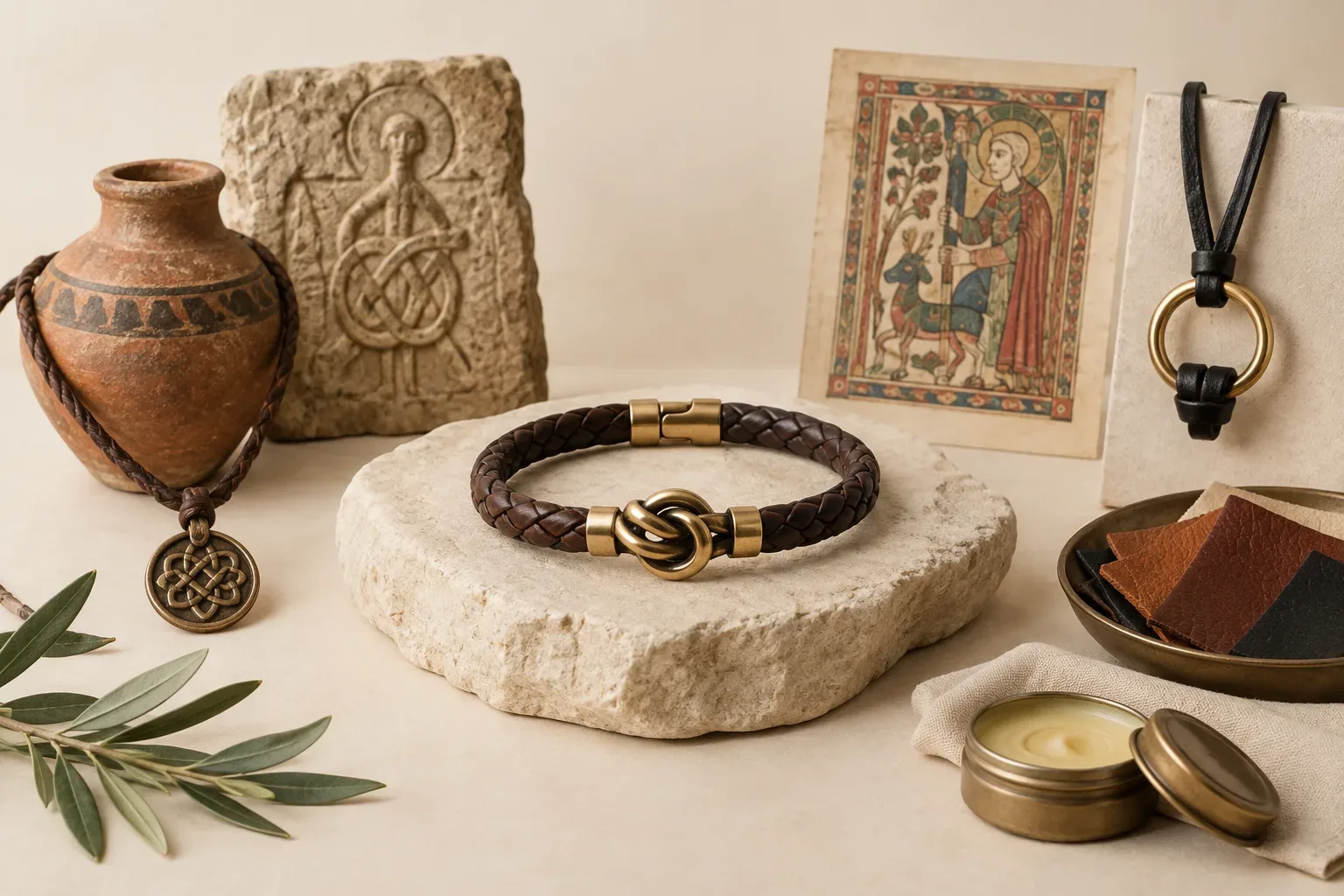
In both historical and modern practice leather most often appears as cordage, straps, or backing rather than as a carved precious component. Common forms include simple leather cords for pendants, braided leather bracelets with metal findings, leather chokers and collars, leather-backed cuff bracelets, and leather elements used to wrap or suspend a gemstone or charm.
Gemstones and decorative motifs are often paired with leather by using the leather as the suspension or wearable component while the stone or metal holds the decorative focus. The Victoria and Albert Museum's resources on gemstones provide helpful context for how stones are identified and valued; the pairing of a modest leather strap with a high-quality stone has long been one way to combine an economical wearable material with a valued gem focal point.
Leather is also used in contemporary craft and designer jewellery as a surface or as an intentional contrast to polished metal. Designers may employ vegetable-tanned leather that darkens and develops a patina, or they may use heavily treated or coated leathers to give a more stable, water-resistant finish. The choice of leather type changes how the piece will age and how the leather will behave when exposed to wear.
Durability: what tarnishes, what wears, and why
Tarnish is a chemical reaction of metals with their environment; common jewellery metals such as silver, copper, and some alloys tarnish in the presence of sulfur compounds, moisture, and air. Leather itself does not tarnish, but metal components attached to leather do, and their tarnish or corrosion is often what degrades the look of a leather piece.
Leather ages through mechanisms different from metal. Chromed or heavily finished leathers resist water and staining but can crack or peel when oils and flexing break down surface treatments. Vegetable-tanned leathers absorb oils and sweat and will darken and soften into a patina, which many wearers prize. All leathers are vulnerable to prolonged moisture, salt from sweat, ultraviolet light, and abrasion; those forces can cause stiffening, discoloration, weakening, and eventual breakage.
Because leather is porous it can trap salts and sweat that accelerate the corrosion of adjacent metal findings. A leather cord that sits against a silver clasp will expose that silver to salty, acidic contact more than if it were against clean air. For that reason, the limiting factor for a leather-and-metal piece is often the metal fittings and how they are joined to the leather.
Care: cleaning, conditioning, storage, and repairs
Basic cleaning and maintenance will greatly extend the life of leather jewellery. Wipe leather gently with a soft, dry cloth after wear to remove surface oils and dust. For a deeper clean, a barely damp cloth with a drop of mild, pH-neutral soap can be used very sparingly, followed by air drying away from direct heat or sunlight. Avoid soaking leather or submerging it in water.
Conditioning vegetable-tanned leather periodically with a product designed for jewelry or small leather goods can prevent drying and cracking. Use a small amount and test on an inconspicuous spot first; over-conditioning can darken leather and change its feel. Do not use household oils or solvents meant for furniture or automotive leather without confirmation from a leather-care specialist.
Protect metal findings from tarnish by keeping them dry and by storing pieces in low-humidity conditions. Where possible, separate leather pieces from high-humidity areas and from chemicals like perfumes, sunscreens, and household cleaners. If a metal component does tarnish, remove the leather from the metal before cleaning the metal, or protect the leather while you use a metal cleaner; many metal polishes will harm leather.
Repair-friendly construction extends life. When choosing or commissioning leather jewellery, favor pieces with replaceable findings (screw-in clasps, crimped ends that can be reworked) and clearly attached stones. If a leather cord breaks, a skilled jeweller or leatherworker can splice, re-knot, or replace the cord. For valuable gemstones or antique pieces, consult a conservator rather than attempting improvised repairs.
Selection and gifting guidance — practical and respectful choices
Think about intended use. If the recipient plans to wear the piece daily, choose a more heavily finished or coated leather with durable hardware, or select stainless steel, gold-filled, or solid gold findings that resist tarnish. For occasional wear or for someone who values natural aging, vegetable-tanned leather that will patina can be a thoughtful choice.
Check construction. Look for secure attachment of metal findings to leather, neat termination of cords, and reassurance that stones are set or mounted with protection from abrasion. Pieces sold with clear material disclosures are preferable; the Federal Trade Commission advises clear disclosure of treatments and imitations for gemstones and other materials, and that transparency helps you compare quality and value.
Consider skin sensitivity and ethics. If the wearer has metal allergies, choose leather jewelry with hypoallergenic findings or with a design that keeps metal away from skin contact. If leather sourcing is a concern for the recipient, ask about the type of leather and the supplier's sourcing practices; some makers offer vegetable-tanned local leathers or vegan leather alternatives if that fits the recipient's values.
Respect cultural meanings. If a leather form or motif is associated with a particular culture's ritual or identity, learn whether it is appropriate to gift or wear that motif. Museums like the Victoria and Albert document material culture, but contemporary cultural significance can be different and should be approached with respect. When in doubt, choose neutral, widely accepted styles and, if gifting an object with identified cultural meaning, speak to the recipient about context and provenance.
When to seek professional advice
For valuable or antique leather jewelry, consult a conservator or reputable jeweller before attempting cleaning or repair. Improper cleaning can irreversibly damage certain historical leathers and finishes. Museums and professional conservators use specialised techniques and products that are not appropriate for general DIY care.
For gemstone concerns or questions about treatments or imitations, consult a qualified gemmologist or check seller documentation; the FTC’s guidance on buying gemstones, diamonds, and pearls emphasizes the need for disclosure about treatments, imitations, and the identity of materials so buyers can make informed choices.
Frequently asked questions
Does leather jewelry tarnish?
Leather itself does not tarnish as metals do. Leather will patina, darken, dry, or crack with exposure. Metal findings attached to leather can tarnish, and that tarnish often determines how quickly a piece looks worn.
How should I clean a leather necklace?
Wipe gently with a soft dry cloth after wear. For light cleaning, use a barely damp cloth with mild, pH-neutral soap applied sparingly, then air dry away from heat. Avoid soaking or submerging leather.
Will sweat ruin leather jewelry?
Prolonged exposure to sweat and salts can darken and weaken leather and can accelerate corrosion of nearby metal findings. Wiping the piece after wear and occasional conditioning helps, but for heavy perspiration choose more resistant materials.
Can I use metal polish on leather jewelry?
Only if you fully protect the leather. Many metal polishes and cleaners will stain or harm leather. Remove leather components before aggressive metal cleaning, or consult a professional.
How long will leather jewelry last?
Lifespan depends on leather type, construction, use frequency, and care. Well-made pieces with durable findings and proper care can last many years; inexpensive, poorly finished pieces will show wear much sooner.
Sources and further reading
- Bedazzled: A History of Jewellery — Victoria and Albert Museum
- An A-Z of Gemstones — Victoria and Albert Museum
- Buying Gemstones, Diamonds, and Pearls — Federal Trade Commission