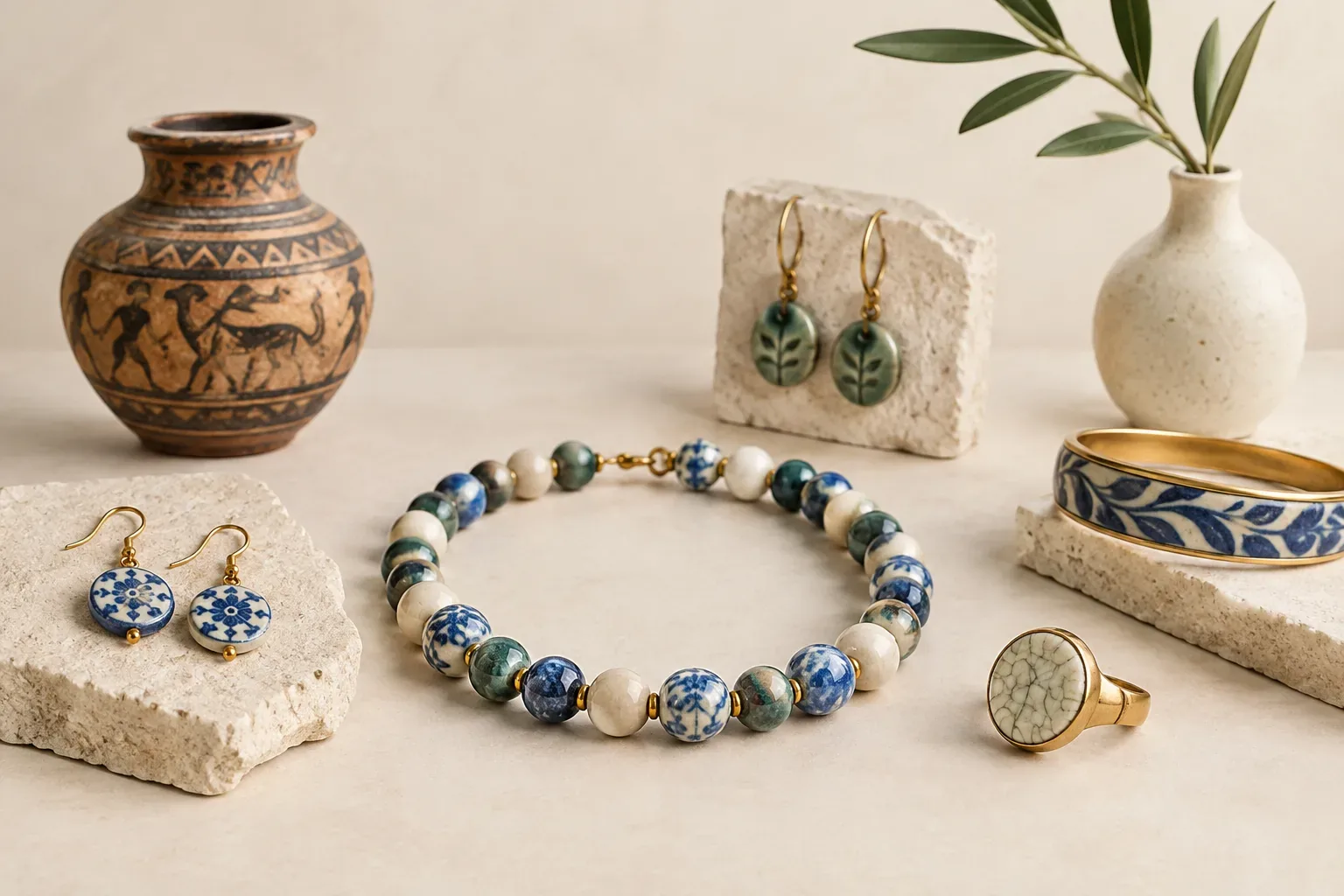
Meaning at a glance
Explain the documented history and changing contexts of the ceramic jewelry buying guide motif, separate cultural or religious evidence from later popular interpretations, and give practical guidance for choosing and wearing the motif in modern jewelry.
What the historical record actually shows
Museum scholarship makes two clear points useful for buyers: jewelry materials and meanings change over time and across societies, and museums document that those changes reflect social context rather than fixed, universal symbolism. The Victoria and Albert Museum frames jewellery as an evolving material culture where makers used a wide range of materials and functions shifted with fashion, technology, and social practices (Victoria and Albert Museum, Bedazzled: A History of Jewellery).
When people describe the ‘history’ of a material such as ceramic in jewelry, the careful way to state it is that museums and curators document examples of ceramic and similar non-metallic materials appearing in different periods and contexts, and they emphasise changing social uses rather than one consistent meaning. For gemstone and material identification more broadly, the V&A’s A–Z of Gemstones provides context about how materials have been classified and valued in different eras (Victoria and Albert Museum, An A–Z of Gemstones).
Separate from museum-documented uses are later or popular interpretations that assign single symbolic meanings to a motif or material. These modern readings are often personal, commercial, or revivalist. They can be meaningful for individuals, but they are not the same thing as documented historical practice. Keep that distinction in mind when a seller or label claims that a ceramic motif has an ancient, universal meaning: ask for the source or provenance.
How ceramic and ceramic motifs appear in contemporary jewelry
In modern craft and commercial jewelry, ceramic components typically appear as beads, pendants, plaques, inlays set into metal, or small sculptural elements integrated with metalwork. Makers may use different ceramic bodies—low-fired earthenware, stoneware, or high-fired porcelain—and a range of surface techniques, such as painted decoration, glazes, decals, and lustres. The final piece often combines ceramic with metals, stringing materials, or gemstones.
A motif painted or incised into ceramic can be a maker’s original design, a local or regional pattern, or a revived historic motif. Documented museum displays emphasize provenance and context, while contemporary makers may borrow motifs for aesthetic or personal reasons. When a motif is presented as having a specific cultural or religious meaning, request citation or provenance rather than accepting a blanket claim.
Quality markers: what to inspect and ask about
Surface finish and structural integrity are the first visual checks. Look for an even glaze without extensive milling marks, large cracks, or loose glaze flakes. Crazing (a web of fine glaze lines) is common in glazed ceramics and can be a stylistic choice, but it may affect the piece’s perceived age and how it traps dirt or moisture. Ask the seller whether crazing is intentional, and how it affects wear.
Check how the ceramic element is attached. Pins, bezels, wire wraps, or drilled holes should be cleanly executed and reinforced where appropriate. Poor attachment is a common failure point when ceramics are dropped or stressed. Metal settings should be soldered or otherwise robust; avoid pieces where the ceramic is only glued to soft metal without mechanical support.
Ask the maker or seller about the ceramic body and firing: porcelain is typically denser and can take a higher-gloss, less porous finish; earthenware is lighter and more porous unless well-glazed. If you need specific professional assurances about treatments or imitations, the Federal Trade Commission advises that sellers disclose treatments, enhancements, and imitations of materials used in jewelry (Federal Trade Commission, Buying Gemstones, Diamonds, and Pearls). Request clear disclosure in writing if it matters to you.
Pricing: factors that justify cost
Price reflects several factors: the ceramic body used (porcelain may command more than low-fired earthenware), the complexity of surface decoration, the number of firing steps and specialist glazes, the skill and reputation of the maker, and the metals or gemstones used in the mount or findings. Hand-painted or historically referenced motifs that require skilled decoration add labour cost.
Condition and provenance matter for vintage ceramic jewelry. Museum commentary on jewellery history underscores that objects acquire social value through use, association, and rarity (Victoria and Albert Museum, Bedazzled). For vintage pieces, documented provenance or maker marks can increase price. For contemporary pieces, an established maker’s signature or limited editions justify higher costs.
Best uses, styling, and when to avoid ceramic jewelry
Ceramic jewelry often makes an effective statement piece: colorful glazed pendants, hand-painted porcelain beads, or sculptural ceramic earrings draw visual attention and pair well with simple clothing. Because ceramic elements can be lightweight compared with solid metal, they can be comfortable to wear as larger-scale pieces.
Avoid ceramic jewelry in situations where it will be exposed to hard knocks, prolonged moisture, or heavy abrasion. Ceramics can chip or crack if dropped. For active wear, sports, or work where impact is likely, opt for metal- or composite-based pieces. If ceramic elements are mounted on soft or reactive metals, be mindful of exposure to chemicals (including some cleaning agents) that can affect metal finish and adhesives.
Practical and respectful selection and gifting guidance
When buying or gifting, start by confirming provenance and maker information. If a motif might have a cultural or religious meaning, research it first using reliable sources and ask the seller for provenance. Jewelry often carries different meanings in different communities; don’t assume a motif is neutral across contexts. If you are unsure, choose neutral designs or consult the intended recipient.
Prioritise pieces with clear maker or origin information and a reasonable return policy. If gifting to someone with allergies, check the metal used in findings; a ceramic component does not guarantee hypoallergenic metal. Include care instructions and, if possible, a note about the maker and the techniques used—this adds value to a gift and shows respect for craftsmanship.
If the piece uses motifs associated with a living culture, consider purchasing directly from makers within that cultural community where possible, or from sellers who can document collaborative, consent-based use of motifs. That helps ensure economic benefit to communities and reduces the risk of inadvertent cultural appropriation.
Care, repair, and longevity
Clean glazed ceramic jewelry gently. Use a soft cloth or a damp cloth with mild soap for dirt; avoid abrasive cleaners and ultrasonic cleaners that can stress ceramic glazes and metal joins. Dry pieces thoroughly before storing. For porous ceramics or pieces with crazing, avoid prolonged immersion in water.
For repairs, consult a jeweller experienced with mixed-material work. Simple chips can sometimes be stabilized or disguised by a professional, but significant breaks may require careful reset into a new mount. Keep receipts and maker contact details to facilitate repairs or commissions.
Verifying authenticity and responsible purchase steps
Ask for written disclosure about treatments and materials and request close-up photos or a video showing details of attachment and surfaces. Use the FTC guidance on disclosure as a benchmark: sellers should state clearly when materials are treated or when a component is an imitation (Federal Trade Commission, Buying Gemstones, Diamonds, and Pearls).
For higher-value or antique ceramic jewelry, consider professional appraisal or a condition report. For contemporary craft pieces, seek pieces with maker signatures or documented editions. Keep records of purchase and any maker statements about materials and techniques; these enhance provenance and future resale or conservation options.
Frequently asked questions
Are ceramic beads and pendants durable enough for everyday wear?
Ceramic elements can be durable if well-made and properly mounted, but they are more vulnerable to chipping or cracking than metal. For everyday wear, choose pieces with robust attachment methods and avoid situations where the piece will be knocked or dropped.
How can I tell if a ceramic jewelry component is porcelain or earthenware?
Ask the maker or seller for the ceramic body. Porcelain is typically denser, smoother, and often more translucent at thin edges, while earthenware is lighter and more porous unless well-glazed. If provenance matters, request written confirmation from the seller.
Do sellers have to disclose treatments or imitations in ceramic jewelry?
Yes—by the Federal Trade Commission’s guidance for gemstones and jewelry materials, sellers should disclose treatments, enhancements, or imitations. Ask for clear disclosure about glazes, decals, pigments, or any non-ceramic coatings used.
Is ceramic jewelry hypoallergenic?
Ceramic itself is usually inert, but allergies typically relate to metal findings. Confirm the metals used for posts, clasps, or settings (for example, sterling silver, gold, or plated metals) and choose appropriate hypoallergenic materials if the wearer has sensitivities.
How should I clean and store ceramic jewelry?
Clean glazed ceramic gently with a soft or slightly damp cloth and mild soap if needed; avoid abrasive cleaners and ultrasonic baths. Dry thoroughly before storing in a padded box where pieces cannot rub against each other.
What should I look for when gifting ceramic jewelry to be culturally respectful?
Research any motifs for cultural or religious significance, ask the seller for provenance, and favour pieces made by or in collaboration with the community that developed the motif. When in doubt, choose neutral designs or consult the recipient before purchasing a culturally specific motif.
Sources and further reading
- Bedazzled: A History of Jewellery — Victoria and Albert Museum
- An A-Z of Gemstones — Victoria and Albert Museum
- Buying Gemstones, Diamonds, and Pearls — Federal Trade Commission