Meaning at a glance
Ceramic components do not tarnish like metal, but they are vulnerable to chipping, glaze wear, adhesion failure and surface abrasion; historic uses of ceramic in jewelry are documented across many periods by the Victoria and Albert Museum, while the idea of ceramics as a symbolic 'durability motif' is largely a modern interpretation; choose high-fired pieces, inspect attachments and glazes, ask sellers about treatments, and follow simple cleaning and storage routines to prolong life.
What the historical record shows
Museum scholarship records ceramic materials in personal ornament across many eras and regions, and the Victoria and Albert Museum’s overview of jewellery history emphasizes that materials and their social meanings change over time. The V&A documents the long use of ceramic beads, glazed pendants and small inlaid plaques in a wide range of cultures and periods, showing that potters’ wares were adapted into personal adornment as fashions and technologies evolved.
Those museum accounts place ceramic jewelry alongside other materials—metals, glass, organic beads and gemstones—rather than treating it as a single, continuous symbolic practice. The historical evidence in the V&A’s materials is about material use, technique and social context rather than a single, universal symbolic claim such as 'ceramics mean permanence' or 'ceramics always signify humility.'
Documented historical meanings versus modern interpretations
Where museums document meanings, they link ornaments to specific social functions—status, identity, trade connections or ritual practice—within a named culture and period. The V&A’s work on jewellery history shows that any symbolic meaning attached to an item depends on time and place. For example, a glazed bead or ceramic amulet in one community might have signified trade contacts or a craft tradition; in another it could have been a cheap substitute when metal was scarce. These are context-specific, museum-documented observations rather than universal definitions.
In contrast, contemporary sellers and wearers sometimes project modern sentiments onto ceramic pieces—using terms like 'durability' or 'resilience' as deliberate symbolic language when marketing or gifting ceramic jewelry. That use is a modern personal or commercial interpretation and should be distinguished from the specialized, contextual meanings recorded by historians and museums. If you care about historical accuracy, check provenance and ask whether a symbolic claim is rooted in documented cultural practice or is a contemporary sentiment applied to the object.
How ceramic motifs and materials appear in jewelry
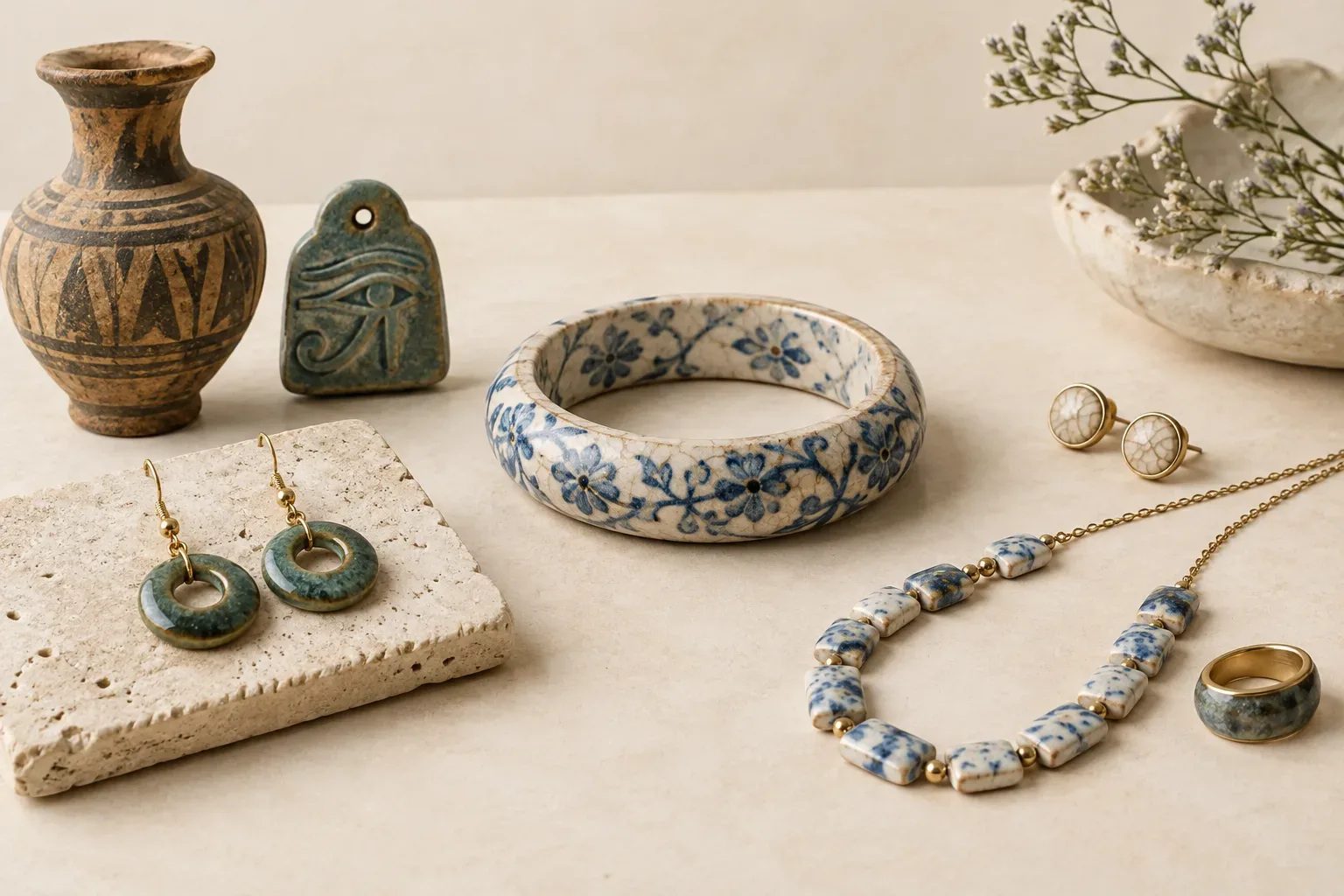
Ceramic elements appear in jewelry in several ways: as beads strung into necklaces and bracelets, as fired plaques or medallions set into metal mountings, as small glazed or painted pendants, and as inlaid decorative panels in mixed-material pieces. The Victoria and Albert Museum collections and exhibitions show ceramics used both as standalone ornaments and in combination with metal settings, gemstones or organic materials, often selected for color, surface pattern or the distinctive sheen of a glaze.
Modern makers may use techniques borrowed from historical craft—hand-formed beads, porcelain portrait miniatures, or lampworking of glass-like enamels applied to ceramic surfaces—while adding stainless, gold or silver fittings for strength and wearability. When ceramics are combined with gemstones or glass, the overall durability of the piece becomes a function of each material and the way they are attached.
What 'tarnish' and 'wear' mean for ceramics
Tarnish is a chemical surface reaction usually associated with metals—sulfidation or oxidation that changes color and luster. Ceramics do not tarnish in that sense because they are ceramic oxides and silicates rather than elemental metals, so you will not see the greening or blackening typical of copper or silver sulfidation. This is one of the reasons sellers sometimes contrast ceramic components with metal ones when discussing long-term appearance.
Wear for ceramics is primarily mechanical or surface-related rather than chemical: impact damage (chips and cracks), surface abrasion that dulls glaze and painted decoration, glaze crazing (fine network of cracks in the glaze), and loss of attached fittings where adhesives or solder joints fail. Chemical exposure—strong acids, alkalis, or some solvents—can also attack colored pigments, glazes or the surface decoration and weaken adhesives. Repeated thermal shock, for example rapid temperature changes, can induce cracking in thin or poorly fired pieces. Finally, metal findings and stringing materials attached to ceramic components can corrode, tarnish, or break, creating failure points even where the ceramic element itself remains intact.
Practical care for ceramic jewelry
Handle ceramic jewelry as you would other fragile costume or heritage pieces: avoid drops, bangs and tight packing that can transmit shocks. Clean gently with a soft, dry cloth; for stubborn surface dirt use a slightly damp cloth and mild soap, but avoid soaking, especially if the piece has open-pore body clay or glued fittings where water could be absorbed and weaken joins.
Avoid exposure to strong chemicals such as household cleaners, acetone, concentrated perfume or chlorine. These substances can degrade glazes, pigments and adhesives. Do not use ultrasonic cleaners on pieces with glazes, inlaid pigments or adhesive-set components. When a metal setting or chain is present, clean and care for the metal per its own requirements while protecting the ceramic elements from abrasion during cleaning.
Store ceramic pieces with padding and separated from harder jewelry to prevent knocks. For strung beads, check the cord or string regularly; restring when wear appears. If a ceramic pendant is mounted in metal, have a jeweler check prongs and solder joints periodically.
Selection and respectful gifting guidance
When buying ceramic jewelry, prioritize well-fired, glazed bodies and professional attachments. High-fired porcelains and stonewares tend to be less porous and more durable than low-fired earthenware, and continuous, undamaged glaze provides better surface protection. Inspect the glaze for hairline cracks (crazing), which can indicate old or stressed glaze layers, and look for chips around edges and drill holes. Examine metal findings and attachment points for secure joins and corrosion-resistant choices such as gold-filled or stainless steel when allergies or long wear is intended.
Ask the seller for specific information about treatments, glazes, pigments and adhesives. The Federal Trade Commission’s consumer guidance on gemstones and treatments recommends that sellers disclose treatments and imitations; the same principle applies to ceramic jewelry where coatings, overglazes, or modern sealants play an important role in durability. A trustworthy maker or retailer will provide care instructions, state whether a piece is intended for occasional wear only, and explain any limitations.
Gifting ceramic jewelry invites a few additional considerations. If the design references a particular cultural motif, verify provenance and avoid appropriating sacred or community-specific symbols without permission. When the object is handcrafted by a living maker, include the maker’s card and care notes as part of the gift; this supports the artisan and gives the recipient practical information. If you intend the piece for daily wear, choose a design with protected ceramic elements or metal encasements rather than exposed, protruding beads that are likely to catch and chip.
Final takeaways
Ceramics make beautiful and historically rich components in jewelry. They do not tarnish like metal, but durability is about more than chemical stability: firing, glaze quality, design of attachments and the care a piece receives determine how well a ceramic item holds up in use. Museum records assembled by the Victoria and Albert Museum show ceramics have been adopted into personal ornament in many contexts, but the symbolic meanings attached to ceramic pieces vary by culture and era and should not be assumed to be universal.
For durable wear select well-made, high-fired pieces with good glazes and secure mountings, ask sellers about treatments and care, and treat ceramic jewelry with gentle cleaning, careful storage and attention to fittings to maximize lifespan.
Frequently asked questions
Does ceramic jewelry tarnish?
No—ceramics do not tarnish in the same way metals do because they are inorganic oxides and silicates rather than elemental metals. Instead of tarnish, ceramics are susceptible to mechanical damage like chips and cracks and to surface loss of glaze or pigments.
Can I wear ceramic jewelry every day?
You can wear some ceramic pieces daily if they are well made, high-fired and protected by good mountings, but frequent wear increases risk of impact and abrasion. Choose designs with protected edges or metal encasements for everyday use and inspect the fittings regularly.
How should I clean ceramic jewelry?
Clean with a soft, dry cloth for routine care. For surface dirt, use a slightly damp cloth and mild soap, avoiding soaking and any harsh chemical cleaners. Do not use ultrasonic cleaners on glazed or painted ceramics or on pieces with adhesive-set components.
What should I ask a seller about a ceramic piece before buying?
Ask about firing temperature (general durability), type of clay and glaze, any surface treatments or overglazes, how the piece is attached to metal or stringing materials, and for written care instructions. The Federal Trade Commission advises that sellers disclose treatments and imitations, so a reputable vendor will be forthcoming.
Are painted or overglaze decorations durable?
Durability depends on whether the decoration is underglaze (fired within the glaze) or overglaze (applied on top and often subject to additional firing or sealing). Underglaze decorations are generally more durable; overglaze enamels and surface paints can be more vulnerable to abrasion and some solvents.
How do I gift ceramic jewelry respectfully?
Respect cultural provenance by avoiding sacred or community-specific symbols without context or permission. When gifting handmade pieces, include the maker’s information and care notes. For everyday gifts, select designs with sturdy mountings and provide guidance about handling and cleaning.
What causes glaze crazing and is it a problem?
Crazing—fine cracks in the glaze—can result from mismatched thermal expansion between glaze and body, age, or stress. It may be purely cosmetic, but it can trap dirt and weaken the surface, so consider it when assessing long-term durability.
Sources and further reading
- Bedazzled: A History of Jewellery — Victoria and Albert Museum
- An A-Z of Gemstones — Victoria and Albert Museum
- Buying Gemstones, Diamonds, and Pearls — Federal Trade Commission