Meaning at a glance
Ceramic jewelry explained: museums document that ceramic elements have appeared in jewellery across many periods and cultures; separate the historical record from modern personal meanings; know how ceramic pieces are made and used in jewelry; and follow clear disclosure and care questions when buying or gifting.
Short answer
Ceramic jewelry explained: museum records show that ceramic elements—fired clay and porcelain pieces finished with paint or glaze—have been used in jewellery from ancient times through the modern era, and their social meanings have shifted across cultures and periods. This article explains the documented history and changing contexts, distinguishes historical evidence from later popular interpretations, describes how ceramic elements appear in jewellery, and gives practical guidance for selecting and gifting pieces while emphasizing disclosure and care.
What we mean by 'ceramic' in jewelry
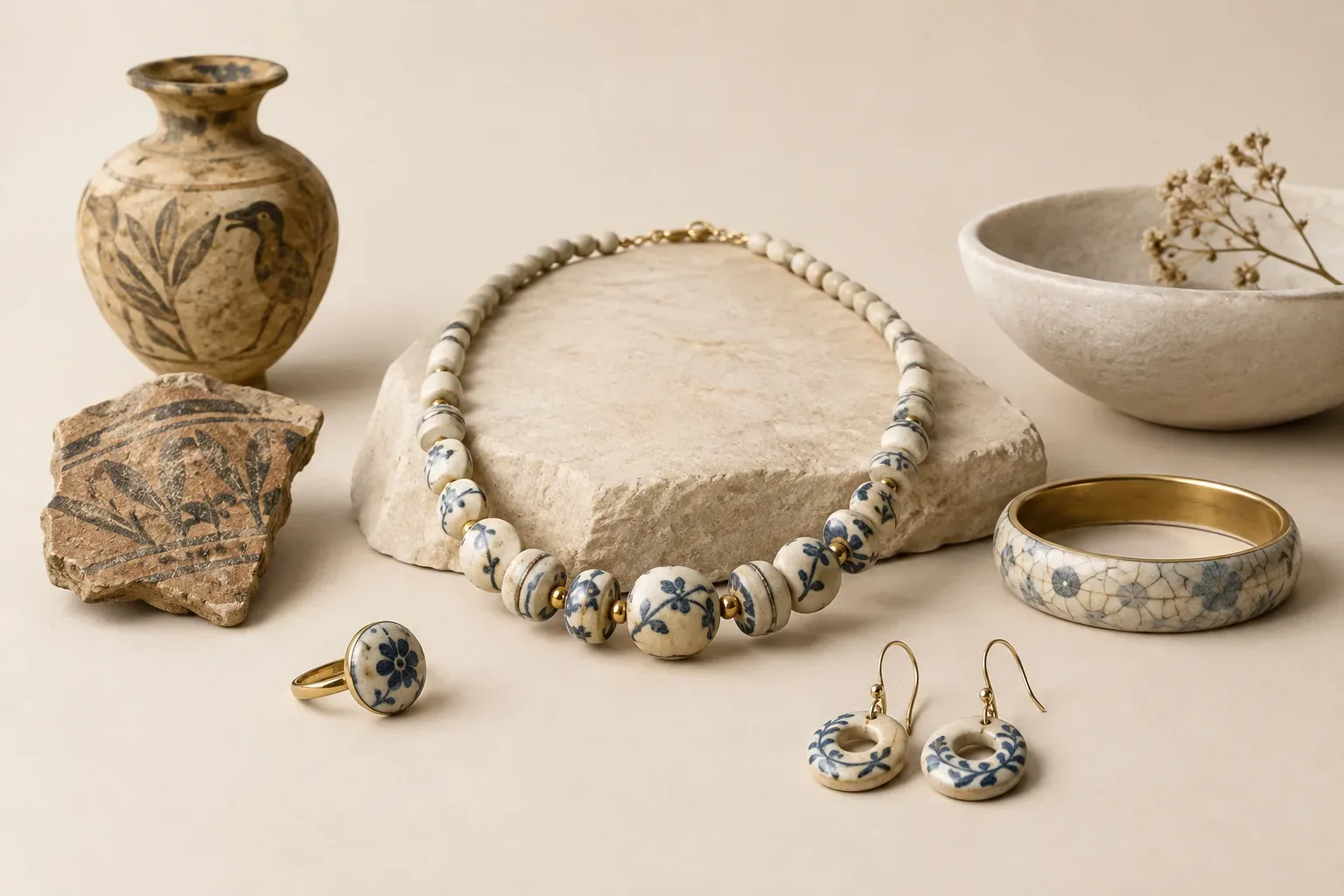
In jewelry contexts, 'ceramic' usually refers to small worked pieces of fired clay or porcelain that are glazed, painted, or otherwise finished for decorative use. In jewelry they commonly appear as beads, insets, medallions, or painted miniatures set into metal. Museums and curators who study jewellery materials treat ceramics as one category among many—alongside metals, gemstones and organic materials—because ceramics behave differently in wear and conservation than metal or stone-based components.
Documented historical evidence, by culture and period
The Victoria and Albert Museum (V&A) places jewellery in broad social and historical contexts and documents that materials and meanings change over time. V&A collections and exhibitions demonstrate that ceramic elements have been incorporated into personal adornment at multiple points in history and in different regions. For example, museum records show ceramic beads and inlays appear in archaeological and ethnographic collections from antiquity, while later periods in Europe—particularly the early modern and 18th–19th centuries—include porcelain inserts and painted miniatures used in sentimental pieces and fashions. The V&A’s studies of jewellery history emphasize that these uses were shaped by technological developments, trade networks, and changing tastes rather than a single, continuous symbolic meaning.
Separating documented historical meanings from modern interpretations
Museum documentation often records the contexts in which a piece was used—its owner, place in dress, or the occasion for which it was made—without assuming a single symbolic meaning. The V&A’s historical perspective shows that meanings attributed to ceramic elements can differ depending on time, place and social context. For instance, a porcelain portrait set into a locket or brooch in 18th-century Europe documented in museum collections may have functioned as a keepsake or sign of taste; that documented role is distinct from present-day interpretations that might read the same object as a symbol of romantic love, nostalgia, or artisanal craft.
Modern sellers, designers and wearers may ascribe personal, spiritual or broadly cultural symbolism to ceramic motifs, but these contemporary interpretations are not the same as the documented historical roles recorded in museum collections. Where available, rely on provenance and curatorial notes to understand a historical piece; treat modern symbolic claims as personal or marketing-driven unless they are supported by museum documentation or primary historical sources.
How ceramic motifs, decorations, and traditions appear in jewelry
Ceramic elements commonly appear in jewellery in a few distinct forms. Museums show examples of beads strung in necklaces or bracelets, painted or glazed insets set within metal frames, and small medallions or plaques fixed into lockets or brooch mounts. Ceramic surfaces may carry painted motifs—botanical decoration, figurative painting, or stylized designs—applied before glazing and firing, and those painted motifs travel into jewellery as miniature artworks or decorative accents.
Because ceramics are made by shaping and firing clay, designers and makers often combine ceramic parts with metal findings—settings, bezels and mounts—that both protect the ceramic element and integrate it into conventional jewellery forms. Contemporary makers may also use modern ceramic techniques and glazes to reference historical styles or to create wholly new motifs.
Hallmarks, maker’s marks and disclosure: what to ask
Traditional metal hallmarks authenticate metal fineness and sometimes place and date a work, but ceramic elements themselves rarely carry the same kind of national hallmark. Instead, museum records and marketplace practice show that ceramics in jewellery are more typically identified by maker’s marks, stamps, labels, documented provenance or supporting paperwork. When buying or evaluating ceramic jewellery, ask the seller about any maker’s marks, documented provenance, and whether the piece has been catalogued or conserved by a museum or specialist.
The U.S. Federal Trade Commission’s guidance for buying gemstones, diamonds and pearls is useful by analogy: the FTC emphasizes transparent disclosure of treatments, imitations and material substitutions. Apply the same standard to ceramic jewellery: ask whether any surface treatments, stabilizers or adhesives have been applied; whether the ceramic component is antique, restored, or a modern reproduction; and whether any paint or glaze is original or later-applied. Sellers should disclose treatments and restorations, and museum or dealer documentation can materially affect value and the interpretation of a piece.
Practical selection and gifting guidance
Decide what matters more to the recipient: historical authenticity, visual style, symbolic meaning, or everyday durability. If historical authenticity matters, request provenance and any available curatorial notes and favour dealers or auction houses that provide documentation and clear condition reports. If the piece is a modern designer object, ask about the artist, materials and whether the ceramic component is stable for regular wear.
Consider durability and care. Ceramic elements can chip, crack or detach from their settings; choose protective settings and avoid high-impact wear. If you plan to gift a ceramic piece with cultural motifs or religious imagery, research the motif’s provenance and be mindful that meanings vary across communities. When in doubt, ask the maker or a knowledgeable dealer about the motif’s origin and whether the design draws on a living cultural tradition; respectful disclosure of sources and collaboration with communities is a good practice.
For everyday wearers, prioritize workmanship: examine how the ceramic is attached, whether the glaze shows fine crazing or flaking, and whether the metalwork is designed to cushion edges. For special-occasion or heirloom pieces, documentation and conservator reports increase confidence about authenticity and long-term care.
Care, repair and conservation considerations
Ceramic components require different conservation approaches than metals or gemstones. Because ceramic can be brittle, avoid high-impact activities and extreme temperature swings that can cause glaze crazing or cracking. Seek a conservator or experienced jeweller for repairs; amateur gluing or inappropriate soldering can cause further damage. When a ceramic element has historic value, consult museum professionals or specialist conservators before attempting restoration so that interventions are reversible and well-documented.
Final takeaway
Ceramic jewelry explained in short: museum documentation—such as that maintained by the Victoria and Albert Museum—shows ceramic elements have long been part of jewellery, with meanings that change across cultures and eras. Separate documented historical roles from contemporary personal or marketing interpretations, ask explicit questions about maker’s marks, provenance and treatments, and take practical care and cultural sensitivity into account when selecting or gifting ceramic jewellery.
Frequently asked questions
Is ceramic jewelry fragile?
Ceramic components can be more fragile than metal or many gemstones; they are prone to chipping, cracking or detachment if struck. Choose protective settings and avoid high-impact activities, and consult a specialist jeweller or conservator for repairs.
How can I tell if a ceramic piece is antique or a reproduction?
Ask the seller for provenance, maker’s marks, condition reports and any conservation documentation. Museum or auction records, and clear seller disclosure about restorations or reproductions, are the most reliable indicators of authenticity.
Do ceramics in jewelry carry the same hallmarks as metals?
No. National hallmarking systems apply to certain metals. Ceramic elements rarely have those hallmarks; instead look for maker’s marks, stamps, labels, provenance or supporting documentation from dealers or museums.
What should sellers disclose about ceramic jewellery?
Following the spirit of the FTC guidance on gemstones and treatments, sellers should disclose any restorations, surface treatments, stabilizers, or reproductions, and be clear about whether a piece is antique or modern.
Is it appropriate to wear ceramic jewelry with cultural or religious motifs?
Context matters. Research the motif’s origin and meaning, and if a design invokes living cultural or religious traditions, seek information about whether the maker collaborated with or received permission from the relevant community. When uncertain, choose pieces that have clear provenance and respectful sourcing.
Sources and further reading
- Bedazzled: A History of Jewellery — Victoria and Albert Museum
- An A-Z of Gemstones — Victoria and Albert Museum
- Buying Gemstones, Diamonds, and Pearls — Federal Trade Commission