Meaning at a glance
This guide explains the documented history and changing contexts of copper jewelry, separates historical evidence from modern personal interpretations, describes how copper motifs and gemstones are used, and gives practical advice for choosing, pricing, wearing, and gifting copper jewelry.
Documented historical evidence — what museums record
Museums and curators place copper and copper-alloy objects throughout the long history of personal ornament, often as evidence of early metalworking and later stylistic fashions. The Victoria and Albert Museum discusses jewellery history as a record of changing social contexts and technologies, showing that copper and its alloys (for example, bronze or brass) have been used across many cultures for functional and decorative pieces rather than a single, universal symbolic meaning.
The V&A’s writing on gemstones and historic jewellery highlights how materials and motifs were chosen for their color, availability, and workmanship as much as for symbolic reason. In other words, documented museum evidence emphasizes material culture, technology, and social function. When a particular culture used copper in ornament, museums attribute those choices to local resources, aesthetic preferences, and craft traditions rather than a single, shared metaphysical property.
Separating documented cultural meanings from modern interpretations
Documented meanings are those recorded by historians, archaeologists, and museum catalogues—usually tied to an object’s archaeological context, inscriptions, or contemporary written sources. The V&A’s accounts focus on such documentary contexts when discussing why materials and motifs were used in a given period.
Modern interpretations—such as claims that copper universally promotes health, balances energy, or conveys the same symbolism across cultures—are contemporary personal or popular beliefs rather than consistent historical facts. These modern meanings may be meaningful to the wearer, but they are not the same as what historical evidence documents for a particular time or place.
How copper motifs, gemstones, and traditions appear in jewelry
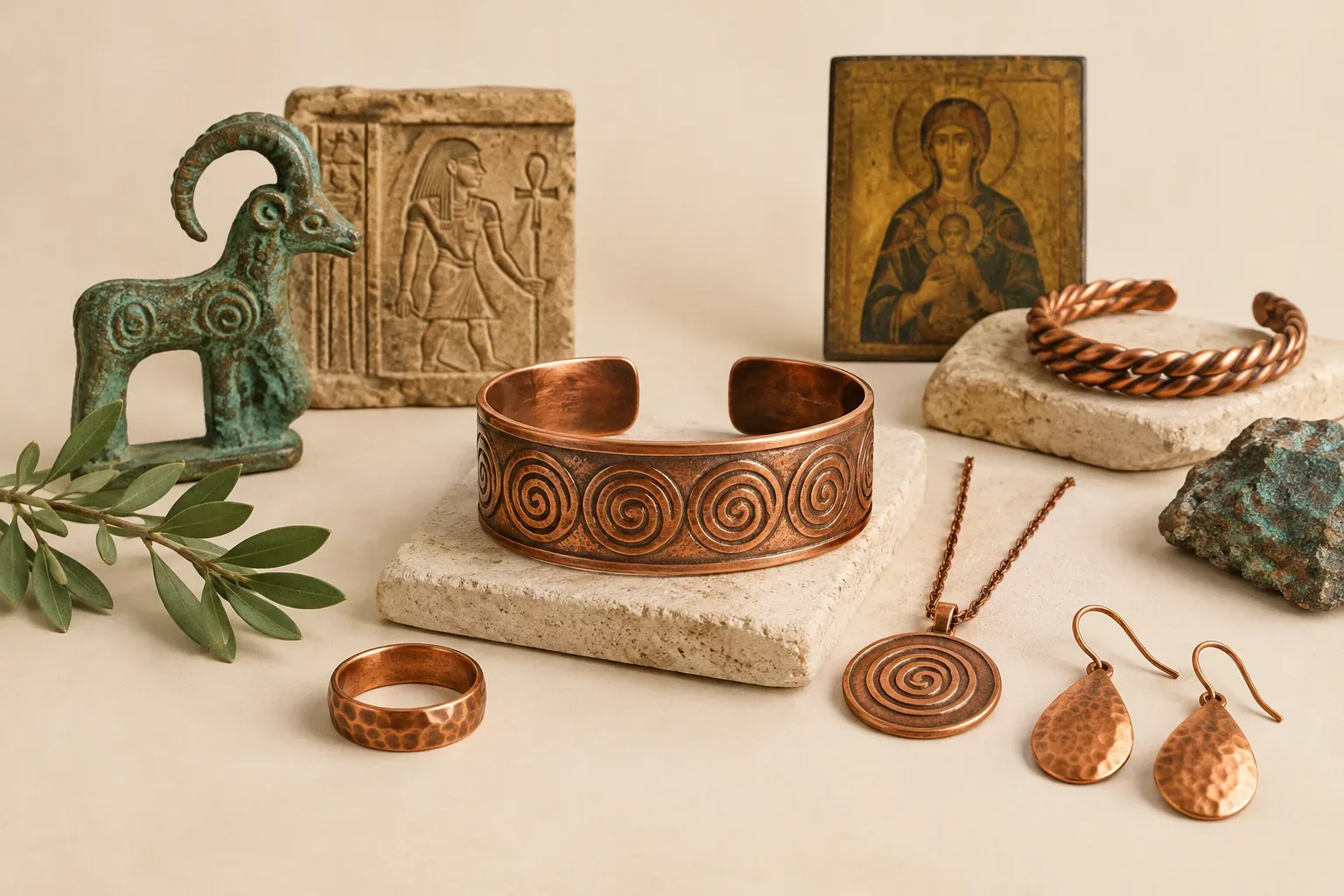
Copper appears in jewelry in several ways: as the primary metal for a ring, bracelet, or pendant; as an alloy (for example in some bronzes or brasses) providing different hardness and color; or as a base metal that is plated with another metal. The metal’s warm reddish tone is often chosen for contrast with pale or cool gemstones.
Gemstones and materials commonly set with copper include stones where color contrast or complementary tones are desirable. Museum discussions of gemstones note how jewelers historically paired stones and metals for visual effect and durability. Settings, bezel styles, and soldering techniques reflect a maker’s skill and local traditions. Motifs—such as simple geometric forms, plant-inspired shapes, or hammered textures—are practical design languages that appear in copper pieces because copper is readily worked and takes surface finishes and patinas well.
Quality and price: what to inspect when buying copper jewelry
Metal composition: ask the seller whether the piece is pure copper, a copper alloy (bronze, brass), or a base metal plated with another metal. True copper pieces will have the reddish-brown tone of the metal and may darken or patinate over time unless sealed. The Federal Trade Commission requires sellers to disclose treatments and imitations for gemstones and similar material treatments; by extension, reputable sellers should disclose plating, lacquers, or other surface treatments on metal.
Finish and workmanship: inspect joins, solder lines, and closures. Clean, consistent soldering and well-finished edges indicate higher craftsmanship and will usually command a higher price than a roughly finished mass-produced piece. For rings and bracelets, check for even thickness and comfortable edges; for chains, look at links and soldered connections.
Surface treatments and patina: some copper jewelry is left to develop a natural patina or is chemically aged to produce green-blue or brown tones. Others are lacquered or plated (for example with silver or gold color) to prevent tarnish. Patina can be an intentional aesthetic choice; lacquer can protect the wearer’s skin but may wear off over time. Both choices affect price and long-term maintenance.
Gemstone setting and authenticity: if a copper piece contains gemstones, ask about the stones’ identity and whether they have been treated. The V&A’s gemstone guidance clarifies historical uses and how stones were selected; the FTC guidance notes that sellers must disclose treatments or imitations, so ask for that information when price seems high for the reported material.
Weight and perceived value: copper is denser than many base metals but lighter than some precious metals. Weight contributes to perceived value and comfort; very lightweight pieces may be hollow or plated. Price should reflect metal type, gemstone authenticity, and maker skill rather than a single metric like weight alone.
Practical guidance for choosing and gifting copper jewelry respectfully
Context matters: when choosing a copper piece as a gift, consider the recipient’s style, skin sensitivity, and cultural background. If the design draws on a particular cultural motif, research its provenance and avoid appropriating sacred or culturally specific symbols without understanding their meaning. Use historical resources and museum catalogues to confirm whether a design has specific ceremonial or cultural significance before presenting it as meaningful.
Be transparent and intentional: when buying for someone who values authenticity, ask the seller for clear information about metal composition, treatments, and where the piece was made. If the recipient believes in modern healing or symbolic properties of copper, respect their beliefs but distinguish between personal meaning and documented history when you explain the gift.
Choose purpose and durability: for everyday wear choose sealed or plated copper if the recipient prefers no color transfer on skin. For someone who enjoys natural changes, select an untreated copper piece that will develop patina. Consider sizing accuracy for rings and bracelets and provide a receipt or flexible return/exchange option when buying as a surprise gift.
Care, wearing, and practical uses
Be mindful of skin and clothing: some people experience greenish discoloration on skin from copper oxidation; this is a cosmetic effect and not necessarily a sign of allergy, but some individuals do have metal sensitivities. If the wearer is known to have sensitive skin, choose plated or sealed pieces or metals known to be hypoallergenic.
Cleaning and maintenance: untreated copper can be cleaned with mild soap and water and dried thoroughly; commercial copper polishes restore shine but remove surface patina. Lacquered items require gentle cleaning and may need re-lacquering over time. When pieces include gemstones, follow gemstone-specific care guidance, and ask sellers about safe cleaning methods for any treated stones.
Appropriate uses: copper jewelry works well as fashion jewelry, statement pieces, and in combinations with other metals. It is suitable for casual, daily wear and can complement both contemporary and historically inspired outfits. For heirloom-quality investment pieces, consider makers who document materials and craftsmanship and who provide clear provenance.
Final note
Buying copper jewelry mixes aesthetic preferences, material facts, and personal meaning. Rely on transparent seller disclosures about composition and treatments, use museum resources such as those from the Victoria and Albert Museum to understand historical context, and follow consumer-protection guidance like that from the Federal Trade Commission to ensure you receive accurate information about treatments and imitations. When gifting, be respectful of cultural sources and clear about whether a piece carries historical significance or personal sentiment.
Frequently asked questions
Is copper jewelry hypoallergenic?
Pure copper itself can cause skin discoloration for some wearers and a small number of people may have metal sensitivities; many allergic reactions are actually to alloyed metals like nickel. If you or the recipient has sensitive skin, choose plated or sealed copper pieces and consult the seller about alloy content.
Will copper jewelry turn my skin green?
Oxidation of copper can cause a greenish residue on skin or clothing; this is a cosmetic reaction from copper salts rather than a universal sign of allergy. Lacquered or plated pieces reduce this effect, while untreated copper will naturally patina over time.
How should I verify the authenticity of gemstones set in copper jewelry?
Ask the seller for documentation about the stone’s identity and any treatments. The Victoria and Albert Museum offers guidance about historic gemstone use, and the Federal Trade Commission advises consumers that sellers should disclose treatments and imitations for gemstones.
Does patina lower the value of copper jewelry?
Value depends on buyer preference, maker reputation, and rarity. Patina is an intentional finish for many collectors and wearers, while others prefer polished or plated surfaces. For high-value pieces, provenance and craftsmanship are more important than patina alone.
What should I look for when buying copper jewelry online?
Look for clear descriptions of metal composition, plating or lacquer status, gemstone information, return policy, and photographs showing details. Reputable sellers will disclose treatments and provide close-up images of joins, settings, and hallmarks where applicable.
Sources and further reading
- Bedazzled: A History of Jewellery — Victoria and Albert Museum
- An A-Z of Gemstones — Victoria and Albert Museum
- Buying Gemstones, Diamonds, and Pearls — Federal Trade Commission