Meaning at a glance
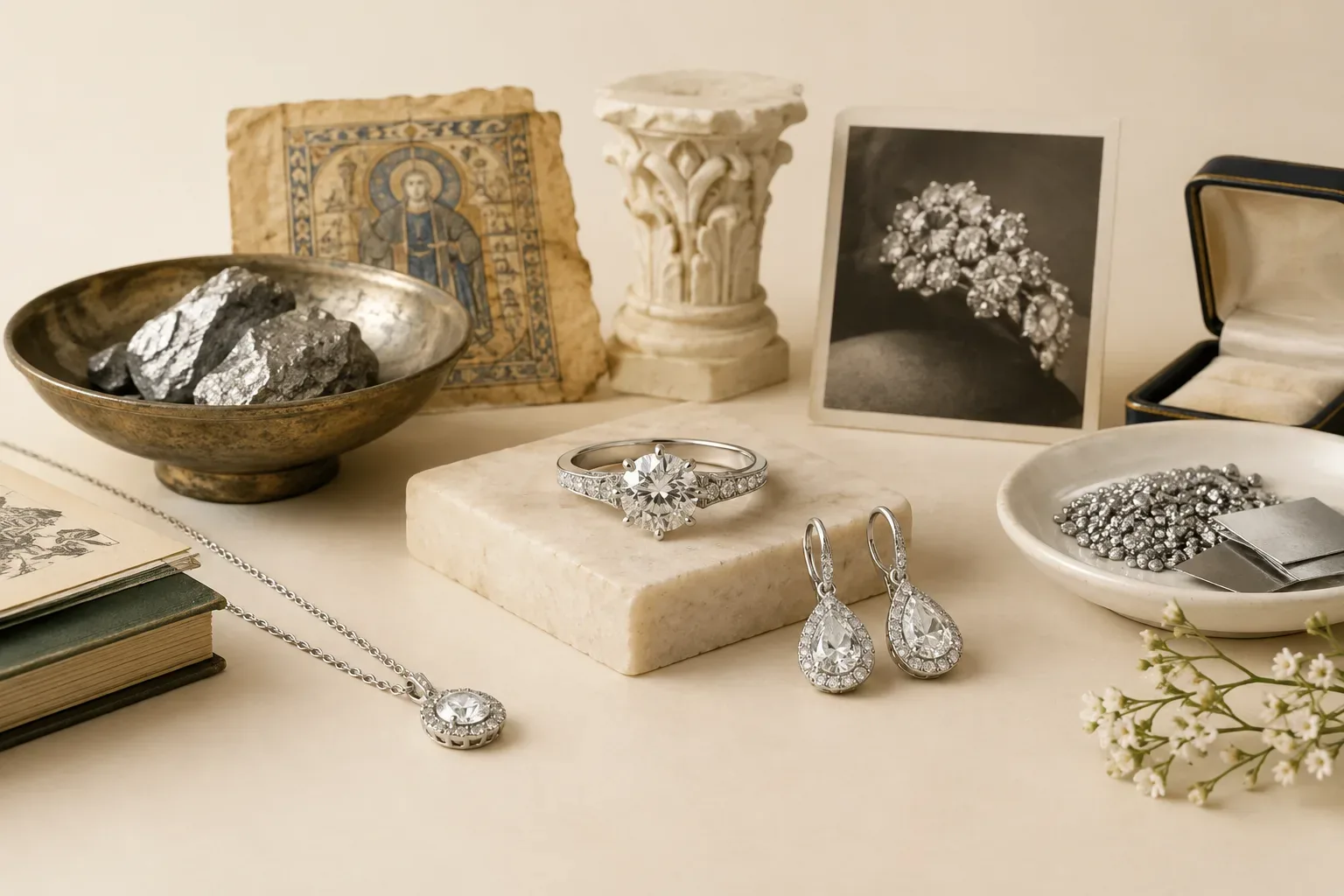
Rhodium plated jewelry explained: a thin surface coating used to change color and surface properties of metal settings, whose history fits into broader changes in jewelry finishes documented by the Victoria and Albert Museum, and whose sale must be honestly disclosed under consumer guidance such as the FTC's rules about material treatments.
Quick answer
Rhodium plated jewelry explained in one sentence: it is jewelry that has a very thin surface layer of rhodium applied over another metal to achieve a bright, white, reflective finish and improved surface performance, and because that finish is a treatment rather than solid metal it should be clearly disclosed to buyers and properly described by sellers. This article explains the technical idea, places plating within documented jewelry history, separates historical evidence from modern interpretation, shows how finishes interact with motifs and gemstones, and gives practical guidance for selection and gifting.
What rhodium-plated jewelry is (composition and basic notes)
Rhodium plating is a surface treatment: a very thin metal layer is applied to the visible surfaces of a piece to change its color, reflectivity, or wear characteristics. The effect you see is the plated surface; underneath is the piece's base metal, which may be silver, white gold, a lower-cost alloy, or a non-precious metal. Because the plated layer is thin, the underlying metal will eventually show through if the surface is worn or abraded. From a buyer's point of view, it matters whether a piece is solid precious metal or a plated finish, and that distinction is central to both accurate description and long-term expectations.
Historical evidence and changing contexts
Finishes, coatings and surface treatments have long been part of jewellery practice, but the specific use of modern electroplated and industrial metal coatings belongs to the industrial age. The Victoria and Albert Museum documents how changes in technology, taste and production shifted which finishes were achievable and fashionable, and how those finishes were used differently across periods and cultures. For example, the V&A explains that as manufacturing techniques developed from the nineteenth century onwards, makers gained finer control over surface effects and could offer new visual styles at different price points, so finishes that were once the preserve of high-status objects became available more widely.
There is no single, ancient cultural meaning attached to the presence of a bright white metal finish like rhodium plating; finishes have been chosen for visual, technical, or economical reasons in different times and places. When discussing history it is therefore important to be precise: the V&A's research situates changes in finishes within specific periods, workshops and markets rather than attributing a universal symbolic meaning to a finish.
Documented historical meanings versus modern personal interpretations
Documented historical meanings about finishes and decorations come from material culture studies and museum scholarship that identify how objects were made, who used them, and which social or economic functions they served. The Victoria and Albert Museum's work on jewellery history shows that finishes often reflected available technology and prevailing taste, and that meanings attached to objects can shift when their production, use, or audience changes.
Modern personal interpretations, by contrast, are individual or community-based responses that people attach to a finish today. For example, some wearers treat a bright white finish as a contemporary, minimalist aesthetic or as a sign of luxury; others may prefer the warmth of unplated gold. Those contemporary preferences are valid personal meanings, but they are not the same as documented cultural or religious symbolism recorded by historians and curators. Always distinguish between what scholarship documents and what present-day wearers or markets may interpret.
How plating appears across motifs, gemstones, and traditions
Rhodium plating is a visual and technical treatment, not a motif. It modifies the look of motifs and settings rather than adding symbolic content itself. In practice, makers use rhodium plating on a wide range of motifs—from minimalist bands and geometric forms to historically rooted designs such as lockets or floral brooches—to achieve a consistent white-metal appearance across different pieces and price points.
When gemstones are set into rhodium-plated metal, the perceived color balance of the gemstone and the setting changes because the setting presents a very white, reflective backdrop. This is one practical reason why white finishes are preferred for white diamonds or colorless gemstones: the bright surface can make a stone appear cooler or more brilliant to some eyes. The Victoria and Albert Museum's work on gemstones emphasizes that how a gem is presented—cut, setting, and surrounding metal—has always been part of its aesthetic history, and modern plating is one contemporary method of presentation.
Plating is also used in pieces that echo traditional forms. For instance, historic motifs like lockets and mourning jewelry are often reproduced with a variety of finishes for different markets; using a white metal finish on a historically warm-toned motif changes its contemporary framing without altering the original motif's documented historical meanings. If a motif has a specific cultural or religious meaning, that meaning stems from the motif itself and its historical use, not from the modern plated finish applied to a reproduction.
Hallmarks, disclosure, and what consumers should expect
Hallmarking systems and legal remedies for misrepresentation differ by country, but general consumer protection principles apply. The U.S. Federal Trade Commission's guidance on buying gemstones, diamonds and pearls underscores that material treatments, coatings, and enhancements should be disclosed by sellers. A plated finish is a treatment and should not be sold or described in a way that suggests the item is solid precious metal when it is not.
Historically, hallmarking served to indicate metal content and to assure buyers about purity and origin. In the context of plated jewelry, hallmark stamps that indicate solid metal content should correspond to the base or solid metal parts they describe; plating itself is not the same as a precious metal assay. Buyers should ask whether a hallmark applies to the underlying metal or to solid parts of the piece and should expect clear language in advertising and invoices if a piece has a surface treatment.
Practical guidance for choosing and gifting rhodium-plated pieces
Decide what you want the piece to do. If you need a long-wearing everyday item with minimal maintenance and the assurance that the metal is solid precious metal, choose a solid-metal piece and check hallmarking and documentation. If you value the bright white look and are comfortable with the idea of periodic re-plating or possible surface wear, a rhodium-plated piece can be an attractive, often more affordable option.
Ask the seller clear, specific questions before you buy or give the piece as a gift. Request written confirmation of the base metal and of any plating or coatings. Ask whether the seller will re-plate the item and what that service costs. If allergies are a concern, ask what metal is underneath the plating and whether any nickel or reactive alloys are present in the substrate. These are reasonable consumer questions supported by the kind of disclosure expectations the FTC outlines.
Match the piece to the recipient's lifestyle and preferences. For someone who works with their hands or prefers low-maintenance jewelry, recommend a solid precious-metal item or plan for maintenance. For someone who loves changing fashion finishes and is happy to have pieces that may be refreshed over time, a plated piece may be perfectly appropriate. When gifting a reproduction or a piece inspired by historical motifs, be respectful about provenance: if a motif has cultural or memorial meaning, choose wording that acknowledges whether the piece is a modern interpretation.
Care, maintenance, and realistic expectations
Because plating is a surface layer, normal wear and abrasive contact will eventually thin it. Cleaning should be gentle: avoid harsh abrasives or aggressive chemicals that can accelerate wear to the coated surface. Many sellers offer re-plating services that restore the finish, but the need for re-plating is a normal aspect of owning plated jewellery rather than an indication of defect.
If long-term preservation of an heirloom look is the priority, a buyer may prefer solid metal construction or choose pieces where plated areas are less subject to friction. The Victoria and Albert Museum's collection and articles remind us that how an object is made and used affects its life and meaning, so select and care for pieces with an eye to actual wear patterns rather than idealized assumptions.
Frequently asked questions
How durable is rhodium plating and will it wear off?
Rhodium plating is a thin surface layer and will wear with time and abrasion. The rate of wear depends on how often the piece is worn and the activities of the wearer. Re-plating services can restore the finish; ask the seller about expected lifetime and re-plating policies before purchase.
Can I tell if a piece is rhodium-plated from the hallmark?
Hallmarks generally indicate the composition of solid precious-metal parts, not a thin surface treatment. A hallmark alone may not tell you whether a piece is plated. Request written confirmation from the seller that describes any plating or coatings and shows which parts, if any, are solid metal.
Does rhodium plating change how gemstones look?
A bright white metal finish provides a cooler, more reflective backdrop for gemstones, which can affect perceived color and brilliance. Presenting a stone against a white metal is a long-standing aesthetic choice in jewellery, and museum resources on gemstones explain how setting and surrounding metal are part of a gem's presentation.
Is it dishonest for a seller to call a plated item 'silver' or 'white gold'?
Consumer protection guidance requires sellers to disclose material treatments. Describing a plated item in a way that leads buyers to believe it is solid precious metal is misleading. The Federal Trade Commission advises that sellers clearly disclose treatments, coatings and enhancements.
Should I buy rhodium-plated jewelry as a gift?
Rhodium-plated jewelry can make an excellent gift when the recipient values the white-metal look and you understand the care and potential need for maintenance. For gifts intended as long-term heirlooms, consider solid precious-metal alternatives or ensure the recipient knows the piece is plated and how it is cared for.
How can I care for rhodium-plated jewellery at home?
Use gentle cleaning methods and avoid abrasive cloths or chemical cleaners that might remove surface plating. Store plated pieces separately to reduce wear from contact with other items. For specific care instructions, follow guidance from the piece's maker or seller.
Sources and further reading
- Bedazzled: A History of Jewellery — Victoria and Albert Museum
- An A-Z of Gemstones — Victoria and Albert Museum
- Buying Gemstones, Diamonds, and Pearls — Federal Trade Commission