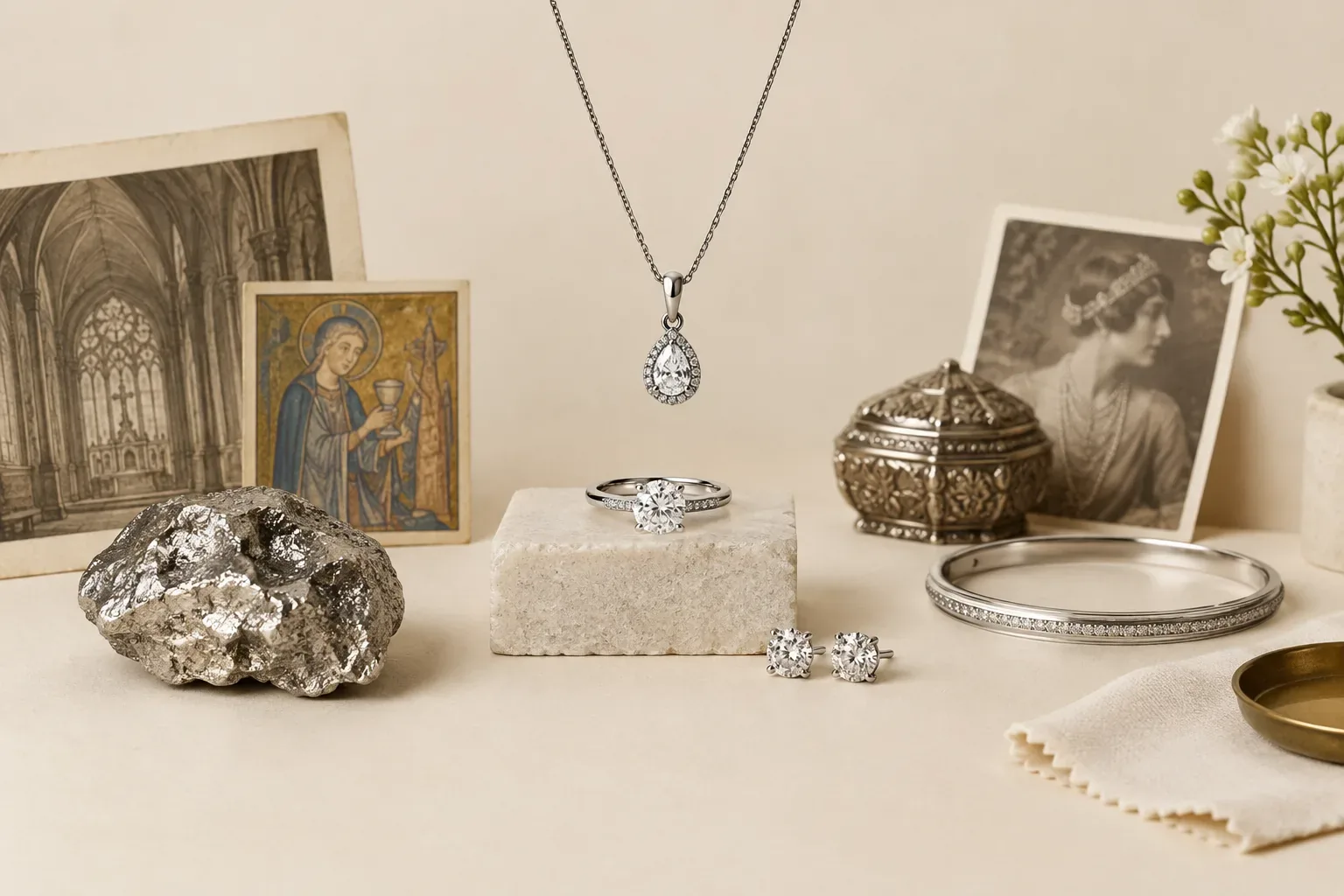
Meaning at a glance
Platinum is celebrated historically for its association with high-status jewelry and in modern practice for long-term wear; museum evidence traces its rise into popular use in modern Europe and North America, while consumer guidance stresses disclosure, hallmarking, and appropriate maintenance. Distinguish documented historical contexts from later personal meanings, know how platinum appears in settings and bands, and choose or gift it based on wear habits, budget, and the recipient's taste.
Short answer
Platinum jewelry durability is best understood as a mix of material behavior and cultural meaning: platinum resists chemical tarnish common to silver, but it does show surface wear and can develop a matte patina over time; museums document its rise into modern jewellery-making as a premium, durable metal, and consumer guidance emphasizes clear disclosure, hallmarking, and professional maintenance when buying or owning platinum pieces.
What the historical record shows (and how to read it)
When speaking about the history of platinum in jewellery, rely on documented museum studies rather than later marketing claims. The Victoria and Albert Museum's survey of jewellery history places platinum within the larger modern turn in jewellery manufacture, showing how different metals and techniques came in and out of fashion across distinct periods. The V&A describes jewellery through named periods—ancient, medieval, early modern, Victorian, Art Nouveau, Art Deco and contemporary—allowing readers to see how materials moved from novelty to standard practice in particular cultural and industrial contexts.
Specifically, museum evidence records that platinum became prominent in jewellery-making during the industrial and modern eras in Europe and North America as advances in metalworking and consumer demand changed what jewellers could do. That documented shift is distinct from later brand or popular claims that equate platinum with a single universal meaning such as "eternal" or "unchangeable." The V&A provides the historical framework; it does not suggest that any symbolic meaning is universal across all cultures or periods.
Separating documented meanings from modern personal interpretations
Documented historical meanings are the ones you can trace to sources such as museum catalogues, exhibition narratives and surviving objects. For example, the V&A's work on jewellery history records that certain materials and motifs were associated with social rank, mourning customs, or shifting fashions at named periods, and that those associations changed over time. Those are verifiable cultural contexts tied to particular places and eras.
Modern personal interpretations — for instance, the common contemporary idea that platinum literally symbolizes indestructible love — are cultural overlays rather than single, historically continuous meanings. They arise from recent marketing, personal preference and social practice. Treat them as valid personal or social meanings but not as direct continuations of a single documented historical tradition. In short: the V&A documents where and when platinum was used and why materials were valued in those settings; modern personal meanings are separate and should be acknowledged as contemporary.
How the "durability" motif appears in jewellery
Durability as a design or marketing motif shows up in several concrete ways. Historically, museums like the V&A record the practical use of robust metals for pieces intended for frequent wear or for settings that hold valuable stones; in modern jewellery, platinum commonly appears in engagement rings, wedding bands and fine settings precisely because its density and surface qualities complement diamonds and other gemstones. Aesthetically, designers use platinum for plain bands, bezel settings, and secure prongs for high-value stones to emphasize longevity and reduced chemical sensitivity.
Technically, the visual signals of the durability motif include heavy-weight feel, broad plain profiles, and finishes that highlight the metal rather than ornate surface decoration. Collectors and museums document shifts in finish and technique across periods: for example, some historical pieces that prized surface brilliance later gave way to tastes for matte or satin finishes that visibly age in ways collectors judge differently. Recognize that those choices are cultural and period-specific as recorded by museum scholarship.
Wear and tarnish: what to expect from platinum
In everyday terms, platinum behaves differently from soft golds and from silver. Unlike silver, which chemically tarnishes, platinum does not develop the same surface oxidation; however, platinum will show surface scratches and can develop a soft, satin patina with heavy wear. Many wearers and jewellers regard that patina as part of the metal’s character rather than as damage. The presence of surface scratches is a normal mechanical response to contact and abrasion rather than a chemical degradation of the metal.
How a particular piece will age depends on the alloy composition, finish and how it is worn. Museum catalogues and conservation literature documented by institutions such as the V&A show how different finishes and contexts affect long-term appearance. When evaluating a piece, consider whether you prefer the way a polished surface can be reworked by a jeweller or whether you value the lived-in look of a patina, which is often celebrated in both historical and contemporary examples.
Practical care and buying guidance
When selecting or gifting platinum, match the metal to the recipient’s lifestyle and to the stone settings you prefer. If the recipient wears jewellery daily and values a low-maintenance metal that does not chemically tarnish, platinum is a strong choice. If the recipient prefers occasional wear and a highly polished, mirror finish that is frequently re-polished, discuss maintenance options with the retailer.
Ask for documentary evidence and disclosure when purchasing. The Federal Trade Commission advises consumers to seek clear information about composition, treatments and any material imitations. Request hallmarks or assay marks and written confirmation of metal content and any treatments performed on stones. For significant purchases, request pedigrees, receipts and any laboratory reports for gemstones.
For care at home, routine cleaning with mild soap, warm water and a soft brush will remove everyday oils and dirt. Avoid harsh abrasives or strong chemical cleaners that can alter finishes or damage gemstones. For deeper polishing, consult a qualified jeweller; restoration and re-polishing should be done by professionals who understand platinum’s properties. Keep important documentation and consider insuring high-value pieces, especially those containing diamonds or rare gemstones.
Selection and gifting etiquette
Be respectful of cultural and personal meanings. If gifting jewellery for a cultural rite or religious occasion, research the specific traditions linked to that culture and period—museum resources like those at the V&A can help identify historically accurate practices. Do not assume that platinum has the same symbolic role across cultures or families.
When choosing a piece, consider weight, finish and stone setting. Heavier, plain bands and secure settings emphasize durability; intricate work and thinner profiles communicate delicacy and traditional decorative value. Discuss resizing policies, warranty and aftercare with the seller before purchase so that the recipient will have access to professional maintenance and documentation if needed.
A final note on meaning and material
Platinum’s role in jewellery blends technical qualities and evolving cultural value. Museums document when and where platinum became prominent; modern consumers and designers layered new meanings—durability, rarity, status—onto the metal. Keep the distinction clear: use museum-based evidence for historical claims and respect contemporary or personal meanings as valid but separate layers of interpretation.
Frequently asked questions
Does platinum tarnish?
Platinum does not tarnish in the same chemical way that silver does, but it will show surface scratches and can develop a soft patina with wear. Many collectors and wearers view that patina as part of the metal’s character rather than damage.
How should I clean and care for platinum jewellery at home?
Regularly clean with mild soap, warm water and a soft brush to remove oils and dirt. Avoid harsh abrasives and strong chemical cleaners that can alter finishes or damage gemstones. For polishing and repairs, use a qualified jeweller experienced with platinum.
What documentation should I ask for when buying platinum jewellery?
Ask the seller for clear disclosure of metal content and any treatments, hallmark or assay marks, receipts and any available laboratory reports for gemstones. The Federal Trade Commission recommends obtaining written information about composition and treatments for significant purchases.
Is platinum a good choice for an everyday ring?
Platinum is often chosen for everyday rings because it resists chemical tarnish and offers secure settings for stones; however, it will develop surface wear over time. Match the metal to the wearer’s activities and maintenance preferences before buying.
How can I tell if a piece is actually platinum?
Look for hallmarks or assay marks indicating metal content and request written confirmation from the seller. For higher-value purchases, obtain gemstone reports or lab documentation where relevant and consult a reputable jeweller if you have doubts.
Sources and further reading
- Bedazzled: A History of Jewellery — Victoria and Albert Museum
- An A-Z of Gemstones — Victoria and Albert Museum
- Buying Gemstones, Diamonds, and Pearls — Federal Trade Commission