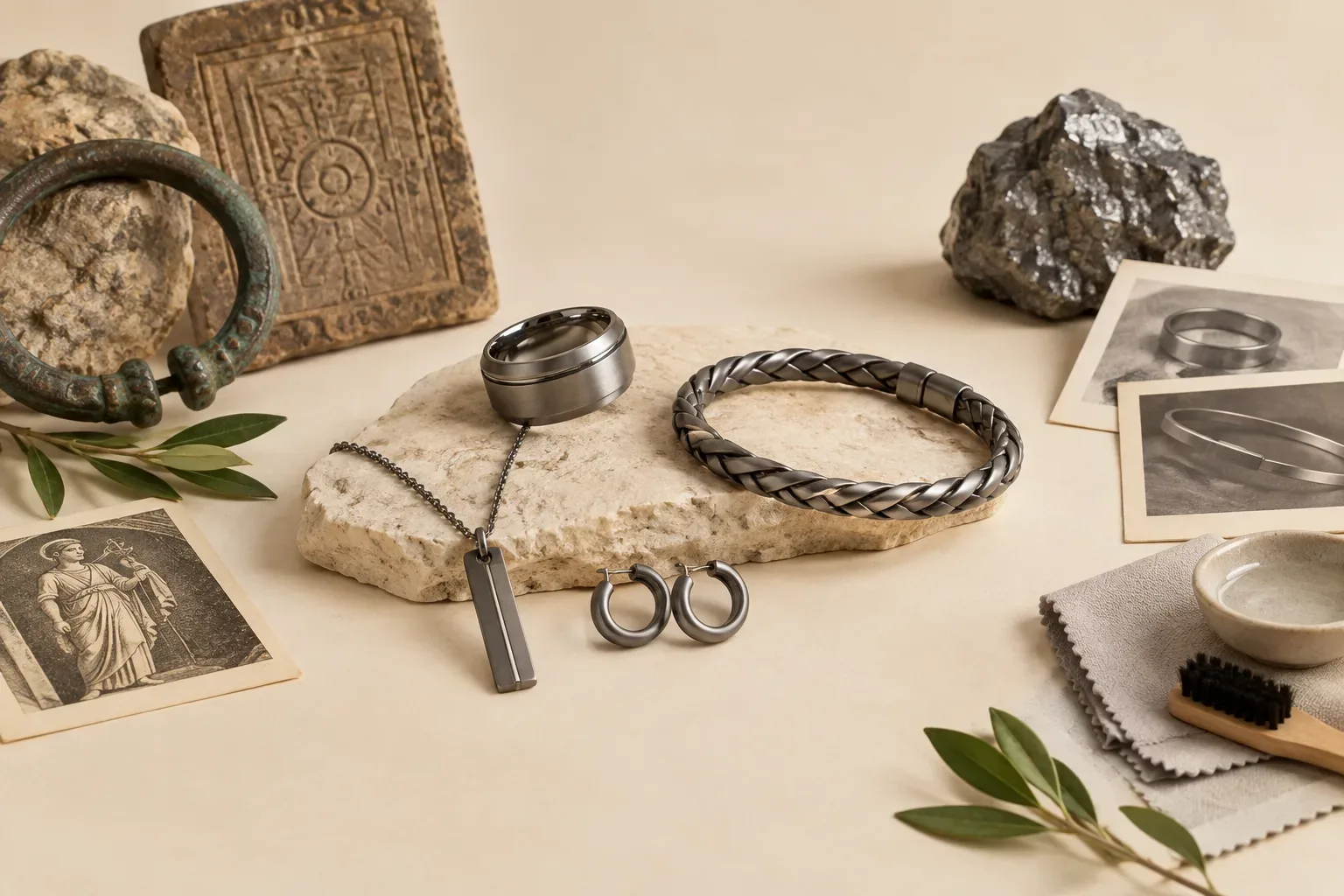
Meaning at a glance
Durability as a symbolic motif has shifted across cultures and periods; museum research shows meanings tied to materials change over time. In contemporary jewelry the association of titanium with durability is a modern interpretive layer rather than an established historical symbol. Practical purchase and care guidance emphasizes confirming material and any surface treatments, following maker instructions, and using gentle cleaning and storage to reduce wear.
What the historical record actually shows
Museum writing on jewellery history emphasizes that materials, motifs, and meanings change with culture and time. The Victoria and Albert Museum (V&A) notes that designs and the social uses of jewellery have shifted repeatedly: a single form or material can carry different messages in different places and eras. This means that durability as a motif has been expressed through many different materials and forms rather than by any one metal or technique.
For example, objects used to mark long-term commitments or to memorialize the dead — subjects the V&A covers in surveys of jewellery history — often relied on materials or inscriptions intended to suggest permanence. Those historical examples show how people have used jewellery to express enduring ties, but they do not document a continuous, universal meaning for any specific contemporary metal such as titanium. In short, the historical record documents changing social contexts rather than a fixed symbolic vocabulary tied to modern technical materials.
Documented historical meanings versus modern interpretations
Documented historical meanings are those recorded by curators, catalogues, and museum scholarship about particular objects and contexts. The V&A’s resources demonstrate that past makers and wearers selected stones, alloys, shapes, and inscriptions for reasons tied to fashion, ritual, status, technology and personal memory. Those contexts are best understood in their original cultural and temporal settings rather than being automatically transferred to modern metals.
Modern associations — such as linking titanium with toughness, resilience, or a minimalist modern aesthetic — are contemporary interpretations introduced by designers, marketers, and wearers in the last several decades. These modern meanings are valid as contemporary personal or cultural statements, but they are not documented as historical symbolism from older periods. Distinguishing these two kinds of meaning keeps clear what is historically recorded and what is a present-day usage or trend.
How the durability motif and titanium appear in contemporary jewelry
In modern manufacturing and design, the motif of durability appears through choices of material, finish, and construction: heavier settings, secure closures, simple robust forms, and materials advertised for abrasion or corrosion resistance. Contemporary makers often use such choices to signal permanence or everyday wearability, which are interpretive choices rather than carry-overs from distant historical practice.
Titanium, as a material used in contemporary jewellery design, is commonly presented by makers as a metal appropriate for daily-wear pieces. Designers may pair it with engraved messages, inlays, or gemstones to combine a modern mechanical look with more traditional symbolic elements. Where gemstones are included, museum resources like the V&A’s A–Z of Gemstones remind buyers to consider the relative hardness and historical associations of each stone when placing it in a modern metal setting.
Tarnish, wear, and surface treatments—what to check before you buy
Sellers should disclose treatments, coatings, and material composition. The Federal Trade Commission’s guidance on buying gemstones and other precious materials emphasises the importance of disclosure about treatments and imitations. Apply the same caution to metals: ask whether a titanium piece is solid titanium, an alloy, or has a surface treatment, coloured anodizing, plating, or inlay that could wear differently from the base metal.
Surface treatments and coatings affect how a piece will age. A top surface coating can show scratches or wear more quickly than the underlying metal, while untreated metal may develop a uniform surface patina. Always ask for care instructions, a warranty or return policy, and clear written information about composition before purchase so you can make an informed choice and avoid surprises.
Practical care: gentle routines to limit wear and preserve finish
Follow the maker’s instructions first. When no specific directions are provided, adopt conservative, low-impact cleaning steps: remove jewellery before heavy manual work or exposure to strong chemicals, rinse with lukewarm water and mild soap, and dry with a soft lint-free cloth. Avoid abrasive cleaners, scouring pads, or ultrasonic cleaners unless the maker explicitly confirms they are safe for the specific piece.
Store pieces separately in soft pouches or lined compartments to prevent bumping and surface abrasion. For items with any applied colour or plating, treat them as more delicate and minimise friction and impact. If a piece has gemstones or glued elements, those components may be affected by water or heat; seek professional cleaning if you are unsure.
Selection and gifting guidance—practical, respectful choices
When choosing titanium jewellery as a purchase or gift, be explicit with the seller about what you want and expect: ask whether the piece is solid titanium, the grade if provided, and whether it carries any coatings or inlays that will require special care. Request written material and return or repair policies so the recipient can get service if needed.
Respect personal and cultural meanings. The V&A’s work on jewellery history underscores that meanings attached to objects vary by context. If you are giving a piece as a token of commitment, mourning, or cultural identity, consider whether the modern qualities associated with titanium (such as a contemporary aesthetic or perceived resilience) fit the recipient’s values and whether an inscription or accompanying card explaining your intent would be helpful.
Finally, consider practicalities such as skin sensitivity and daily habits. If the recipient prefers low-maintenance jewellery or has a physically active lifestyle, a robust, low-finish piece may be appropriate. If they value a particular historic look or a gemstone tradition, explore combinations that pair titanium’s contemporary look with traditional stones while confirming compatibility and care needs.
When to seek professional help
If a piece shows unexpected surface damage, colour loss, or issues with fitted components, consult a professional jeweller rather than attempting aggressive home repair. Professionals can confirm whether damage affects the structure or only the surface, and whether repair will preserve the intended finish. If you suspect a seller failed to disclose treatments or imitations, the Federal Trade Commission’s consumer guidance can help you understand disclosure standards and consumer protections.
Final takeaways
Durability as a symbolic motif is historically variable; museum scholarship (Victoria and Albert Museum) demonstrates that materials and meanings evolve with culture and technology. The contemporary tie between titanium and toughness or modernity is a present-day interpretation, useful for designers and wearers but not a direct historical inheritance.
From a practical perspective, confirm material and treatments before buying, follow maker guidance for cleaning, use gentle care routines, and choose pieces and inscriptions that suit the recipient’s sensibilities. When in doubt, ask sellers for written disclosure and consult a trusted jeweller for preservation or repair advice.
Frequently asked questions
Will titanium jewellery tarnish?
Titanium is typically presented in the contemporary jewellery market as a metal that resists common tarnish processes associated with some other metals, but surface appearance can vary depending on coatings, anodizing, or inlays. Ask the seller whether a piece has any applied finishes and follow any care instructions provided.
How should I clean titanium jewellery at home?
When no maker instructions are available, use a conservative approach: rinse in lukewarm water with mild soap, gently clean with a soft cloth, and dry thoroughly. Avoid abrasive cleaners and scouring pads. For pieces with coloured finishes, inlays, or glued components, seek professional advice if you are unsure.
Can surface treatments wear off and how can I check for them?
Yes. Coatings, platings, and coloured finishes can wear differently than the base metal. Ask the seller for written disclosure about any treatments before you buy and check their return and repair policies so you can address premature wear if it occurs.
Is titanium jewellery a good choice for everyday wear or as a gift?
Titanium is often marketed as suitable for everyday wear because of its modern aesthetic and perceived robustness, but suitability depends on the recipient’s tastes and habits. Confirm material details and care needs, and consider adding an explanatory note about why you chose the piece to make the gift more meaningful.
What should I do if a newly purchased piece shows unexpected damage?
Contact the seller immediately and refer to any written warranty or return policy. If disclosure about treatments or composition seems incomplete, the Federal Trade Commission’s consumer guidance can help you understand disclosure standards and next steps.
Sources and further reading
- Bedazzled: A History of Jewellery — Victoria and Albert Museum
- An A-Z of Gemstones — Victoria and Albert Museum
- Buying Gemstones, Diamonds, and Pearls — Federal Trade Commission