Meaning at a glance
This article explains the documented history and changing contexts for modern metals in jewellery (as surveyed by museum literature), separates the absence of long-standing cultural meanings for titanium from later personal and commercial interpretations, and gives practical guidance on verifying composition, hallmarks, and seller disclosure when choosing or gifting titanium jewellery.
What the historical record shows (and doesn’t) — by period and culture
Surveys of jewellery history published by major museums emphasize that metals and gem materials acquire meanings through their use in specific cultures and historical moments. The Victoria and Albert Museum presents jewellery as an evolving material culture across distinct periods including ancient Egyptian and classical antiquity, medieval Europe, the early modern period, and the industrial and modern eras, each with its own social contexts and symbolic conventions.
Those same museum accounts show that gold, silver, bronze and gemstones have long-documented roles in many societies: they signalled status, served in ritual contexts, or carried heirloom meanings tied to particular cultures and eras. By contrast, the documented historical record contains little or no evidence of titanium being used with a continuous cultural or religious symbolism in pre-industrial societies; titanium’s appearance in jewellery belongs to the modern era described as the industrial and contemporary phase of jewellery history by museum scholarship.
Separating documented history from modern interpretation
Documented history, as treated in museum literature, ties symbolic meanings to long-standing practices documented in particular cultures and periods. For example, when the Victoria and Albert Museum traces meanings of jewellery through different ages it does so by showing how materials and forms were used within those societies’ social and ritual life. Because titanium is a modern material, there are no comparable long-standing cultural meanings recorded in that documentary tradition.
Modern meanings attributed to titanium therefore arise from recent design and marketing, individual preferences, and contemporary social associations. These modern attributions are valid as personal meanings or as trends within contemporary fashion, but they are distinct from a documented cultural history. When the wearer or giver interprets titanium as representing modernity, technological strength, or minimalism, that interpretation is a contemporary personal or commercial meaning rather than a historical cultural meaning preserved in museum records.
How titanium appears in jewellery (forms and finishes)
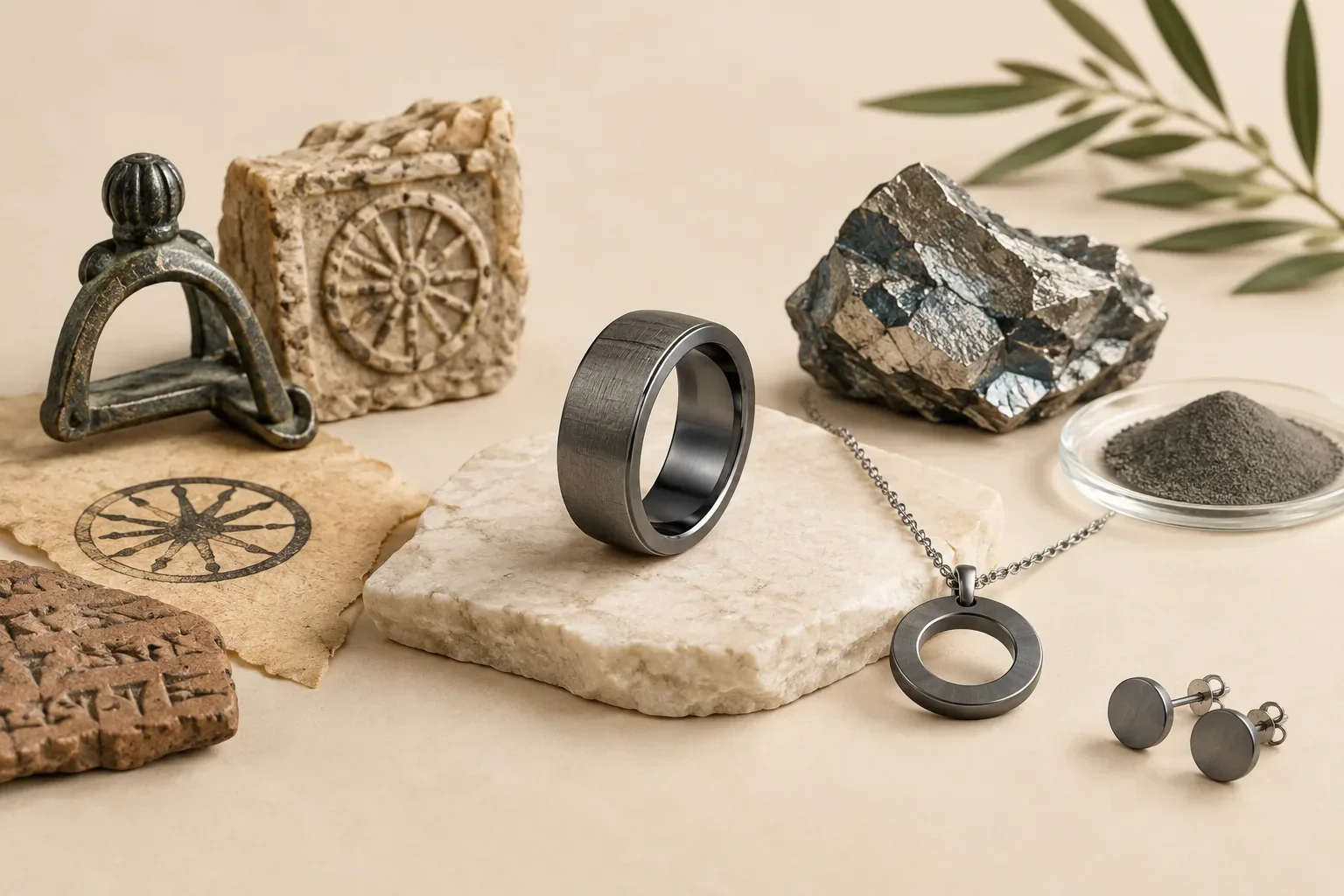
In modern practice, titanium is presented in a variety of wearable formats, including rings, bracelets, pendants and small sculptural pieces, and it is often combined with other metals, gem settings or surface finishes preferred by designers. Contemporary jewellery surveys note that newer materials enter the craft alongside established materials as designers explore new aesthetics and techniques.
Designers and retailers also use surface treatments and finishes to achieve specific colours or textures. Because those treatments alter appearance without changing the base material, they are important to understand when you evaluate a piece. When a gemstone or motif accompanies a titanium element, the design choices often reflect current fashion or the maker’s intent rather than long-established cultural symbolism; museum literature treats these combinations as part of the modern evolution of taste and technique.
Composition and hallmarks: what to request and why
If you need to know exactly what you are buying, request written information from the seller that specifies the metal content, whether a piece is a solid metal, alloy or plated/coated item, and whether any colour or surface finish is the result of a treatment. Traditional assay marks and national hallmarking systems were developed for metals commonly used in earlier periods, and the presence or form of marks for modern materials can vary by jurisdiction. Museum references underline that hallmarking practices differ across time and place, so a lack of traditional marks does not necessarily mean a product is mis-described, but it does increase the importance of clear seller disclosure.
The U.S. Federal Trade Commission advises that sellers disclose material treatments, imitations and significant manufacturing processes that affect appearance or performance. That guidance applies to any jewellery purchase: ask for explicit disclosure of anodizing, coatings, plating, or composite construction, and request documentation or a written statement of authenticity or metal content where available. A reputable seller will provide clear answers or a certificate that matches the piece you receive.
Practical and respectful selection or gifting guidance
Match the piece to the recipient’s personal style and practical needs rather than relying on assumed symbolic meanings. Because titanium and similar contemporary materials are often chosen for their modern look, ask whether the intended wearer prefers minimalist or statement designs and whether they need features such as an easily resized band or a setting style that allows repairs.
Respect health and lifestyle considerations by asking the seller about any surface treatments and how they hold up to wear. Many buyers are concerned about skin sensitivity; rather than assuming a material is hypoallergenic, request clear disclosure from the seller about any alloying or surface coating and, if necessary, consult the wearer’s medical advice. Confirm practicalities such as resizing, repair options and warranty or return policies so the gift will be usable and cared for over time.
When buying for cultural significance, avoid assigning long-standing cultural or religious meaning to titanium without evidence. If you plan to express a cultural idea through jewellery, research historical precedents and select motifs or materials that have documented use in that tradition. Our guides on choosing meaningful jewellery and on researching symbols can help you make an informed, respectful choice.
A short checklist for buying with confidence
Before you purchase, ask the seller for written details about composition and any treatments; request certificates or lab reports if available. Check whether the piece carries any maker’s marks, assay marks or a written hallmarking statement and, if hallmarks are absent, ask how the seller verifies composition. Confirm policies on resizing, repair, returns and warranties. Finally, when symbolism matters, document whether the claimed cultural meaning is a modern interpretation or has independent historical support, and prefer documented sources where appropriate.
Final note
Titanium belongs to the modern landscape of jewellery-making and is best evaluated on the basis of clear material disclosure and thoughtful personal or design meaning. Museum scholarship frames the metal’s use as part of the contemporary evolution of taste, and consumer-protection guidance highlights the importance of disclosure for treatments and imitations. Asking for transparent information will help you choose or gift titanium jewellery in a way that is both respectful and informed.
Frequently asked questions
Does titanium have a long historical or cultural meaning?
No long-standing cultural or religious meanings for titanium are documented in major museum surveys of jewellery history; titanium’s use in jewellery is a modern development and contemporary attributions are personal or commercial rather than part of an older cultural tradition.
How can I verify the composition of a titanium piece?
Ask the seller for written information specifying whether the piece is solid metal, an alloy, plated or coated, and request any certificates or documentation the seller can provide; if hallmarking is relevant in your jurisdiction, ask whether maker marks or assay marks apply and what they signify.
Are sellers required to disclose treatments and coatings?
Consumer-protection guidance, such as that of the U.S. Federal Trade Commission, advises sellers to disclose material treatments, imitations and significant manufacturing processes that affect appearance or performance, so you should request clear disclosure before purchase.
Should I assume titanium is hypoallergenic?
Do not assume any material is hypoallergenic without specific information; ask the seller about alloying and surface coatings and, if the wearer has known sensitivities, seek medical advice or choose a piece with documented suitability for sensitive skin.
Is it respectful to gift titanium for cultural symbolism?
If you intend the piece to convey a cultural meaning, verify that the motif or material has documented use in that tradition; avoid assigning historical cultural or religious meaning to titanium itself unless you have evidence from reputable sources that supports such a connection.
Sources and further reading
- Bedazzled: A History of Jewellery — Victoria and Albert Museum
- An A-Z of Gemstones — Victoria and Albert Museum
- Buying Gemstones, Diamonds, and Pearls — Federal Trade Commission