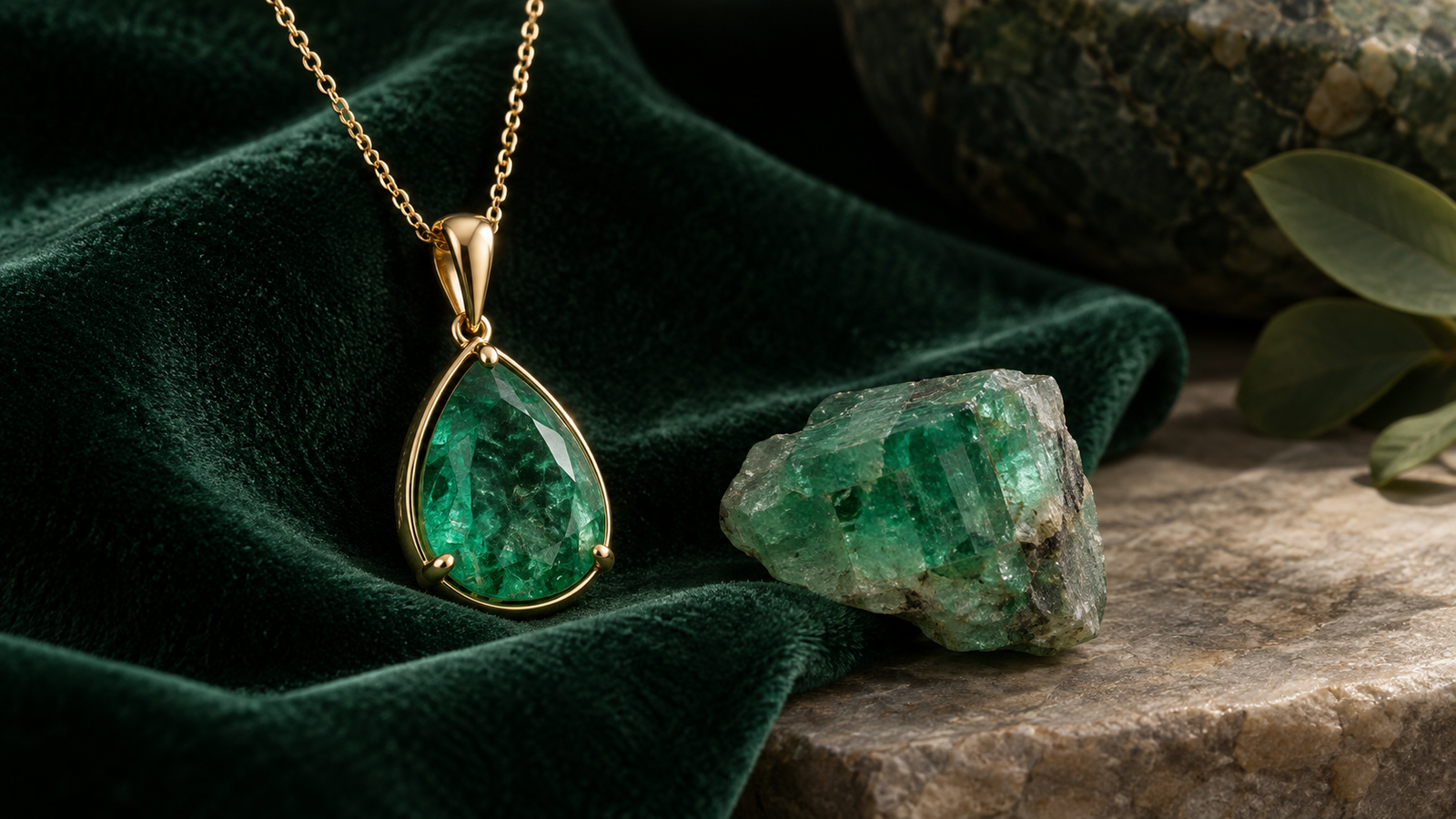
Meaning at a glance
Emerald is the green variety of the mineral beryl and has been used in jewelry across many cultures; historical uses and meanings are documented by institutions such as the Gemological Institute of America and museum collections, while modern symbolic claims about renewal, protection, or love are cultural or personal interpretations. Practical buying advice centers on color, clarity (inclusions are common), documented treatments, protective settings, and gentle cleaning.
Quick answer
Emerald is the green variety of the mineral beryl with a long history in jewelry; its symbolic associations—often described today as renewal, love, or protection—are cultural or personal interpretations rather than universal facts, and buyers should focus on color, treatment disclosure, inclusions, protective settings, and gentle care when selecting or gifting emerald jewelry.
What the historical record shows
The Gemological Institute of America (GIA) documents that emeralds have been valued and used as gemstones since antiquity. Archaeological and museum collections show emeralds set into gold and other precious metals in multiple regions and periods, demonstrating long-standing desirability as ornamental stones rather than a single unified meaning.
The Metropolitan Museum of Art’s collection includes examples such as a gold ring set with an emerald, which illustrate how ancient and medieval jewelers mounted emeralds in wearable objects. Such museum pieces provide physical evidence that emeralds were fashioned into rings, pendants, and other jewelry long before modern commercial trade networks.
When historical writers or institutions record meanings attached to emeralds, those meanings tend to vary by culture and period. The GIA’s historical overview compiles references to emeralds in ancient Egyptian contexts, classical Mediterranean use, and later royal collections in Europe and South Asia. These records show continuity in valuing the stone for its color and rarity rather than establishing a single symbolic meaning shared by all peoples.
Documented historical meanings versus modern interpretations
Documented historical meanings are what contemporary records, inscriptions, or reputable museum and gemological sources report about how a culture used or spoke about emeralds. For example, historical references compiled by the GIA note that specific societies prized emeralds for their beauty and as status objects in courts and religious contexts. Those records are evidence of social use, not proof of any innate magical properties.
Modern interpretations—statements today that emeralds mean renewal, bring healing, or guarantee fidelity—are largely cultural, sentimental, or personal. People adopt these meanings for reasons of fashion, personal belief, or marketing. They may be meaningful to an individual or group, but they are not universal facts and should be presented as such.
How emeralds and related motifs appear in jewelry
Emeralds appear in a wide range of jewelry types: rings, necklaces, earrings, bracelets, and brooches. Museum examples such as the Met’s gold ring with an emerald demonstrate that setting a green beryl into a metal mount is a long-standing practice. In modern jewelry, emeralds are used as central stones, accent stones, and in pavé or inlay work depending on size and quality.
Because inclusions are common in emeralds, jewelers often cut them to maximize color and protect the stone. The term 'emerald cut'—a rectangular step cut commonly used for beryl—has historical association with the gem class and remains a popular choice because it emphasizes color and can reduce stress on the stone compared with very deep faceting. Emeralds are also sometimes cut as cabochons or rounded forms when used in historical or artisanal pieces.
Motifs incorporating emeralds include floral designs, coronet or crown motifs in court jewelry, and paired combinations with diamonds or other gems for contrast. Contemporary designers also use emeralds in simpler modern settings where the green color is meant to be the primary visual focus.
Practical guidance for choosing and gifting emerald jewelry
When selecting an emerald, prioritize the color first: a lively, even green with good saturation is typically the most valued attribute. Color preference varies by personal taste, so consider the recipient’s wardrobe and skin tone rather than assuming one green is ‘‘best’’ for everyone.
Expect inclusions. The GIA notes that inclusions are common in emeralds and that many stones are clarity-enhanced. Ask any seller to disclose whether a stone has been treated, what type of treatment was used (for example, oiling or resin filling), and what impact that treatment has on care and value. Treatments are common and acceptable in the trade if properly disclosed.
Request documentation. For higher-value purchases, ask for a report from a recognized gemological laboratory or a sales receipt that states treatments and any origin information the seller can reliably provide. Clear disclosure protects buyers and preserves resale value.
Consider setting and wear. Because emeralds can contain internal fissures, choose protective settings for rings and bracelets—bezel or partial bezel settings can shield the girdle and table. For daily-wear rings consider lower-profile mounts and strong metal choices such as platinum or 14–18k gold. Pendant and earring settings usually expose the stone to fewer knocks and are often safer for fragile stones.
Budget sensibly. Color and clarity enhancements affect price. Fine, untreated emeralds of strong color command premium prices, while common, treated stones can offer attractive color at a lower cost. Balance the desired look with honest treatment disclosures and realistic pricing.
Care and handling: gentle and informed maintenance
Handle emeralds gently. Because many emeralds contain inclusions and are sometimes clarity-enhanced, avoid exposures that could force moisture, heat, or chemicals into fissures. Do not wear emerald jewelry during heavy manual work, swimming, or while using household chemicals.
Clean carefully. The GIA advises gentle cleaning with mild soap, a soft brush, and warm water. Avoid steam or ultrasonic cleaners unless you have written confirmation from a gemological laboratory or the seller that the specific stone is stable for such treatment. Particular caution is warranted if the stone has been oiled or filled, since harsh cleaning can remove or alter the filling.
Store safely. Store emerald pieces separately from harder stones, such as diamonds, to prevent abrasion. Soft cloth pouches or individual compartments in a jewelry box reduce the risk of scratching and accidental knocks.
Professional maintenance. For valuable or frequently worn emerald items, schedule periodic checks with a trusted jeweler to ensure prongs, bezels, and settings remain secure and to assess any changes in clarity treatments or surface condition.
Respectful gifting advice
When gifting emerald jewelry, respect the recipient’s cultural or personal sensibilities about gemstones. Ask about metal preference, lifestyle, and whether the recipient favors a durable everyday piece or an occasional-wear statement item. Consider a written note that acknowledges whether the stone was treated and include any lab report to help the recipient care for and insure the piece.
Match the meaning to the person. If you wish to convey symbolic meaning—such as renewal, appreciation, or a shared memory—explain that these associations are personal or cultural interpretations and share why the particular piece felt meaningful to you. This approach keeps the gift respectful and honest.
Frequently asked questions
What does emerald jewelry traditionally symbolize?
Traditionally, uses and symbolic associations for emeralds vary by culture and period; historical records compiled by institutions such as the Gemological Institute of America show that emeralds were prized for beauty and status, while modern claims that they symbolize renewal, love, or protection are cultural or personal interpretations rather than universal facts.
Are most emeralds treated?
Yes—according to the Gemological Institute of America, many emeralds contain inclusions and are commonly clarity-enhanced (for example by oiling or filling); such treatments are acceptable in the trade when fully disclosed, so always ask for treatment information before buying.
How should I clean and care for emerald jewelry?
Clean emeralds gently with warm water, mild soap, and a soft brush, avoid steam and ultrasonic cleaners unless a lab or seller confirms the specific stone is safe for those methods, and remove emerald jewelry during heavy work or chemical exposure to prevent damage to inclusions or treatments.
Is an emerald a good choice for an engagement ring?
An emerald can be a beautiful and distinctive engagement stone, but because many emeralds have inclusions and may be clarity-enhanced, choose a protective setting, accept that additional care is required compared with very hard gems like diamonds, and request full treatment disclosure.
How do I verify an emerald’s authenticity and treatment status?
Request documentation from a reputable gemological laboratory or a trustworthy seller that states whether the stone has been treated and any other relevant details; written reports protect buyers and help with future care and resale.
Sources and further reading
- Emerald — Gemological Institute of America
- Emerald History and Lore — Gemological Institute of America
- Gold ring set with an emerald — The Metropolitan Museum of Art