Meaning at a glance
Documentary museum sources treat copal as one of several resinous organic materials used in jewellery; specific, culture‑by‑culture sacred meanings for copal are not well documented in the cited museum literature. This guide separates what is documented in museum and consumer‑protection sources from modern personal and commercial interpretations, explains common ways copal is worked into jewellery, and gives practical guidance for choosing, caring for, and respectfully gifting copal pieces.
What the record shows about copal and organic resins
The Victoria and Albert Museum's resources place organic resins—materials that include amber and similar substances—within the broader history of jewellery materials and gemstones, and they emphasise that meanings and uses change with social context. The V&A's guides on gemstones and its exhibition material on jewellery history show how museums classify organic materials alongside minerals and metals when studying how people have used them for personal ornament and status across time and place.
Within the limits of the cited museum literature, there is clear documentation that designers and cultures have used resinous materials in jewellery, and that these materials are handled in ways comparable to other organic gems. However, the V&A sources provided do not supply a comprehensive, culture‑specific catalogue of symbolic meanings uniquely attached to copal itself, nor do they single out copal with the same depth they use for more widely studied materials such as Baltic amber or pearls.
Historical evidence: what is documented and what is not
What is documented in museum literature and exhibitions is principally that resinous materials appear in collections and that jewellery practices and meanings evolve over time. The V&A's exhibition material on jewellery history summarises how social context shapes material choice and symbolism, and the V&A's gemstone A–Z treats organic materials as a recognised category for study and display.
What is not documented in the cited sources is a single, authoritative historic meaning for copal that applies across cultures. Where specific cultural or religious meanings exist, they are best confirmed in focused ethnographic, archaeological, or museum cataloguing records tied to named communities or objects. The V&A material included here supports careful, contextual reading of meanings rather than universal claims: it shows that museums interpret materials in light of provenance, date, and documented use rather than presupposing a single symbolic grammar.
Separating documented historical meanings from modern interpretations
Documented historical meanings in the provided sources are statements about use and context rather than fixed symbolism. Museum records emphasise who owned an object, how and when it was worn, and how materials signalled social standing, trade connections, or technological choices. Those are the kinds of historical claims supported by the V&A resources: changes in social context, craftsmanship, and the material economy shape meaning.
Modern interpretations of copal jewellery meaning—spiritual, healing, or identity claims—are largely personal, contemporary, or commercial unless supported by specific ethnographic or documentary evidence. Contemporary sellers, designers, and wearers often attach meanings drawn from personal belief, marketing narratives, or revived traditions. Such readings are valid as personal or community expressions, but they should not be presented as universal or as historically continuous without direct evidence.
How copal appears in jewellery
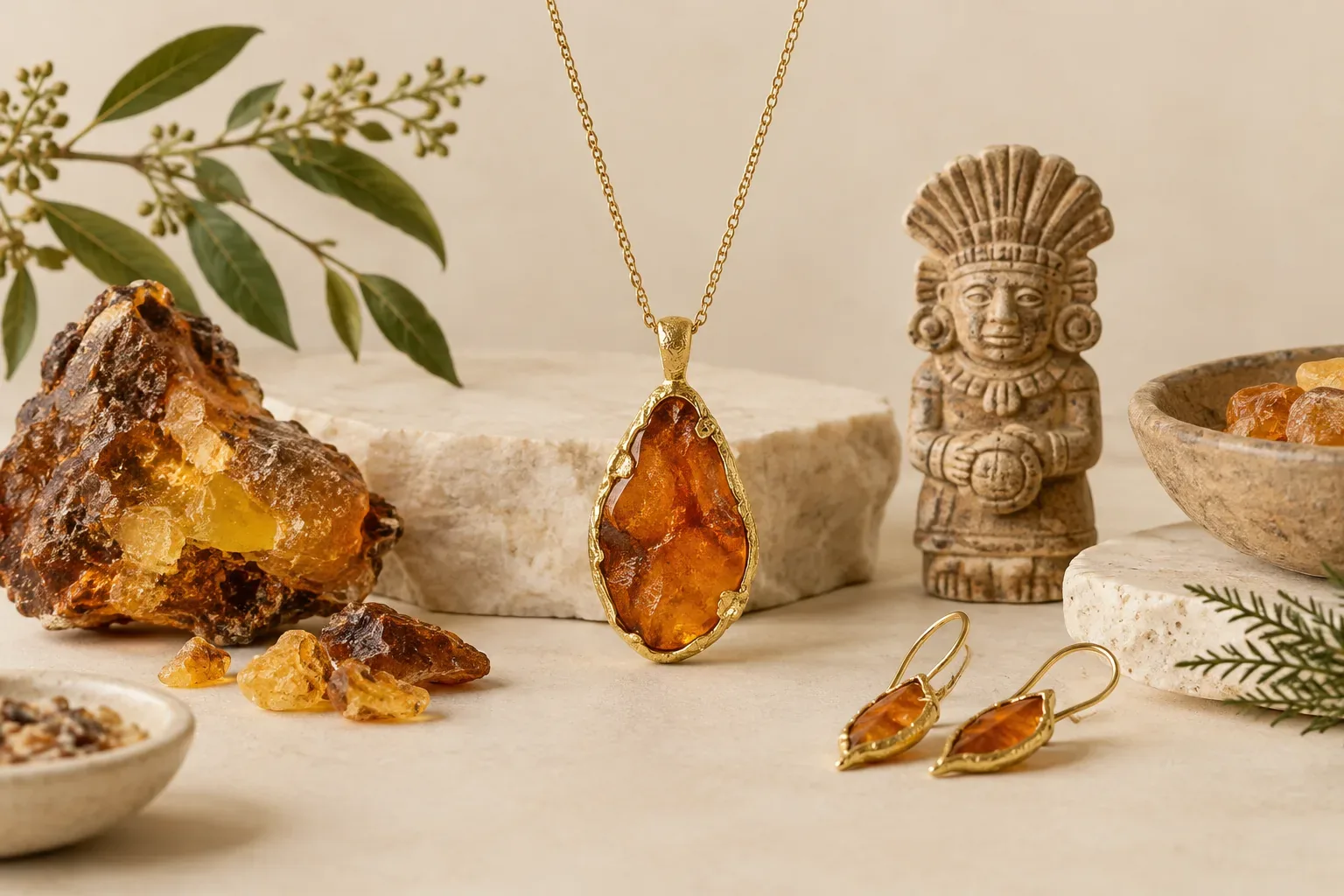
The treatment of copal in jewellery follows the same practical forms museum literature describes for organic gem materials. According to the V&A resources on gemstones and on jewellery history, organic materials are commonly worked into beads, cabochons, pendants and inlays; they are sometimes polished and sometimes carved. Where copal is used, it is typically handled like other resins and organic gems—shaped, polished and set into metal mountings or strung as beads—though specific techniques vary by maker and tradition.
Museum documentation also shows that the same material can serve different roles: a simple bead may be everyday adornment, while a larger, carefully finished piece may signal wealth or ritual function. The V&A's coverage of jewellery history emphasises that judging meaning requires attention to the object's form, context of use, and provenance rather than material alone.
Practical, respectful guidance for selecting and gifting copal jewellery
Accurate identification and full disclosure are the first priorities. The Federal Trade Commission's consumer guidance on buying gemstones, diamonds and pearls emphasises that sellers should disclose treatments, imitations and any important facts that affect value or durability. Ask a seller to confirm whether a copal piece is natural, stabilized, dyed, heat‑treated, or an imitation, and request written confirmation when possible.
Consider provenance and cultural sensitivity. If a piece is described as coming from a named community, an indigenous tradition, or as serving a ritual purpose, treat those claims as significant. If you are buying a copal object tied to living cultural or religious practice, seek permission or guidance from community representatives before wearing it in ceremonial contexts or passing it along as a gift. Museums and cultural institutions emphasise the importance of context when evaluating objects for display or use; apply the same respect when you acquire jewellery.
Choose reputable sellers and, for higher‑value items, get an independent assessment. The V&A's framing of jewellery as historically contingent supports the practical conclusion that reputable documentation matters. If a piece is promoted as antique, ask for provenance records or catalogue references; if modern, ask about the maker and materials. For gifts, pair the piece with an honest note about what is known and what is not known about its history and meaning so the recipient understands the basis for any symbolic claims.
Care and longevity: materials classified as organic or resinous can be sensitive to heat, chemicals and abrasives, so ask the seller or maker for recommended care. The FTC guidance also implies that treatments affect durability; know whether a piece has been stabilized or treated and follow the care instructions provided by the seller or a qualified conservator.
Wearing copal respectfully today
Be mindful of context. Wearing copal as everyday jewellery is widely acceptable, but wearing an object explicitly described as a sacred or ceremonial item from a contemporary community may be disrespectful unless you have permission from that community. The museum approach to material culture—evaluating objects by provenance, use and community meaning—offers a helpful template: learn what is documented, ask questions, and avoid treating living traditions as decorative props.
Frame modern meanings as personal. If you wear copal for personal reasons—memory, aesthetics or personal belief—present that meaning as yours rather than claiming it as historically prescriptive. This respects both historical scholarship and living communities.
Summary
Museum sources establish that resinous materials like copal sit within the long history of organic materials used in jewellery, and they stress that meanings are shaped by context, provenance and documented use. The cited V&A resources provide a framework for evaluating materials and meanings, and the FTC guidance reminds buyers to seek transparent disclosure about treatments and imitations. Outside of specific documentary evidence, contemporary symbolic claims about copal are best treated as personal or commercial interpretations unless supported by targeted ethnographic or museum records. When buying, wearing or gifting copal jewellery, prioritise accurate identification, transparent disclosure, documented provenance and cultural respect.
Frequently asked questions
Is copal the same as amber?
Copal and amber are both fossilized or semi-fossilized tree resins, but they differ in age and properties; authoritative classification and identification is best confirmed by a qualified gemological lab or by museum documentation. The museum gemstone guides used here treat resinous materials as a recognised category, and independent testing can clarify whether a piece is copal, amber or a modern imitation.
How can I be sure a copal piece is genuine and not dyed or imitated?
The Federal Trade Commission recommends buyers ask sellers about treatments and imitations and request written disclosure for significant purchases. For greater certainty with higher‑value items, seek an independent assessment from a qualified gemological laboratory or a reputable conservator.
Are there documented sacred meanings for copal in specific cultures?
The museum sources cited here show that resinous materials have been used in many cultural contexts, but they do not provide a comprehensive, culture‑by‑culture list of sacred meanings specifically for copal. Where a piece is presented as having ritual or cultural significance, verify that claim with focused ethnographic or museum records, or consult representatives of the community involved.
How should I care for copal jewellery?
Care instructions depend on treatments and material condition. Ask the seller or maker for recommended care and whether the piece has been stabilized or treated. For pieces with documented age or fragility, consult a conservator or follow seller guidance rather than assuming standard cleaning methods.
Is it appropriate to gift copal jewellery with spiritual or cultural meaning?
Gifting is appropriate when you understand the piece’s provenance and the meanings attributed to it. If the item is tied to a living tradition or ritual use, seek guidance or permission from community representatives before gifting or wearing it in a ceremonial context. If meanings are contemporary or personal, make that clear to the recipient.
Sources and further reading
- Bedazzled: A History of Jewellery — Victoria and Albert Museum
- An A-Z of Gemstones — Victoria and Albert Museum
- Buying Gemstones, Diamonds, and Pearls — Federal Trade Commission