Meaning at a glance
Documented museum and gem‑trade sources show that petrified wood is treated and worn as a gemstone material whose meanings in jewellery are largely modern and personal; historical evidence for specific cultural symbolism is limited, so choose and gift with attention to provenance, disclosure of treatments, and respectful intent.
Direct answer: What petrified wood jewelry means
Concise answer: Museum and gem‑trade records indicate that petrified wood is treated and catalogued as a material used in jewellery rather than a widely documented historical symbol, and most of the meanings attached to it today are contemporary personal or commercial interpretations rather than well‑attested cultural beliefs. This article explains what is documented, separates that evidence from later interpretations, and gives practical guidance for selecting and wearing the motif responsibly.
Natural history and how museums place petrified wood in the jewellery record
Museum literature and gem reference collections categorize petrified wood alongside other mineralized and fossilized materials that are worked for jewellery and ornament. In broad summaries of jewellery history and gemstone identification, institutions such as the Victoria and Albert Museum treat materials like petrified wood within the same practical and historical frameworks used for many organic and mineral gem materials: they are identified, classified, set, and reused as fashions and technologies change.
What museums record most clearly are the changing social contexts for materials: which techniques and fashions made certain materials popular, how markets and technologies affected availability, and how collectors and makers presented those materials. The Victoria and Albert Museum’s overviews of jewellery history and its gem A–Z emphasize this shifting material culture rather than attributing a single, continuous symbolic meaning to any one material across time and place.
Documented historical uses versus modern interpretation
Documented historical evidence specifically linking petrified wood to particular rituals, religious beliefs, or consistently repeated symbolic meanings across cultures is limited in mainstream museum and gem‑trade records. That absence of clear documentation is meaningful: it indicates that, unlike motifs such as religious iconography or well‑recorded gemstone traditions, petrified wood does not have a broadly attested historical symbolism recorded by major collections and reference works.
In contrast, many of the meanings people associate with petrified wood today—stability, grounding, longevity, connection to deep time—are modern interpretations. These contemporary associations arise from the material’s fossilized appearance and popular metaphors rather than from traceable historical practices. It is appropriate to distinguish between museum‑documented uses (how the material was worked and worn) and these later, often personal meanings that jewelers, retailers, and wearers have adopted.
How the motif and material appear in jewellery
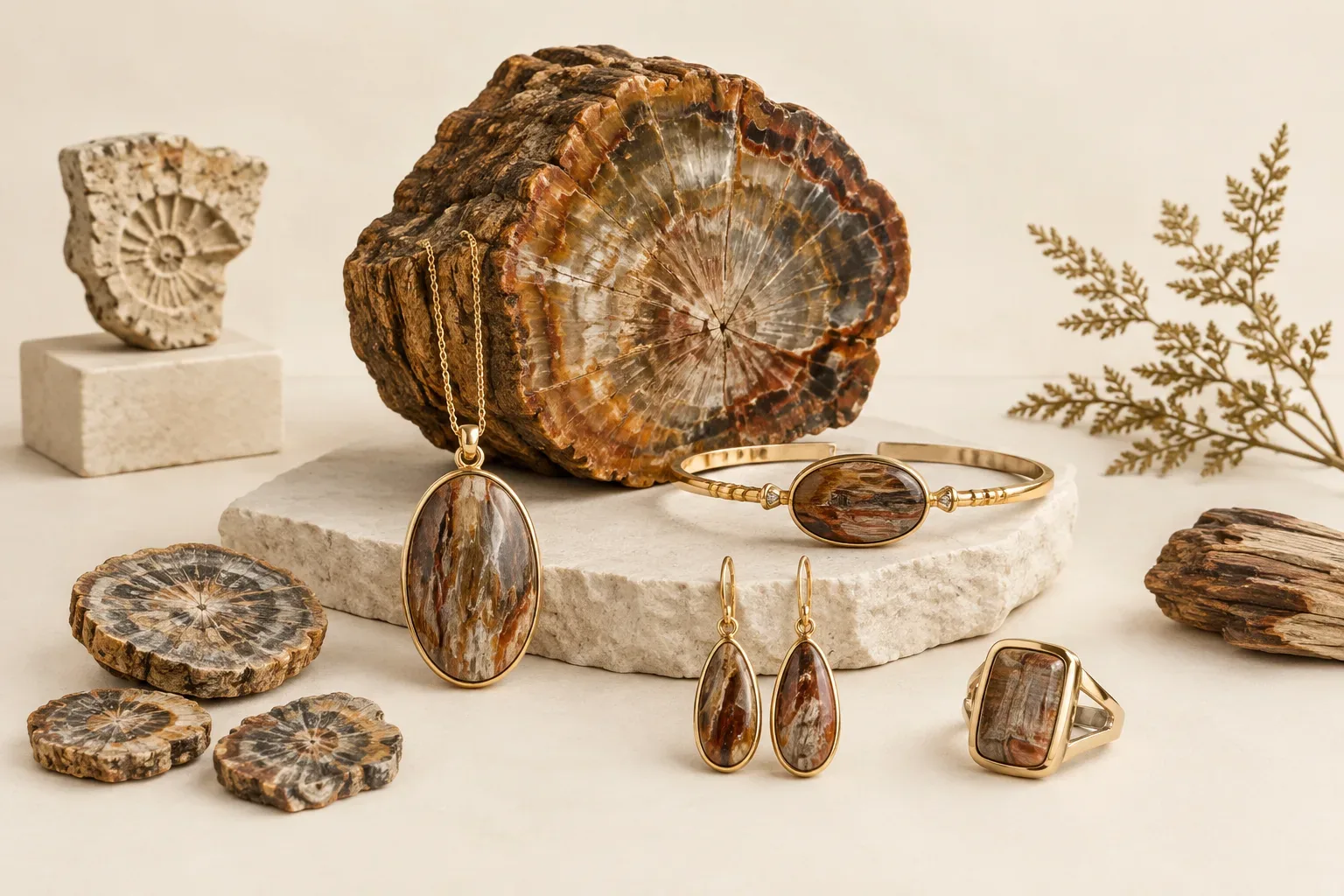
In jewellery practice, petrified wood appears in many of the same forms as other lapidary materials. Makers cut it into cabochons for rings and pendants, slice and polish thin rounds for inlay and beadwork, and preserve polished faces for display in brooches or statement pieces. Museum summaries of gem materials and jewellery practice show that craftsmen adapt techniques familiar for stones—cutting, polishing, mounting—to a wide range of hard organic and fossil materials.
Designers may highlight the characteristic grain and coloration of petrified wood, often setting pieces in simple metal frames to show the pattern, or combining it with metals or other stones for contrast. When displayed in collections or retail contexts, petrified wood is typically catalogued alongside other non‑traditional gem materials and described by its lapidary qualities and provenance rather than by an inherited symbolic program.
Selection: provenance, treatment, and responsible purchasing
Because petrified wood is sold as a gem and ornamental material, typical consumer protections and best practices for buying gemstones apply. The Federal Trade Commission’s consumer guidance on gemstones, diamonds, and pearls stresses disclosure requirements for treatment, imitation, and origin. Ask sellers to state whether a piece has been stabilized, dyed, or otherwise treated and request any available provenance information.
Provenance matters for culturally sensitive pieces and for conservation of important sites. If a piece is presented as originating from a particular protected or culturally significant locality, seek documentation. Treat claims about ritual or historical use with caution where no source is cited. When a seller connects a material to a cultural or spiritual tradition, ask what evidence supports that claim and whether the community concerned has been consulted or acknowledged.
Gifting and wearing with respect
When you give petrified wood jewellery as a gift, be explicit about what the piece means to you and avoid asserting putative historical or religious meanings that are not documented. Present the material’s contemporary associations—durability, earthiness, personal significance—as personal metaphors rather than universal truths.
If a recipient practices a tradition that attributes specific spiritual significance to fossilized materials, check respectfully with them (or with knowledgeable members of their community) before emphasizing such claims. If a piece has been sourced from a site that is environmentally or culturally sensitive, consider the ethics of display and wear: some objects are better preserved in collections than worn routinely.
Care and display
As with many lapidary materials, care instructions depend on how the piece was finished and set. Sellers should disclose any stabilization or resin treatments because those affect cleaning methods. Follow jewellery‑care norms: avoid harsh chemicals, ultrasonic cleaners, and extreme temperature changes unless a qualified lapidary confirms a treatment that makes those methods safe.
For larger or historically significant specimens, museums and collectors often keep items in controlled display rather than in regular wear. If you have a piece that you consider especially valuable—monetarily, scientifically, or sentimentally—consult a conservator or experienced jeweller about long‑term preservation.
Researching claims and continuing curiosity
If you encounter claims that a petrified wood object has specific historical or cultural meanings, use established research steps: ask for primary documentation, consult museum catalogues or reputable gem references, and check whether the claim comes from a recognized community tradition or from modern marketing. The Victoria and Albert Museum’s resources on jewellery history and its A–Z of gemstones are useful starting points for understanding how materials enter the historical record and how meanings can shift over time.
When in doubt, treat striking but undocumented symbolic claims as contemporary meanings or marketing narratives and frame them as such when sharing the piece with others.
Summary: balanced, evidence‑led meaning
Petrified wood has a clear place in modern jewellery practice as a material worked and worn for its aesthetic and lapidary qualities; museum and gem references document that placement within the larger story of changing materials and fashions. They do not, however, produce a single, widely attested symbolic history for petrified wood the way they do for some other motifs. Most commonly cited meanings today are contemporary and personal; responsible selection and gifting involve checking provenance and treatment disclosures and avoiding unsubstantiated historical claims.
Frequently asked questions
Is petrified wood considered a gemstone?
Petrified wood is treated and marketed in the gem trade as an ornamental stone and appears in gemstone reference collections, though it is a fossilized/organic material rather than a traditional mineral gem. Museum gem guides categorize it with other lapidary materials used in jewellery.
Does petrified wood have a historical symbolic meaning?
Major museum and gem‑reference sources do not record a single, broadly attested symbolic tradition for petrified wood; many meanings commonly associated with it today are contemporary interpretations rather than documented historical beliefs.
What should I ask a seller before buying petrified wood jewellery?
Ask for disclosure of any treatments (stabilization, dyes, resins), documentation of provenance, and any claims linking the piece to specific cultural traditions. The Federal Trade Commission advises consumers to seek clear information about treatments and imitations when buying gemstones.
How do I care for petrified wood jewellery?
Care depends on any treatments and the way the piece is set. Avoid harsh chemicals and ultrasonic cleaners unless confirmed safe by a qualified lapidary or jeweller; if a seller discloses stabilization or resin treatments, follow their cleaning guidance to avoid damage.
Is it disrespectful to wear petrified wood if it comes from a culturally sensitive site?
If an object is claimed to come from a culturally sensitive or sacred site, verify provenance and consider whether display or study by experts and community custodians is more appropriate than everyday wear; when in doubt, ask respectful questions of knowledgeable sources or community representatives.
Sources and further reading
- Bedazzled: A History of Jewellery — Victoria and Albert Museum
- An A-Z of Gemstones — Victoria and Albert Museum
- Buying Gemstones, Diamonds, and Pearls — Federal Trade Commission