Meaning at a glance
This guide explains the documented history and changing contexts of the fish fossil jewelry motif, separates cultural or religious evidence from later popular interpretations, and gives practical guidance for choosing and wearing the motif in modern jewelry.
Direct answer — what this guide covers
This fish fossil jewelry buying guide explains what the historical record actually documents about fossil materials and jewelry motifs, distinguishes documented cultural meanings from modern personal or commercial interpretations, and gives practical guidance on authenticity, disclosure of treatments, and everyday care when you select, buy, or gift fossil-based jewelry.
What the historical evidence shows (and what it doesn't)
Museum scholarship demonstrates that the social role of jewellery, and the use and meaning of materials, have changed over time and between cultures. The Victoria and Albert Museum catalogues how jewellery materials and motifs shift in meaning as fashions, technologies and trade networks change, and it is therefore a useful framework for understanding a motif such as fish fossils in context rather than assuming a single, timeless meaning.
For the specific motif of fish fossils in jewellery, the published museum literature does not provide an unbroken, well-documented tradition linking a single ancient culture to a continuous symbolic meaning. Instead, what is better documented is the broader pattern: jewellers and wearers have long used unusual natural materials, including fossilized organic substances and gemstones, for aesthetic, sentimental or status reasons. The V&A's surveys of jewellery history and of gem materials explain these changing contexts and the importance of identifying materials accurately rather than assuming a fixed symbolic meaning.
Separating documented historical meanings from modern interpretations
Where the historical record is clear, attribute meanings to the specific society and period that used the motif. Museum research shows that the meaning of motifs commonly shifts: an object that had one significance in a specific culture can later be repurposed as a fashion motif, a novelty, or a personal talisman. When you encounter claims that a fish fossil or any fossil motif carried a particular ancient religious or cultural meaning, ask for the primary evidence and the named culture and time period. If a seller or writer does not cite specific archaeological or museum sources, treat the claim as a modern interpretation or marketing narrative rather than verified history.
Modern wearers often adopt fossil imagery for aesthetic reasons, for environmental or scientific interest, or for personal symbolic associations such as resilience or deep time. Those modern, personal meanings are legitimate for the wearer, but they are different from historically documented cultural meanings and should be presented as contemporary interpretations when selling or gifting.
How fossil motifs and fossilized materials typically appear in jewellery
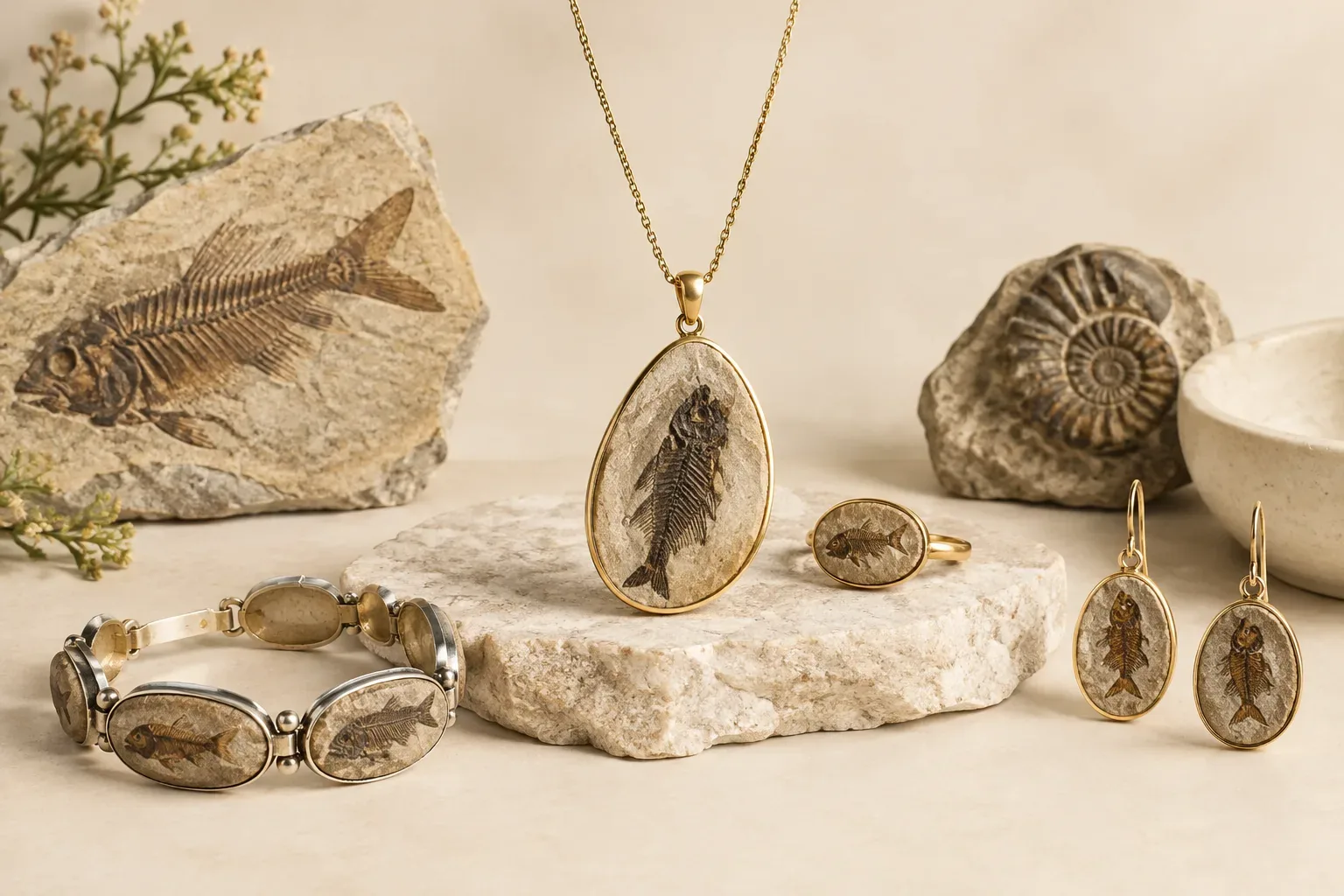
In contemporary jewellery, fossilized organic materials and fossil impressions are used in several common ways: whole or partial fossils are set, slices or polished faces of fossil-bearing stone serve as cabochons, and fossil motifs are engraved, carved, or cast in metal as reproductions. Designers may set small fossil fragments into pendants, rings, or bracelets, or use fossil-bearing matrix stones as beads. The specific look depends on the species of fossil, whether it has been stabilized or dyed, and the metal or mounting style.
Because related gemstone identification and lapidary techniques affect appearance, consult general references on gem and material identification. The Victoria and Albert Museum's A–Z of Gemstones explains how different natural materials present and how historical artisans selected and worked with them; applying the same careful observation will help you assess fossil-based pieces.
Authenticity, treatments, and disclosure: what to ask and expect
Federal Trade Commission guidance on buying gemstones, diamonds and pearls emphasizes clear disclosure of treatments, imitations and enhancements. That principle applies to fossils and fossilized materials used in jewellery: sellers should honestly disclose whether a fossil has been stabilized with resin, dyed, heat-treated, reconstructed from fragments, or is a cast or replica rather than an original fossil specimen.
When you are evaluating a fossil piece, ask the seller specific questions: what is the precise material (for example, the rock or matrix the fossil sits in), whether the fossil has been treated, whether any adhesives or consolidants were used, whether parts have been reconstructed, and whether you will receive any documentation or return rights. If the seller offers a certificate, examine who issued it and what tests or provenance it records. For higher-value or scientifically significant specimens sold as fossils, independent verification from a qualified laboratory or an established museum or specialist dealer can be appropriate.
Practical selection and gifting guidance
Decide what matters most: aesthetic appearance, scientific authenticity, cultural sensitivity, or resale value. If you value the scientific authenticity of a fossil, prioritize sellers who provide clear provenance and disclose any restoration. If you want the look rather than the specimen, stabilized or worked fossils and casts may be a better, more affordable choice, but they should be described as such.
Consider the recipient’s values and the context of the gift. If the recipient is a collector or has scientific or cultural ties to fossils, choose an ethically-sourced piece with documented provenance. If the recipient prefers wearable fashion jewellery, pick settings and sizes appropriate for regular wear and ask whether the piece has been reinforced for durability. Pair the choice with a short note explaining whether the piece is an original fossil, a stabilized specimen, or a decorative replica so the receiver understands its nature and care needs.
Care, conservation and everyday wear
Fossils and fossil-bearing stones can be more fragile than typical gemstones. Conservation-minded care helps preserve them: avoid prolonged exposure to water, strong detergents, acids, or high heat that could degrade stabilizing resins or adhesives. Store fossil jewellery separately from harder gems and metals to avoid abrasion. For cleaning, use a soft, dry cloth or a lightly dampened cloth with plain water; do not use ultrasonic cleaners or steamers unless a qualified conservator confirms it is safe for the specific specimen.
If a fossil component shows looseness, cracking, or surface residues, consult a jeweller experienced in working with fossils or a conservator. For valuable or scientifically important specimens, seek advice from a museum conservation department before attempting any restoration or repair.
Price, provenance and ethical considerations
Price should reflect material rarity, workmanship, and documentation. Provenance—clear information about where and how a specimen was found and whether it was legally collected—affects both legal and ethical standing. Sellers who cannot provide reasonable provenance or who sell specimens with ambiguous origin raise legitimate concerns, especially for fossils that may have been removed from protected sites or from regions with strict export controls.
If ethical sourcing matters to you, ask about the collecting context and whether the seller follows local laws and international conventions. Keep in mind that a lower price can legitimately reflect a treated, stabilized, or replicated piece rather than an original, high-quality specimen; transparent sellers will explain these differences clearly.
Final checklist before you buy
Before purchase, verify: a clear description of material and species if known, disclosure of treatments and repairs, documentation of provenance if the specimen is sold on scientific or high-collection grounds, the seller’s return policy, and recommended care instructions. Use authoritative reference material to confirm the seller’s claims about materials; the Victoria and Albert Museum’s resources on jewellery history and gemstones are good starting points for understanding how materials have been used and described over time.
If anything about the piece’s origin, treatment, or value is unclear, pause the purchase until you have satisfactory answers or independent verification. Transparent sellers will welcome detailed questions; evasive answers are a legitimate reason to walk away.
Frequently asked questions
How can I tell if a fossil in a piece of jewelry is real?
Ask the seller for a precise material description and any supporting provenance or laboratory testing. Genuine fossils usually show matrix rock, natural fractures and patterns consistent with the species; sellers should disclose any stabilization, resin fills, reconstruction or casting. If authenticity is important, consider independent verification from a qualified lab or an established specialist dealer.
Are fossilized materials treated or enhanced?
Yes. Like gemstones, fossil materials can be stabilized with resins, dyed, filled, reconstructed or cast. The Federal Trade Commission advises that sellers disclose these treatments and that buyers should request clear explanations of what has been done to a specimen before buying.
Is it safe to wear fossil jewelry daily?
It depends on the specimen and treatment. Many fossil materials are softer or more brittle than common gemstones and may be vulnerable to moisture, heat, or impact. If a piece has been reinforced for wear it may be suitable for regular use; otherwise reserve it for occasional wear and follow conservative cleaning and storage practices.
Can I gift a fossil piece to someone who values cultural sensitivity?
Yes, but be transparent about the piece’s nature and origin. If the recipient values provenance or cultural context, choose ethically sourced items with clear documentation. Communicate whether the piece is a genuine fossil, a stabilized specimen, or a decorative replica so the recipient understands its significance.
What should I look for on a seller’s return policy and documentation?
A fair return policy, written descriptions of materials and treatments, and any provenance documentation are important. For higher-value specimens, look for documentation from recognized labs, museums or reputable dealers; ambiguous or evasive policies are a warning sign.
Sources and further reading
- Bedazzled: A History of Jewellery — Victoria and Albert Museum
- An A-Z of Gemstones — Victoria and Albert Museum
- Buying Gemstones, Diamonds, and Pearls — Federal Trade Commission