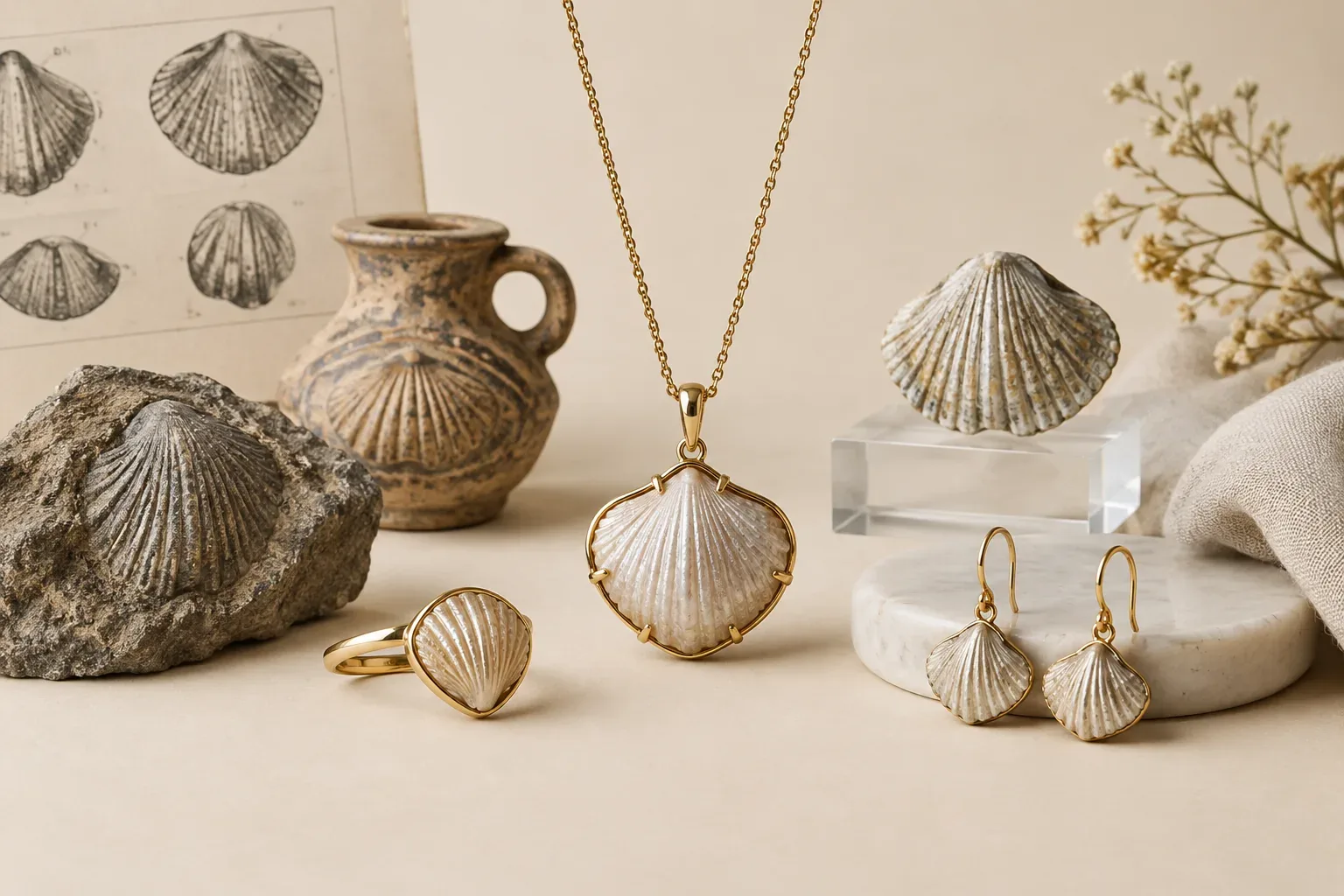
Meaning at a glance
This guide explains the limited documented history and changing contexts of brachiopod motifs in jewelry, separates verified museum-backed evidence from modern or personal interpretations, and gives practical, respectful advice for selecting, verifying, and caring for brachiopod-themed pieces.
What the historical record actually shows
When readers ask about the history of a niche motif such as the brachiopod (a shelled marine fossil), it's important to separate two questions: whether the object type appears in jewelry, and whether specific cultures attached a documented, consistent meaning to it. Surveys of jewelry history emphasize that natural-history subjects—shells, fossils, plants, and animals—have often been used decoratively, but their meanings shift across time and place. The Victoria and Albert Museum's work on jewelry history shows how motifs migrate and change social context, and that museum catalogs typically group natural motifs together rather than isolating every micro-motif with a unique, well-documented symbolic lexicon.
Which cultures or periods actually used similar motifs (and how certain is that evidence?)
Museum and curatorial records collected by institutions such as the Victoria and Albert Museum indicate that shells and fossil-like forms appear in European decorative arts and in the jewelry of collectors interested in natural history from the seventeenth century onward, but these records more often discuss 'shell' or 'natural specimen' motifs broadly rather than naming brachiopods specifically. That means you may find pieces described as 'shell pendants' or 'fossil cameo' in museum inventories rather than a consistent category labeled 'brachiopod jewelry.'
Because major public-facing surveys of jewelry history emphasize changing styles and social contexts rather than exhaustive lists of every small motif, there is no widespread, documentary record in the standard museum literature that identifies a single, universal symbolic meaning for brachiopod-shaped jewelry across multiple cultures. In short: the physical motif appears as part of broader natural-history trends, but specific cultural meanings tied to brachiopods are not well-documented in the sources museums use to interpret jewelry.
Documented historical meanings versus modern personal interpretations
Documented meanings are those a curator or primary source can point to in a given context: for example, a Victorian collecting cabinet that used shells as a symbol of natural curiosity, or a later piece made to celebrate paleontology as a scientific interest. When relying on museum-backed interpretations, always look for explicit provenance, catalog notes, or exhibition labels that tie a specific piece to a documented intention. The Victoria and Albert Museum's materials on jewelry history show how curators link motifs to social practices and collecting trends, not to universal symbolic dictionaries.
Modern interpretations are often personal, commercial, or community-driven. Today, makers and wearers might choose brachiopod shapes to signal an interest in fossils, marine life, environmentalism, or simply because the form is attractive or unusual. These contemporary meanings are valid for the wearer but are not the same as a historically documented symbolism. Treat any broad symbolic claim—especially those circulated online or by marketers—as a modern interpretation unless you can find explicit historical documentation.
How the motif and fossil materials appear in jewelry today
Contemporary designers and vintage dealers present brachiopod-related material in several ways: intact fossil shells set as pendants, cross-sections or polished slices mounted as cabochons, carved cameos inspired by fossil shapes, and metalwork reproductions of the shell form. These applications treat the brachiopod as a visual motif or a natural specimen rather than as a standard gemstone.
The Victoria and Albert Museum’s resources on gemstones and historical materials help when identifying how materials were used: museum cataloging practices and A–Z style references show that makers historically chose certain treatments and settings to highlight the visual qualities of natural items. When a fossil is used as a decorative stone it is often stabilized, cut, or backed to enhance durability and wearability.
Authenticity, treatments, and what to ask sellers
When assessing a brachiopod piece, start with provenance and seller disclosure. The Federal Trade Commission provides guidance on material-treatment disclosure: sellers should tell buyers about dyes, stabilizing resins, reconstituted materials, adhesives, or other treatments that change appearance or durability. Ask for written confirmation of any claims, and request photographs or lab reports if the piece is presented as a rare specimen or if its value depends on originality.
Material-wise, sellers may offer natural fossil, restored fossil, cast reproductions, dyed shell, or polymer/resin recreations. If authenticity matters to you—whether for collecting or gifting—ask if the item is natural fossil material, whether it has been stabilized or dyed, whether parts are modern repairs, and whether the setting is period or modern. If the seller cannot answer clearly, treat the piece as a decorative object rather than a documented historical specimen.
Practical selection and respectful gifting guidance
Select a brachiopod-themed piece first by deciding which value matters most: historical authenticity, aesthetic design, ethical sourcing, or personal meaning. If you prioritize historical provenance, buy from reputable dealers, auction houses, or museums whose documentation is explicit about origin and previous ownership. If you prefer a contemporary designer piece, choose makers who disclose materials and methods so you can assess longevity and care needs.
Gift thoughtfully by matching the object to the recipient’s interests and values. If the recipient values scientific provenance, present documented pieces with accompanying information. If they prefer symbolism, explain that modern meanings are personal rather than historically universal. Respectful gifting also means being transparent about the piece’s origins and treatments so the recipient can make informed choices about wear and conservation.
Care and conservation for brachiopod jewelry
Treat fossil materials as you would other delicate natural specimens. Avoid exposure to strong acids, prolonged high humidity, and extreme temperature changes, and keep the piece away from cosmetic chemicals such as perfumes, hair spray, and household cleaners. Clean gently with a soft, dry cloth rather than abrasives. If the fossil is mounted in metal, check mountings periodically for wear and loose settings.
For items of clear historical value or museum-level significance, consult a qualified conservator rather than attempting home repairs. Museums such as the Victoria and Albert Museum apply specialist conservation techniques to jewelry and recommend professional intervention when an item’s historic surface or integrity might be affected by cleaning or treatment.
Final considerations
A brachiopod motif can be an appealing, unusual choice for jewelry because it combines natural history and visual distinctiveness. But do not assume a single, historical symbolism applies universally; documented meanings are context-dependent and best confirmed by provenance and museum-style cataloging when historical accuracy matters.
If you buy for style or personal meaning, prioritize transparent sourcing and clear seller disclosure about treatments and repairs. If you buy for historical or collecting reasons, insist on documentation and, when appropriate, independent verification. In all cases, modest care and prudent storage will extend the life of the piece and preserve whatever value—sentimental, aesthetic, or monetary—you and the wearer place on it.
Frequently asked questions
How can I tell if a brachiopod pendant is a natural fossil or a reproduction?
Ask the seller for provenance and specific material information. Reputable sellers should state whether the piece is natural fossil material, stabilized, dyed, repaired, or a modern cast. Request clear photographs and, for high-value items, a written report or independent verification. If a seller cannot answer clearly, treat the object as decorative rather than a documented fossil specimen.
What treatments should sellers disclose for fossil or shell jewelry?
According to consumer guidance from the Federal Trade Commission, sellers should disclose treatments that affect appearance or durability, such as stabilization with resin, dyeing, backing, reconstitution, or modern repairs. Ask for those disclosures in writing and keep receipts or product descriptions that note any treatments.
Is brachiopod jewelry appropriate as a sentimental or symbolic gift?
Yes, if the recipient appreciates natural-history motifs or the aesthetic. Be clear with the recipient about whether the piece is historically documented or a contemporary interpretation, and explain that modern symbolic meanings are personal rather than universal. Match the choice to their interests—scientific provenance for collectors, design and meaning for personal gifts.
How should I clean and store a brachiopod or fossil-based piece?
Clean gently with a soft, dry cloth and avoid abrasives, household chemicals, and long exposure to moisture or strong sunlight. Store separately from harder stones and metals to prevent abrasion. For items with museum or historical value, seek a professional conservator’s advice before attempting cleaning or restoration.
Are there ethical or legal concerns when buying fossil-based jewelry?
Provenance matters. Different regions have laws or regulations about collecting and exporting fossils, and reputable sellers should be able to document legal sourcing. If ethical sourcing is important to you, ask about where the fossil was found, whether it was collected legally, and whether local or national laws apply.
Sources and further reading
- Bedazzled: A History of Jewellery — Victoria and Albert Museum
- An A-Z of Gemstones — Victoria and Albert Museum
- Buying Gemstones, Diamonds, and Pearls — Federal Trade Commission